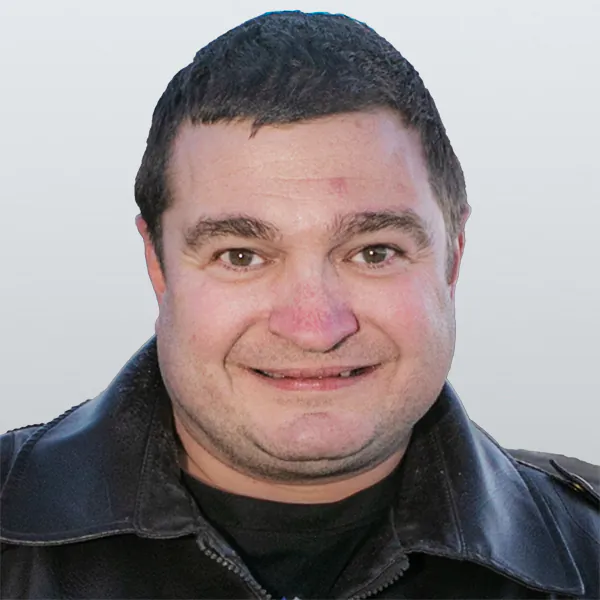
Up until the mid-20th century, microphones were most commonly used in recording studios, as they were bulky, expensive, and required a great deal of power to operate. In the late 1950s, however, two scientists—James West and Gerhard Sessler—began experimenting with electrets, small devices capable of holding an electrical charge. By the early 1960s, Sessler and West had invented a smaller microphone that used less power and was inexpensive to manufacture, catapulting their creation into widespread use.
James West
West was born on Feb. 10, 1931, at his family’s home in Prince Edward County, Virginia. From a young age, he was fascinated by how things worked, often taking apart items like his grandfather’s watch and putting them back together.
That curiosity deepened when he was 8 years old and found a broken radio someone had thrown away. Believing he had diagnosed the problem, he attempted to plug it into an outlet connected to a ceiling light socket while standing on the brass footboard of his bed. His hand became stuck to the socket as 120 volts shot through his body. He remained frozen until his brother knocked him free.

Rather than frightening him, the incident pushed West to learn more about electricity. By age 12, he was working with a cousin as an electrician, gaining hands-on experience. Although West knew he wanted to become a scientist, his parents encouraged him to pursue medicine instead.
Yielding to that pressure, West initially attended Hampton University as a pre-med student. His studies were interrupted when he was drafted during the Korean War. After a brief period of service, he was wounded and discharged, earning a Purple Heart. The experience also led him to embrace pacifism.
In 1953, West followed his passion and enrolled at Temple University in Philadelphia to study physics. During summers, he worked as an intern for the Acoustics Research Department at Bell Laboratories in Murray Hill, New Jersey. Although he completed enough credits for a bachelor’s and a master’s degree, he decided not to pursue those credentials.
In 1957, West joined Bell Laboratories as a scientist in the Acoustics Research Department, where he worked on architectural acoustics, electroacoustics, and physical acoustics. By 1960, he had teamed up with Gerhard Sessler, and the two were tasked with developing a more efficient microphone.
Sessler was born Feb. 15, 1931, in Rosenfeld, Germany. He studied physics at various German universities before earning his Ph.D. from the University of Gottingen in 1959. He then moved to the United States to work at Bell Laboratories.
The Breakthrough: Electret Technology
The two started experimenting with electret foil made from Teflon coated with a thin metal layer. The term “electret” comes from the words “electric” and “magnet.” They discovered that the electret could permanently hold a charge without being connected to a power source. They then used the electret to create a low-voltage microphone that was smaller, required no battery, and could be produced inexpensively.
By 1962, the two scientists had received a patent for their electret microphone. Their invention greatly improved sound quality while reducing production costs. By 1968, the microphone was being mass-produced and soon became the industry standard, used in products such as tape recorders, camcorders, telephones, and hearing aids.

Lasting Impact
West retired from Bell Laboratories in 2001 after more than 40 years with the company. He then joined John Hopkins University as a research professor for the Whiting School of Engineering in the electrical and computer engineering department. Throughout his career, West developed more than 250 patents and contributed to several scientific papers and books.
Sessler left Bell Labs in 1975 and returned to Germany to become professor of electroacoustics at the Technical University of Darmstadt. While working there in the 1980s, he invented the first condenser microphones using silicon micromachining and earned more than 100 patents.
In 1999, both scientists were inducted into the National Inventors Hall of Fame for their invention of the electret microphone. Today, more than 90 percent of the microphones manufactured use the basic principles developed by West and Sessler.
What arts and culture topics would you like us to cover? Please email ideas or feedback to features@epochtimes.nyc