



When Mount Vesuvius erupted in 1944, the Bay of Naples was covered in ash and pumice. As one of the most dangerous active volcanoes in Europe—most famously destroying Pompeii in its A.D. 79 eruption—this natural disaster had far-reaching consequences. The towns of San Sebastiano al Vesuvio and Massa di Somma were devastated, while around 80 U.S. military aircraft were destroyed at the height of World War II.
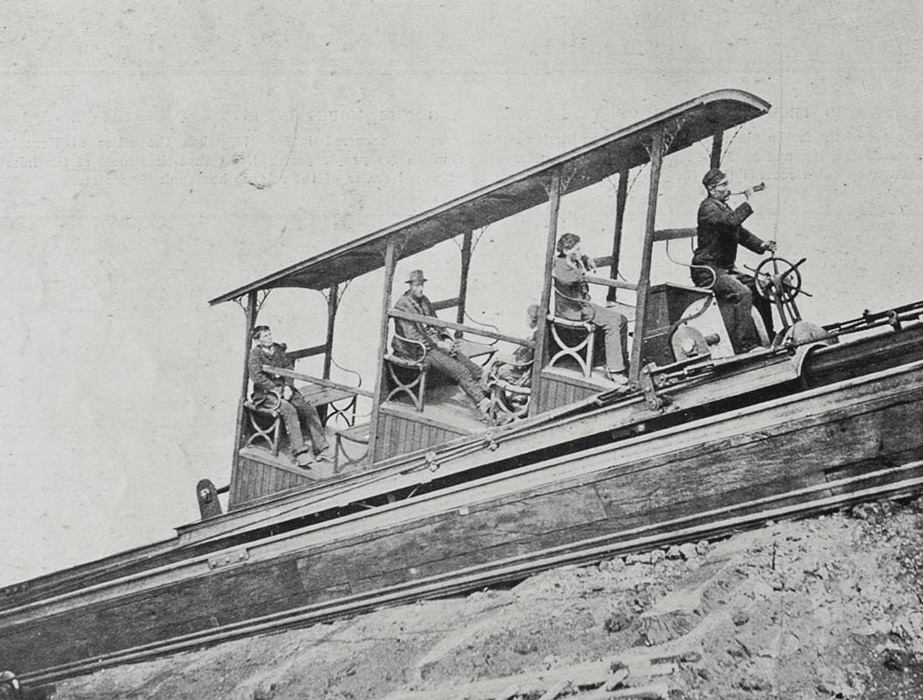
While the 1944 eruption has become famous for its unfortunate timing, it also destroyed a little-known piece of history. The eruption marked the end of the Vesuvius Railway, a funicular railway built in 1880 that represented a remarkable feat of engineering at the time. During its heyday, enterprising tourists rode carriages up to the fiery crater to enjoy a sweeping view of the surrounding landscape.
However, the very feature that drew visitors would ultimately result in the railway’s downfall, with eruptions in 1906 and 1934 damaging the funicular before it finally succumbed in 1944.
Though the railway is now consigned to distant memory, it left an indelible mark on music history in the form of one of Italy’s most popular songs. Recorded by countless artists, and accidentally plagiarized, this song is called “Funiculi, Funicula” by composer Luigi Denza.

Funiculi, Funicula
“Funiculi, Funicula” was originally written to celebrate the opening of the funicular railway as a catchy advertisement. With journalist Peppino Turco providing the lyrics, what was likely intended as a joke turned into one of Italy’s most popular songs. Within a year, a million copies of sheet music had been sold, and the song became an instant hit at the Festival di Piedigrotta, Naples’s annual song competition.
The song became so ubiquitous that multiple composers mistakenly reused it. In 1907, Russian composer Rimsky-Korsakov, thinking it was a traditional tune, used it in his tone poem “Neapolitanskaya pesenka” Op. 63. But the most famous example of copyright infringement occurred when Richard Strauss quoted “Funiculi, Funicula” without attribution in his “Aus Italien,” just six years after it was written. When Denza found out, he took legal action and won, making it one of the earliest notable copyright cases in music.
Today’s performance of Luigi Denza’s “Funiculi, Funicula” is by Andrea Bocelli, Andrea Griminelli, and the New York Philharmonic conducted by Alan Gilbert.
This light-hearted song tells the story of a young man taking his sweetheart on a leisurely, volcano-bound stroll. The chorus “jammo, jammo, ‘ncoppa jammo ja” translates to the cheery refrain “Let’s go, let’s go, to the top we’ll go.” The following line reveals the namesake of the song, the lyrics “funiculi, funicula” referencing the newly built railway. Literally translated, the catchy line means “funicular up, funicular down,” illustrating a journey on the funicular carriage. Cheery and effusive, this musical advertisement has deservedly outlived the product it was created to promote.
What arts and culture topics would you like us to cover? Please email ideas or feedback to features @epochtimes.nyc.

_-_Archivio_storico_Ricordi_FOTO001319.jpg)