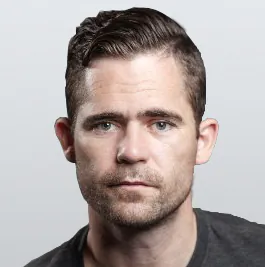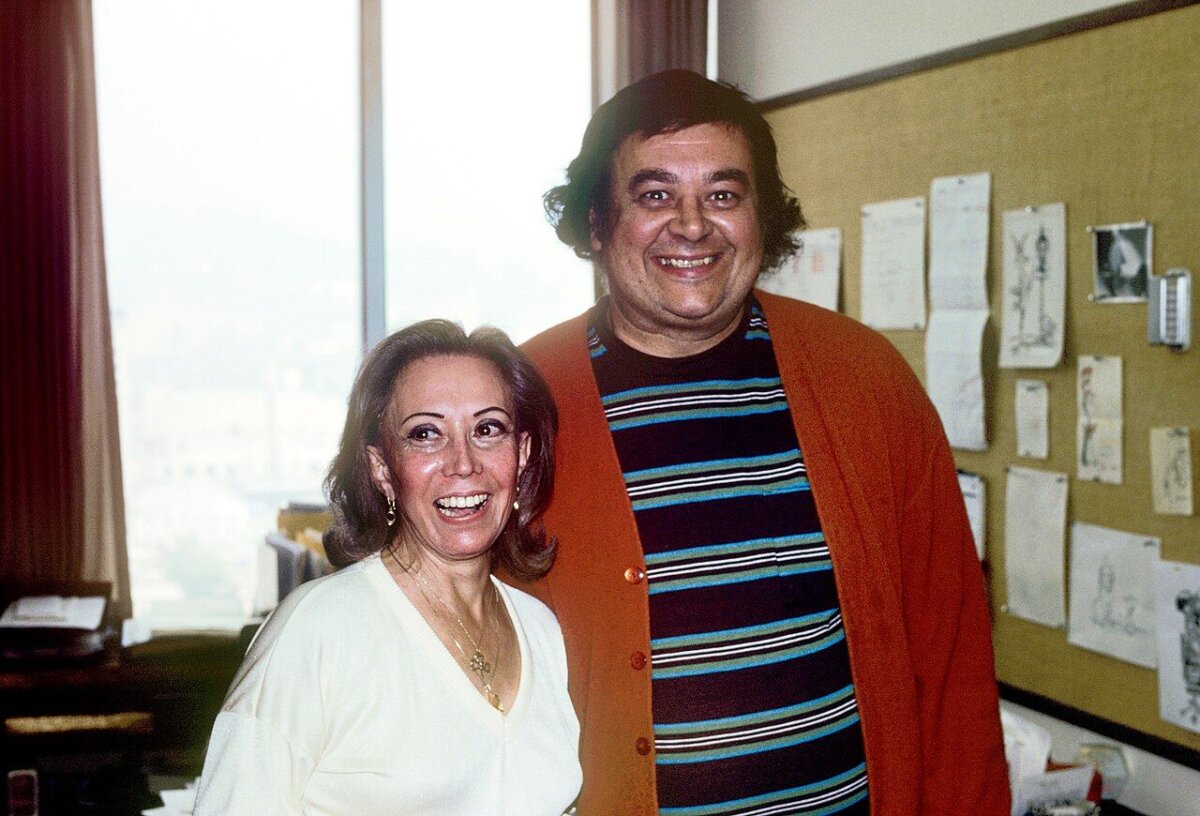
Max Fleischer had just died. The 89-year-old animator had left an indelible mark on the film and cartoon industries. He had co-founded Fleischer Brothers cartoon studio, which created Koko the Clown, Betty Boop, and had put Popeye the Sailor Man on television. The loss of such an industry giant was immense, and for one fellow animation giant, it was only appropriate to honor Fleischer’s legacy in some official capacity.
By 1972, the year of Fleischer’s death, June Foray (1917–2017) had enjoyed a very successful career in radio and animation voice acting. Animation had become a burgeoning industry, and Foray believed now was the time to start some type of awards program.
“I think we should give animation awards. Everybody else has awards but animation doesn’t,” she told several other industry leaders. Nick Bosustow, the ASIFA-Hollywood president, agreed. Thus began the Annie Awards, an idea created and fostered by Foray and a name that was suggested by her husband, Hobart Donavan.
Getting Started Early
The now-prestigious annual Annie Awards, however, was just one of Foray’s contributions to the world of animation. Her capacity for creating voices was practically endless and her talent was evident almost from the moment she could speak. Born in Springfield, Massachusetts, she found herself behind the microphone at the local radio station as part of a radio play at the age of 12. By the time she reached 15, she was a regular voice actor on Springfield’s WBZA radio station.
When she was 17, her parents made a momentous decision that would certainly alter her life and the industry of radio and, later, animation. The family moved across the country to Los Angeles. It was in Los Angeles that Foray didn’t simply voice act, but she created and starred in her own radio show called “Lady Make Believe,” for which she wrote about 300 episodes. Her radio show was just the beginning of her breakthrough into the radio industry.
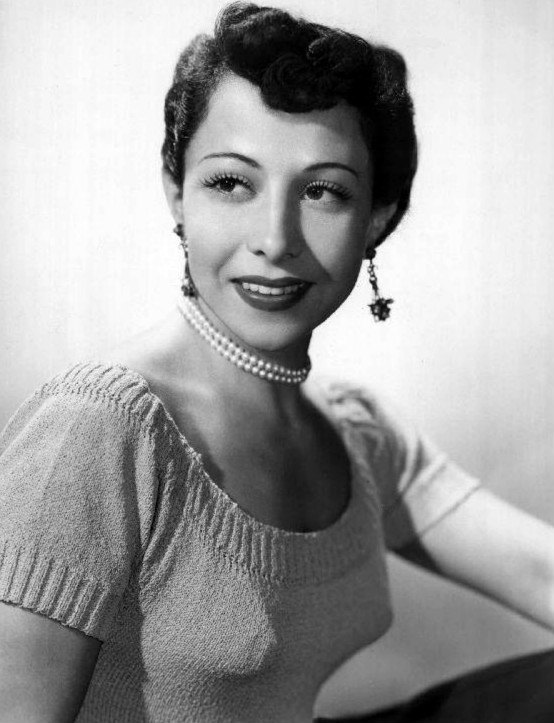
She exploded onto the voice-acting scene, appearing on shows like “The Cavalcade of America,” “The Billie Burke Show,” “The Rudy Vallee Show,” “Jack Haley’s Sealtest Village Store, Glamour Manor,” “The Lux Radio Theater,” The Adventures of Philip Marlowe,” and “The Stan Freberg Show.” She acted alongside or for some of the biggest names in the entertainment industry, like Bob Hope, Lucille Ball, Orson Welles, Jimmy Durante, Lionel Barrymore, and the duo of Basil Rathbone and Nigel Bruce, of “Sherlock Holmes” fame.
Foray proved capable of doing any kind of voice. Soon, she broke into the animation industry.
The Animated Voice
In 1943, she obtained her first animation role for a short film produced by Walter Lantz, the creator of “The Woody the Woodpecker Show.” Foray voiced the role of Oswald the Lucky Rabbit in the short Easter animation film titled “The Egg Cracker Suite.”
The demand for Foray’s voice soon landed her in the company of such animation icons as Chuck Jones, Friz Freleng, and the legendary Mel Blanc. She had already proven her incredible talent on the radio, but the fast-paced work of animation expanded her abilities and, in an interesting way, provided her more freedom to explore creatively due to the limited amount of direction.
“If you were lucky, you got to see a drawing,” she recalled. “More often they would give you a one-word description … mean … sweet … old … fragile.”
Her role in the animated short was just the beginning of a career that witnessed her voice some of the most memorable characters for Hanna-Barbera, MGM, Walt Disney, Warner Brothers, and Rankin Bass. Arguably, her most famous role came in 1959.
Her Most Famous Role(s)
During a lunch in 1957, Foray sat down with animator and producer Jay Ward for martinis. “He had an idea for a TV show about a moose and a squirrel,” she said. “It sounded kind of crazy. After the second martini, it sounded like a terrific idea.”
The show was called “The Adventures of Rocky and Bullwinkle and Friends,” and it launched in 1959 and was an instant hit. Foray was the voice of Rocky the Flying Squirrel. The show was known for its silly characters, which also included Mr. Peabody and Sherman, Dudley Do-Right (in which Foray voiced Dudley’s love interest, Nell Fenwick), Snidely Whiplash, Boris Badenov, and Natasha Fatale (voiced by Foray). The show was also known for its somewhat adult humor.
“We offended everybody—congressmen, sports people, every strata of society,” Foray said. “The children loved it because of the voices and the concept, but their parents laughed at different times because they understood the humor, the sophistication.”
Many More Voices
The cartoon lasted from 1959 to 1964 and has had several movies made from the concepts. In 1963, Foray received an interesting opportunity. She had given voice to Mattel’s Chatty Cathy. This led “The Twilight Zone” to come calling. The result was the malevolent version of Chatty Cathy called Talky Tina for the eerie episode “Living Doll.”
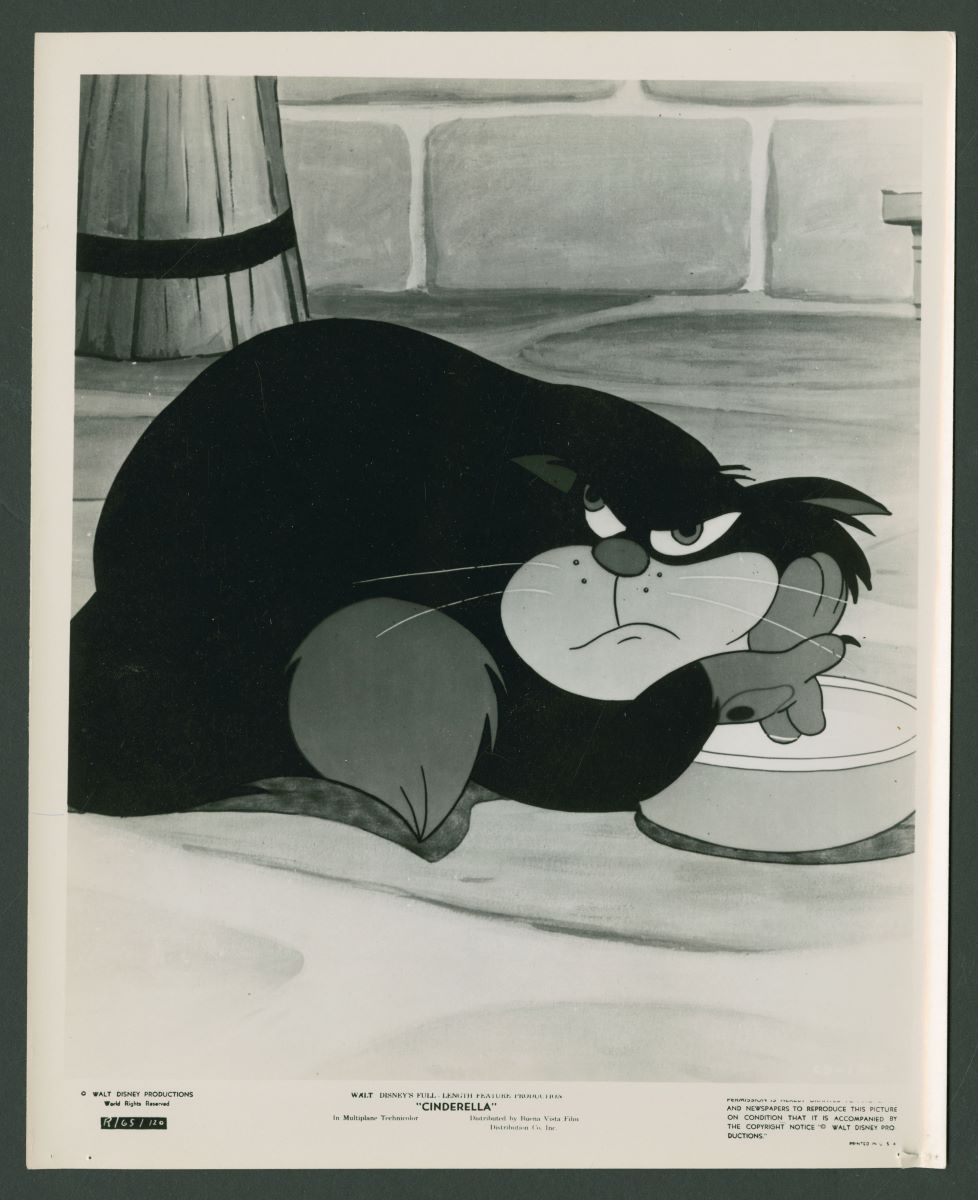
Foray’s career, however, is hardly known for scary characters, though she was, in a sense, no stranger to sinister voices. She played the voice of Lucifer the cat in “Cinderella,” Looney Tunes’ Witch Hazel (which she had originally used as Hazel the Witch in the 1952 Donald Duck cartoon “Trick or Treat”), Mrs. Cauldron in “The Garfield Show” (becoming in 2012 the oldest entertainer to ever be nominated for an Emmy), and the aforementioned Natasha Fatale. But even these were always somewhat playful in nature (except, perhaps, the cat).
Along with these memorable characters, she was the voice of Cindy Lou Who in the animated version of “How The Grinch Stole Christmas,” and Granny in Looney Tunes’ “The Sylvester and Tweety Show.” She also voiced characters in live action TV shows like Johnny Carson’s “Carson’s Cellar”; “Andy’s Gang,” where she met her future husband; “Baretta”; and “Green Acres.”
An Audible Legacy
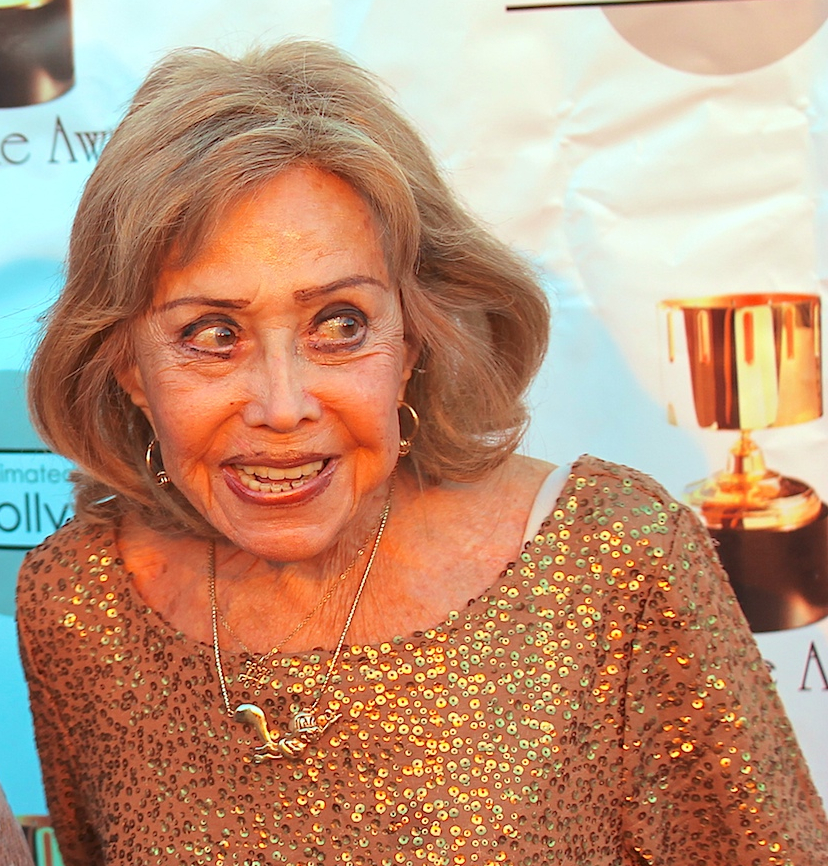
Her voice seemed everywhere, and she used her voice for more than just a successful career. She was a leading advocate for the animation industry, ultimately becoming a founder of ASIFA-Hollywood, an important chapter of the Association Internationale du Film d’Animation. She was also the founder of the aforementioned Annie Awards and, due to her efforts, the creation of the Oscar category for animated films.
In 1995, she was awarded the ASIFA-Hollywood’s Winsor McCay Award for Career Achievement, and, fittingly, in the same year, she received the inaugural June Foray Award from the organization. Along with those awards and her Emmy, she won two Annie Awards, a Television Academy’s Governors Award, and, in 2000, was honored with a star on Hollywood Boulevard’s Walk of Fame. Foray died July of 2017, just a few months before her 100th birthday.
What arts and culture topics would you like us to cover? Please email ideas or feedback to features@epochtimes.nyc