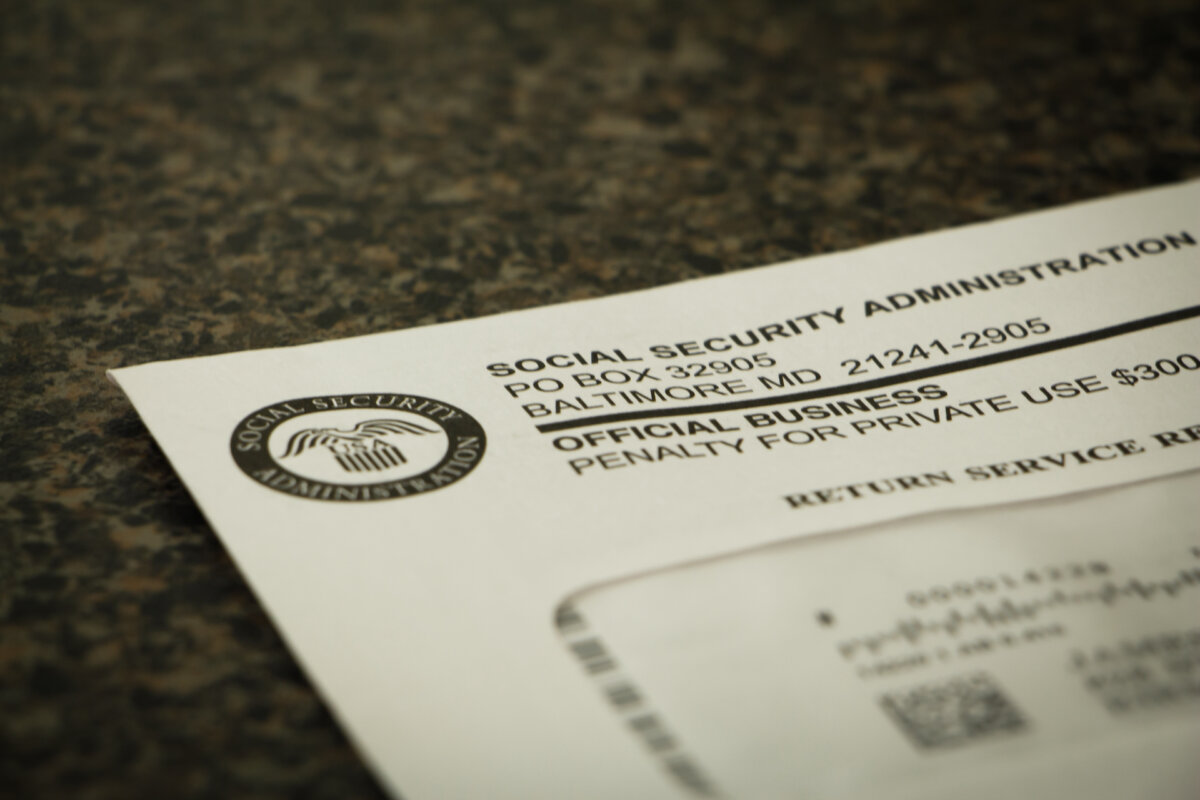
Q: I am a 78-year-old recent widow. I got my own Social Security number (SSN) when I was about 20. But since my husband and I started getting Social Security benefits about 15 years ago, the correspondence I have received from the Social Security Administration (SSA) has shown my husband’s SSN with a letter “B” after it. Somebody at a Social Security office once told me that this meant that I was getting wife’s benefits on my husband’s record. How does the letter “B” stand for a wife? And now that my husband has died, I notice that any mail I get from the SSA shows my husband’s number with a letter D. Does this mean “deceased”?
A: No, it doesn’t mean deceased. Believe it or not, it stands for “widow”! You may legitimately wonder why in the world a “D” means widow. Wouldn’t you think that it should be a “W”? I will use this column to explain the mysterious world of Social Security claim numbers. SSA jargon for these numbers is beneficiary identification codes (BIC).
First of all, what is a “claim number”? And how does it differ from an SSN? Almost everyone in this country has an SSN. It’s the number you give to your employer if you get a job, and it’s the number you would use to file an income tax return. It’s also the number that many government agencies and private companies use as a personal identification number for you. (The use of the SSN for personal identification is a topic for another column.)
But a claim number is the SSN on which you are claiming Social Security benefits. And it’s always followed by a little letter symbol to indicate the kind of benefit you have claimed. For many people, their claim number is simply their own SSN with a letter symbol—usually an “A”—after it. But some people claim Social Security benefits on another person’s Social Security record—almost always a spouse but sometimes a parent. So their claim number is the spouse’s or parent’s SSN, followed by the appropriate claims symbol.
The little claims symbols were not assigned in any sort of meaningful pattern. In other words, the letter “R” was not used to indicate “retirement” benefits and the letter “W” wasn’t used to indicate “wife’s” or “widow’s” benefits.
Instead, the letters were essentially assigned alphabetically, as benefits were added to Social Security law. Here is a list of the claims symbols used. It’s not a complete list.
A—This claims symbol indicates that you are getting your own retirement benefits.
B—You are getting benefits as an aged (older than 62) wife on your husband’s record.
B1—You are getting benefits as an aged (older than 62) husband on your wife’s record.
B2—You are getting benefits on your husband’s record as a young wife (younger than 62) caring for his minor child.
B6—You are getting benefits as a divorced wife on your ex-husband’s record.
C—You are getting benefits as a child on your parents’ record.
D— You are getting aged (older than 60) widow’s benefits on your deceased husband’s record.
D1—You are getting aged (older than 60) widower’s benefits on your deceased wife’s record.
D6—You are getting divorced widow’s benefits.
E—You are getting mother’s benefits—paid to a widow younger than 60 who is caring for the minor children of a father who has died.
E1—Same as above, except you are divorced from the father.
E4—You are getting father’s benefits—paid to a widower younger than 60 who is caring for the minor children of a mother who has died.
F—You are getting benefits as a dependent parent on a grown son’s or daughter’s Social Security account (very rare).
HA—You are getting disability benefits on your own account. (Although sometimes the SSA shortens this to just “A”.)
M—You don’t have enough work credits for regular Social Security and you qualify only for Part B Medicare benefits.
T—You are not insured for Social Security benefits, but you are eligible for Part A hospital coverage from Medicare. (See below for more information.)
W—You are getting disabled widow’s benefits on your deceased husband’s account.
W1—You are getting disabled widow’s benefits on your deceased wife’s account.
More about the “T” code. In the past, the “T” code was reserved for only those very few people who were not eligible for any kind of Social Security benefit but had paid taxes into the Medicare program. But when the full retirement age climbed beyond age 65, and people affected by that change started reaching that age, the SSA had to change its claims filing rules. Those rules say that you can file for Medicare at age 65 without having to file for Social Security benefits. And these folks had to be given a claim number.
It couldn’t be an “A” BIC code, which, again, means that you are getting retirement benefits. So, they used the “T” code, and the definition was changed to “entitled to Medicare but not yet entitled to Social Security.” That means that the once little-used “T” BIC is now very common. There are currently millions of “T” beneficiaries. If you are one of them, meaning that you took Medicare at age 65 but are waiting until full retirement age, or maybe age 70, to file for Social Security, whenever you do that, your claim number will change from your SSN with a “T” to your SSN with an “A” after it.
Again, this list is not complete. In fact, if you do a Google search for “Social Security BIC codes,” you will find a list of about 100 codes, most of them for extremely rare benefits. My list in this column shows only the more common beneficiary codes. But “common” is a relative term. Many of the benefits listed above are infrequently paid. For example, you could almost count on your hands the number of people getting “F” (parents’ benefits) or “W1” (disabled widower’s benefits).