



There’s a moment each year when winter begins to loosen its grip. The days stretch just a little longer, the weather feels a touch warmer, but the nights still carry a chill. It’s a season of overlap, a bridge between light and dark, warmth and cold. But the one place where the transition is most evident? Your farmers market. Piles of yellow and gold winter squash make way for leafy greens, tender young radishes, snap peas, and plenty of fresh herbs. It’s a reminder to leave behind the heavy foods of winter and make way for brighter, greener things.
Citrus
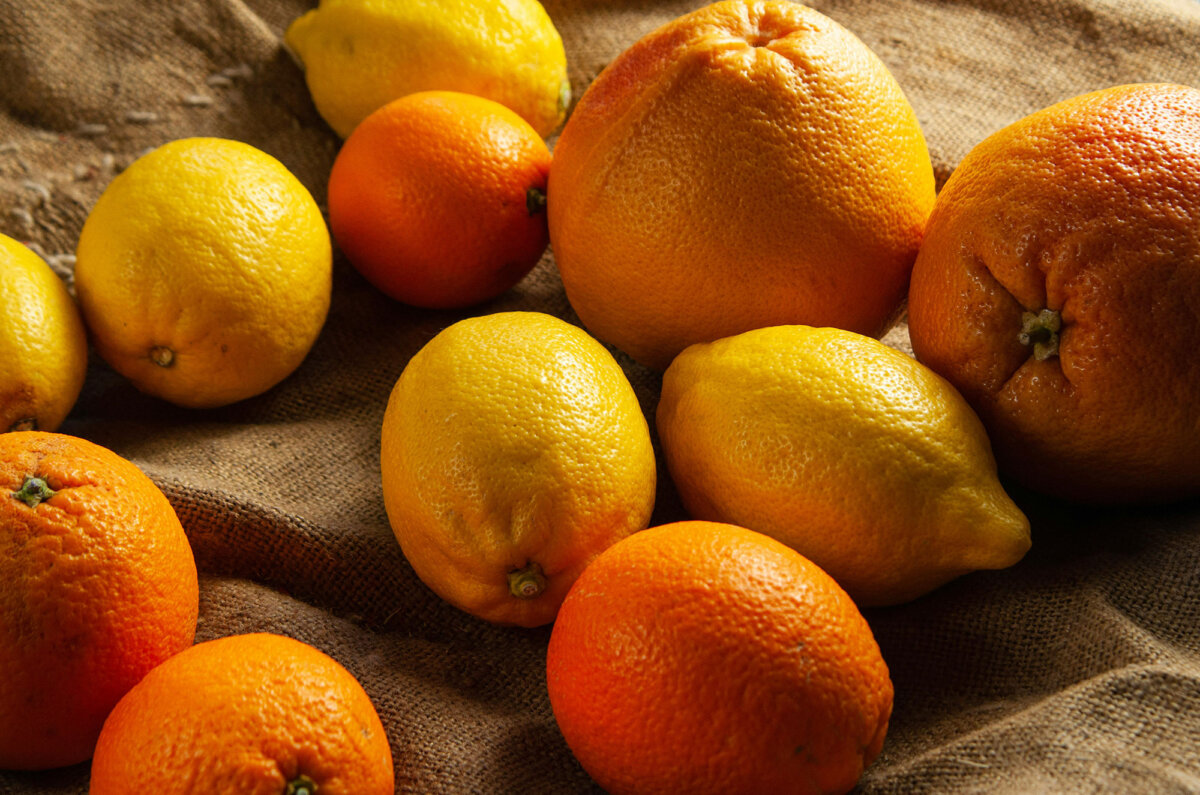
Citrus smooths the transition from winter to warmer months, bringing the brightness that defines spring cooking. Rich in vitamin C and bioflavonoids such as quercetin and hesperidin, citrus fruits help calm inflammation and are linked to improved cardiovascular health and metabolic function.
Lemons, limes, and late-season oranges are plentiful in spring. Look for fruit that feels heavy for its size, indicating that it’s fully ripe and juicy. Use finely grated citrus zest to boost flavor in dry rubs, baked goods, and roasted vegetables, meat, or fish. Use the juice as a replacement for vinegar in vinaigrettes, or to bring a spark of acidity to soups, salads, and grain bowls.
Hardy Greens
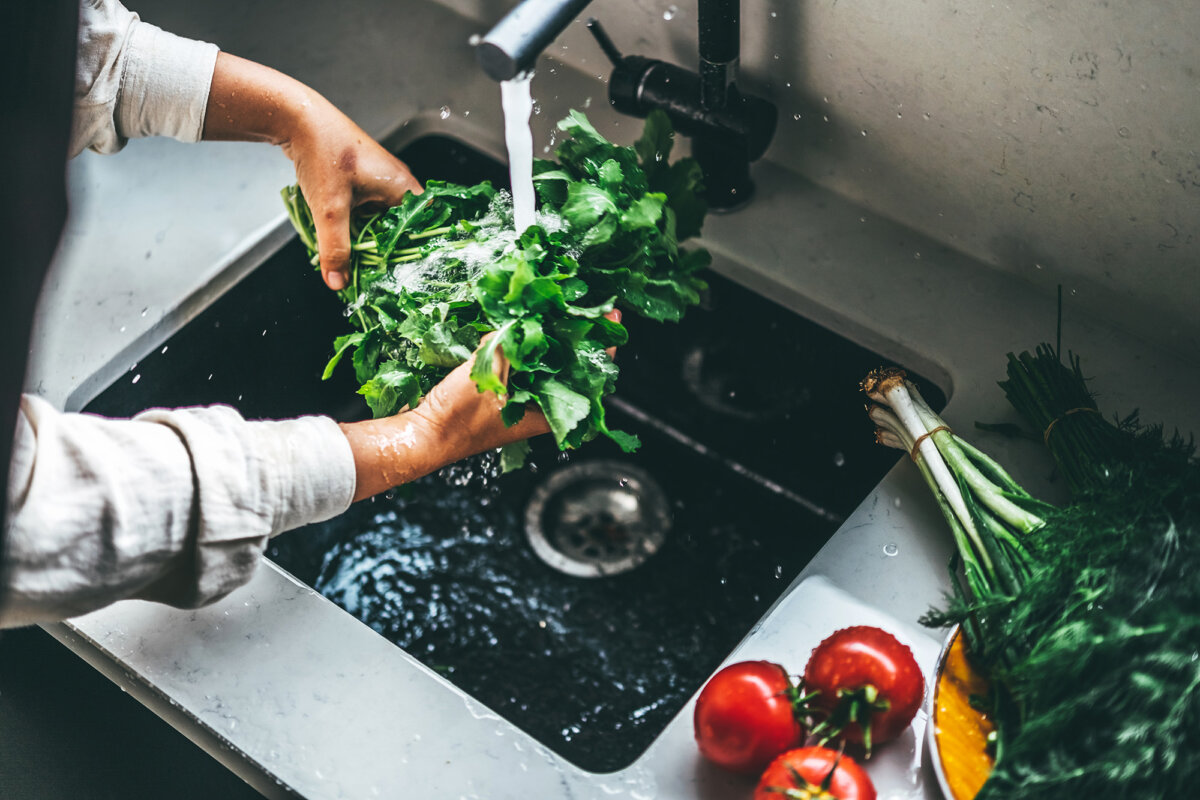
You’ll find plenty of kale, chard, and mustard greens at farmers markets in early spring. They’re rich in fiber, vitamins, and minerals. Higher intakes of leafy greens are associated with lower overall risk of heart disease, Type 2 diabetes, and certain cancers.
Look for greens with strong, crisp leaves and plump stems. Avoid those with mushy spots or brown or yellowing leaves. When preparing the greens, slice away any tough stems and chop them finely. They take longer to cook than the leaves, but you can sauté them with onions and garlic. Try steaming or braising the leaves. Finish with a little vinegar or lemon juice for brightness.
Scallions and Spring Onions
Unlike storage onions found in big bags at the grocery store, spring onions are distinctly fresh. Like scallions, they have plush green tops, but their bulbs are glossy and thick—although not as big as those of regular onions. Both scallions and spring onions are in season from mid-April through late May. They contain special sulfur compounds that not only give them flavor, but also help reduce stress and inflammation. Eating onions regularly may improve cardiovascular health and help lower cholesterol.
Scallions and spring onions are delicious sliced and eaten fresh in salads. You can also sauté them in olive oil and combine them with other spring vegetables, especially leafy greens.
Radishes
Radishes are quick-growing, needing only about a month from seed to harvest, so they’re among the first spring vegetables you’ll see at the market. They’re related to other members of the brassica family, including broccoli, kale, and mustard greens, and they offer many of the same health benefits.
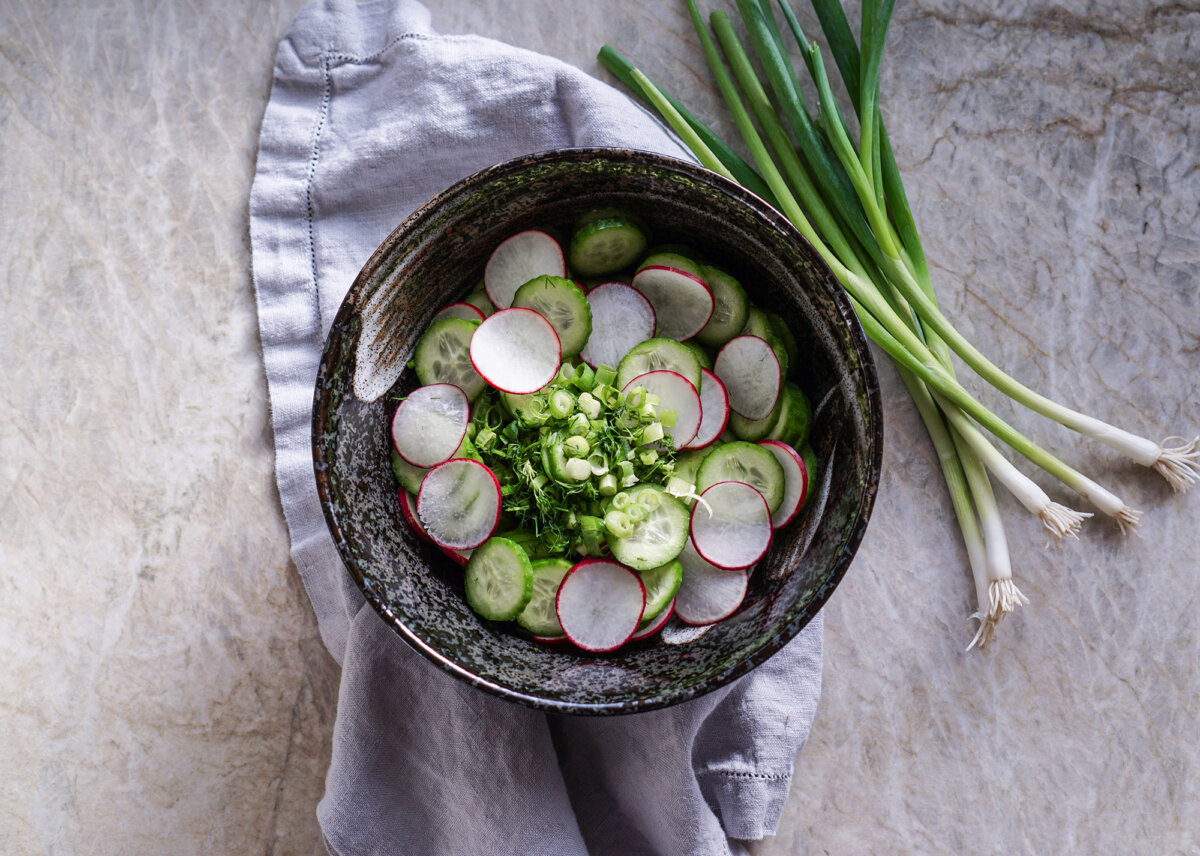
Buy radishes by the bunch with their greens still attached. The greens should look fresh and lively, with no mushy or yellowing spots, and the radishes should feel firm and plump. You can slice radishes and add them to salads, but they’re also excellent roasted in olive oil with salt and pepper. The greens are also edible, and they’re particularly nice sautéed like kale, dropped into soups, or blended into pesto.
Asparagus
Asparagus is at its peak in the spring. It’s one of the richest natural sources of folate, a vitamin linked to better pregnancy outcomes, as well as heart health. It also contains plenty of prebiotics—special types of fiber that support a healthy microbiome.
When shopping, look for firm stalks with tightly closed tips. Avoid any asparagus with shriveled stalks or mushy tops. Although green asparagus is most common, you might also find white and purple varieties at farmers markets or specialty shops. Asparagus is versatile.
Steam it and serve it with a vinaigrette or hollandaise sauce, roast it with olive oil and garlic, or slice it very thinly for salads.
Peas
Sweet and green, peas capture the essence of spring. You can find varieties ranging from English peas, which need shelling, to the tender snow peas and snap peas that you can eat whole. They’re a rich source of vitamin C, vitamin K, folate, magnesium, and potassium, as well as key antioxidants.
Choose bright green pods that feel plump and firm. English peas have thick, fibrous pods and you will need to shell them before cooking. Snap peas, snow peas, and other varieties with edible pods can be eaten fresh in salads, added to a relish tray, or stir-fried with garlic, onion, and ginger.
Lettuces
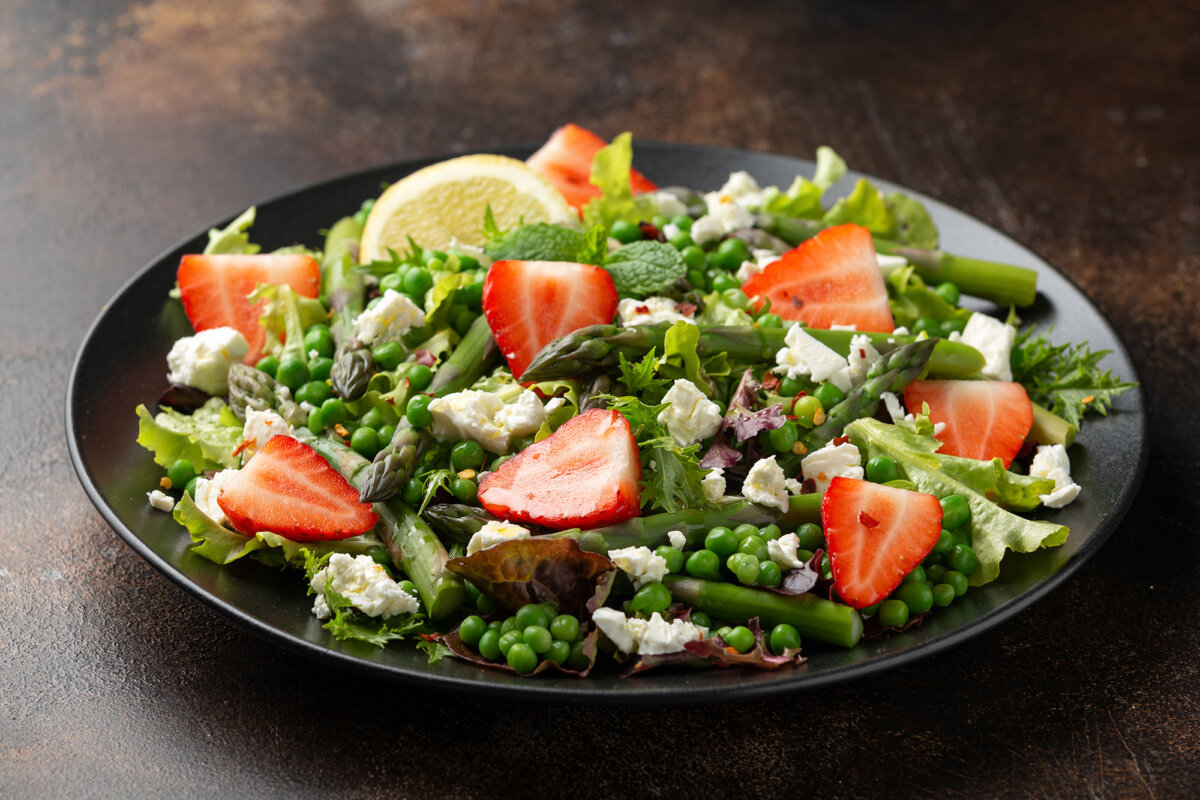
Butter lettuce and other tender-leaf varieties come into season just as the weather begins to warm, before summer’s heat sets in and causes them to bolt. Lettuces are hydrating and contain fiber, beta carotene, and folate.
Look for heads of lettuce with perky leaves and no brown streaking along the veins, which can be a sign that it wasn’t harvested recently. Lettuce is naturally well-suited to salads, and beautiful drizzled with a creamy buttermilk-herb dressing or a sharp vinaigrette.
Strawberries
Strawberries arrive late in spring, plump, sun-ripened, and deliciously sweet. They’re packed with vitamin C, fiber, and key antioxidants that help fight inflammation and oxidative stress. Some research suggests that eating plenty of strawberries can improve lipid profiles and reduce the risk of heart disease. Moreover, berry consumption is linked to better cognitive health, especially as we age.
Choose deeply colored, plump berries with perky, deep-green leaves. Although eating strawberries fresh out of hand is perhaps the most popular way to enjoy them, they’re also delicious cooked—slow-roasted with olive oil and honey or stewed into a compote seasoned with vanilla.
Risotto Primavera
Serves about 6
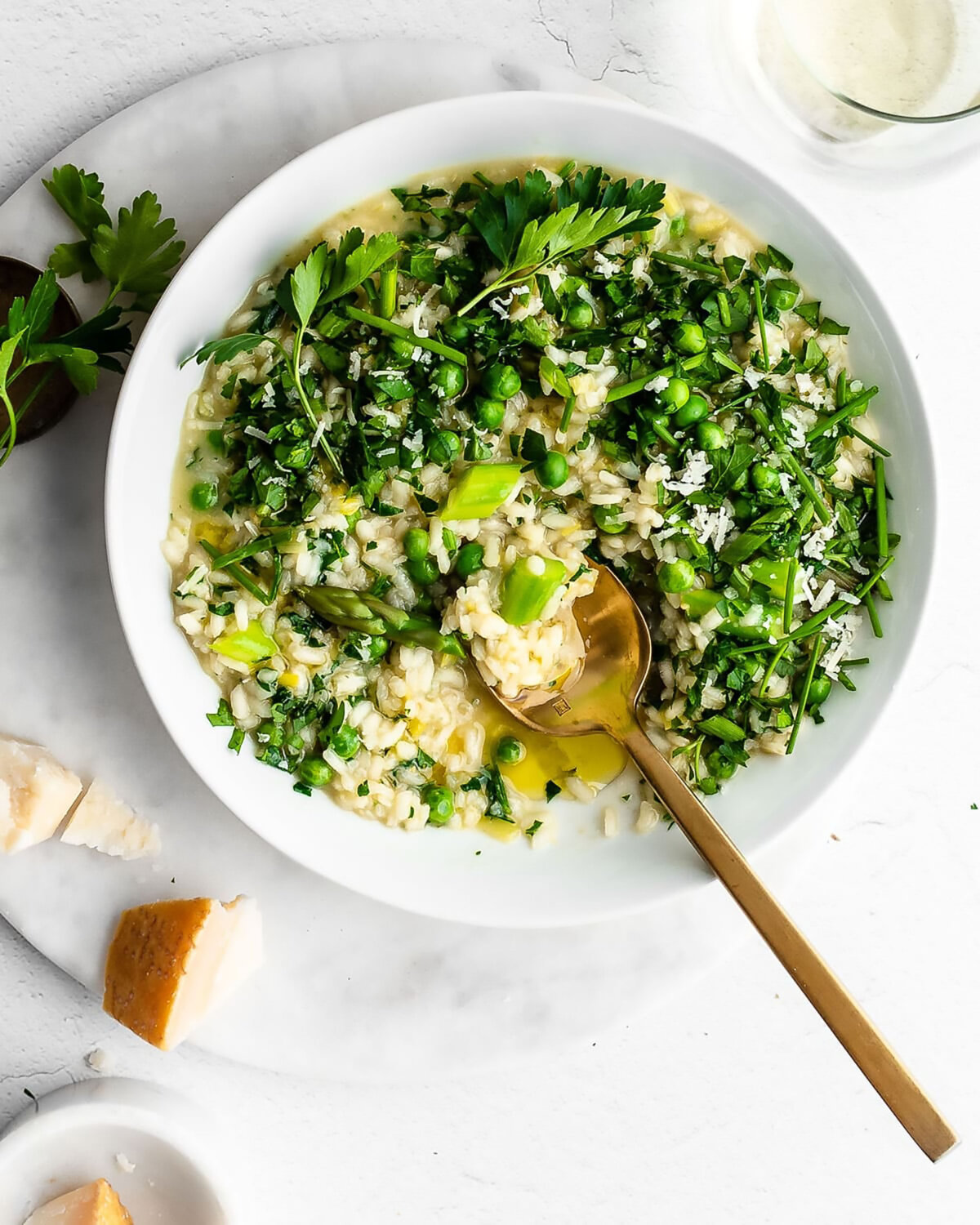
When you visit the farmers market during spring, you’ll find loads of leeks, green onions, asparagus, and green peas. They’re perfect for making this spring-inspired risotto primavera. Finish the dish with a good sprinkling of freshly grated Parmesan cheese and plenty of chopped fresh herbs.
1 bunch asparagus (trimmed and chopped into 1/2-inch pieces)
3 tablespoons extra-virgin olive oil
1 medium leek (white and light-green parts only), sliced thin
6 green onions sliced thin (white and green parts separated)
1 teaspoon fine sea salt
1 cup carnaroli or arborio rice
1 cup dry white wine
4 cups chicken broth
1 cup frozen green peas or freshly shelled peas
1/2 cup chopped flat-leaf parsley
1/2 cup chopped fresh chives
1 teaspoon lemon zest
Parmesan cheese
Bring a small saucepan of water to a boil, and drop in the asparagus. Allow the asparagus to boil until tender and bright green, about 4 minutes. Drain and transfer to a bowl of ice water.
Warm the olive oil in a braising dish or wide skillet over medium heat. Stir in the leeks and green onions. Sprinkle them with salt and cook until tender, about 6 minutes.
When the leeks are tender, add the rice and stir until thoroughly coated with the oil and the tips of each grain turn translucent. Increase the heat to medium-high, and pour the wine and stir until absorbed.
Add the broth, about a 1/2 cup at a time, stirring until the rice fully absorbs the liquid before adding more. Continue adding the broth in batches and stirring until the rice is tender and creamy, about 30 minutes.
Turn off the heat and stir in the peas, asparagus, fresh herbs, lemon zest, and Parmesan cheese. Serve immediately and store any leftovers in a tightly sealed container in the fridge for up to 3 days.
Springtime Salad
Serves about 6
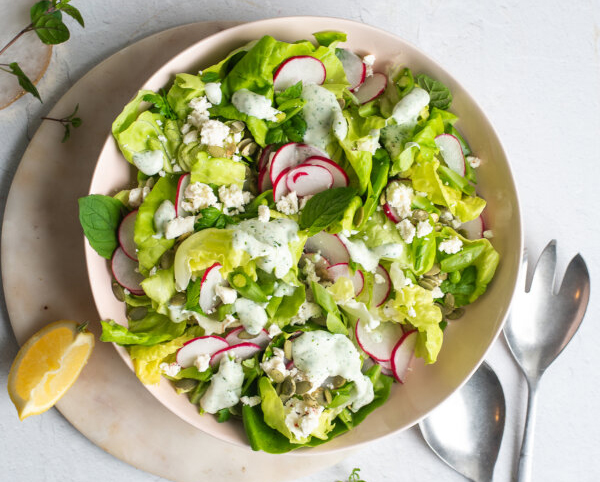
Delicate butter lettuce pairs beautifully with creamy dressings such as this one made with crème fraîche, herbs, and lemon. Other hallmarks of spring—fresh herbs, green peas, and radishes—add color, while creamy feta provides salty notes and a bit of crunch.
For the dressing:
3 tablespoons crème fraîche
3 tablespoons extra-virgin olive oil
2 teaspoons honey
1 tablespoon minced fresh chives
2 teaspoons minced fresh mint
2 teaspoons minced fresh chervil
1 lemon
1/2 teaspoon fine sea salt
1/4 teaspoon ground white pepper
For the salad:
1 head buttercrunch lettuce, torn into bite-size pieces
3 green onions (white and light-green parts only), sliced thin
4 radishes, sliced thin
1 cup snap peas, sliced thin
1/4 cup flat-leaf parsley
1/4 cup loosely packed mint leaves
1/4 cup crumbled feta
1/4 cup pepitas
Spoon the crème fraîche into a mixing bowl. Whisk in the olive oil, honey, chives, mint, and chervil. Grate the lemon peel very finely into the bowl.
Cut the lemon crosswise, and squeeze its juice into a small bowl or pitcher. Strain to remove the pulp and seeds, and pour the juice into a mixing bowl. Whisk the lemon juice, salt, and white pepper into the dressing. Set aside.
Toss the lettuce, green onions, radishes, snap peas, parsley, mint, feta, and pepitas together. Dress at the table.
Stewed Strawberries With Lemon Ricotta
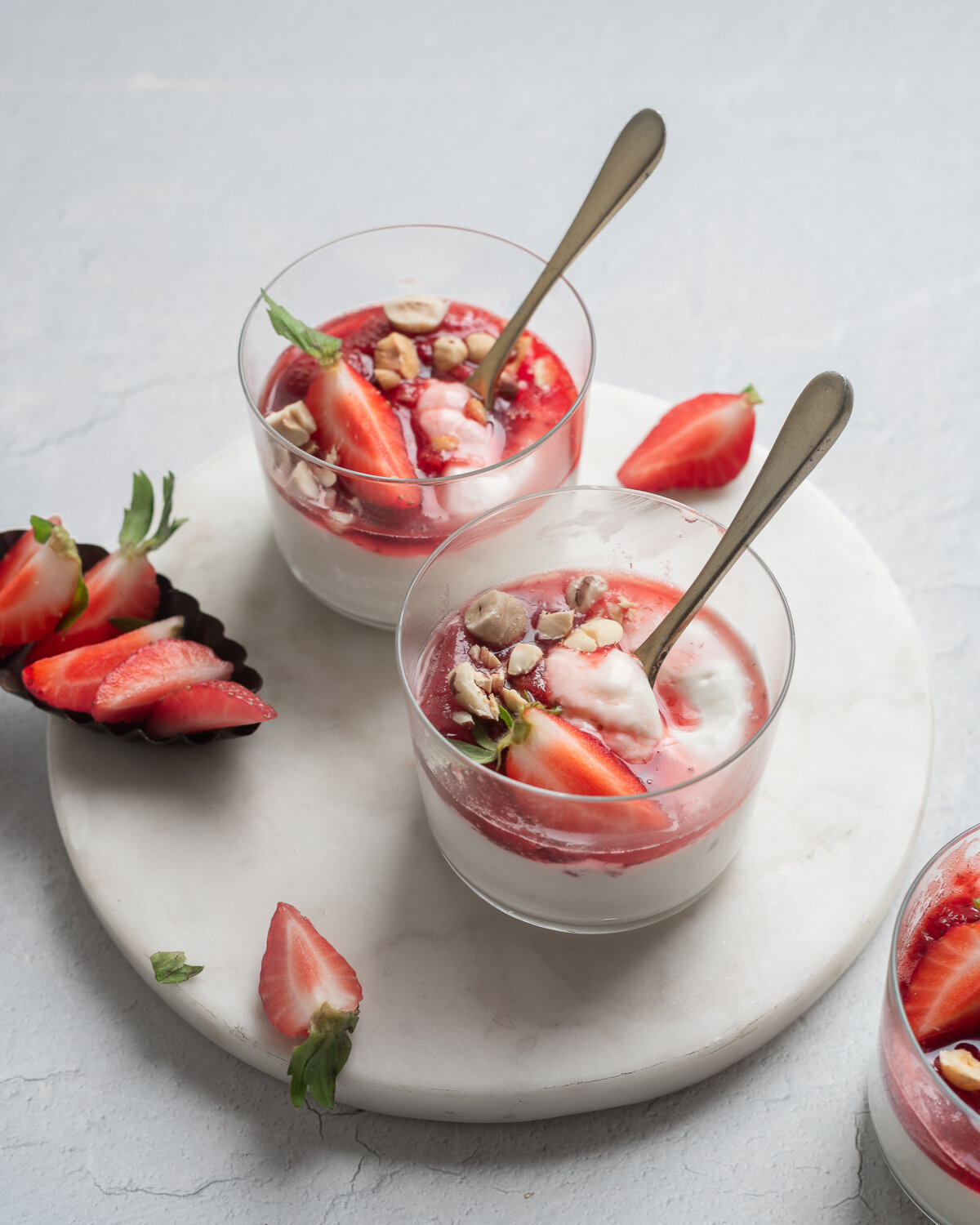
Although strawberries are delicious fresh, cooking them amplifies their sweetness and flavor. Here, you’ll combine them with honey and vanilla until they soften into a beautiful sauce, and pour them over a lemon- and honey-infused ricotta for a simple dessert. You can make each component up to two days ahead, and assemble right before serving.
Serves about 6
For the strawberries:
1 pound fresh strawberries, hulled and quartered lengthwise
3 tablespoons honey
2 teaspoons lemon juice
1 teaspoon vanilla extract
For the ricotta:
2 cups full-fat ricotta
2 tablespoons extra-virgin olive oil
2 tablespoons honey
1 tablespoon finely grated lemon zest
To serve:
1/2 cup coarsely chopped toasted almonds
Combine the strawberries, 3 tablespoons honey, lemon juice, and vanilla extract in a medium saucepan. Cook gently over medium heat until the berries soften and release their juices, about 10 minutes. Turn off the heat and let cool to room temperature.
Place the ricotta, olive oil, honey, and lemon zest in a food processor and process until completely smooth. Spoon into 6 serving dishes, top with stewed strawberries and toasted almonds, and serve immediately.
Recipes originally appeared on NourishedKitchen.com
