
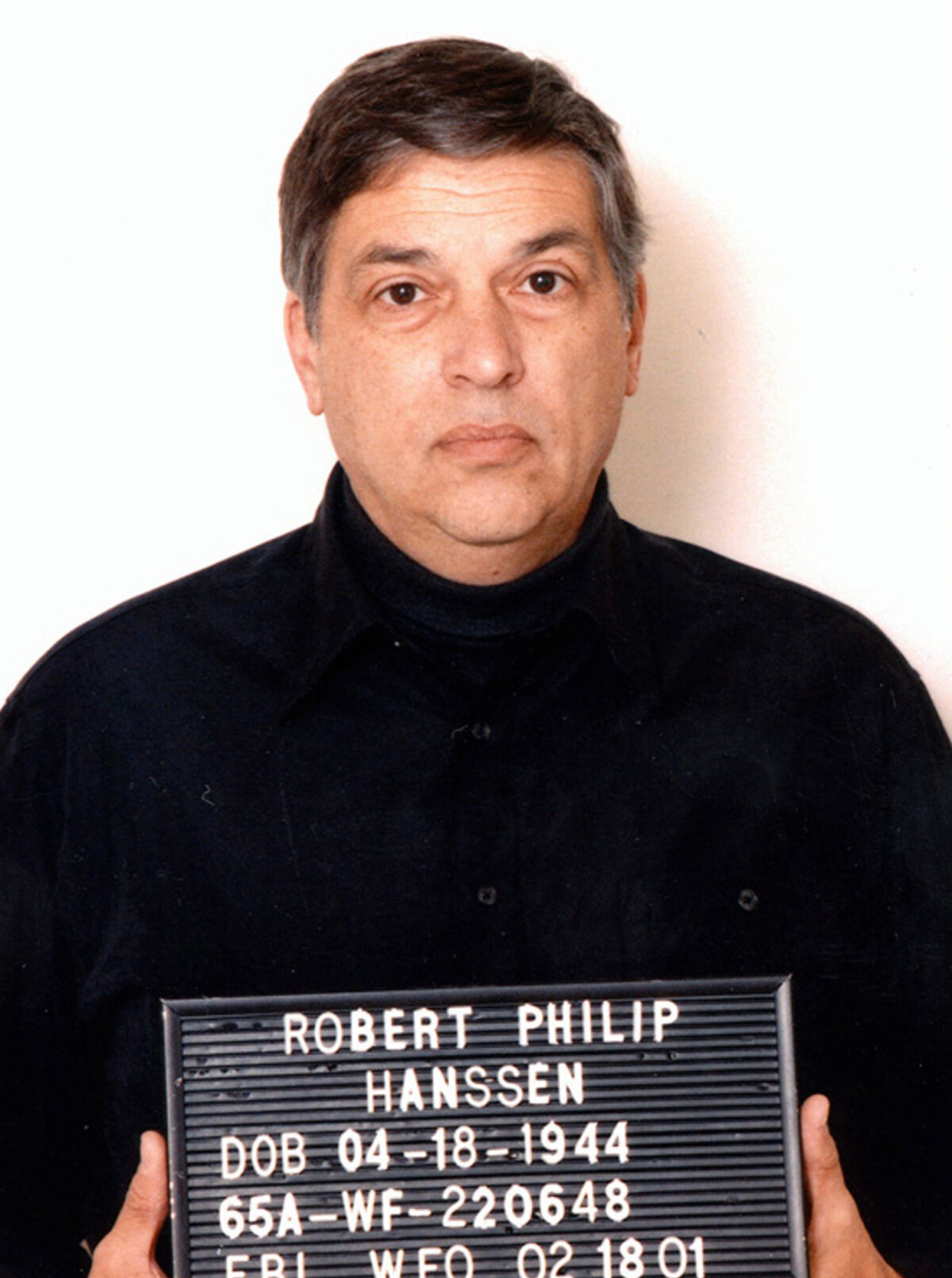
Between 1979 and his arrest in 2001, Robert Hanssen abused his position as an FBI agent by working as a spy for the Soviet Union and the post-Cold War Russian government. Hanssen secretly sold roughly 6,000 classified documents to Moscow’s intelligence operatives.
The documents detailed U.S. military secrets and exposed KGB agents who were spying on behalf of Washington. It was no small exaggeration for the U.S. Department of Justice to describe Hanssen’s shenanigans as “possibly the worst intelligence disaster in U.S. history.”
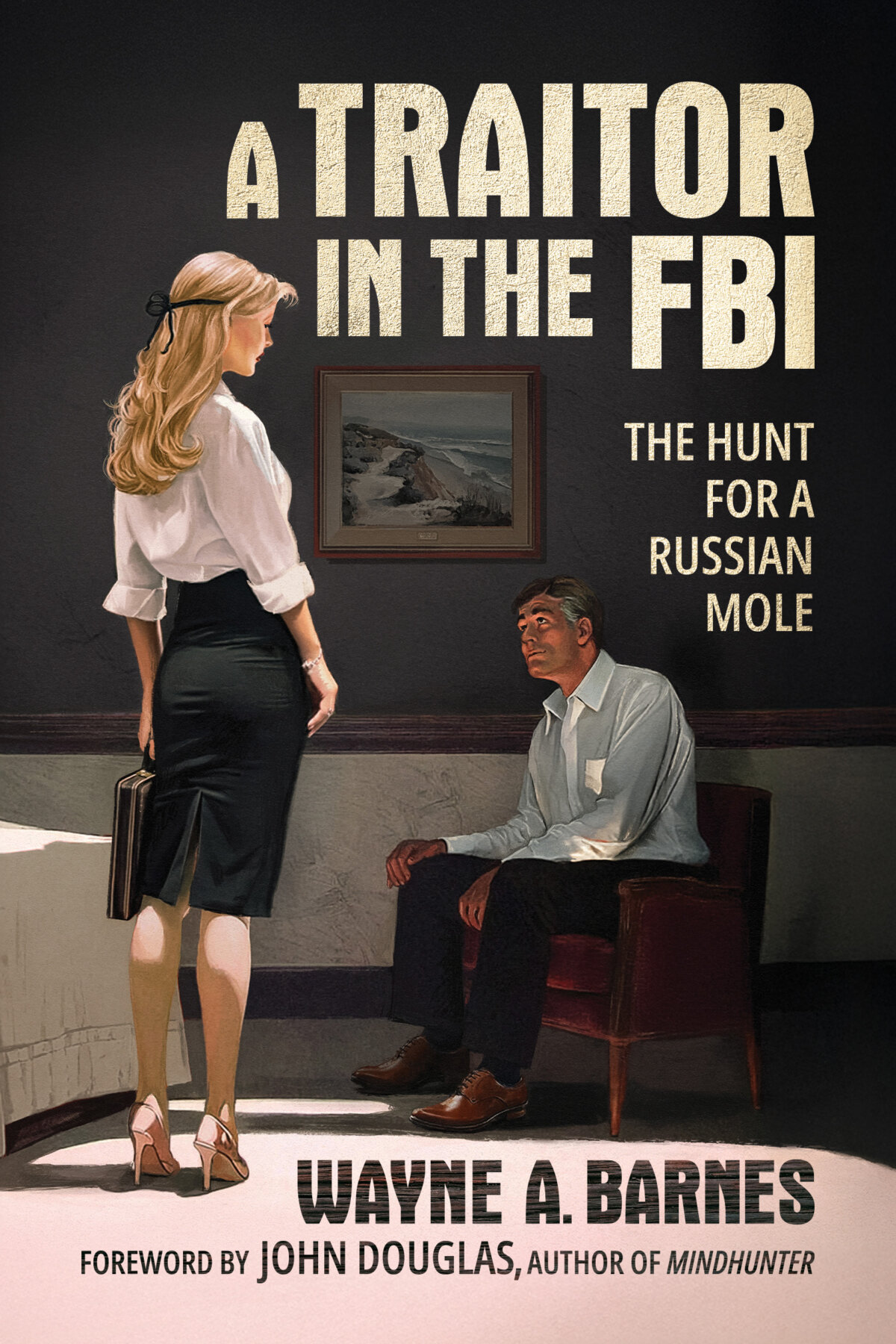
Hanssen’s treachery has inspired a half-dozen books, two feature films, several documentary offerings, and multiple articles. One could assume this story has been so thoroughly covered that there is nothing more to be added. However, a significant backstory to the investigation of Hanssen is only now being declassified in Wayne A. Barnes’s “A Traitor in the FBI: The Hunt for a Russian Mole.”
A Remarkable Agent
Barnes, a former FBI counterintelligence special agent, has brought forth an astonishing autobiography that details his hitherto untold work in a secret operation that helped unmask Hanssen. Indeed, his story is so wild in concept and execution that it often feels like a light-comic novel instead of a genuine history.
During the 1970s and 1980s, Barnes was among the top FBI agents who successfully recruited Eastern European intelligence targets to defect. He was the undercover coordinator in the FBI’s Washington field office. He later relocated to the agency’s San Diego office in 1989 to accommodate his daughter’s medical treatments for spina bifida. While on the West Coast, much of his work involved investigations into health care fraud.
In 1998, Barnes was assigned to ferret out a suspected mole within the FBI. This involved recruiting a former Soviet intelligence operative who was believed to be aware of the mole’s identity.
Lights, Camera, Action
The Russian identified in Barnes’s book as Ivan Fyodorovich Kurylenko was going to be at the American Film Market, a motion picture industry sales and marketing event held in Santa Monica, California. Kurylenko was seeking American backers for a proposed Armenian film about the 1915 genocide committed by the Ottoman Turks.
Barnes went undercover to the American Film Market in the guise of a representative for wealthy Texans looking to invest in films. He gained Kurylenko’s trust by recruiting Polly Platt, an Oscar-nominated production designer. Platt’s brother worked for the CIA, hence her willingness to volunteer for what she viewed as a patriotic task.
Platt’s status within the film world and her insight into how Hollywood operated won Kurylenko’s confidence. Being close to Kurylenko enabled Barnes to conduct an in-depth psychological profile of his target, thus hatching a plan that would make an informant out of the Russian.
Stranger Than Fiction
How Barnes ultimately secured Kurylenko’s trust to the point that he voluntarily identified the mole in the FBI is nothing short of jaw-dropping. Giving away too much of this feat would be a spoiler of epic proportions. The best description is the ultimate literary cliché: You have to read it to believe it.
Mercifully, Barnes is blessed with a storytelling skill that transcends standard-issue nonfiction. His tale pulsates with the staccato rhythm and all-encompassing eye for detail that recalls the halcyon days of pulp detective fiction. Consider his expert mix of great depth with sparse language in this description of the aftermath of a restaurant dinner with his Russian target:
“The check arrived. I let it sit on the table until I was sure Ivan saw it out of the corner of his eye. It was around $300, a tidy sum in 1998. He went quite pale.”
The Human Experience
It’s also to Barnes’s credit that he can carefully lace enough personal information regarding his inner-city Philadelphia upbringing and his family life into this work. His flashbacks and family detours provide both a playful and a deeply sincere aspect to his personality.
There is an especially touching segment when he describes his attendance at his son’s track meet; this was in the middle of both the Kurylenko pursuit and another case involving health care fraud. Despite the demands and gravity of his work, Barnes acknowledges that the family-oriented events were what he was “supposed to be doing.”
After Hanssen’s capture, Platt received a “letter of appreciation” from the FBI director for her cooperation in the case. Barnes, however, received no special commendation. Records of his work mysteriously vanished.
It took the author seven years of struggle with the FBI Prepublication Review Office before he was granted permission to make his story public. The reason for the delay was never properly explained.
If the FBI didn’t appreciate Barnes’s accomplishments, readers in search of a great book will certainly praise him. “A Traitor in the FBI” offers rare insight regarding the intelligence sphere, framed by a riveting and brilliantly entertaining presentation.
‘A Traitor in the FBI: The Hunt for a Russian Mole’
By Wayne A. Barnes
Republic Book Publishers: April 7, 2026
Paperback, 304 pages
What arts and culture topics would you like us to cover? Please email ideas or feedback to features@epochtimes.nyc