Two Philadelphia art museums will celebrate America’s 250th anniversary with a stupendous joint exhibition. Unprecedented in scope and scale, “A Nation of Artists” spans three centuries of American art through more than 1,000 paintings, photographs, sculptures, decorative arts, and other items, at the Philadelphia Museum of Art (PMA) and the Pennsylvania Academy of the Fine Arts (PAFA).
Founded in 1805, the PAFA was America’s first art museum and fine arts school. The academy’s founders signed its charter in Independence Hall, where almost three decades earlier, America’s Founding Fathers had read the Declaration of Independence and signed the Constitution.
“It was a very self-conscious act of having the founding document signed in the same building where the Declaration was first read,” former PAFA president David Brigham said. “I think it makes a statement that this is about building a civilization and not just a nation.”
Holding “A Nation of Artists” in Philadelphia makes a similar statement, one that also aligns with the heart of that PAFA charter signed over 220 years ago. It stated: “Promote the cultivation of the Fine Arts, in the United States of America, by … exciting the efforts of artists, gradually to unfold, enlighten, and invigorate the talents of our Countrymen.”
One Exhibition, Two Venues
“A Nation of Artists” unites three American art collections as the two museums partner with The Middleton Family Collection. The private collection loaned the exhibition more than 120 artworks, which will be publicly displayed for the first time, including Andrew Wyeth’s “Crown of Flowers” and Charles Willson Peale’s “George Washington at Princeton.”
John S. Middleton, a businessman, philanthropist, and principal owner of the Philadelphia Phillies, felt honored to loan his family’s collection. “Like baseball, art has the power to bring people together and surprise us when we least expect it. With every viewing, there’s something new to discover.”
Each painting in “A Nation of Artists” reveals a unique facet of American civilization, as if we experienced it firsthand. We pause with Cecilia Beaux in silence while a mother cradles her sleepy toddler. We wander with Thomas Moran through the misty mountains of Yellowstone, gaze with Frederic Edwin Church across a lush and luminous mountain valley in New Granada, and rescue trapped whalers with William Bradford in the freezing Arctic ice.
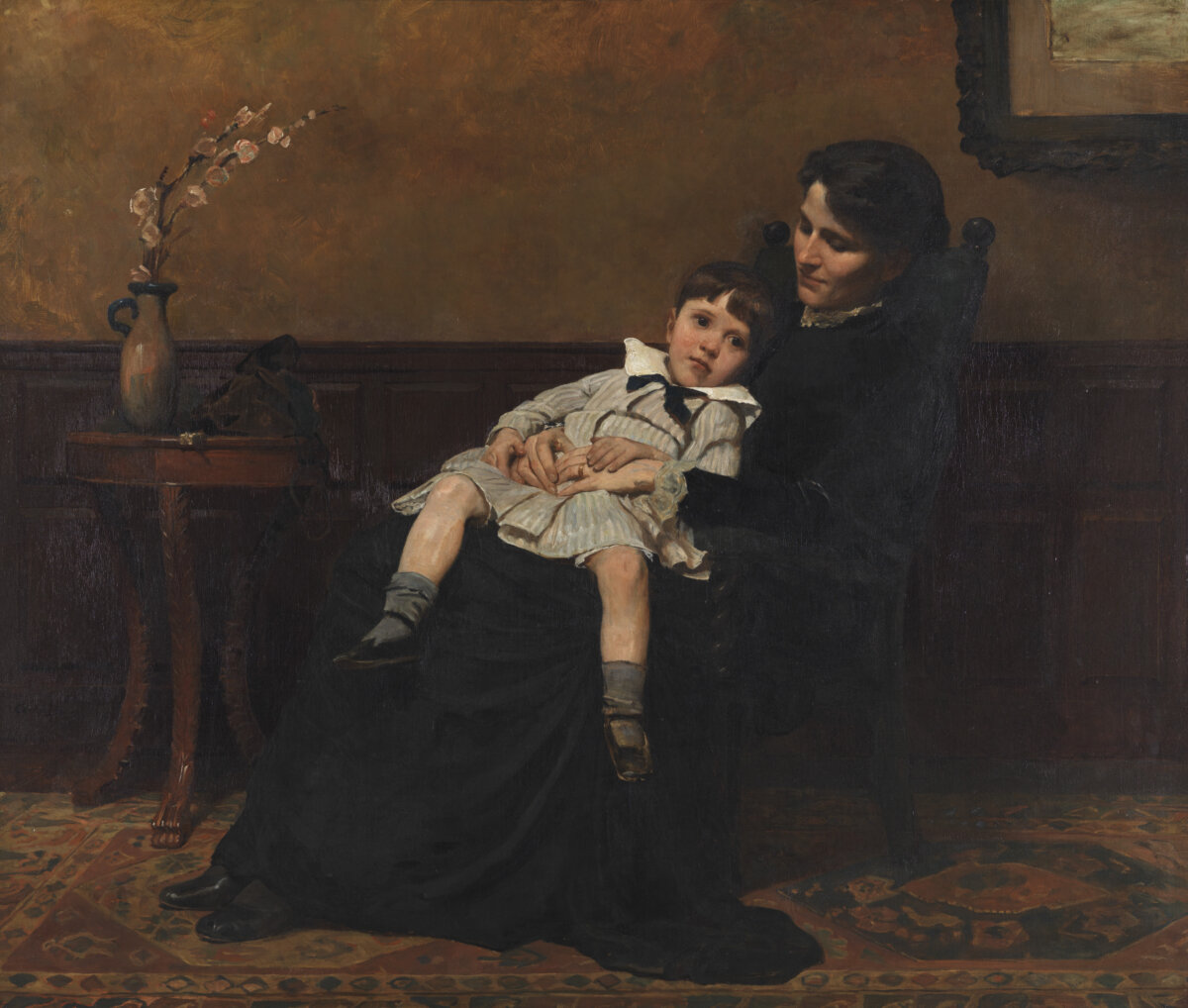
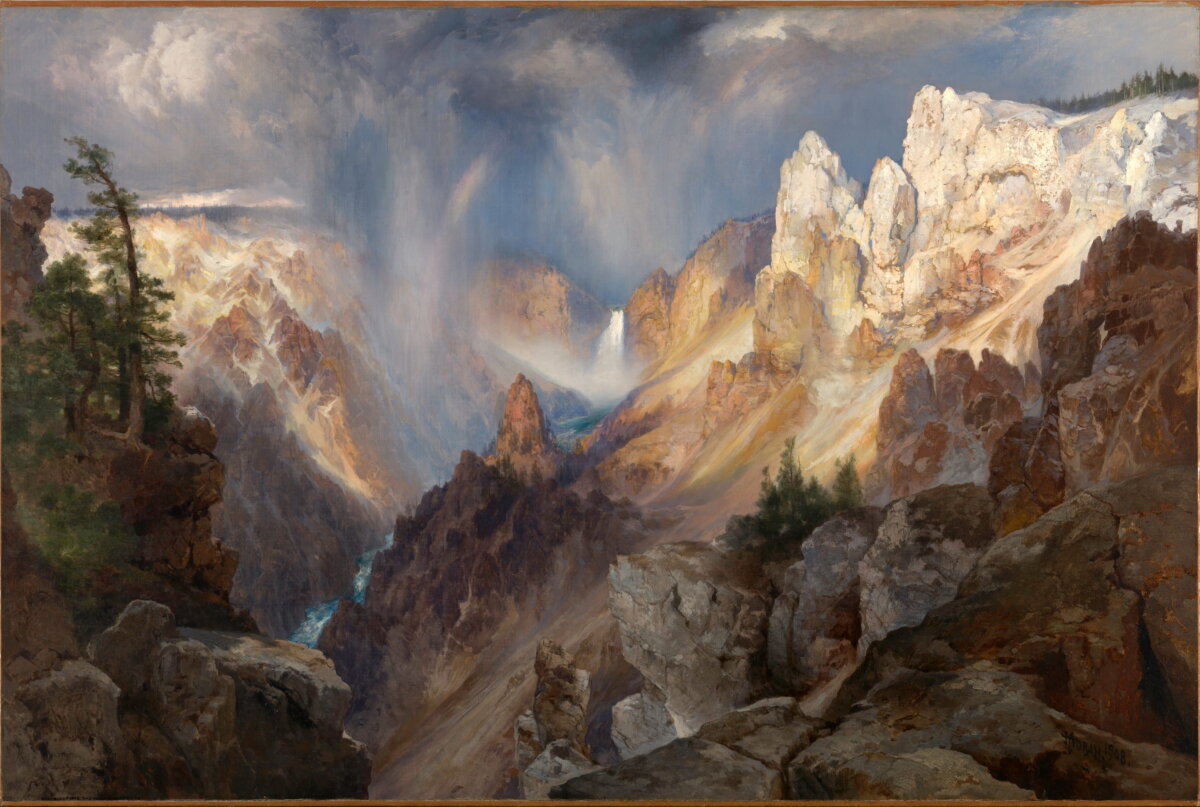
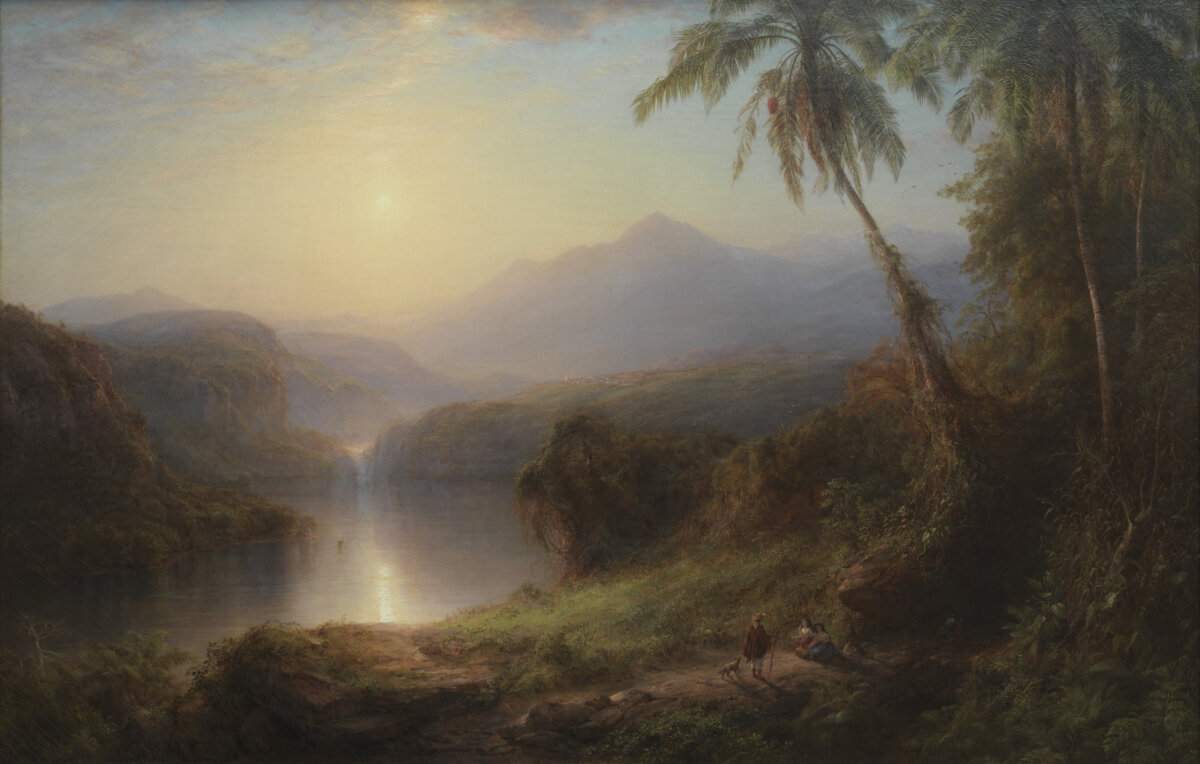
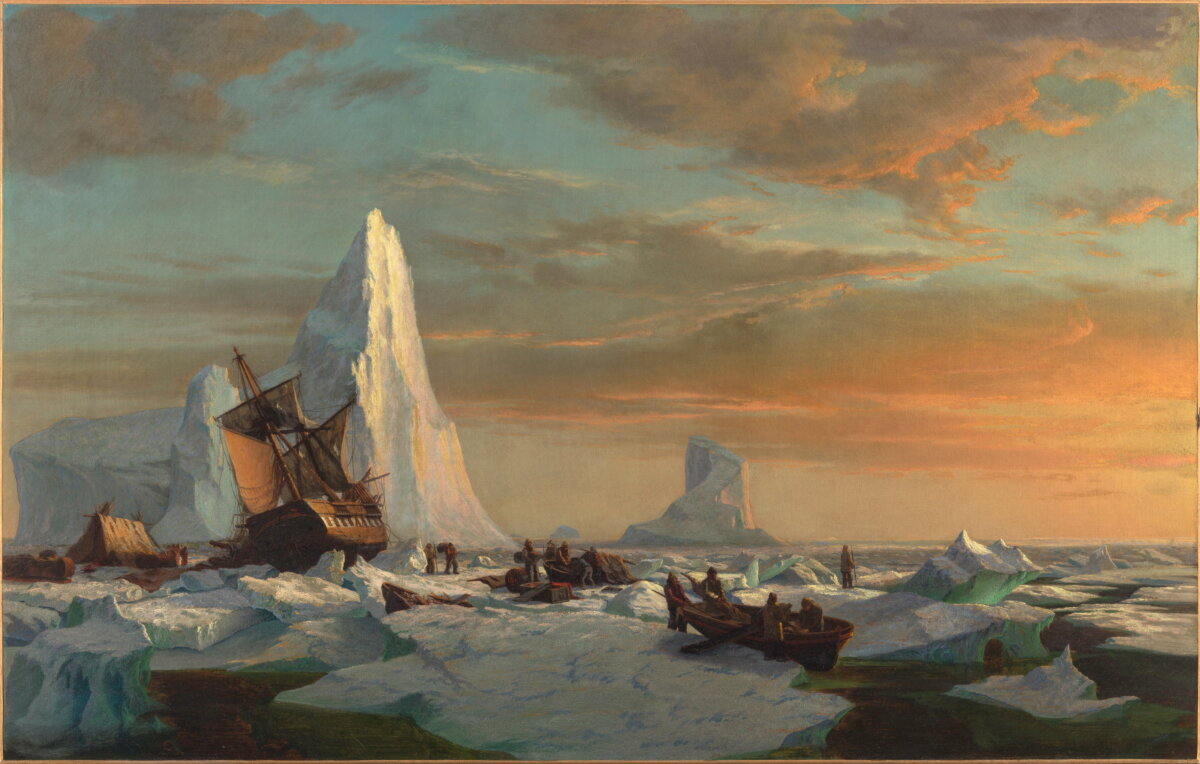
We also marvel at American accomplishments: with Thomas Eakins in the operating theater, with Charles Willson Peale in the country’s first museum, and with Gilbert Stuart as George Washington addresses Congress in his final year as president. And we contemplate our mortality with Benjamin West as he rides us into the apocalypse on a pale horse.
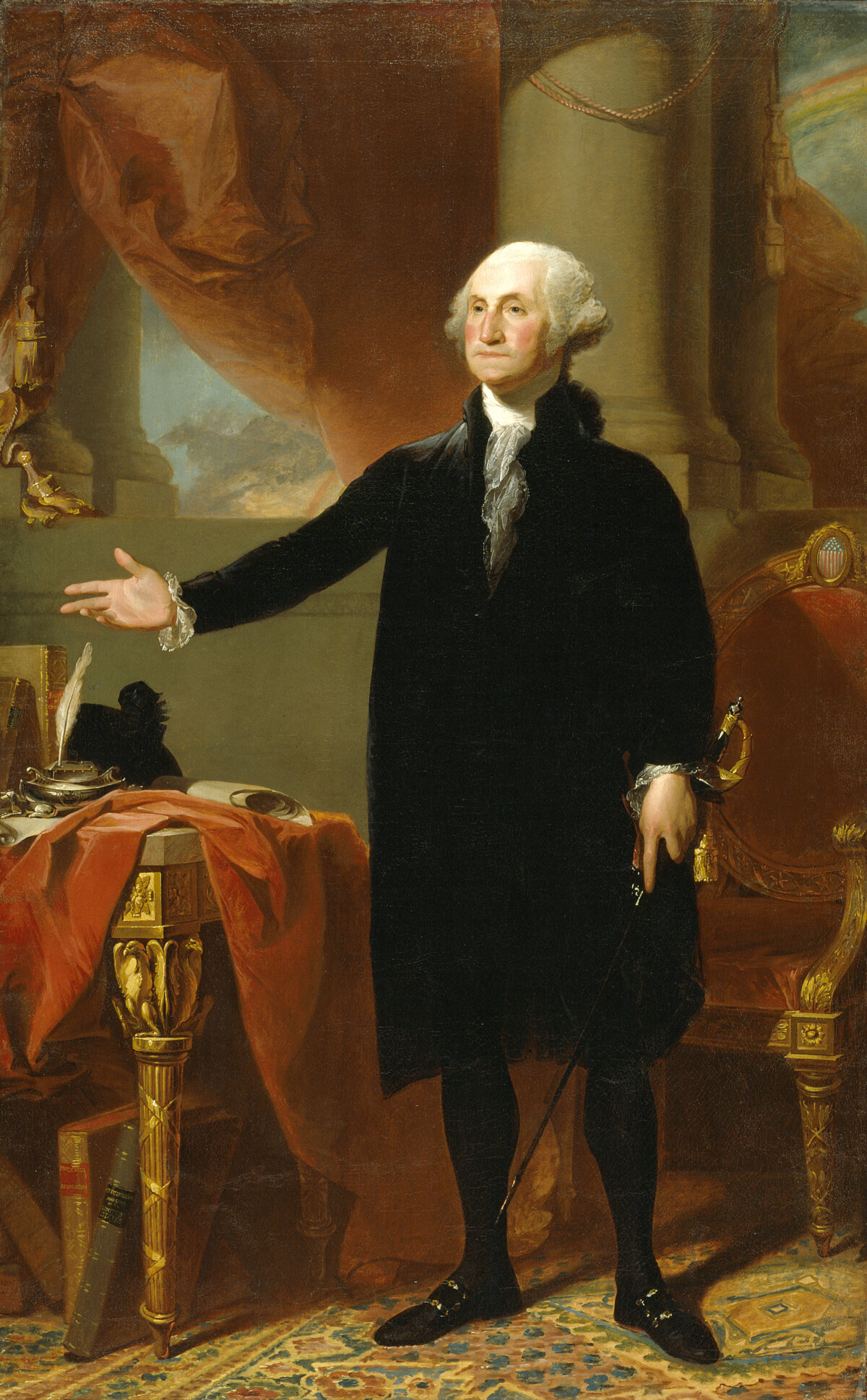
In this 250th anniversary year, it seems fitting to focus on three artists in the exhibition: Benjamin West (1738–1820), Charles Willson Peale (1741–1827), and Thomas Eakins (1844–1916), who led early American artists and left luminous legacies.
America’s Beloved Expatriate Artist
Pennsylvania native Benjamin West was the first American artist to gain international fame—even becoming King George III’s history painter.
At just 22, West traveled east to Europe. He was the first American artist to study in Italy, copying works by old masters like Titian and Raphael. He settled in London as an influential portrait and history painter. He was a founding member of London’s Royal Academy of Arts and became its second president.
For his most celebrated history painting, “The Death of General Wolfe,” West broke the neoclassical convention by rendering figures in contemporary dress rather than ancient classical attire. “I want to mark the time, the place, and the people, and to do this, I must abide by the truth,” he said, according to art historian Michael J. Lewis in “American Art and Architecture.” That set a new precedent for history painting.
Despite making London home, America remained in West’s heart. “The Oxford Companion to Art” called West “the prototype American expatriate artist.” He deeply influenced the nation’s artists, training three generations of Americans in London, including Charles Willson Peale, Rembrandt Peale, Gilbert Stuart, and John Trumbull.
When PAFA offered West its first honorary academician title, the artist accepted, writing:
“It is my wish that your Academy should be so indowed in all points which are necessary to instruct, not only the mind of the student in what is excellent in art—but that it should equally instruct the eye and the judgement of the public to know, and properly appreciate Excellence when it is produced.”
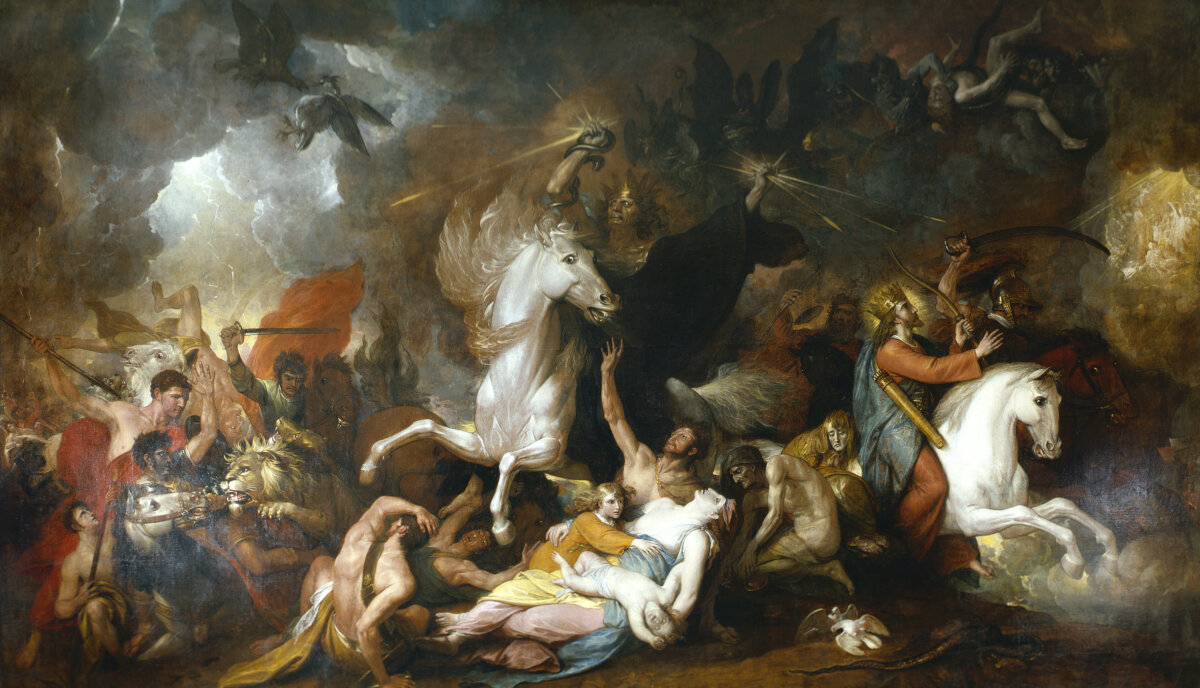
In the 1830s, PAFA mortgaged its building to purchase West’s last major work, the apocalyptic “Death on a Pale Horse,” based on the Book of Revelation. Experts believe the painting heralded the early Romantic art era and inspired French painter Eugène Delacroix.
The Nation’s First Museum Founder
Scientist and painter Charles Willson Peale’s passions inspired and educated the public with colonial portraiture, still-life paintings, and curiosities. Peale also fought in the War of Independence as a colonel of the militia and, for a short time, became a Democratic member of the Pennsylvania Assembly.
Peale cofounded PAFA in 1805. He passed his artistic passions on to his children, who were all named after Renaissance artists, many of whom specialized in the arts and sciences.
In “Staircase Group,” Peale’s life-size portrait of his sons Raphaelle and Titian Ramsay ascending a spiral staircase demonstrates the artist’s skill and a father’s pride. The three had worked together to create Peale’s Museum, the nation’s first public museum that exhibited visual arts and natural sciences.
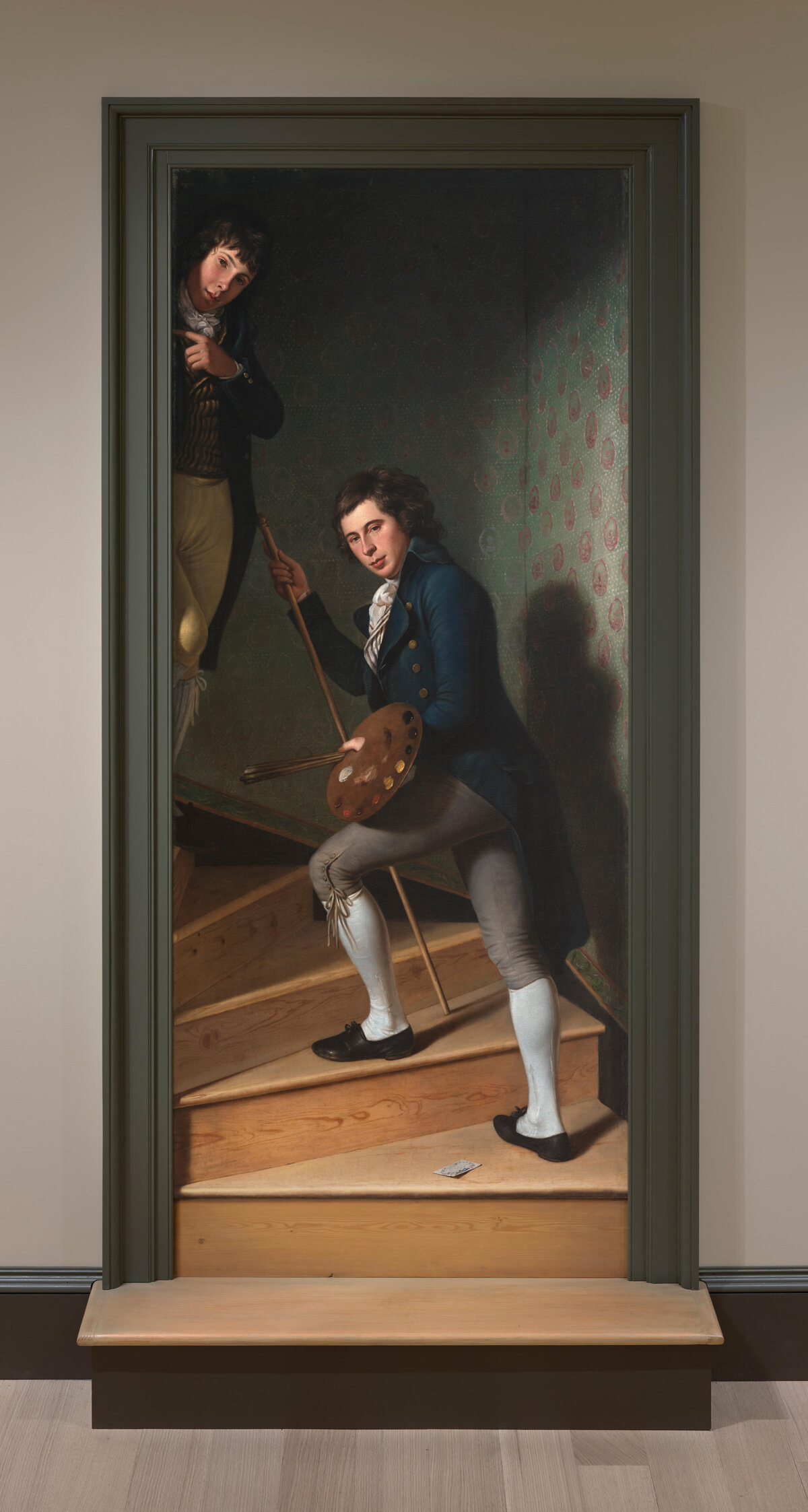
In the portrait, Peale rendered Titian at the top of the stairs, beckoning viewers into the frame. Raphaelle’s dynamic pose makes him appear as if the viewer has interrupted him mid-stride with his paint palette. Peale’s “trompe l’oeil” (deceives the eye) illusionistic treatment of the staircase effortlessly blends with a real wooden step added to the picture frame, fooling museum visitors to this day.
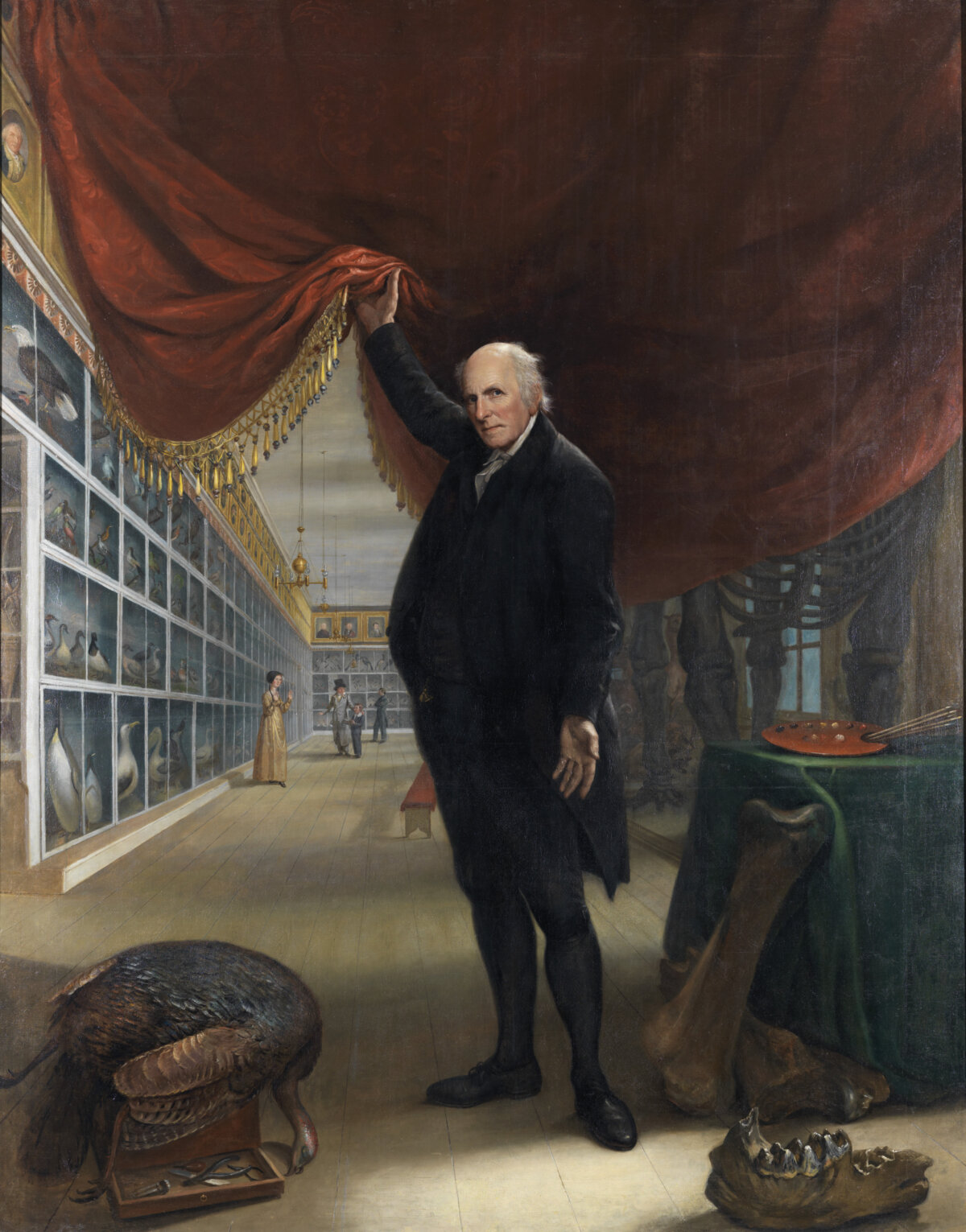
Peale was 81 when he painted “The Artist in His Museum,” although experts believe that his artist sons also contributed to the self-portrait. Peale raised the curtain on his museum with theatrical zeal, revealing a life’s work in floor-to-ceiling cabinets of natural history curios and walls lined with portraits of esteemed Americans. Friends and family gather to marvel and educate themselves. In the foreground, Peale added a wild turkey and the bones of a mastodon, an elephant-like creature, that he excavated. The PAFA website states: “Part advertisement, part philosophical statement, ‘The Artist in His Museum’ stands as a triumphant artistic and historical accomplishment.”
American Artist With French Academic Flair
Fame eluded Thomas Eakins in his lifetime, but he’s now considered one of America’s foremost painters.
Eakins lived most of his life in his native Philadelphia, where he attended the Pennsylvania Academy of the Fine Arts and anatomy classes at Jefferson Medical College.
Eakins was one of the first American painters to train in Paris. There he spent around three years (from 1866) training in the atelier of eminent history and genre painter Jean-Léon Gérôme at a time when photography was gaining popularity and impressionism was just emerging. He mastered photography only to study anatomy more closely, as a tool for his art rather than a replacement.
In the 1880s, Eakins encouraged PAFA students to study human anatomy from life models, and from animal and human cadavers rather than from casts of ancient Greek sculptures. In an American first, he introduced life models to academy sculpture classes, as per the European art academy tradition.
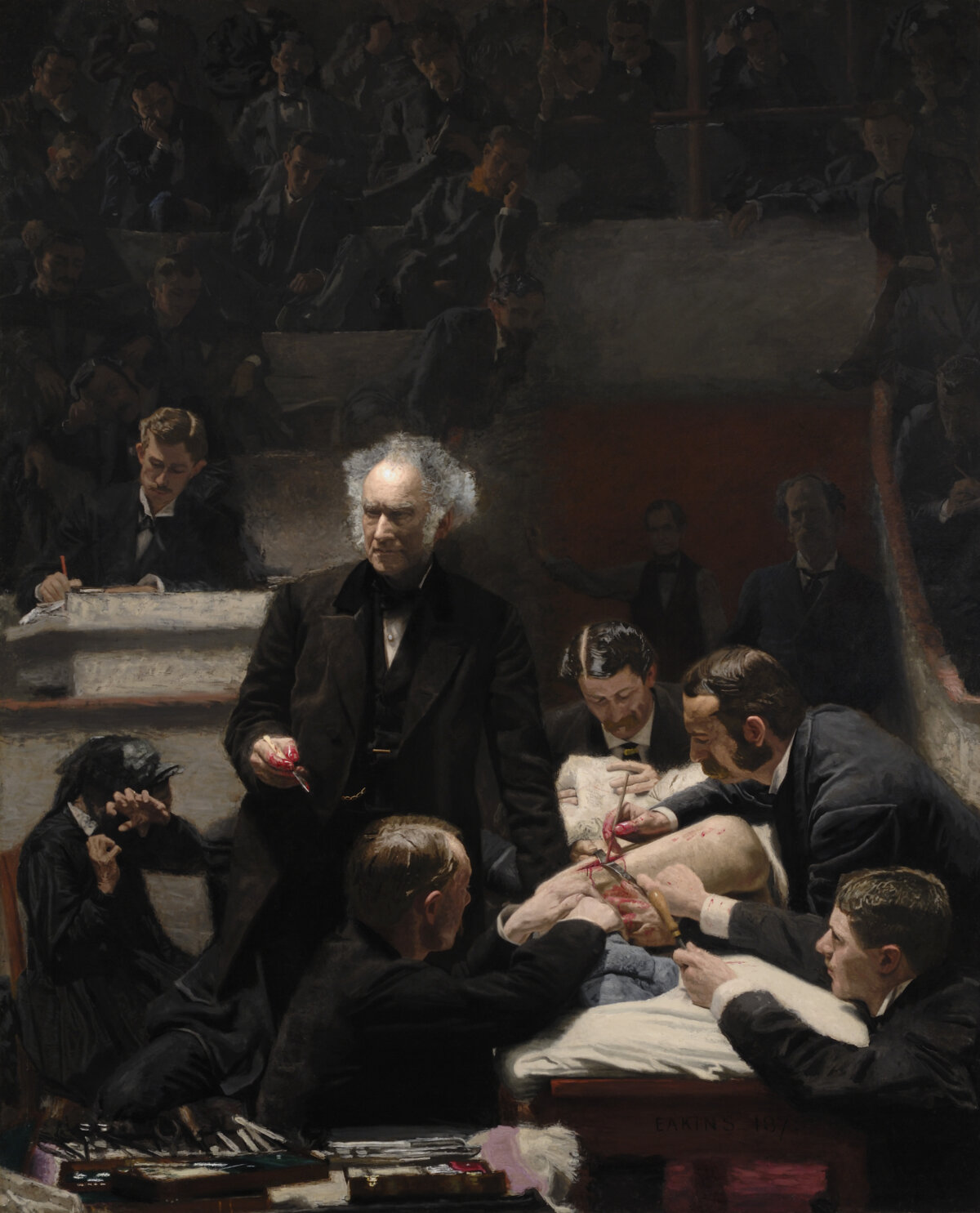
Two of Eakins’s masterworks are medical paintings: “The Agnew Clinic” and “The Gross Clinic.” The latter depicts Dr. Samuel D. Gross, an eminent surgeon and instructor at Jefferson Medical College where Eakins learned anatomy. Lewis describes the painting:
“This is Eakins’s masterpiece, uniting the tight draftsmanship he had learned from Gérôme with the sweeping dignity and drama of Spanish Baroque art. It is full of magnificent passages: the brilliant and unexpected foreshortening of the patient, which dramatically compresses the urgent activity of the assisting surgeons; the radically narrow depth of field … leaves Gross alone in sharp focus, while everything in front of or behind him is somewhat soft-edged. Gross displays a magisterial calm, presiding over the ordered agitation like the captain at the helm of some great ship.”
Great American art by the likes of West, Peale, and Eakins has inspired Philadelphia museum visitors for 150 years at the Philadelphia Museum of Art and over 220 years at the Pennsylvania Academy of the Fine Arts. The museums’ “A Nation of Artists” exhibition acts as a visual “Who’s Who” of American art history. Exhibition visitors can therefore decide whether the trajectory of American art stayed true to West’s hope for Philadelphia as the “Athens of the western world in all that can give polish to the human mind.”
“A Nation of Artists” at the Philadelphia Museum of Art runs from April 12, 2026, to July 5, 2027, and at the Pennsylvania Academy of the Fine Arts from April 12, 2026, to September 5, 2027. To find out more, visit ANationOfArtists.org
What arts and culture topics would you like us to cover? Please email ideas or feedback to features@epochtimes.nyc