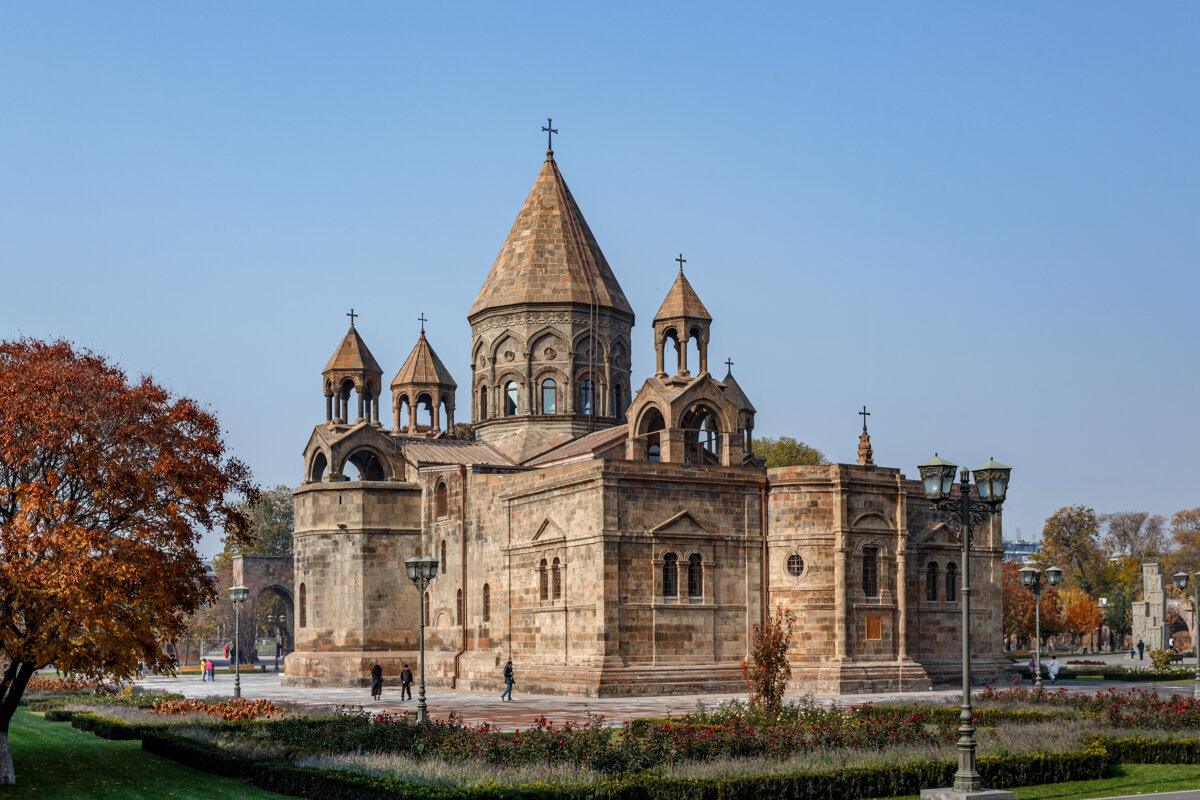
Etchmiadzin Cathedral was constructed in the center of a large courtyard from volcanic tuff, a substance formed when a volcano erupts and the ash is compacted to eventually form rock. Although the structure has been renovated and added to during its multi-century lifetime, the main floor plan remains the same. Currently, it measures 108 feet by 98 feet, with a height of 20 feet. Yet its signature pointed dome is 112 feet tall. (Tatevik Asatryan/Shutterstock)
It makes sense that a cathedral more than 15 centuries old would be located close to Yerevan, the largest city in Armenia and one of the oldest continuously populated cities in the world. Officially located in Vagharshapat, about 11 miles west of the capital, the Etchmiadzin Cathedral’s dome and one of its belfries are much younger, constructed in the 17th century, while the current sanctuary dates to the 16th century.
The cathedral’s architectural style is considered Armenian. Constructed of blocks made from the area’s abundant volcanic tuff stone, its distinct exterior design features include the conical-shaped and pointed dome—resembling a turret—and tall, narrow windows. Decorating the outside of the cathedral are countless reliefs; these are sculptures on the surface of the stone.
The architectural plan is cruciform, meaning that the interior is shaped like a cross, with four projecting apses, or semicircular, recessed, vaulted areas. The altar is located in one of the apses.
Etchmiadzin Cathedral is the mother church of the Christian Armenian apostolic faith, and it is not only a place of pilgrimage, but also a tourist site for hundreds of thousands of people annually. Although other examples of early medieval church architecture are located in the Yerevan region, Etchmiadzin was listed as a World Heritage Site by UNESCO in 2000 primarily because of its significance as perhaps the oldest cathedral in the world.
In September 2024, an extensive six-year renovation was completed.
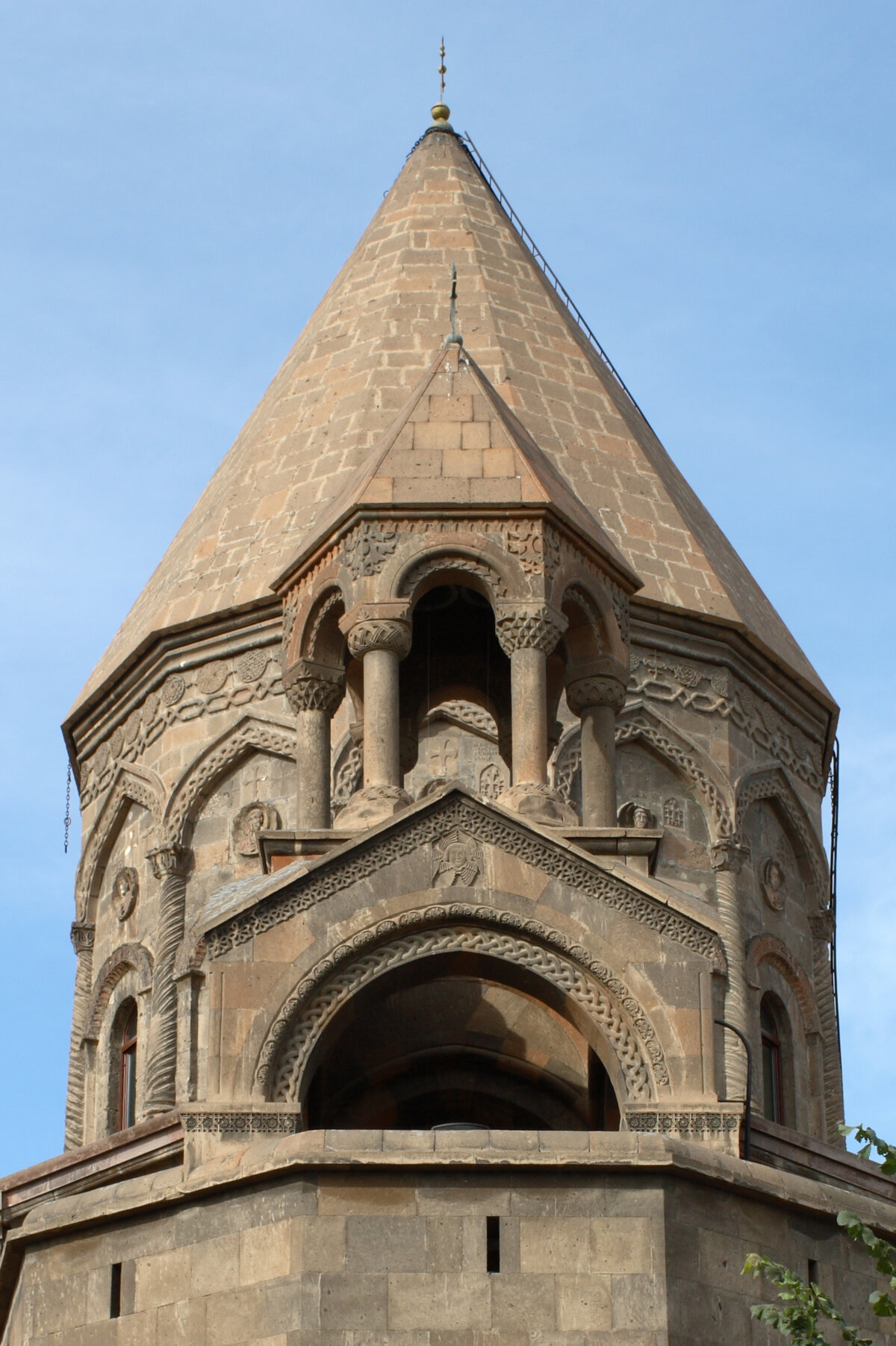
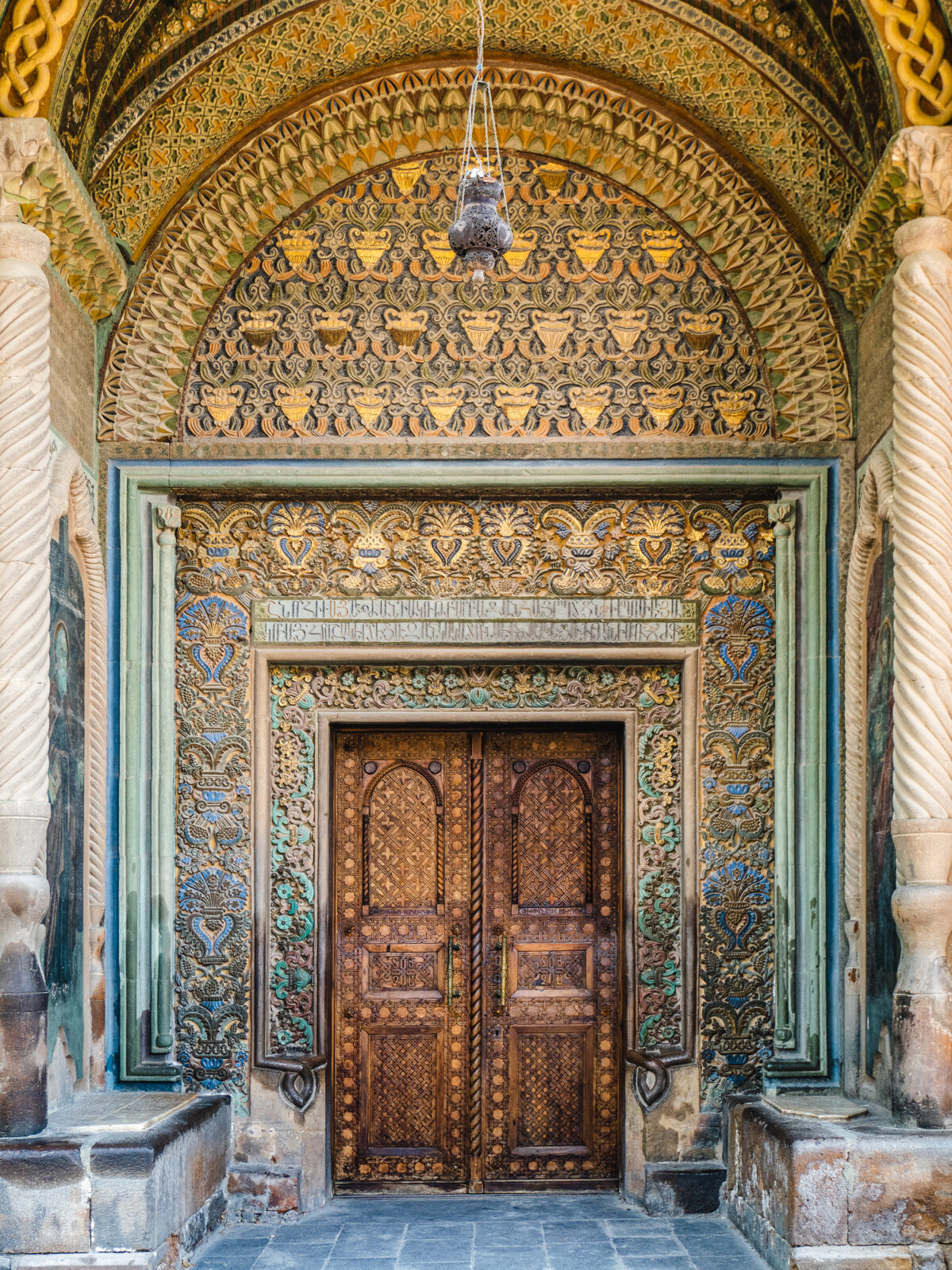
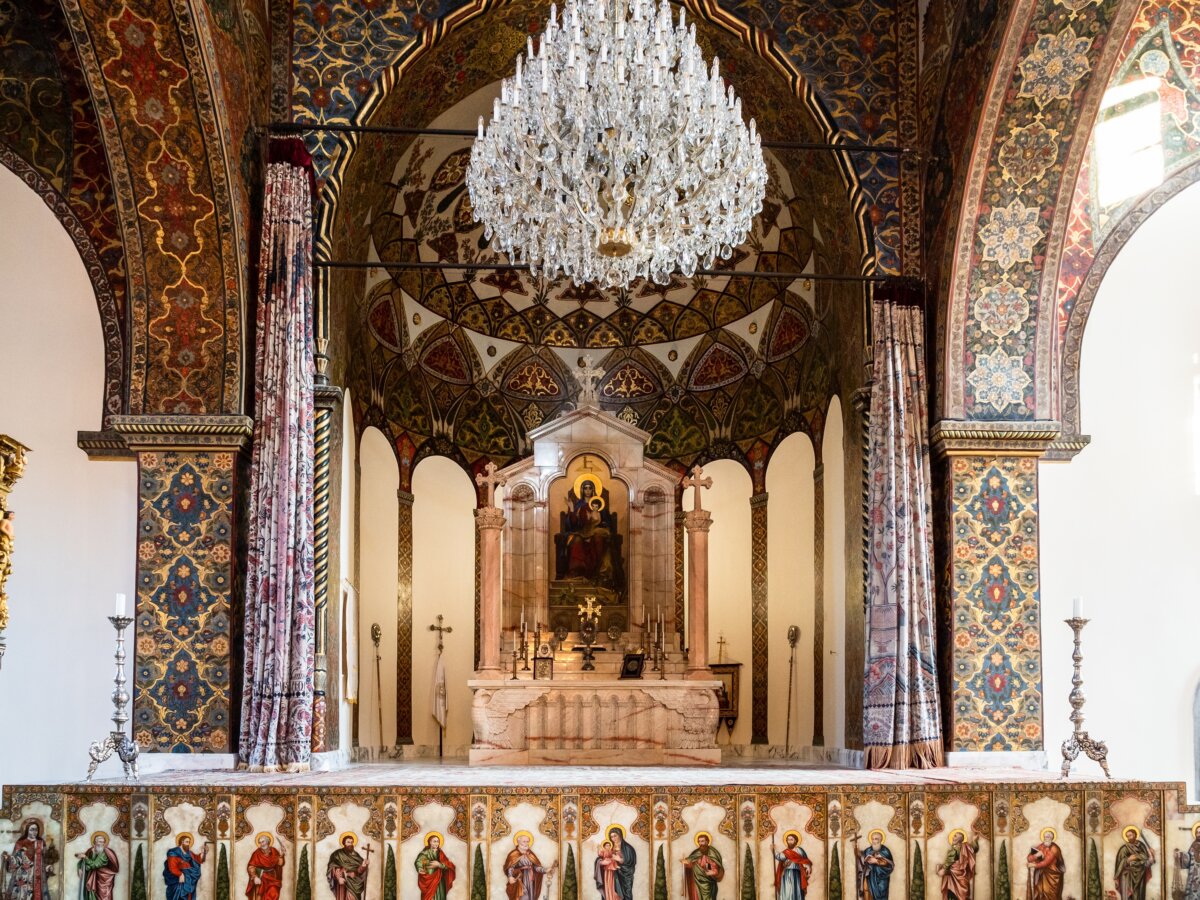
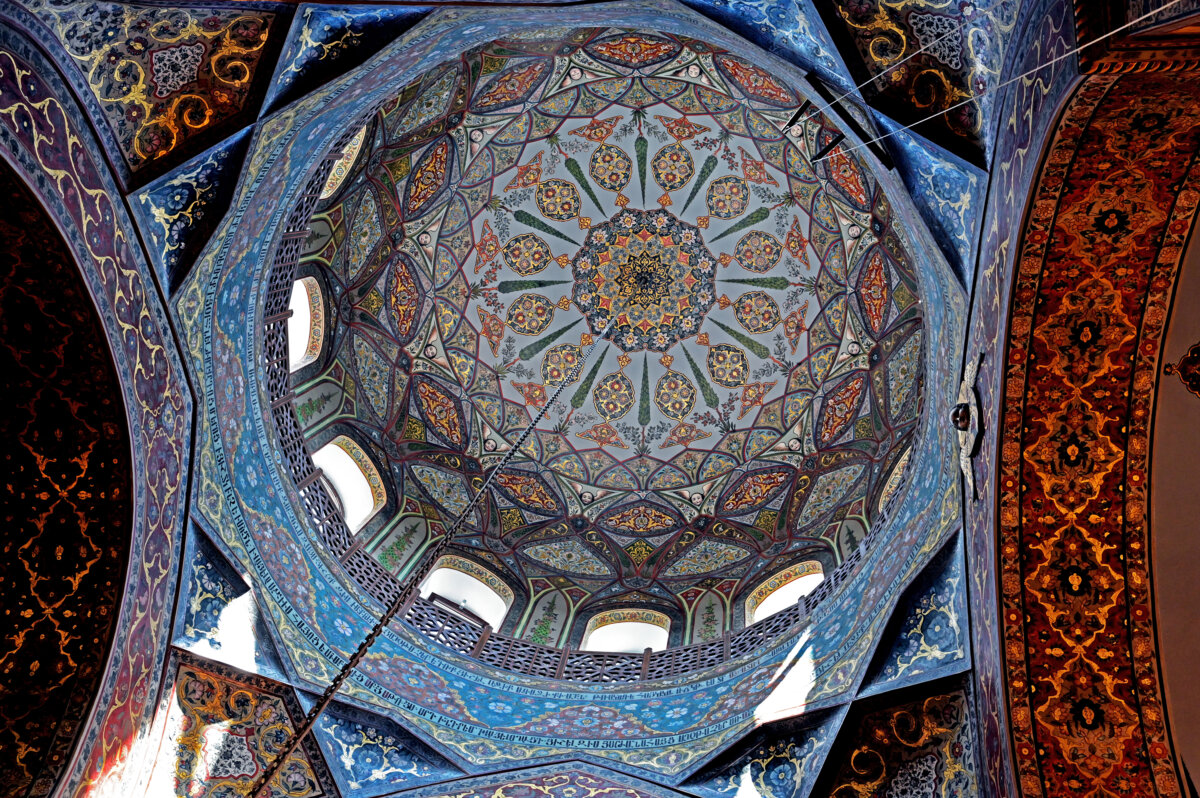
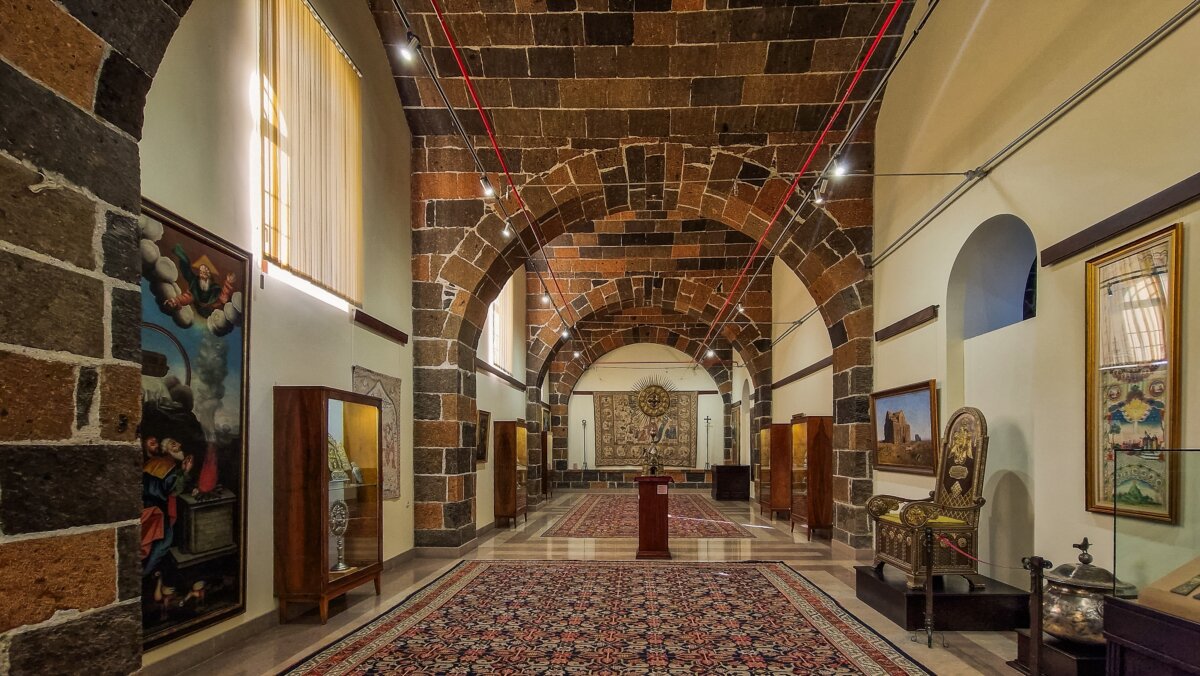
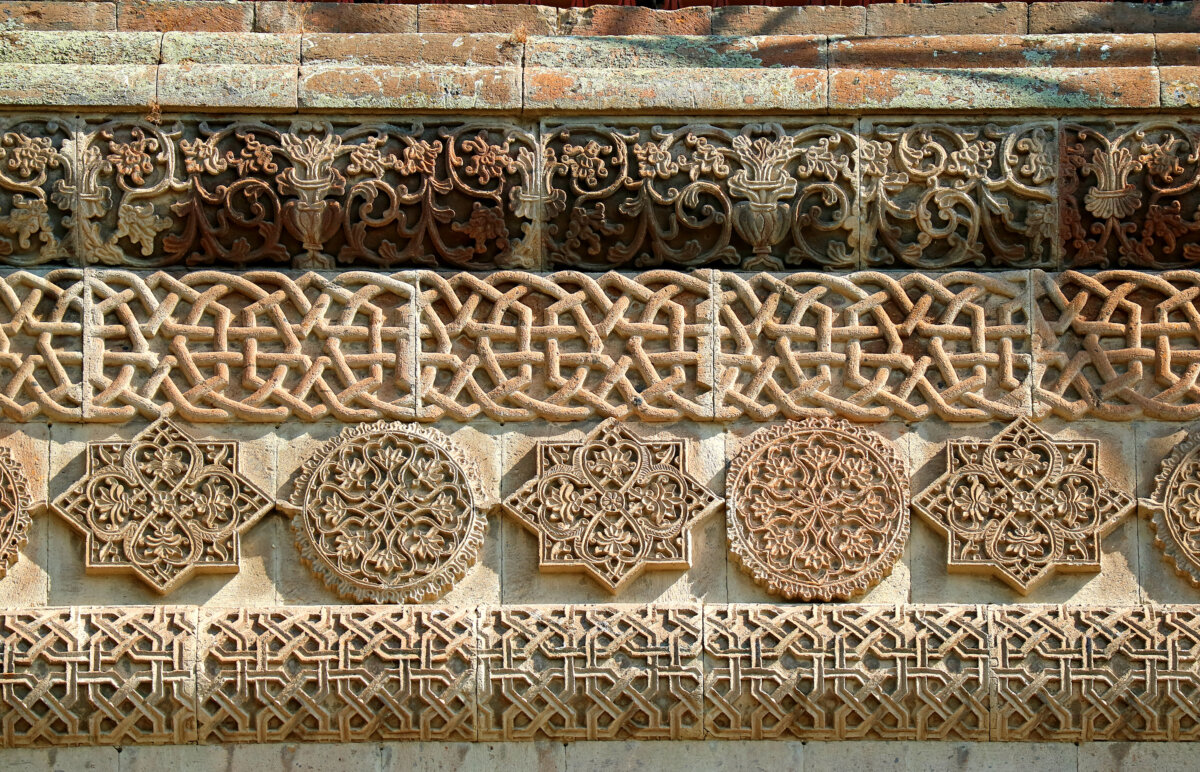
On the exterior of the conical-shaped dome are reliefs of braided rope, floral patterns, linked chains, and medallion faces believed to represent saints. The dome also is adorned with blind arcades, or decorative stilted and gothic arches, as well as smooth and spiral columns. The high-pitched roof features shingles constructed out of thinly cut volcanic tuff. (LAND/Shutterstock) One of three entrances to Etchmiadzin, this one is abundantly bedecked with sculpted relief imagery, some of which has been painted. The elaborately decorated, arched porte cochere entryway is flanked by spiral-shaped columns—also known as Solomonic columns, or barley-sugar columns. These columns have the appearance of a corkscrew and date back to Old Testament biblical times, most notably flanking the entrance to the Temple of Solomon in Jerusalem. The mullion bar between the carved wooden double doors mirrors the design of the columns. (Polsq1/Shutterstock) “Etchmiadzin means” “The Descent of the Only Begotten Son.” Thus, much of the cathedral’s interior presents biblical imagery through reliefs, sculptures, and frescoes. In fact, close to 26,000 square feet of frescoes were painted at Etchmiadzin. The double, intersecting arches at the chancel space near the altar are covered in ornamentations of flowers, birds, and scrollwork—much of which is arabesque in design, meaning that the images interlace and intersect. The altar is located in one of the structure’s apses: semicircular, recessed, dome-like spaces. The altar is made of Italian Carrara marble. In the front of the chancel is a row of painted saints outlined in distinct arch shapes. (KrimKate/Shutterstock) Filling every space of Etchmiadzin Cathedral’s cupola are lavish, jewel-toned fresco paintings covered in gold leaf. Around what is considered the vent section of the cupola, between the cap and the base, are arched windows and a ring of latticework. Gothic arch shapes married with floral designs achieve a one-of-a-kind, opulent presentation inside this dome. (Soghomon Matevosyan/CC-BY-SA-4.0) A museum space to house religious relics and to exhibit aspects of Etchmiadzin Cathedral’s history was constructed in 1868 of Armenian stone blocks (not volcanic tuff) at the structure’s east end. The blocks form a series of arches in the vast, narrow space, which is also called a sacristy because it houses artifacts considered sacred to the Christian church. A few of the important relics on display are a supposed piece of Noah’s ark and what is referred to as the “Holy Lance,” which is considered a spearhead that pierced Jesus’s side when he was nailed to the cross. (Vasylisa Dvoichenkova/Shutterstock) Highly detailed bands of scrollwork in relief form, sculpted to project from the stone background, embellish some areas of the cathedral’s exterior. The long decorative bands commonly showcase geometric patterns such as Islamic stars or circles, both of which feature floral designs in their interiors. Other designs are considered arabesque because of the intertwining of grapevines, foliage, and geometric shapes. (lovelypeace/Shutterstock)
What arts and culture topics would you like us to cover? Please email ideas or feedback to features@epochtimes.nyc.
A 30-plus-year writer-journalist, Deena C. Bouknight works from her Western North Carolina mountain cottage and has contributed articles on food culture, travel, people, and more to local, regional, national, and international publications. She has written three novels, including the only historical fiction about the East Coast’s worst earthquake. Her website is DeenaBouknightWriting.com