



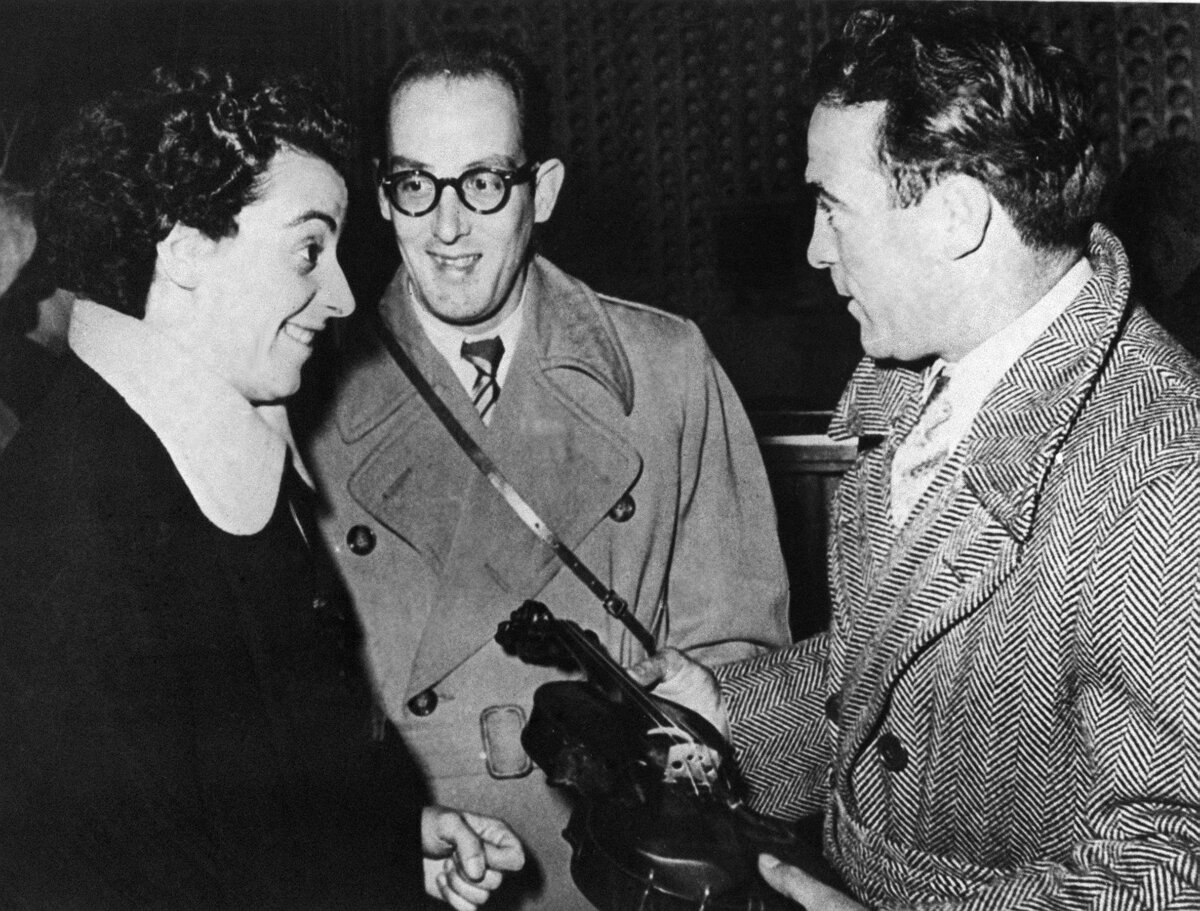
The Sibelius Violin Concerto is one of the most widely recorded of all 20th-century violin concertos. Beloved for its raw emotional core and its evocation of stark Nordic landscapes, the work was initially a failure at its premiere. Through the composer’s revisions and the passage of time, it has become a cornerstone of the repertoire.
Most famously, however, the concerto has become intertwined with the tale of one of violin playing’s greatest “what-ifs”: the tragedy of the French violinist Ginette Neveu.
Violinist Ginette Neveu
Ginette Neveu was one of the finest violinists of the 20th century. Born in 1919, her musical talent was evident from a young age. After winning first prize at the Ecole Superieure de Musique at just 9 years old, she so impressed the renowned teacher Carl Flesch he offered to teach her free of charge, proclaiming she possessed “a gift from heaven.” Her international career was launched with her impressive victory at the International Henryk Wieniawski Violin Competition, where she triumphed over competitors such as David Oistrakh, Boris Goldstein, and Ida Haendel—at just 15 years old.
Unfortunately, her burgeoning career was halted by war. The outbreak of World War II brought international concert life to a standstill, with further tragedy looming. At age 30, on a flight to New York in late October 1949, a plane crash ended Neveu’s life and that of 47 others, including her brother, Jean-Paul Neveu.
Despite a short career, Neveu left an enduring legacy. The great violinist Jacques Thibaud wrote of the tragedy:
“Why was it that at the dawn of her days an unjust and relentless stroke of fate should come and cut off a life which was bringing to the world nothing but beauty and joy? But in spite of the sternness of destiny, in the hearts of her friends and of the whole world Ginette is unforgettable. The memory of her will never die.”
In particular, she is remembered as one of the earliest advocates of what is now a central work of the 20th-century repertoire.
Although now a staple of the repertoire, recorded by virtually every major artist, the Sibelius Violin Concerto took decades to reach prominence. Critics found it tedious and awkward, prompting Sibelius to revise it. The work languished until Neveu’s 1945 recording with the Philharmonia Orchestra emerged as one of its most powerful and compelling renditions.
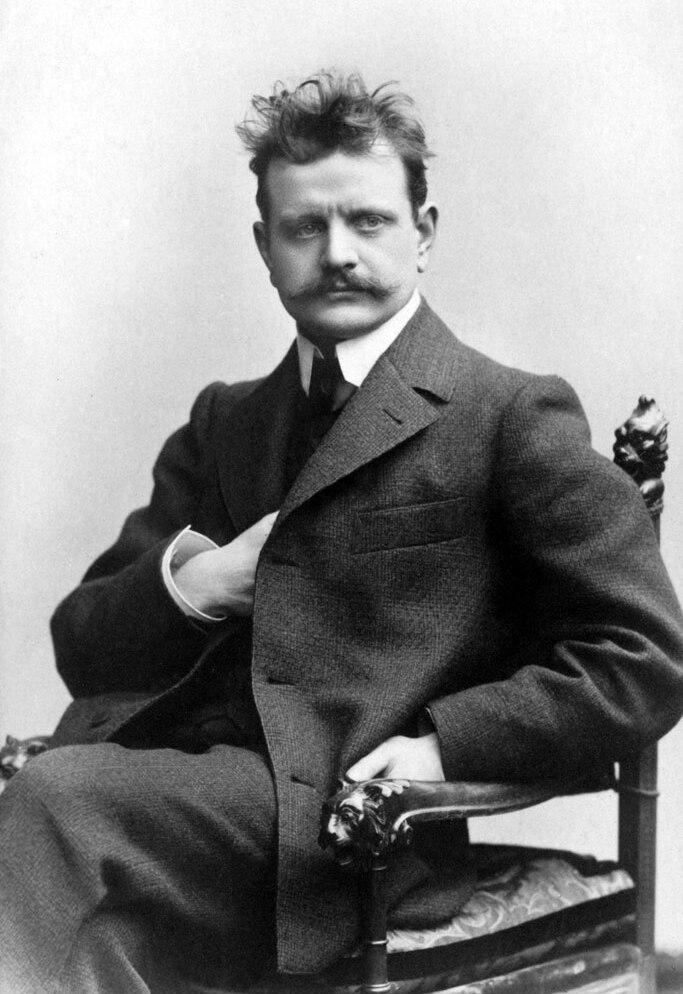
In time, Neveu’s recording came to be regarded as one of the most authoritative early interpretations. Serious and bold, it even gained the approval of its typically reserved composer. Sibelius wrote: “I particularly wish to speak of my feeling of profound gratitude when I think of the inspired and extremely sensitive performance of my Violin Concerto which Ginette Neveu rendered unforgettable.”
Sibelius Violin Concerto
Today’s recording of the second movement of Jean Sibelius’s Violin Concerto in D minor is by Ginette Neveu and the Philharmonia Orchestra, led by Walter Susskind.
The second movement, Adagio di molto, is famous for its contemplative lyricism. Yearning clarinets and oboes paint a picture of northern landscapes. The violin enters soon after, mournful and introspective. A long, singing line is colored by warm, intense vibrato, accompanied by gentle string pizzicato.
Heart-stirring double stops begin at 4:00, signaling a dramatic progression. The orchestra grows stormy, with syncopated patterns building intensity. The violin becomes increasingly agitated until a series of trills signals the emotional climax.
What arts and culture topics would you like us to cover? Please email ideas or feedback to features@epochtimes.nyc
