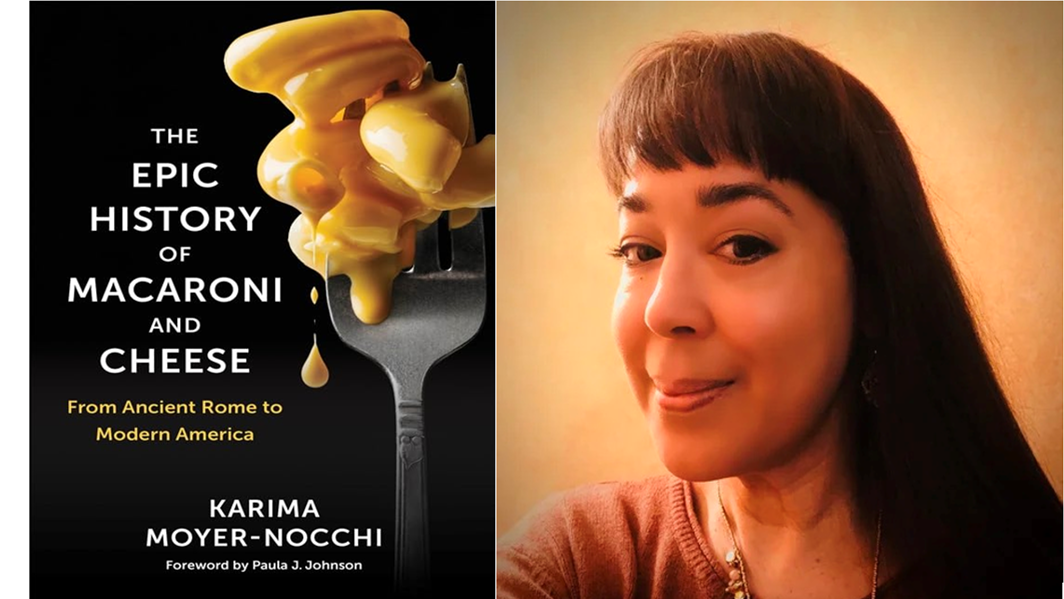
Macaroni and cheese is the ultimate American comfort food, served at family dinners, potlucks, and three-star restaurants. It’s made using pasta, yet, at least in North America, it isn’t associated with Italian cuisine. If it has any ethnicity, it’s U.S. Southern or soul food. How did that happen?
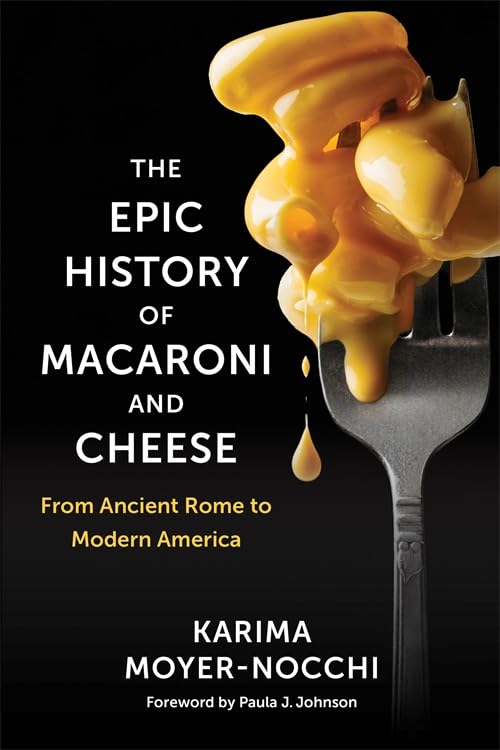
“The Epic History of Macaroni and Cheese: From Ancient Rome to Modern America” by Karima Moyer-Nocchi explains. It shows where an American staple originated and how it migrated to France, to England, and across the North Atlantic to America.
Moyer-Nocchi starts at the beginning, considerably earlier than most would imagine. She presents a recipe for a wheat and cheese dish that appeared in a book written in 160 B.C. by Marcus Porcius Cato, also called Cato the Elder. It was a layered dish of pasta-like dough and cheese. It isn’t called macaroni and cheese, but it tastes remarkably similar.
Italy’s Own Dish
The word “macaroni” first appears in the Middle Ages, in Italy, dating to the late 12th or early 13th century. No less a figure than Frederick II (king of Sicily and later emperor of the Romans) appears as the first patron of macaroni. The pasta was indigenous to Italy.
Moyer-Nocchi explodes the myth that Marco Polo brought macaroni to Italy. Polo’s return from China dates later than Frederick II’s death—after macaroni was first mentioned in contemporary Italian literature. During the late 13th century, macaroni appeared in the form we associate with it today: hollow tubes made of durum wheat.
Macaroni and cheese appeared in various ways in Italy at this time. Sometimes it was a dessert, sweetened and flavored with cinnamon. Nevertheless, it was always served with cheese, especially parmesan cheese. It was also a popular Lenten meal during the Renaissance, as it contained no meat.
The pasta dish migrated to France and from there to the British Isles in the 16th century. Although Catherine de’ Medici is often credited with bringing macaroni and cheese to France, it was already there when she arrived at the French court. Moyer-Nocchi shows how the myth arose and traces the real development of French macaroni and cheese.
She also shows how it hopped to England, becoming a craze in the 17th century. How much of a craze? By the next century, “macaroni” had become a byword for stylishness. Young swells of England created the Macaroni Club, a parody of the Beefsteak Club to which their stuffy elders belonged. Obnoxious and privileged, they soon became parodied (as evidenced in the song “Yankee Doodle”).
Macaroni and cheese jumped to America during the years before the American Revolution. Thomas Jefferson and his enslaved chef James Hemings popularized macaroni and cheese in America. Jefferson was introduced to it by a professor when he went to college, and he fell for it. When serving as a diplomat in France, he brought Hemings with him, paying for Hemings to learn how to prepare the dish in the French style. Hemings obtained his liberty and opened a restaurant featuring it after returning to the United States.
From there, macaroni and cheese conquered America. Macaroni became a major import item. Domestic macaroni originally used soft wheat, yielding an inferior product. The author shows how, over the course of the 19th century, macaroni production became industrialized. The product was made using hard wheats, matching the quality of imported Neapolitan macaroni.
At the same time, especially after the American Civil War, it evolved into mac ’n’ cheese. For white Southerners, it was a reminder of pre-Civil War grace. For black people, it was a reminder of a really delicious meal, often hijacked from the master’s kitchen.
For Americans throughout the nation, it became a nutritious and delicious low-cost meal, simplified by boxed macaroni and cheese. It became the go-to for casseroles and potlucks, and it was associated with comfort and security.
Comfort Recipes
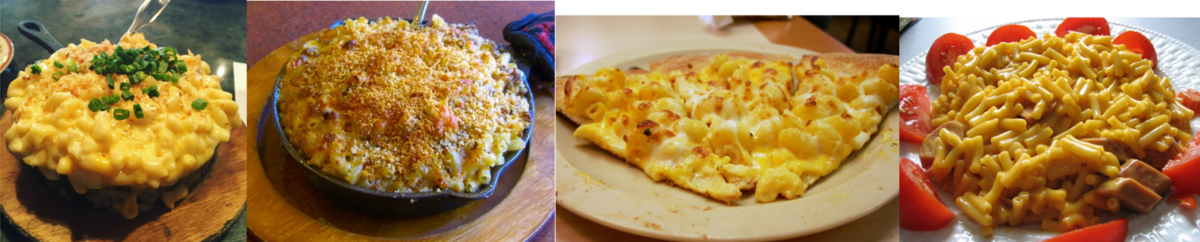
A source of fun for the reader is an abundance of macaroni and cheese recipes in the book. Moyer-Nocchi offers a recipe for making an approximation of Cato’s Roman macaroni and cheese, various medieval and Renaissance macaroni and cheese recipes, French and English recipes from early modern times, and a proliferation of recipes from 18th-century to 20th-century America.
You can make your own version of the dishes Catherine de’ Medici and Thomas Jefferson enjoyed. More modern recipes show the broad range of acceptance macaroni and cheese has gained in the United States.
“The Epic History of Macaroni and Cheese” is indeed epic. The book has a panoramic sweep, showing the peripatetic progress from ancient times to its assumption of a central role in American cuisine. It tells its tale with humor and engaging prose that draws the reader into its story.
‘The Epic History of Macaroni and Cheese: From Ancient Rome to Modern America’
By Karima Moyer-Nocchi
Columbia University Press: Feb. 3, 2026
Hardcover, 368 pages
What arts and culture topics would you like us to cover? Please email ideas or feedback to features@epochtimes.nyc