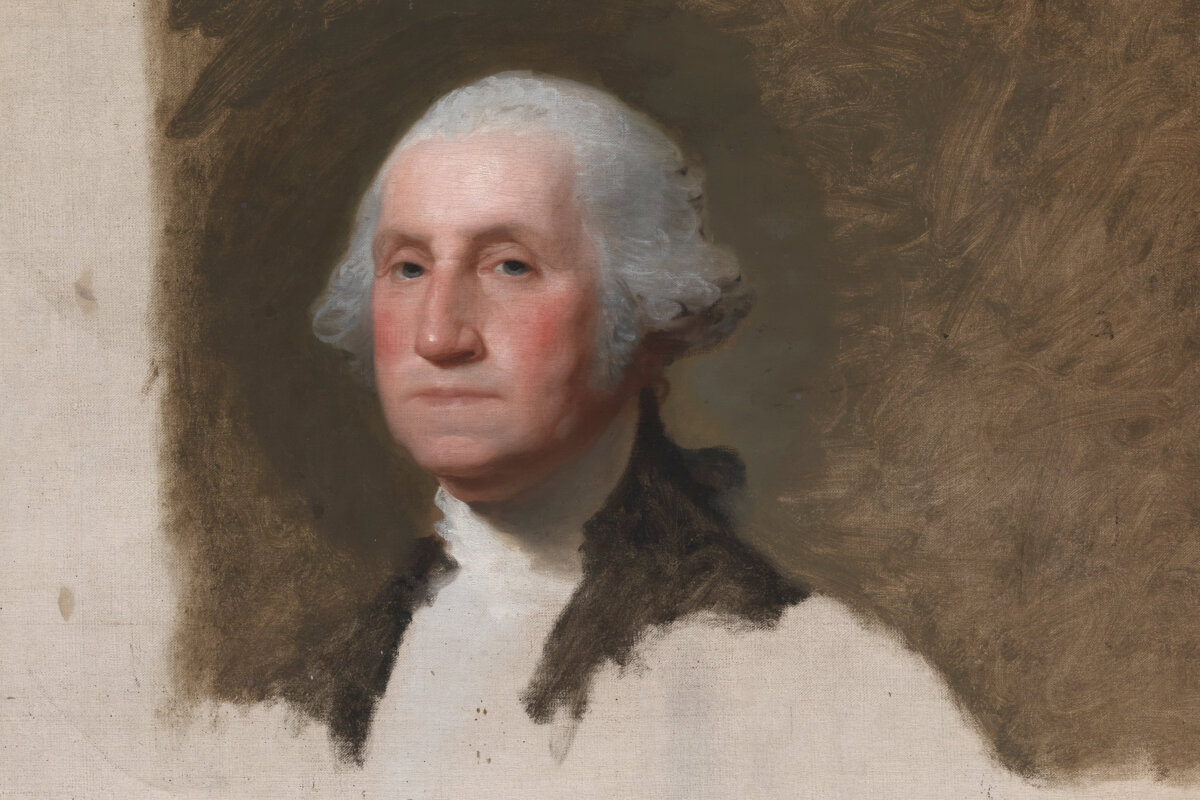
When flames threaten to erase everything, instinct takes over and people reach for what matters most. As British troops advanced on Washington during the War of 1812, that instinct guided First Lady Dolley Madison inside the White House. Determined that a symbol of the young nation should not fall into enemy hands, she ordered that Gilbert Stuart’s portrait of George Washington be removed from the White House and carried to safety. Minutes later, the British arrived and set the building ablaze, but the image of Washington—and all it represented—survived.
The Power of Presidential Portraiture
The rescue of Washington’s portrait highlights the extraordinary power of a single image. Before the emergence of photography in the mid-19th century, painted portraits were the only reliable way to preserve a person’s likeness for future generations. They recorded appearance, conveyed social standing, and served as a lasting visual memory for families and nations alike. As the Industrial Revolution expanded the middle class, demand for portraits surged, transforming what had once been the privilege of monarchs and aristocrats into a broader cultural practice.
This shift was especially significant in the United States. After independence, the young republic sought political stability and a visual identity. Portraiture became essential in shaping how citizens understood their leaders. For presidents in particular, portraits were more than images. They were instruments of national identity. In an era when most Americans would never see their president in person, painted likenesses were the primary means through which leadership was made visible and human.
Unlike European traditions that emphasized grandeur and hierarchy, American portraiture reflected a different ideal. The great American painter Gilbert Stuart helped define this shift. His portraits of early presidents established a visual language that balanced dignity with accessibility, presenting leaders not as distant rulers but as participants in a shared civic life.
Life and Artistic Formation
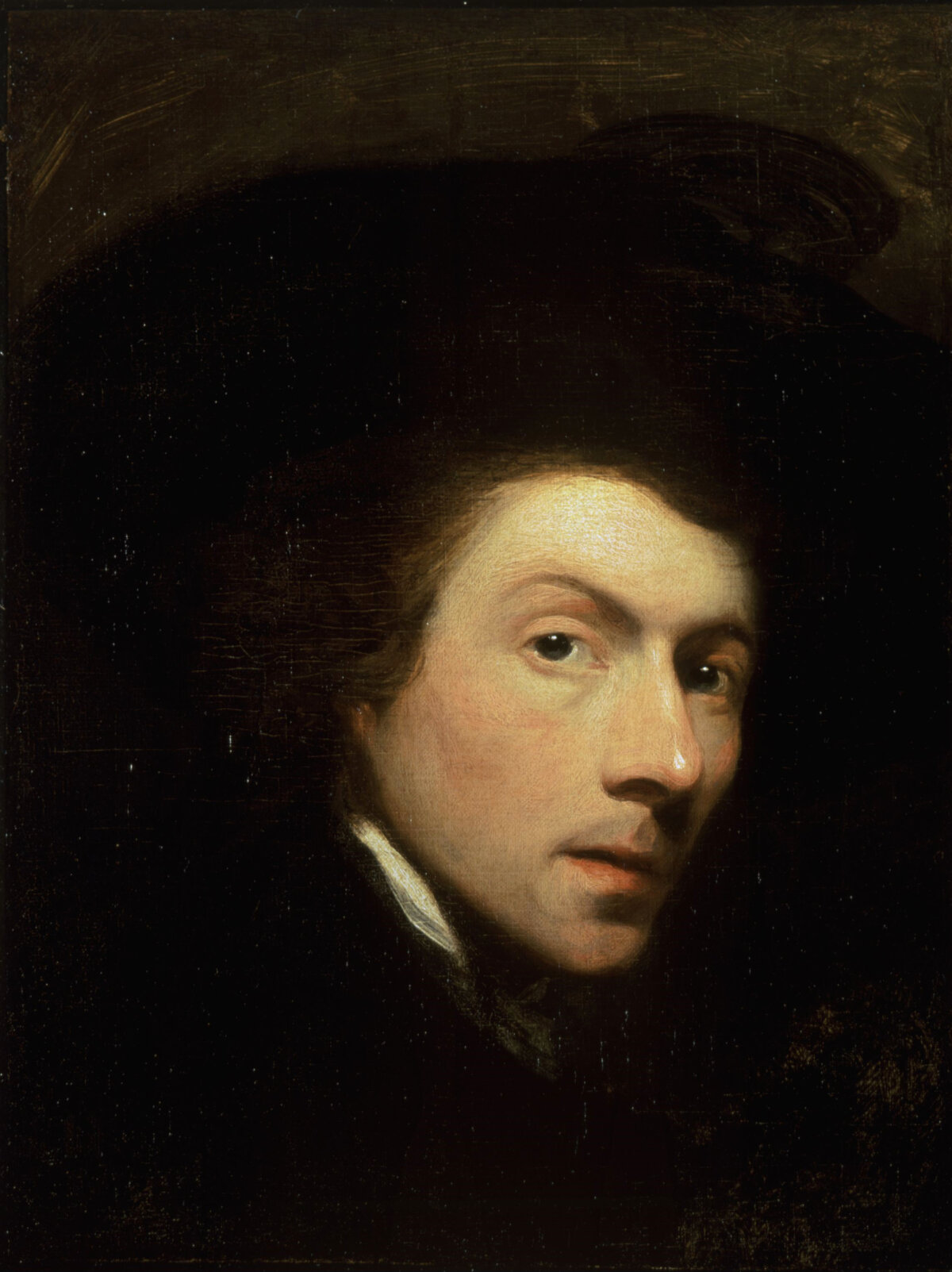
Born in 1755 in Saunderstown, Rhode Island, Stuart emerged from modest beginnings. Though he showed artistic talent at a young age, he did not begin formal training until age 14, when he studied under Scottish painter Cosmo Alexander. After a brief apprenticeship, Stuart eventually found his footing in London under the guidance of Benjamin West, one of the era’s most influential artists.
Stuart absorbed the refined techniques of British portraiture but adapted them in distinctly American ways. He rejected excessive formality and instead relied on layered color and visible brushwork, often working directly with the brush rather than with preparatory drawings. This approach gave his work a distinctive, lifelike presence that his patrons highly valued.
Despite his professional success, Stuart struggled financially throughout his life. He returned to America in 1793, driven in part by debt and in part by ambition. He intended to paint George Washington and secure both fame and financial stability. That decision would define his career and, more broadly, the visual identity of the American presidency.
The Man and the Symbol
Stuart painted more than 100 portraits of Washington, but three compositions stand at the center of his achievement: the Vaughan type, the Athenaeum head, and the Lansdowne portrait.
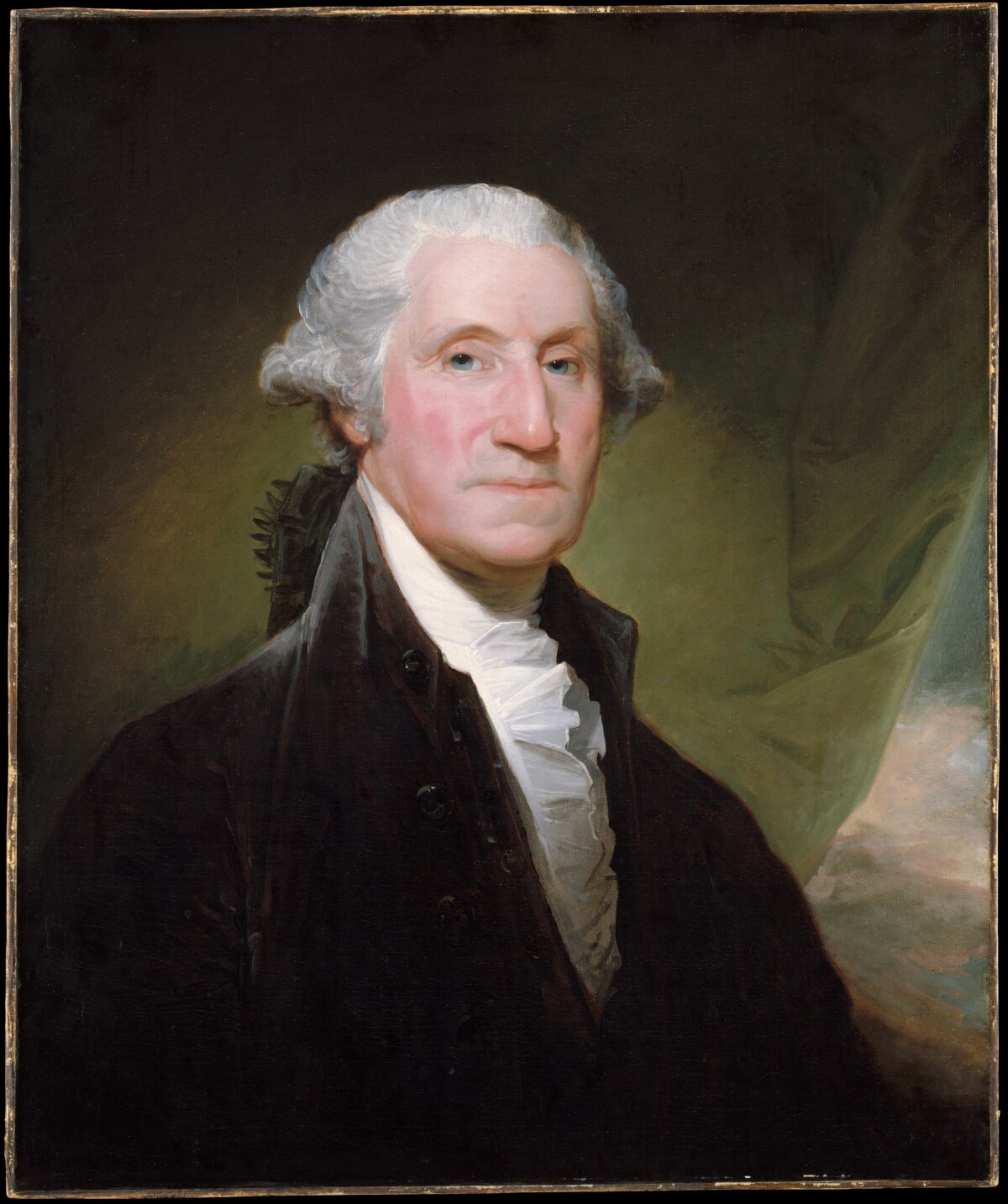
The Vaughan portrait marked Stuart’s first attempt. He later admitted dissatisfaction, believing his reverence for Washington had interfered with his ability to capture a true likeness. That hesitation is part of what makes the painting compelling. It reflects the weight Washington carried as both a man and a symbol.
The Athenaeum portrait became the definitive image. Though unfinished, it achieved extraordinary cultural reach. Stuart deliberately retained the original and used it to produce replicas, a strategy that proved financially successful. Today, this image serves as the basis for the portrait on the U.S. $1 bill. Its restrained composition and calm authority shaped how generations have envisioned Washington.
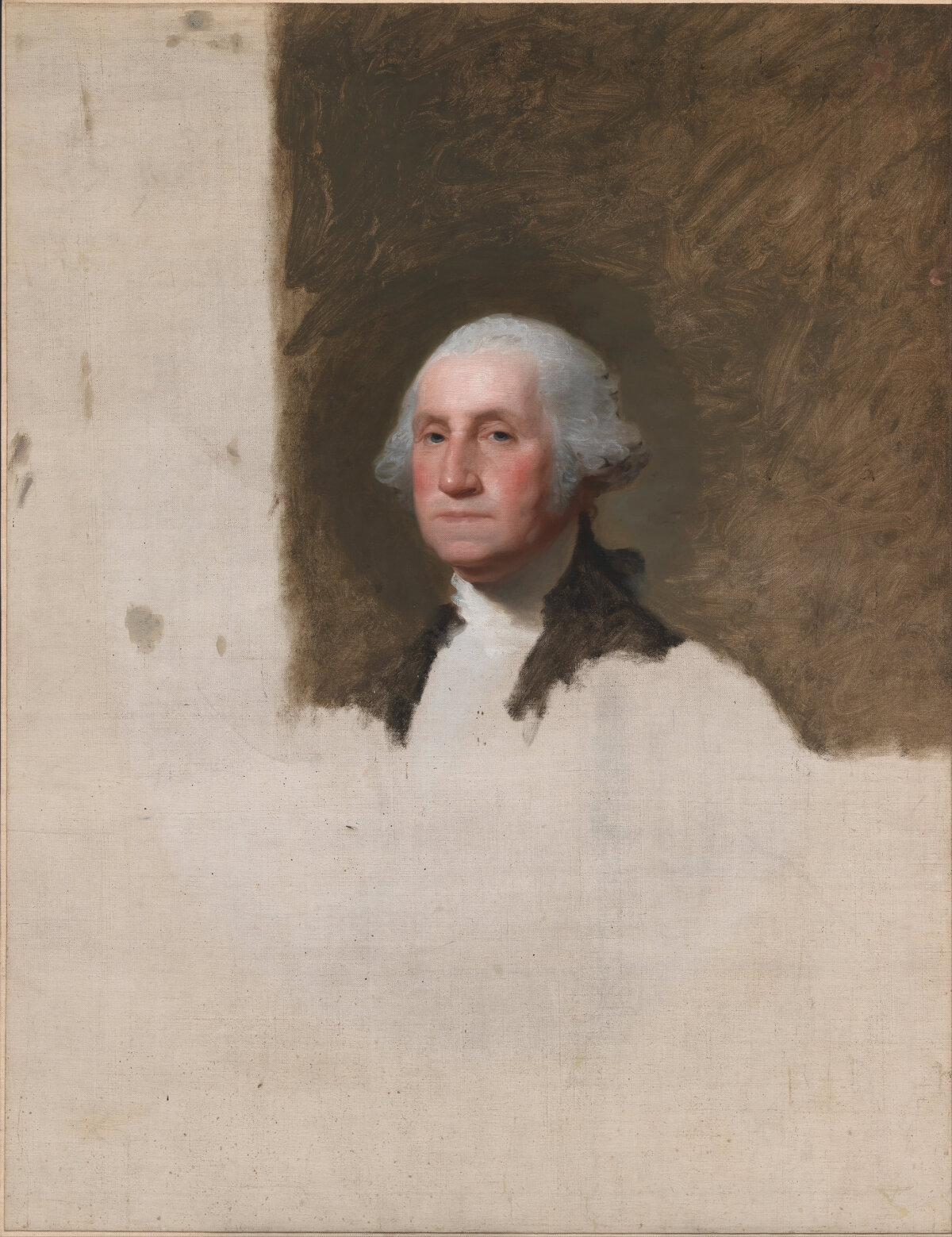
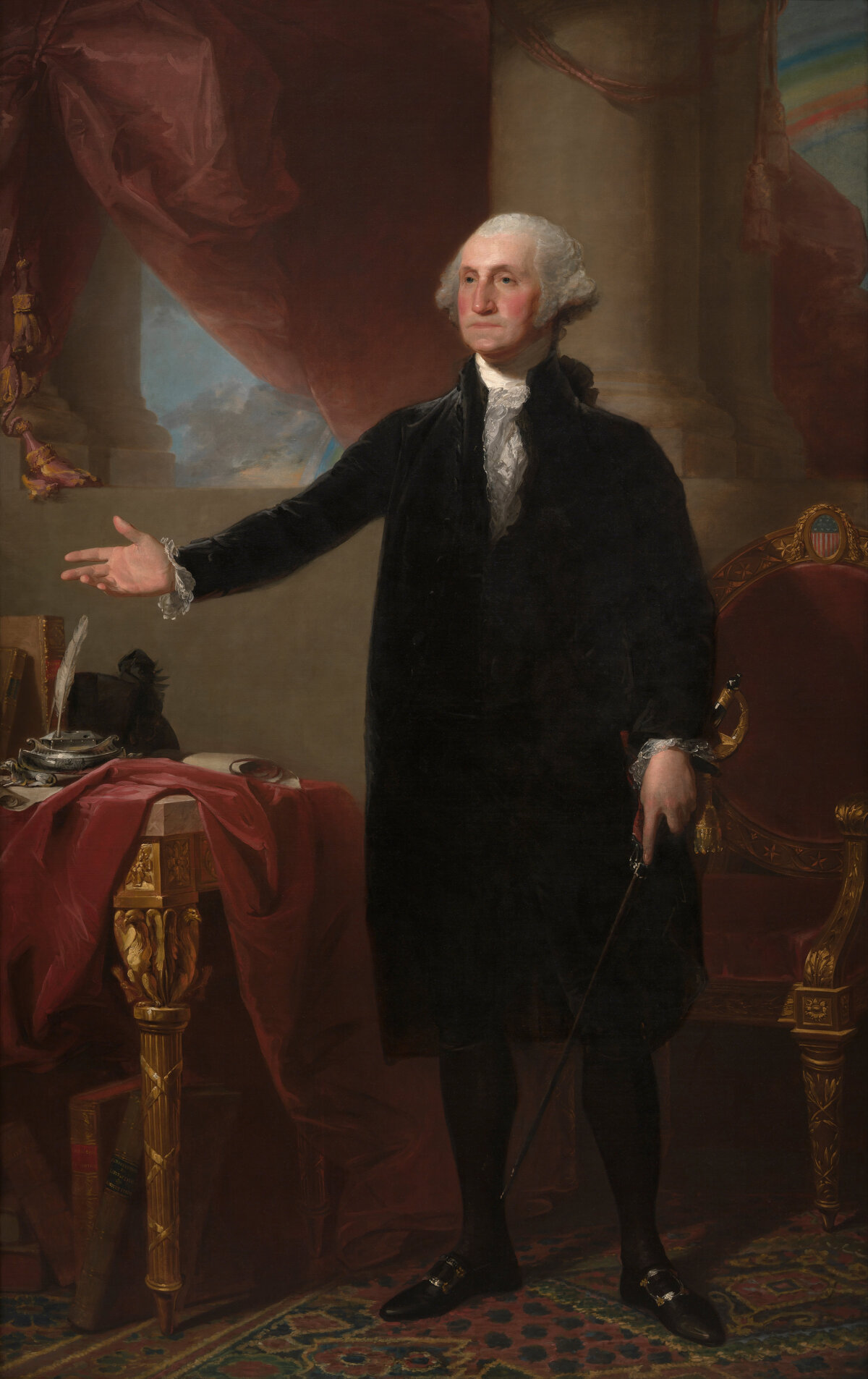
The Lansdowne portrait expanded this image into a full-length statement of national identity. Washington stands amid symbolic objects: books representing law and governance, laurel for victory, and architectural elements evoking stability. Yet even here, Stuart conveys Washington’s authority without suggesting overreach. He went on to produce several iterations of the image, including the one preserved by First Lady Dolley Madison.
Intellectual Authority in Paint
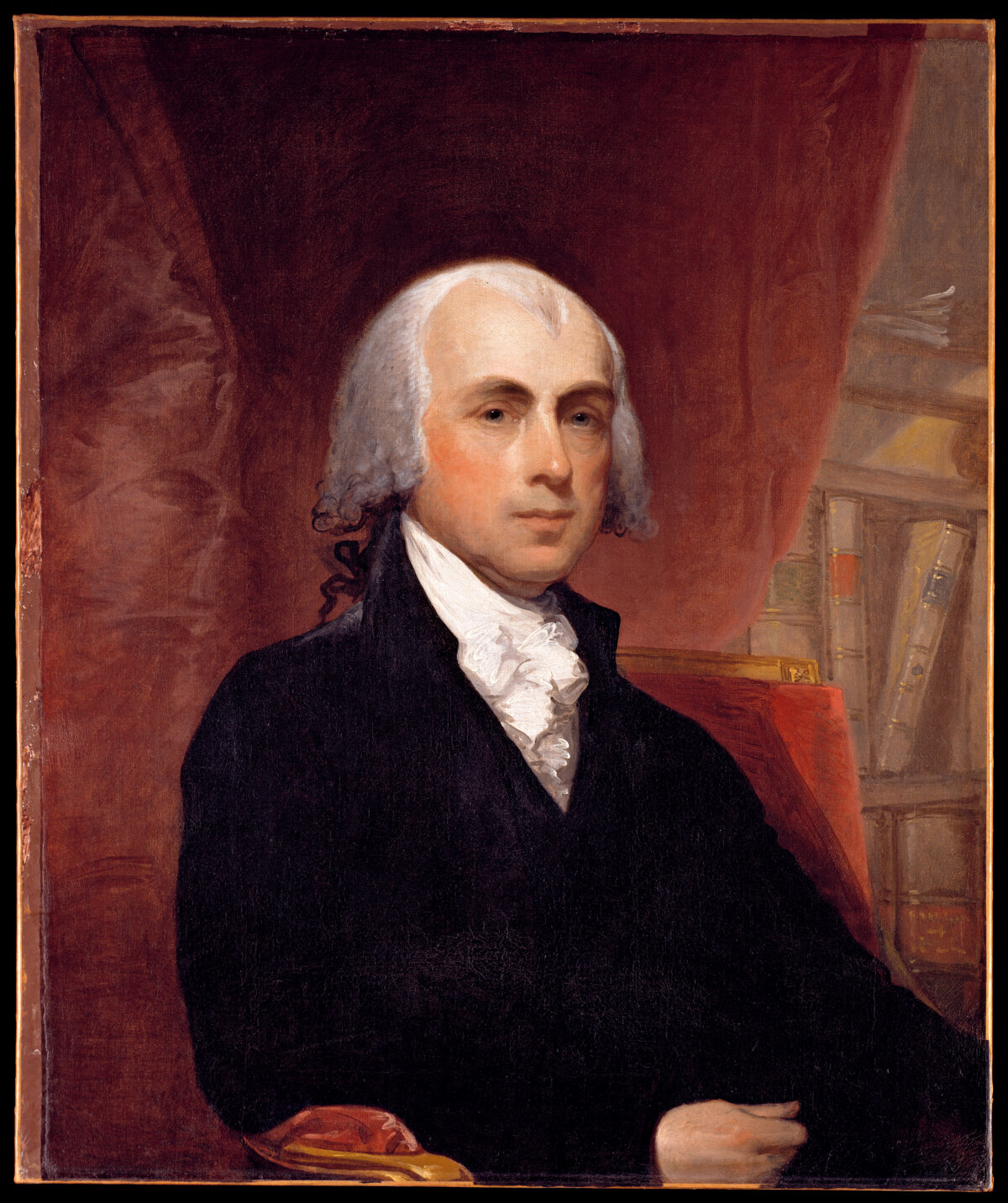
Stuart’s portrait of James Madison offers a different kind of presence. Where Washington conveyed commanding authority, Madison projects intellectual intensity. Known as the “Father of the Constitution,” Madison played a central role in shaping the structure of the federal government, including its system of checks and balances.
Painted around 1804, before his presidency, the portrait reflects Madison at a moment of rising influence. His expression is focused and reserved, consistent with his reputation as a thinker rather than an orator. Stuart captures this quality through subtle modeling of the face and restrained composition.
The portrait was paired with one of Dolley Madison, forming a traditional pendant set. While Madison’s image emphasizes intellect and governance, Dolley’s conveys social grace and political presence. Together, they reflect the dual nature of leadership in the early republic: policy and public life intertwined.

Interestingly, Stuart painted Madison during a period of intense demand. A contemporary remarked that the artist was “almost worked to death,” underscoring how important portraiture had become. For figures like Madison, these images were not optional. They were essential tools for shaping public identity in a growing nation.
The Statesman as Executive
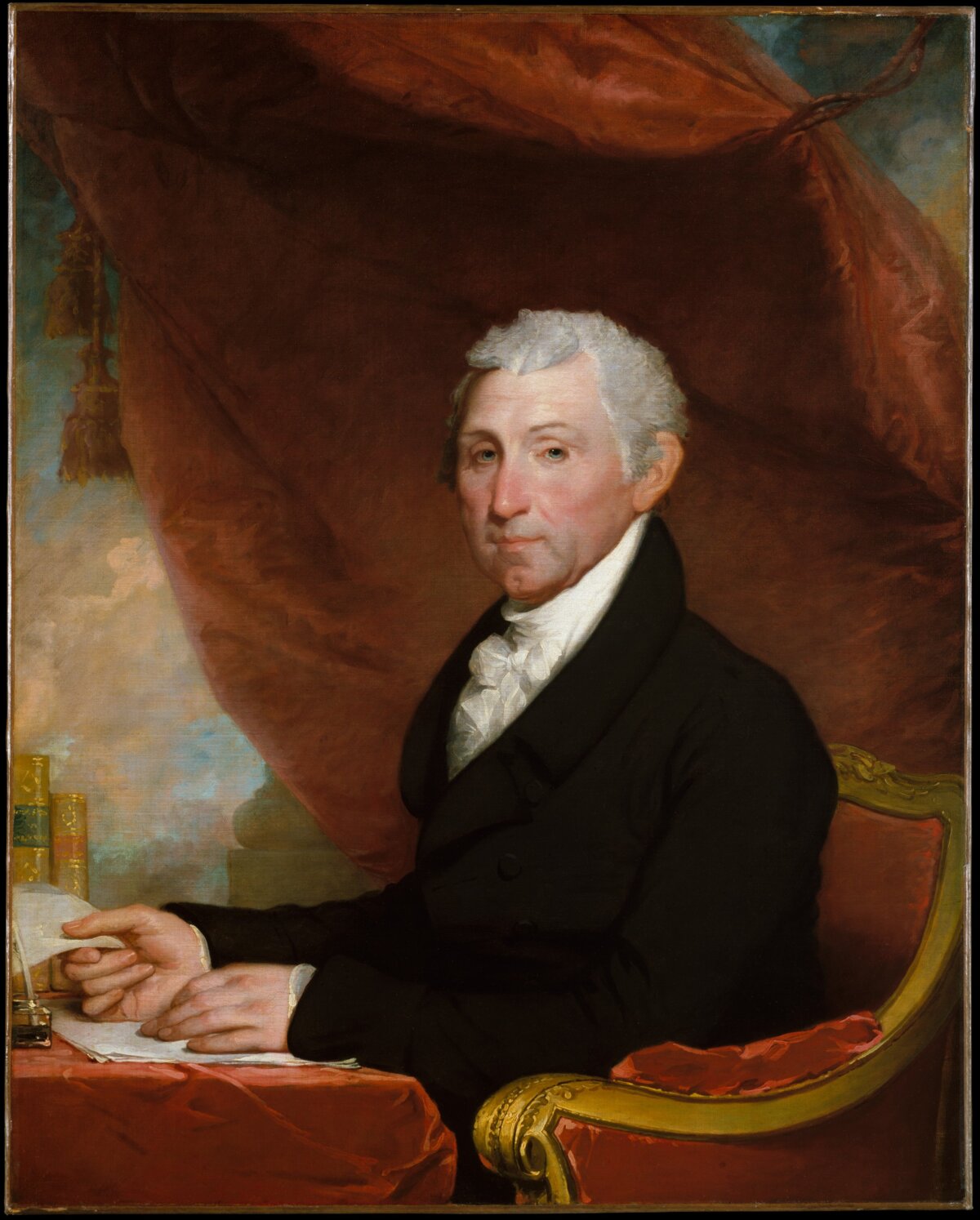
Stuart’s portrait of James Monroe, painted between 1820 and 1822, reflects a mature phase of both the artist’s career and the presidency. By this time, the office had developed clearer traditions and expectations, and the portrait reflects that institutional stability. Monroe is shown seated at a desk, surrounded by papers, with a dramatic red curtain and classical column behind him. These elements draw from European traditions, yet the overall effect remains distinctly American. The emphasis is on civic responsibility rather than royal grandeur.
The composition follows a formula Stuart often used for statesmen: a three-quarter pose, strong color contrasts, and symbolic surroundings. The red drapery suggests authority and drama, while the papers emphasize administrative duty. Monroe appears momentarily paused in his work, reinforcing the idea of the president as an active participant in governance.
Contemporary praise captured the significance of Stuart’s approach. In 1822, the Boston Daily Advertiser praised Stuart, writing that “Had Mr. Stuart never painted anything else, these alone would be sufficient to ‘make his fame’ with posterity. No one … has ever surpassed him in fixing the very soul on canvas; but in the present instance he has done more, investing the individual of nature with the ideal of art.”
This portrait was part of a larger commission to depict the first five presidents. Only the Madison and Monroe paintings survive today, as the Washington, Adams, and Jefferson portraits were destroyed in an 1851 fire. Even so, the surviving works demonstrate Stuart’s skill in adapting his style to different personalities while maintaining a consistent vision of presidential dignity.
Likeness and Legacy
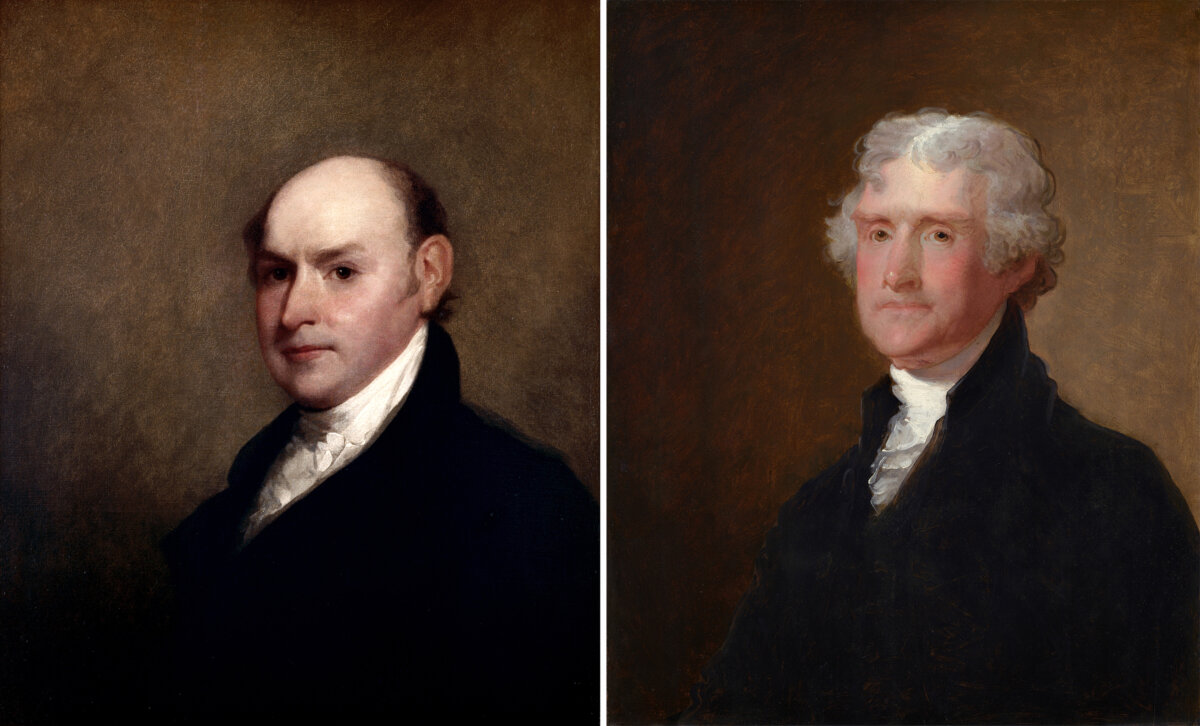
Stuart also captured other key figures of the early republic, men whose political rivalries could not shake their shared commitment to shaping the nation. His portraits of John Quincy Adams and Thomas Jefferson subtly register their differences while emphasizing the qualities they held in common. Adams appears intense and direct, while Jefferson’s image suggests intellectual refinement. Each portrait contributes to a broader narrative of governance, debate, and national development. Together, these images form a collective portrait of leadership during a formative period in American history.
Stuart’s approach to painting combined technical mastery with a thoughtful philosophy. He built skin tones through multiple layers, letting underlying colors peek through. The result was a luminous quality that made his portraits seem alive—one could almost imagine the sitter speaking at any moment.
He brought the same careful attention to capturing expression. By engaging his subjects in conversation, he kept their features from stiffening. The outcome was more than a likeness; it conveyed a subtle sense of the sitter’s personality and psychological presence.
Presidential portraiture remains a vital element of American political culture. Beyond the historical record, these works frame how leaders are remembered, conveying the values, character, and ideals each administration seeks to project. The tradition Stuart helped establish continues to shape the visual language of authority and legacy, linking contemporary presidents to a lineage that reflects the enduring story of the republic.
What arts and culture topics would you like us to cover? Please email ideas or feedback to features@epochtimes.nyc.