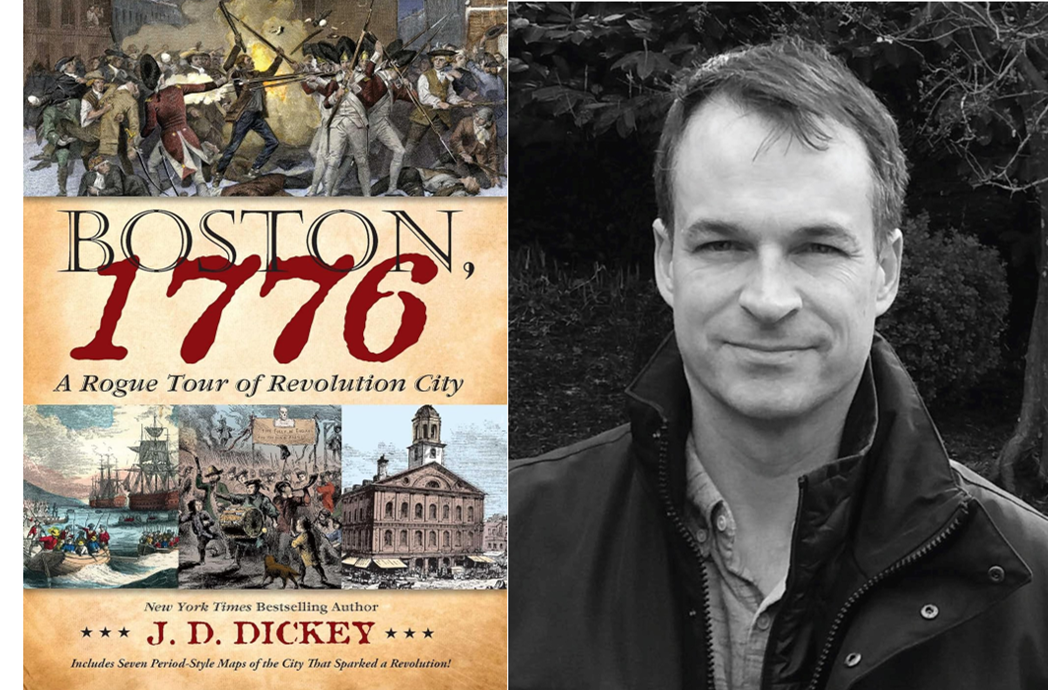
Anyone who sat through a high school history class will recall that Boston was the epicenter of the ferment that stirred Great Britain’s American colonies into the Revolutionary War.
While the issues, events, and personalities of that location have become enshrined in textbooks, there’s one aspect of the story that’s mostly overlooked. This is the city of Boston itself, which historians rarely depict as an entity with a distinctive personality of its own.
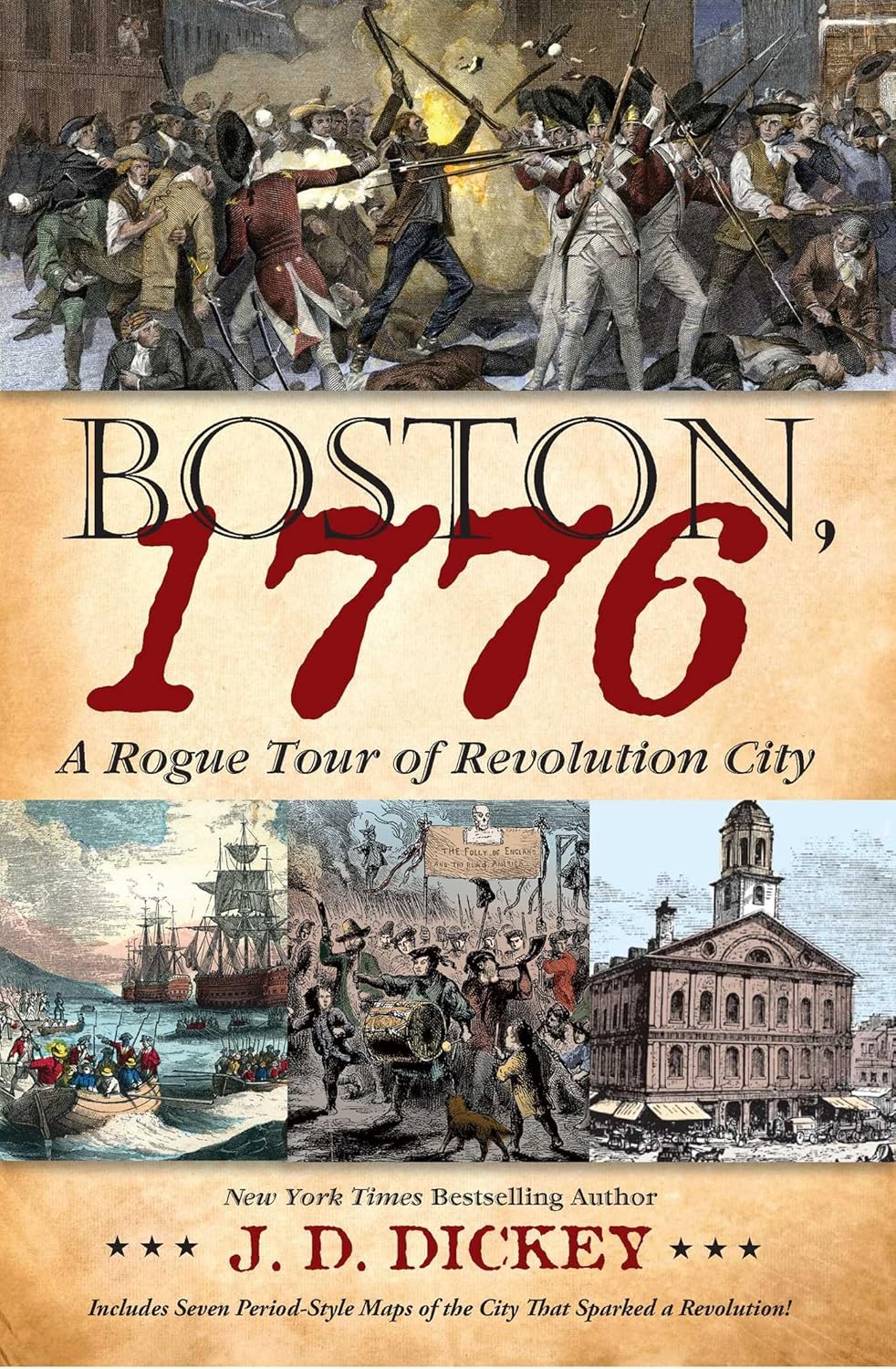
J.D. Dickey’s new book, “Boston, 1776: A Rogue Tour of Revolution City,” does an extraordinary job of re-creating the long-lost Boston that thrived in the years leading up to the war’s beginning. He traces it through the tumultuous period when freedom was achieved on the battlefield. The result is a wildly surprising journey through a locality rich with colorful characters who faced hardships with scrappy determination.
The Social Fabric
Despite his subtitle, Dickey stresses that Boston of the colonial era was closer to being a town, spanning a little more than one square mile with an estimated population of 15,000 prior to the war’s commencement. Boston wasn’t officially incorporated as a city until 1822.
While many Bostonians of the mid-18th century gained prominence as political thought leaders of their time, their hometown was something of an economic mess. Dickey notes how New York City and Philadelphia usurped Boston’s position as the favored destination of colonial commerce. Furthermore, Boston was unfairly burdened with customs duties that were nearly double what New Yorkers paid.
Britain’s Navigation Acts prevented the colonies from having direct trade with foreign lands. Some vessels needed to stop at British ports for steep tariff payments on their valuable cargoes. As a result, Boston-based smugglers created a shadow economy that avoided British tariffs through unauthorized direct trading with continental Europe and the West Indies.
Poverty was also rampant across the population, particularly among the widows and children of Boston men who’d fought and died in foreign wars. Many resourceful women worked hard to achieve economic independence. Dickey highlights how two-fifths of the tavern liquor licenses in Boston were held by women; female entrepreneurship was also common throughout numerous retail and hospitality operations.
More social chaos involved slavery, which was still legal in Boston. One in 10 Bostonians was black, and many found greater freedom working on whaling ships that took them far away from their enslavement surroundings.
Free black Bostonians also embraced entrepreneurship, with many using their maritime experience to successfully create oyster stands and seafood eateries. A few black Bostonians gained notability for their achievements, including soldier and Freemason leader Prince Hall and Phillis Wheatley, an enslaved woman whose published poetry brought her fame and freedom.
Substance in Style
Dickey’s book effectively plumbs the daily lives of colonial Bostonians. As the population rebelled against Britain, the author notes how residents rejected the sartorial foppery of aristocratic trappings.
“The rising republican mood has made the common look more stylish,” Dickey writes. “Patriot icons like Samuel Adams are famed for their humble appearance, while John Adams and others decry the money wasted on the pursuit of fancy attire.”
At this time, buying clothing, or any consumer good, was often confusing. When the war began, Massachusetts issued its own paper currency to replace the British pound.
The Continental Congress in Philadelphia also issued paper currency to be used across the colonies; those notes featured engravings by Boston’s Paul Revere. Many Bostonians were suspicious of the new currencies and relied on a barter system for their commercial transactions.
As for sitting down to a meal, Bostonians were unrepentant carnivores, devouring meat dishes ranging from hare pie to stuffed calf’s head. Bostonians were also fond of fish for dinner, unlike other corners of the colonies, which viewed piscine dishes as being either strictly for the poor or for the minority Catholic population.
Law and Disorder
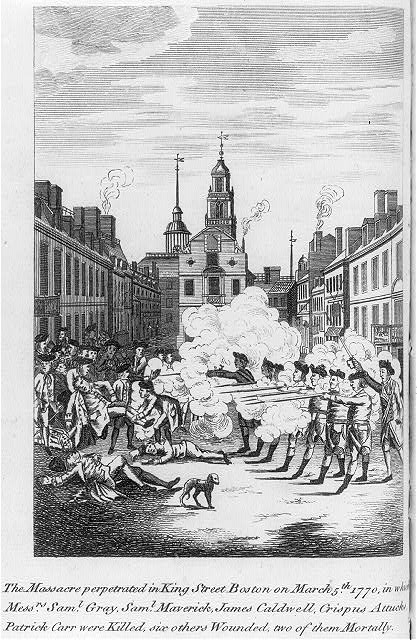
As the Revolutionary War tore the colonies from British control, daily civility began to fray. Dickey gleefully celebrates how grumpy Bostonians ignored official prohibitions on rioting and took to the streets in agitation over perceived injustices.
Women were front and center during many of these upheavals, with Dickey estimating that pugnacious ladies accounted for one-third of the rioters. Their wrath was focused on price gouging and unfair retail practices by merchants.
Vigilante justice was common during this time, and one of the most unpleasant punishments enacted on people assumed to be enemies of the population was tarring and feathering. There was no police force at the time, with night watchmen and constables uneasily taking on law enforcement duties.
As for those who found themselves visiting this wacky place, good luck. Dickey glumly acknowledges that most lodging establishments fell far below basic hygiene standards, with linens and pillow covers that went months between washings while accumulating “the stains and grime of previous visitors.” Ouch!
Only about two dozen colonial-era sites and structures still exist in Boston. While they have great academic value in preserving the past, they don’t capture the raw, earthy spirit that’s wonderfully re-created in Dickey’s marvelous new book.
‘Boston, 1776: A Rogue Tour of Revolution City’
By J.D. Dickey
Diversion Books: Feb. 24, 2026
Hardcover, 320 pages
What arts and culture topics would you like us to cover? Please email ideas or feedback to features@epochtimes.nyc