In a sunlit kitchen in 12th-century Italy, a young woman in a fitted wool dress tipped a bold, green-glazed pitcher, the water sparkling as it poured into a cup. Half a world away, a young Korean woman in flowing silk robes lifted a jade-green ewer, pouring with the same deliberate care. Different vessels, different cultures, yet the gesture carried a shared rhythm of precision and intention.
These small moments hint at a larger story of the Post-Classical period, often called the Middle Ages. This era spanned roughly A.D. 500 to 1500 and bridged the gap between the fall of major classical empires and the rise of the modern world. After Rome’s collapse, Europe became a patchwork of migrating peoples and emerging kingdoms, with the Catholic Church extending its influence. Meanwhile, Korea faced invasions from the Khitan, Jurchen, and Mongols, yet the Goryeo dynasty maintained stability, cultivating a refined court culture as sophisticated as that of Europe.
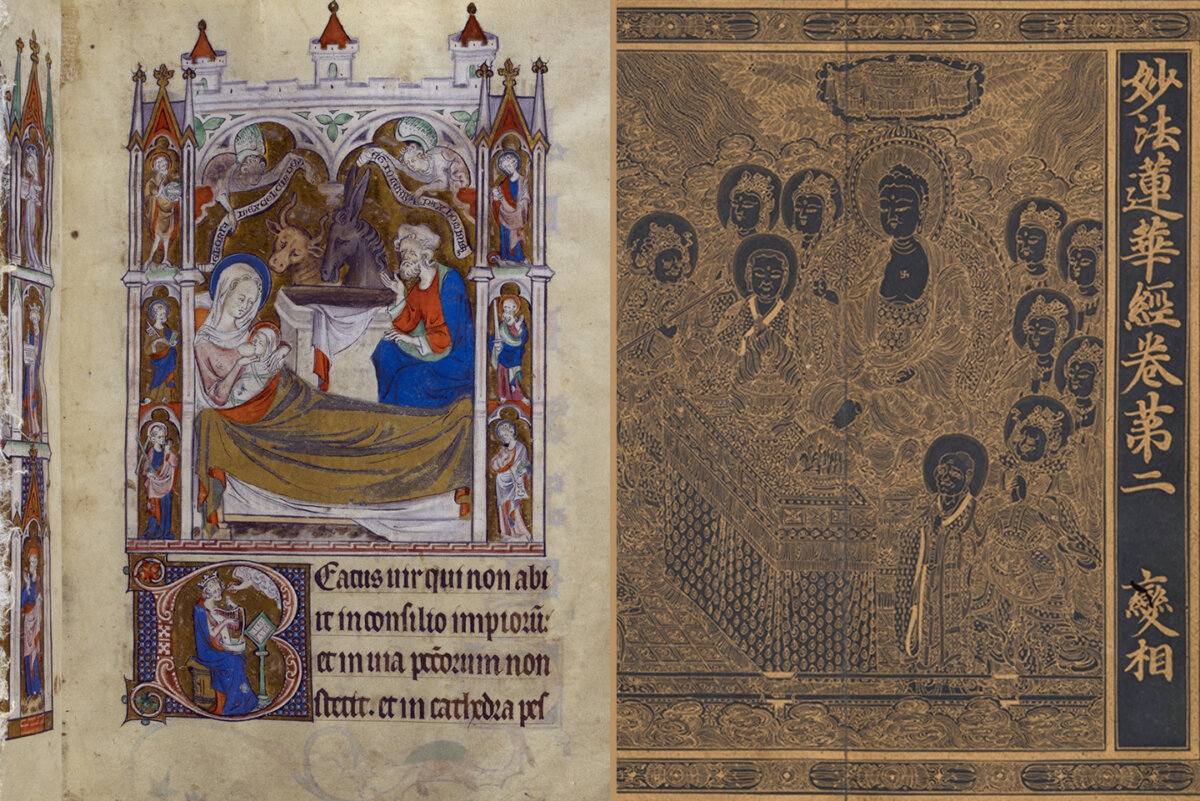
Across these regions, artistic parallels emerged. European cathedrals like Beauvais Cathedral and Korean temples such as Gyeongcheonsa’s Ten-story Stone Pagoda were built to awe and inspire. European illuminated manuscripts glimmered with gold and intricate detail, echoing the precision and radiance of hand-transcribed Buddhist manuscripts of the Goryeo sutras. Across mediums—ceramics, architecture, and painting—the arts reflected mastery, devotion, and the support of elite patrons.
These similarities arose not from direct contact but from shared conditions. Stable courts and religious institutions supported ambitious projects, while Christianity in Europe and Buddhism in Korea shaped the forms and purposes of art. Across thousands of miles, artisans pursued beauty, meaning, and mastery, leaving works in ceramics, architecture, and manuscripts that continue to speak across time. Among these, the production of ceramics shows how culture, technology, and taste shaped objects that were both practical and exquisite.
Crafting Beauty: Ceramics in Korea and Europe
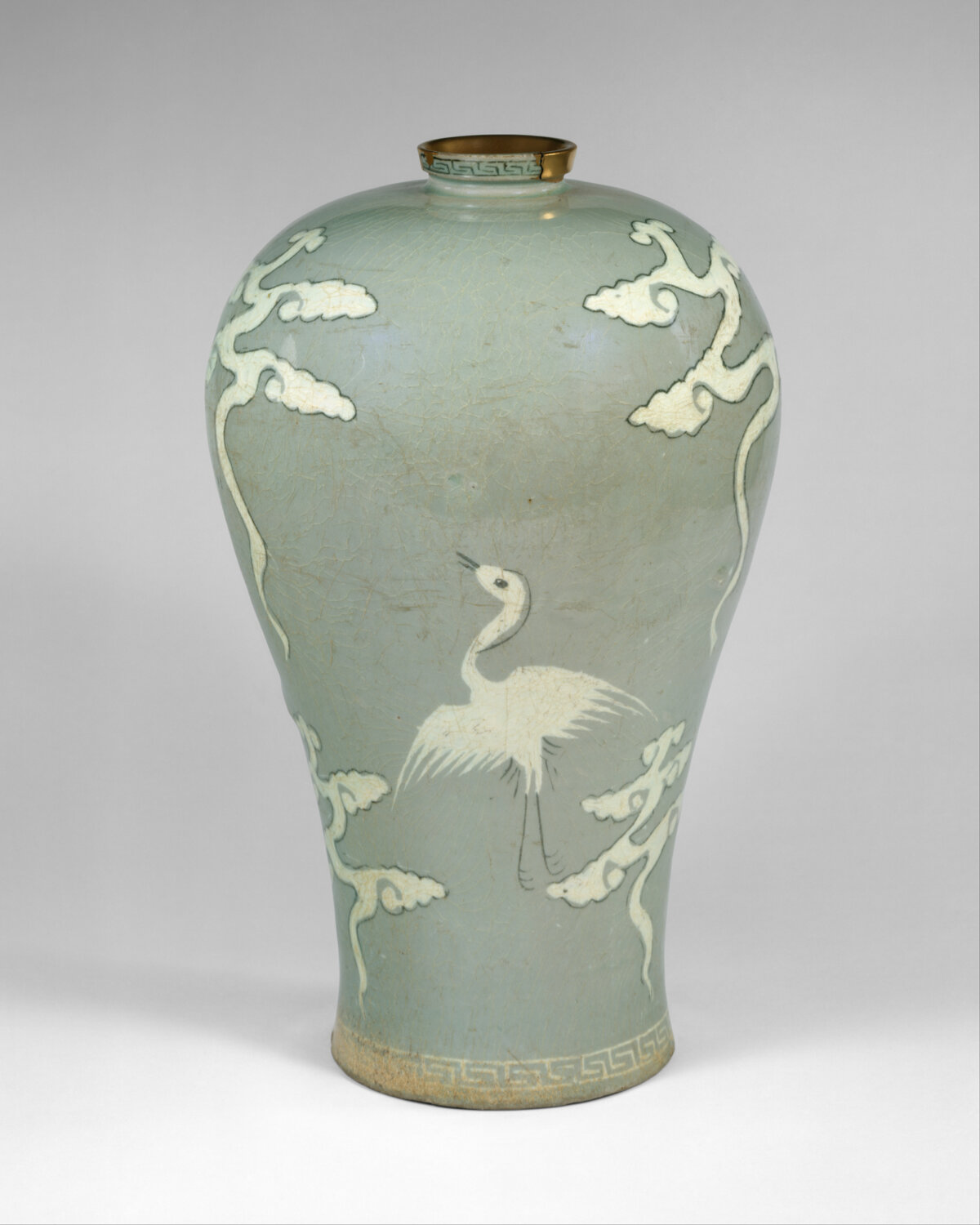
Korean ceramics reached their peak with Goryeo celadon, a high-fired stoneware with a jade-green glaze, called “cheongja.” These wares took many forms, from bowls and cups to jars designed for holding beverages. Goryeo celadon is easily recognized by its translucent green surface.
Decoration techniques included carving, stamping, and the renowned inlay method called “sanggam,” in which designs were carved into the clay and filled with contrasting slips before glazing. Across these works, a cohesive and refined aesthetic prevailed, reflecting the Korean commitment to harmony, subtlety, and technical mastery.
In Europe, Post-Classical ceramics balanced practicality with artistic expression. Early pieces were often unglazed, though glazing eventually became widespread. Jugs, pitchers, and dishes grew specialized and were often adorned with molded or stamped patterns. Regional styles varied widely: French workshops favored subtle decoration, while German centers produced robust earthenware and early stoneware suited to everyday use.
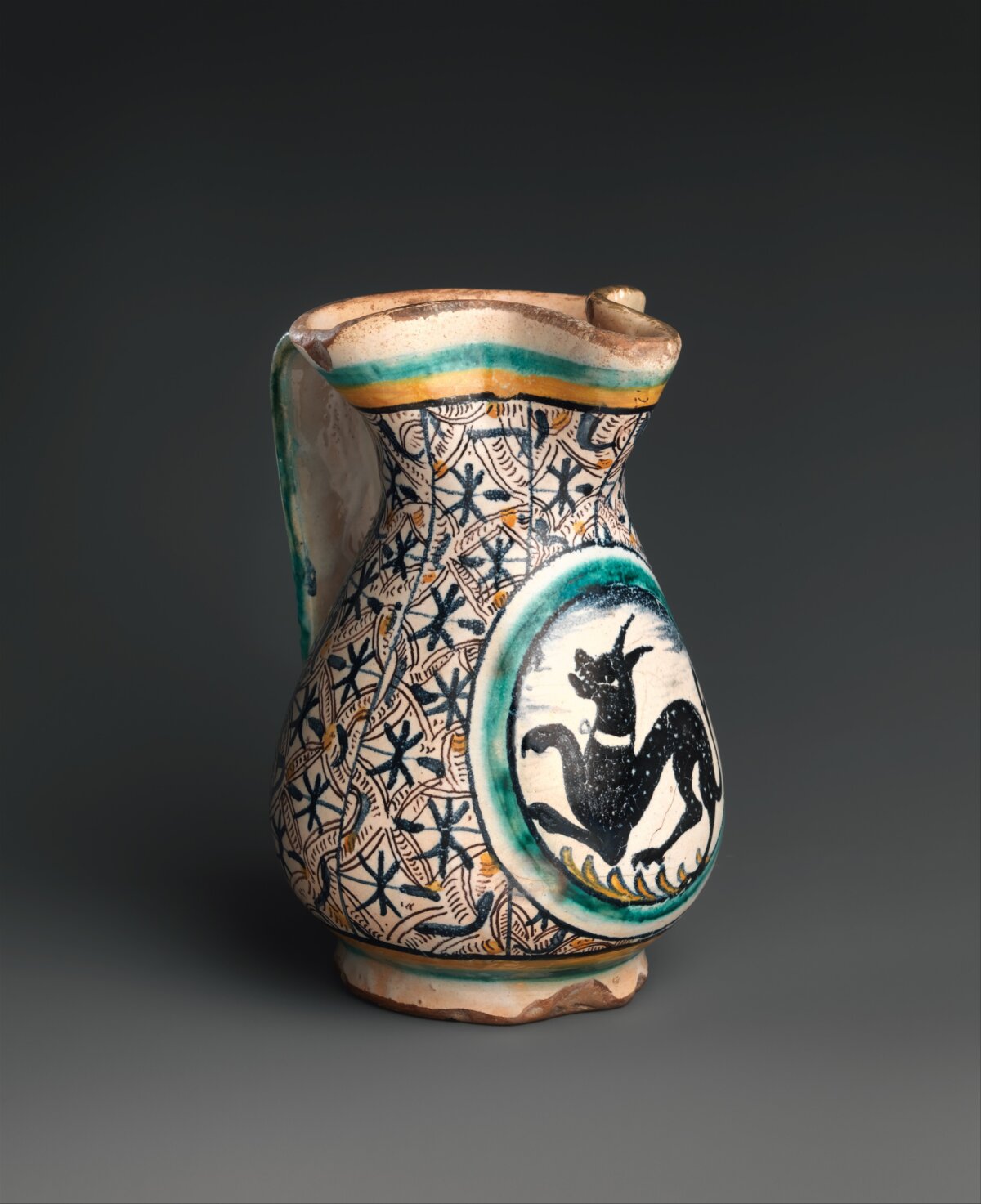
Amid this diversity, Italian maiolica rose to prominence in the late 15th century. This tin-glazed earthenware, inspired by the lusterware style from Spain, is known for its opaque white glaze, often painted in green, purple, and, later, cobalt blue. Highly prized for decorative display, religious rituals, and high-status dining, maiolica quickly spread across Europe and became an important trade commodity.
Together, these traditions reveal how different societies balanced utility, artistry, and cultural values.
Reaching for the Divine: Pagodas and Gothic Cathedrals
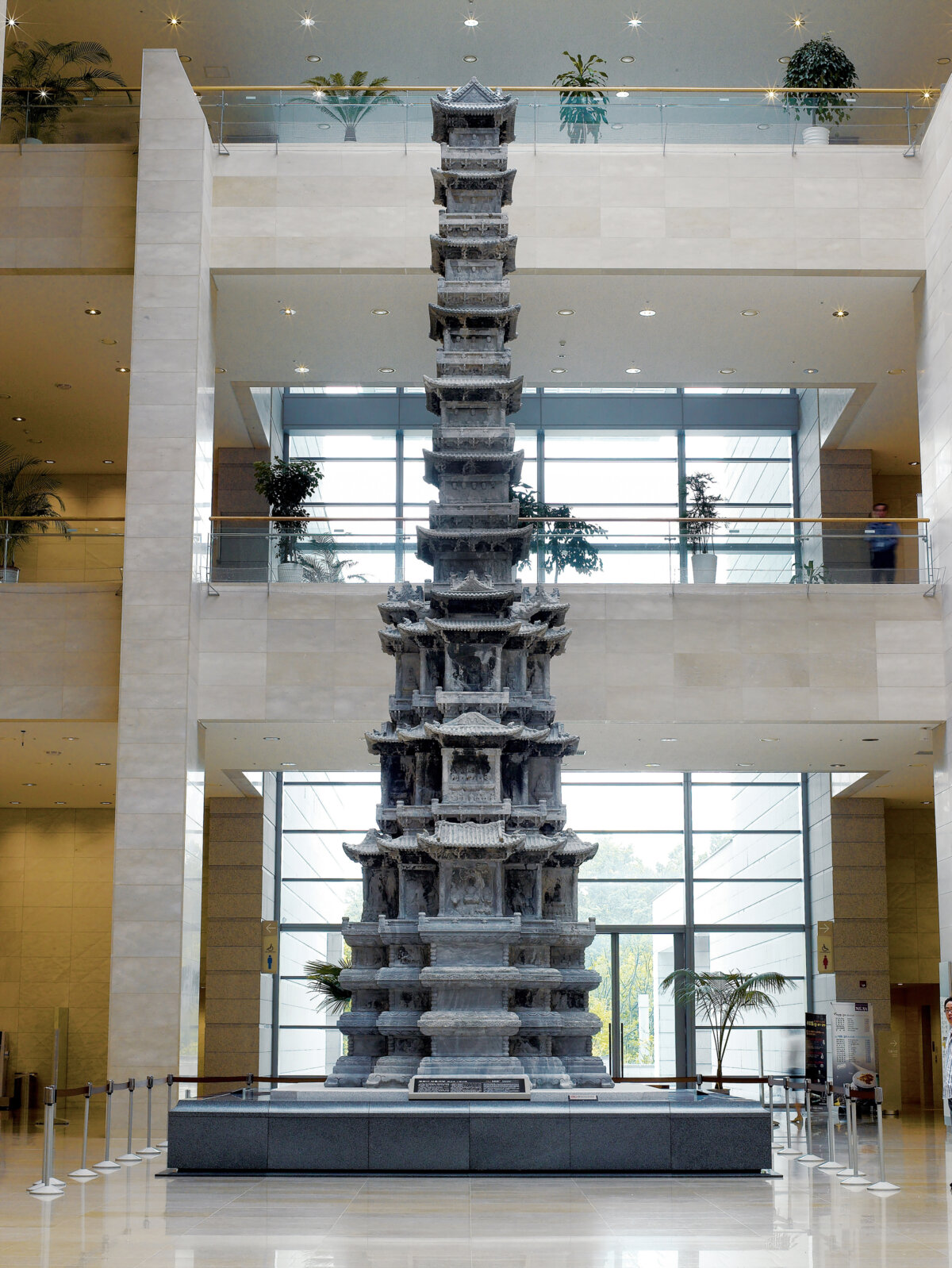
Korean and European architecture reveal two highly developed but contrasting approaches to sacred space. In Korea, pagodas—tiered towers for Buddhist worship and the housing of relics—evolved from simple wooden prototypes into elaborately carved stone structures. Early Korean pagodas retained the three-tiered simplicity of the Silla period (A.D. 668–935), but, over time, builders experimented with polygonal and cylindrical forms, often adorned with intricate reliefs of Buddhas, bodhisattvas, and guardians.
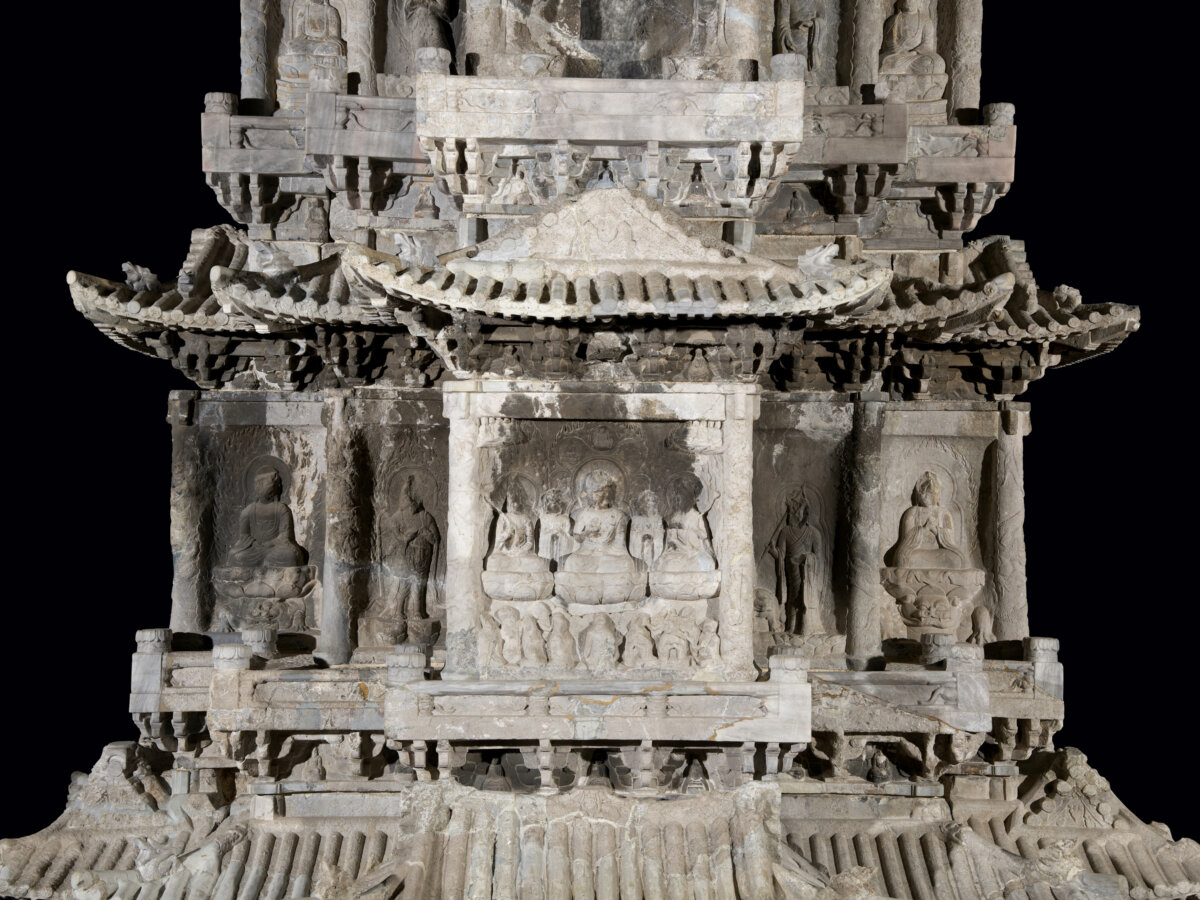
By the late Goryeo period, taller and more complex structures were erected, such as the marble Ten-story Stone Pagoda of Gyeongcheonsa Temple. Its lower stories reflected Tibetan-Mongolian Buddhist forms in a square-and-cross shape, while the upper stories follow the traditional rectangular design of Korean stone pagodas, resulting in a distinctive fusion of native and imported elements.
Gothic architecture emerged in 12th-century France and quickly spread across Europe, transforming how buildings were imagined and experienced. Its signature elements—pointed arches, rib vaults, and flying buttresses—allowed structures to soar skyward while accommodating vast windows that filled interiors with brilliant light. Cathedrals guided the eye upward through multiple stories to vaulted ceilings, creating a sense of vertical momentum that lifted the spirit.
Beauvais Cathedral exemplifies the daring extremes of this ambition. The vaulting in its 13th-century choir rises a staggering 153 feet, the tallest of any Gothic cathedral. Between 1569 and 1573, its tower reached 502 feet, briefly making Beauvais the tallest human-made structure in the world. Its designers pushed the boundaries of engineering and artistry, creating a cathedral that seems to defy gravity and reach toward the divine.
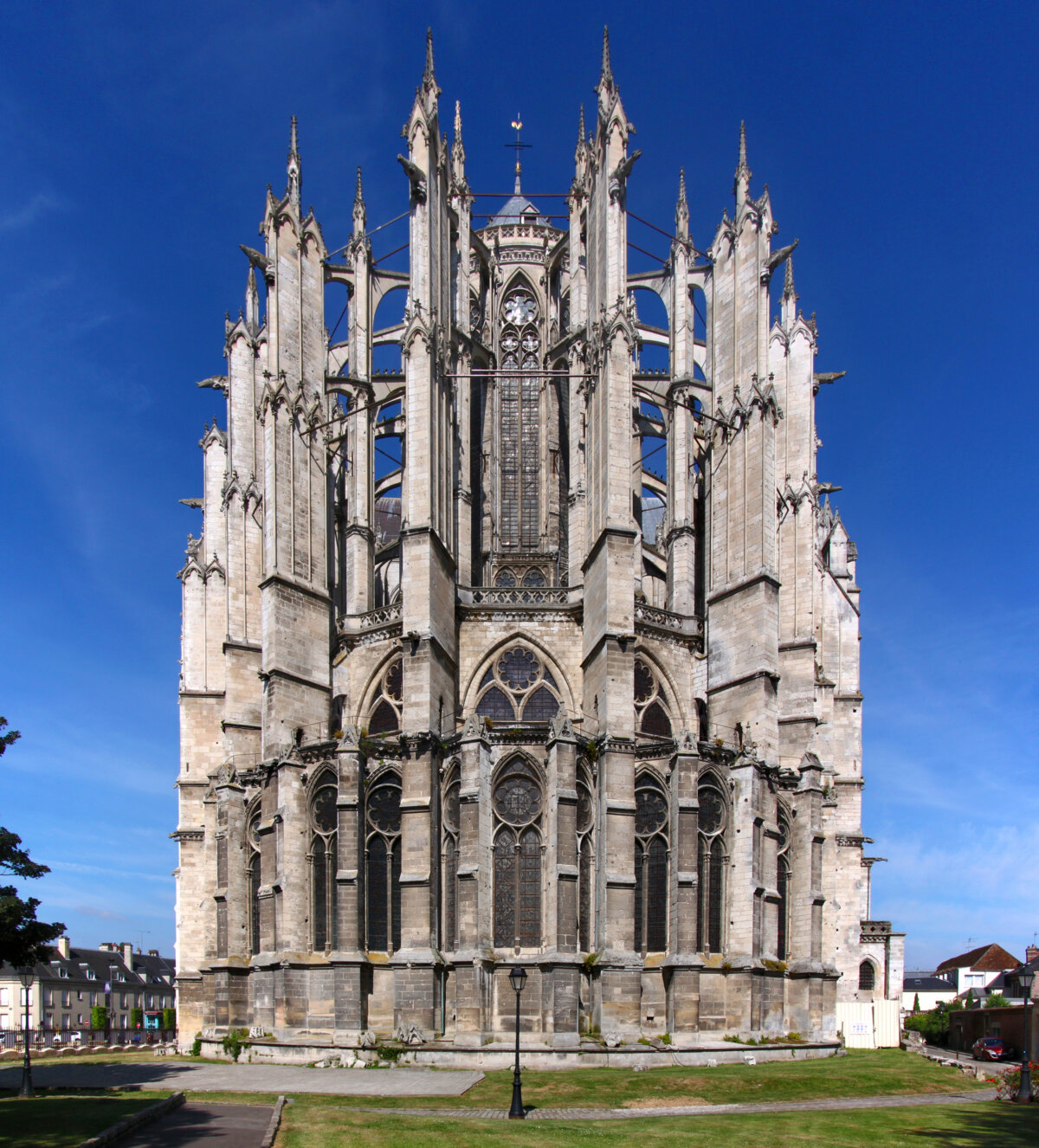
Both traditions integrated architecture with other arts. Korean pagodas incorporated sculptural reliefs directly into the structure, while Gothic cathedrals unified architecture, sculpture, and stained glass into a single immersive environment. Yet their guiding principles differed. Korean architecture prized balance, refinement, and harmonious proportion, whereas Gothic architecture was defined by expansion in both space and spirit, pushing toward light, height, and transcendence.
Illuminated Worlds: Manuscripts That Shine
Manuscripts from Korea and Europe show two rich but very different traditions. In Korea, sutras were closely connected to Buddhist rituals and state support, while in Europe, manuscripts grew out of Christian worship, monastic learning, and the tastes of the aristocracy.
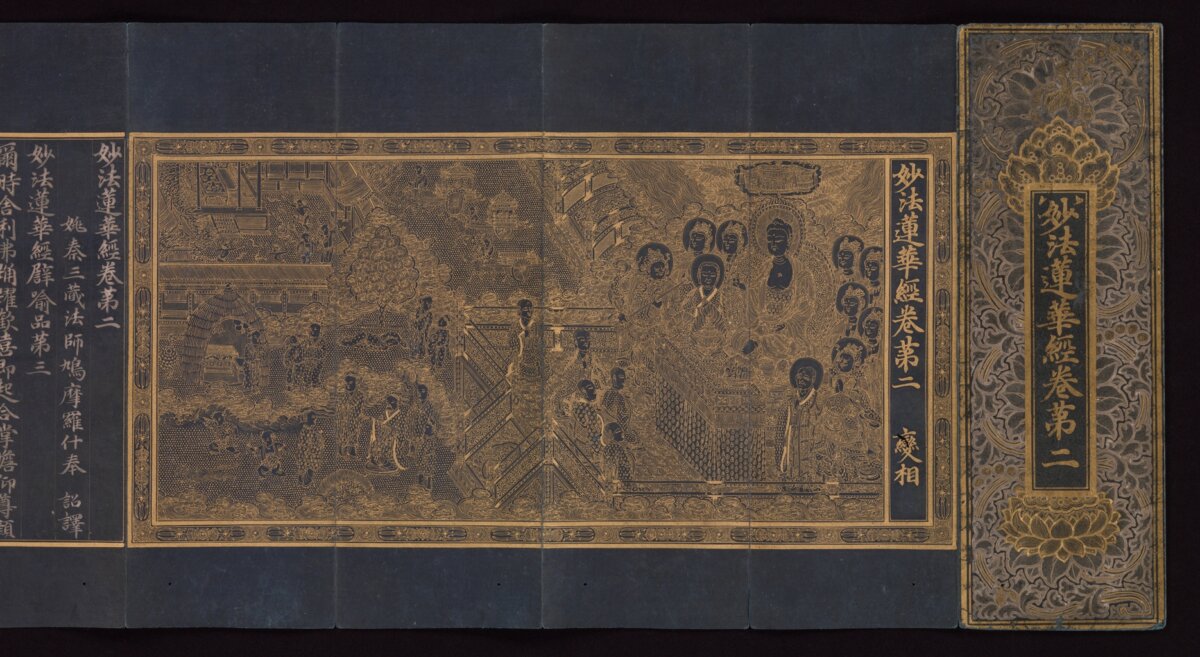
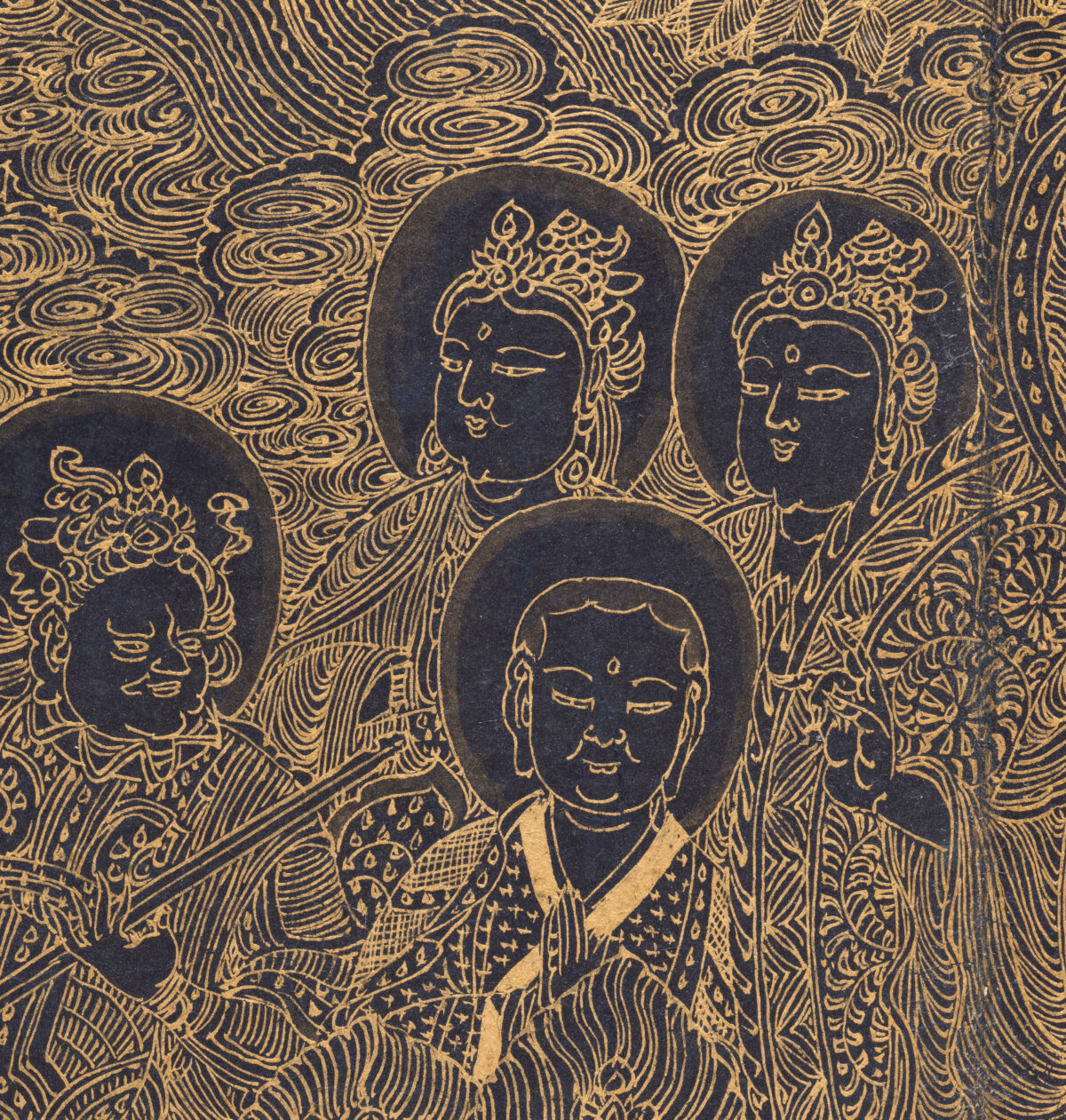
Korea’s manuscript culture flourished alongside advances in printing and calligraphy. Monumental projects like the Tripitaka Koreana, completed in 1251, demonstrate both technical skill and spiritual dedication. More than 80,000 woodblocks were carved to preserve the complete Buddhist canon, making it one of the most meticulously produced collections of sacred texts in the world. Illuminated sutras remained luxury objects, commissioned by royal courts, aristocratic families, and high-ranking monks for prayers, protection, dynastic stability, and spiritual merit. Korean mulberry paper, often dyed in deep hues such as indigo, purple, or ochre, provided a luminous base for gold and silver ink. Scribes and painters worked closely to produce precise brushwork, intricate drapery, floral motifs, and finely rendered sacred figures. Many were produced in an accordion-fold format, allowing viewers to take in continuous scenes.
European illuminated manuscripts brought stories to life, blending text and image in carefully structured page layouts. They wove together the fantastical and the everyday, portraying mythical creatures, aristocratic life, and sacred narratives, while gold leaf added a radiant glow. The “Queen Mary’s Psalter,” a lavish example, contains hundreds of miniature courtly scenes woven with dramatic biblical imagery. Owned by successive English monarchs, including Queen Mary I, it survives today as a striking testament to both the skill of its artists and the cultural prestige of medieval England.

Both traditions reflect a synthesis of artistry and devotion, with manuscripts created through collaboration among patrons, scribes, and painters, each detail designed to convey meaning and spiritual power. Their aims, however, differed: Korean sutras sought to evoke a serene, transcendent world, while European manuscripts drew viewers in with rich narratives and varied imagery, making sacred stories more immediate and accessible.
Across Europe and Korea, Post-Classical art reflects a shared devotion that transcends distance. Gothic cathedrals and Korean temples inspire awe, manuscripts shimmer with gold, and ceramics embody both function and beauty. Each work of the era was guided by faith, patronage, and cultural ideals, demonstrating how aesthetic vision can resonate across time and place.
What arts and culture topics would you like us to cover? Please email ideas or feedback to features@epochtimes.nyc.