



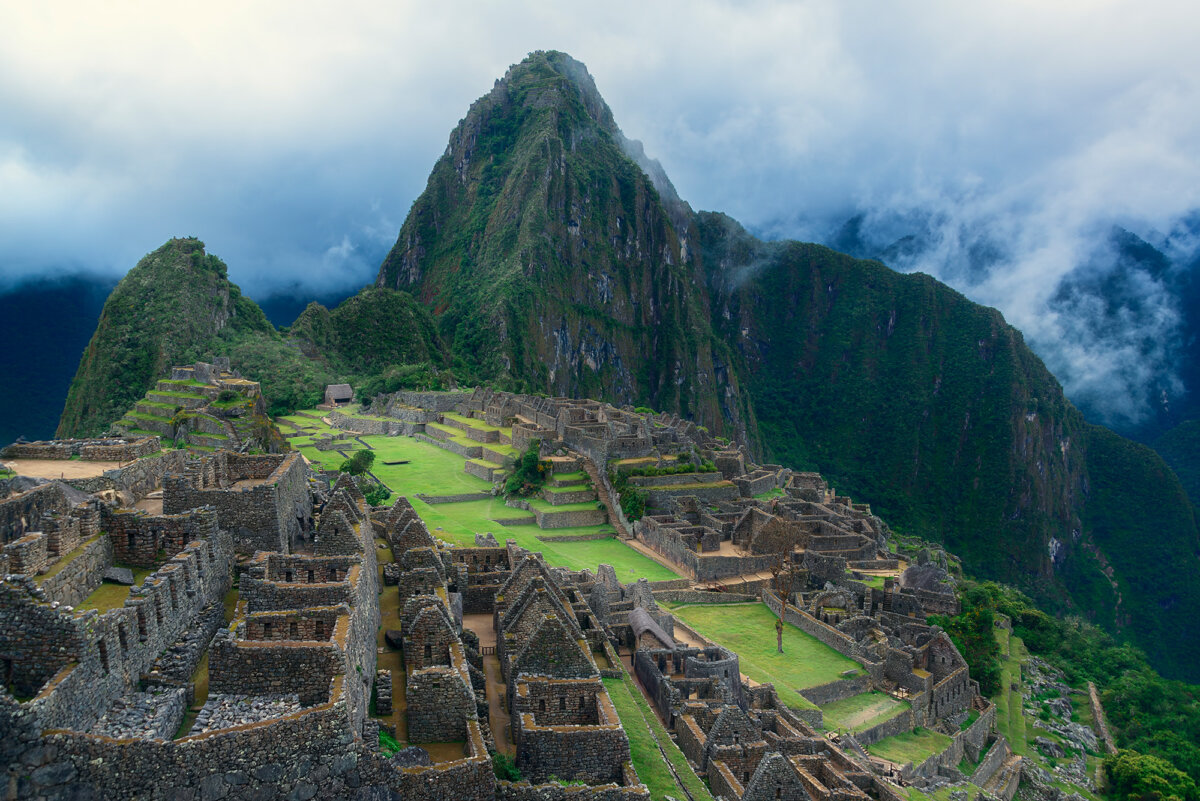
A real-life Indiana Jones set out on a chilly, drizzly July morning in 1911 to investigate rumors of Inca ruins. The intrepid Yale lecturer edged his way through jungle-tortured thickets and liana-choked trees, and crept through a murky morass concealing venomous pit vipers.
Hiram Bingham III struggled up a slippery, steep canyon often on hands and knees, sometimes holding on by his fingernails, he wrote. Reaching the jungle brow, the lost city in the clouds held him spellbound.
In our own travels, we, too, were captivated by Machu Picchu—and our entire Peruvian adventure with Kuoda Travel—from the emerald enclave of the Amazon to the glacial peaks of the Andes.
The country’s history and culture are as diverse as they are dramatic. The Inca citadels, the Uros floating islands, and Spanish colonial towns capture the collective imagination. Peru was named the best international destination at the National Geographic Traveler Readers’ Awards in 2024 and South America’s top destination at the prestigious World Travel Awards in 2025.
Creature Comforts in the Amazon
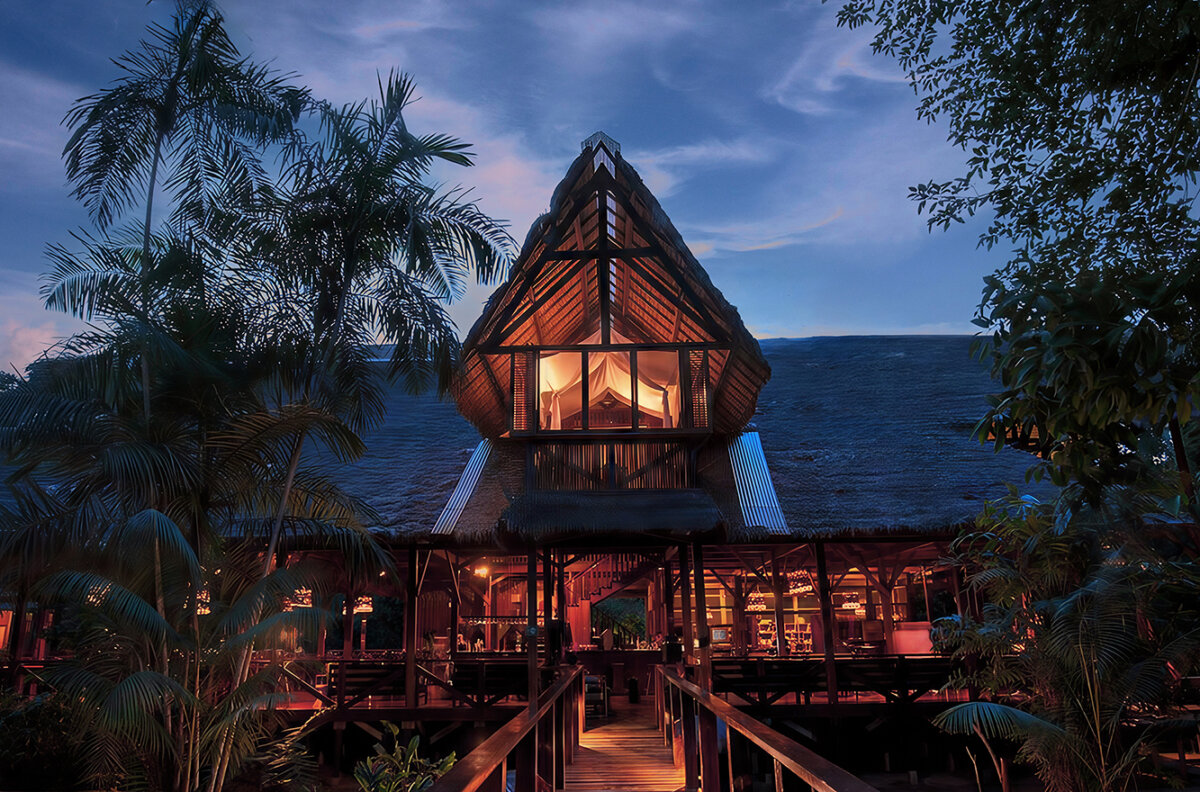
My wife, Maria, and I flew from Lima to Puerto Maldonado and headed up the Tambopata River in a long, motorized canoe to Refugio Amazonas. The private-reserve eco-lodge deep in the heart of the jungle looks like a Disney Animal Kingdom creation with its high thatched roofs and open-air design.
The 32 rustic-elegant rooms feature hot water baths and one wall completely open to the rainforest. The beds have mosquito netting, but insects were not a problem around the lodge.
Big blue morpho butterflies lolloped by our room. Scarlet macaws and brightly billed toucans flew overhead and perched in the acacia. Cicadas’ eerie, electric hum underscored the chiming choir of buzzes, hoots, and screeches that compose the Amazon soundtrack.
On a morning hike, we were amused by saddleback tamarins cavorting in blooming shimbillo trees. From the top of a canopy tower, the rainforest spread out before us the vision of a sylvan medley.
The day folded into a brilliant sunset, and darkness closed slowly around us like the coils of a giant python. A nocturnal walk was not for the squeamish. We spotted fanged, hairy tarantulas and poison-tailed scorpions.
Tailor-Made Travel
From the Amazon, we flew to Andean Cusco. Met at the airport by our private Kuoda Travel guide Edward Castro, 52, and our professional driver, we were whisked away in the comfort and convenience of our 2025 Hyundai minivan.
We had previously visited Peru on a big lumbering and wheezing bus, rolling past sights as the guide droned on through a microphone. By contrast, Castro was a passionate storyteller who inspired engaging conversation and infectious laughter during our intimate, seamless 11-day trip.
Every award-winning Kuoda luxury tour is tailor-made by its talented team. The boutique travel company has five-star reviews for its “exceptional customer service” in a half-dozen South American countries.
“I personally ensure that no detail is overlooked,” founder and CEO Mery Calderón, 48, said. “We live here, we know the people, and we understand the nuances.”
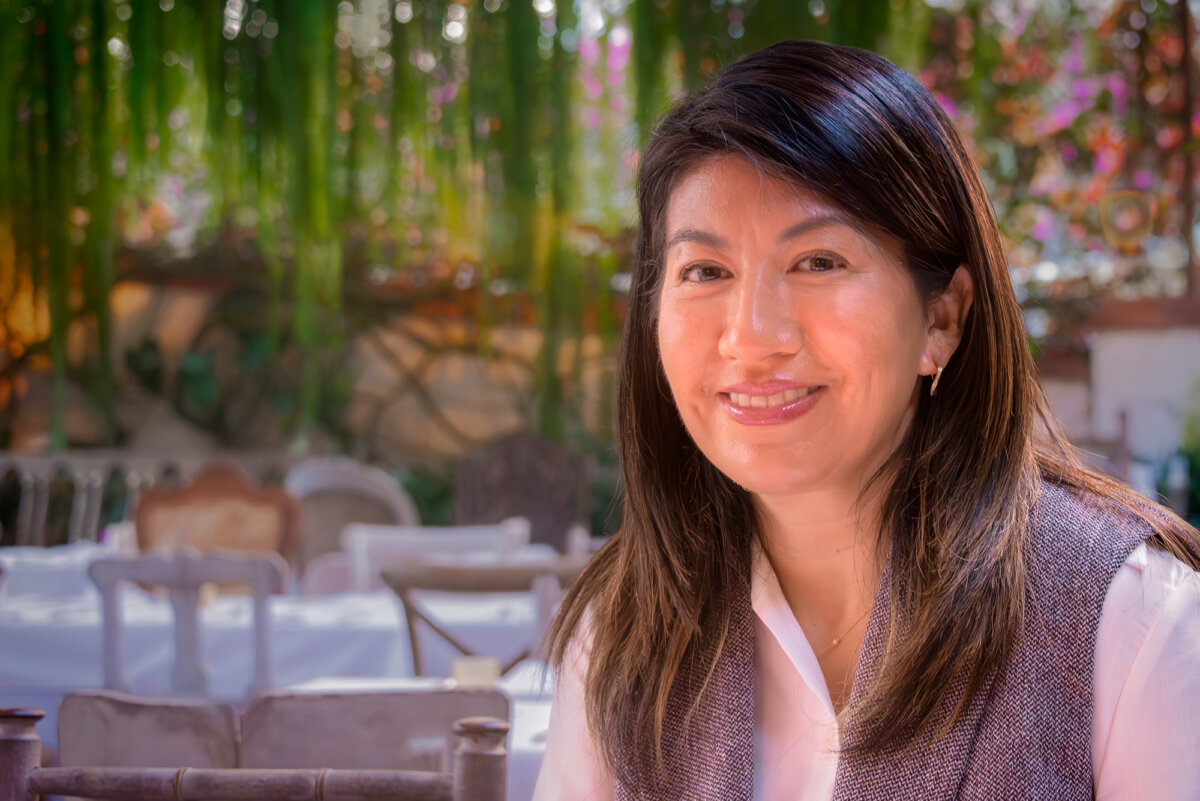
Calderón grew up in Cusco working in her mother’s small souvenir shop before graduating from college and succeeding in the hospitality industry.
“I was surrounded by travelers who came seeking wonder, yet many left without truly connecting with the spirit of this place,” she said. “I didn’t want them to just visit Peru; I wanted them to feel Peru—its people and the culture.” That was the catalyst for Kuoda Travel, established in 2004.
The Sacred Valley
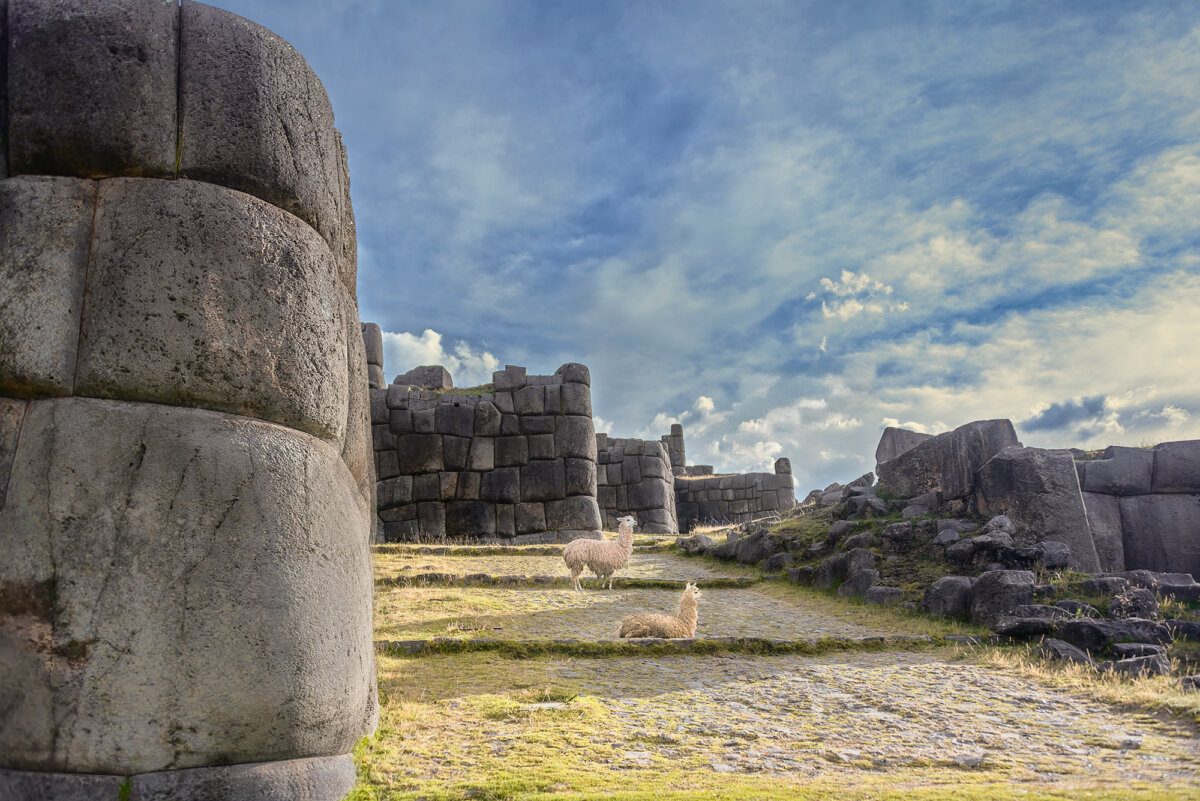
The first archaeological site on our bespoke itinerary was the 15th-century citadel-temple complex Sacsayhuamán, built on a rocky promontory above Cusco. The mammoth stone blocks, larger than those found in Egypt’s pyramids, are precisely fitted together without mortar, like a jigsaw puzzle.
We wound our way to the Sacred Valley that stretches 62 miles from Cusco to Machu Picchu. The Urubamba River flows through the highland valley where agrarian rhythms define life as they have for centuries. Oxen pull Quechua farmers’ wooden ploughs through fertile fields of quinoa, sweet potato, and purple corn beneath ice-encrusted crests said to embody the spirits of ancestors.
Horseback Riding and Time-Honored Rituals
The Sacred Valley is one of the top 10 horseback riding locations in the world, with its “dramatic setting in the Andes,” according to National Geographic. We were the sole guests at the stunning Salineras Ranch, where I rode a Peruvian Paso horse, a breed prized internationally for its exquisite gait. A trio of bilingual wranglers loped on horseback with me on a scenic trail that passed above the pre-Incan Maras Salt Mines still in operation today.
Wrangler Adriana Abril, 42, said she grew up watching American Westerns and wanted to be like John Wayne.
“I’ve always been a pony girl,” she avowed. “Horses are in my bloodline. When my grandmother was 12 years old, she ran away on horseback into the mountains. She is now 101.”
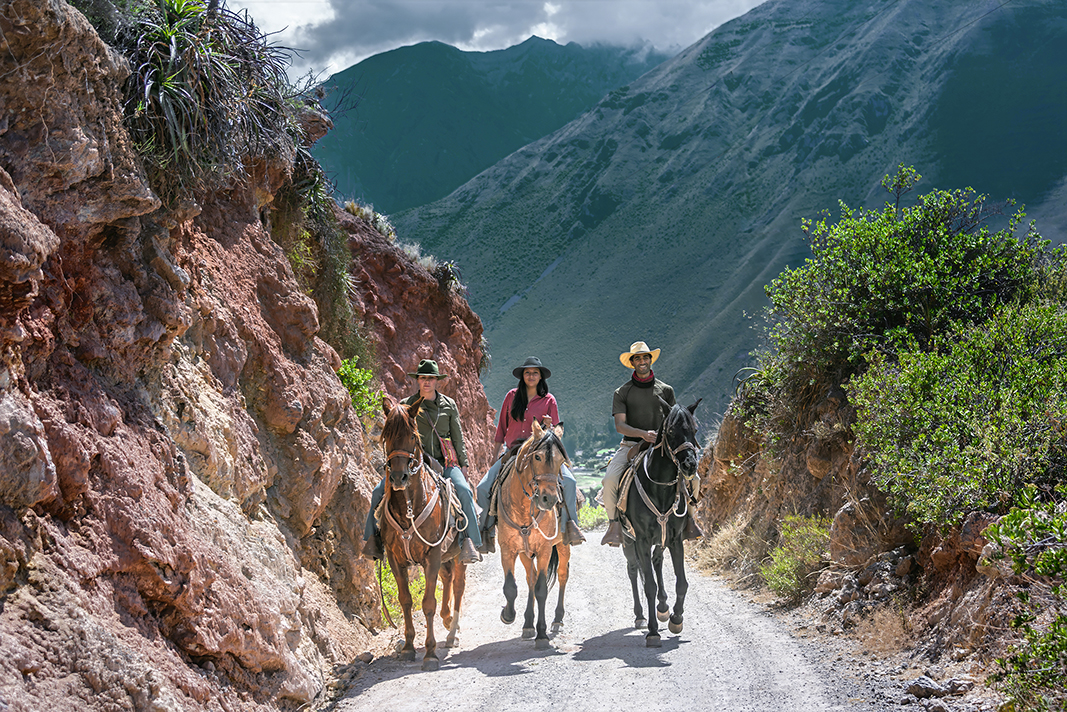
After my ride, we joined gracious ranch co-owner Iriana Valdivia, 47, in one of Peru’s most sacred rituals. Shaman Paco Luis Kaqllarakay, 52, performed the ancient Pago a la Tierra ceremony with coca leaves and fire to express homage to Mother Earth.
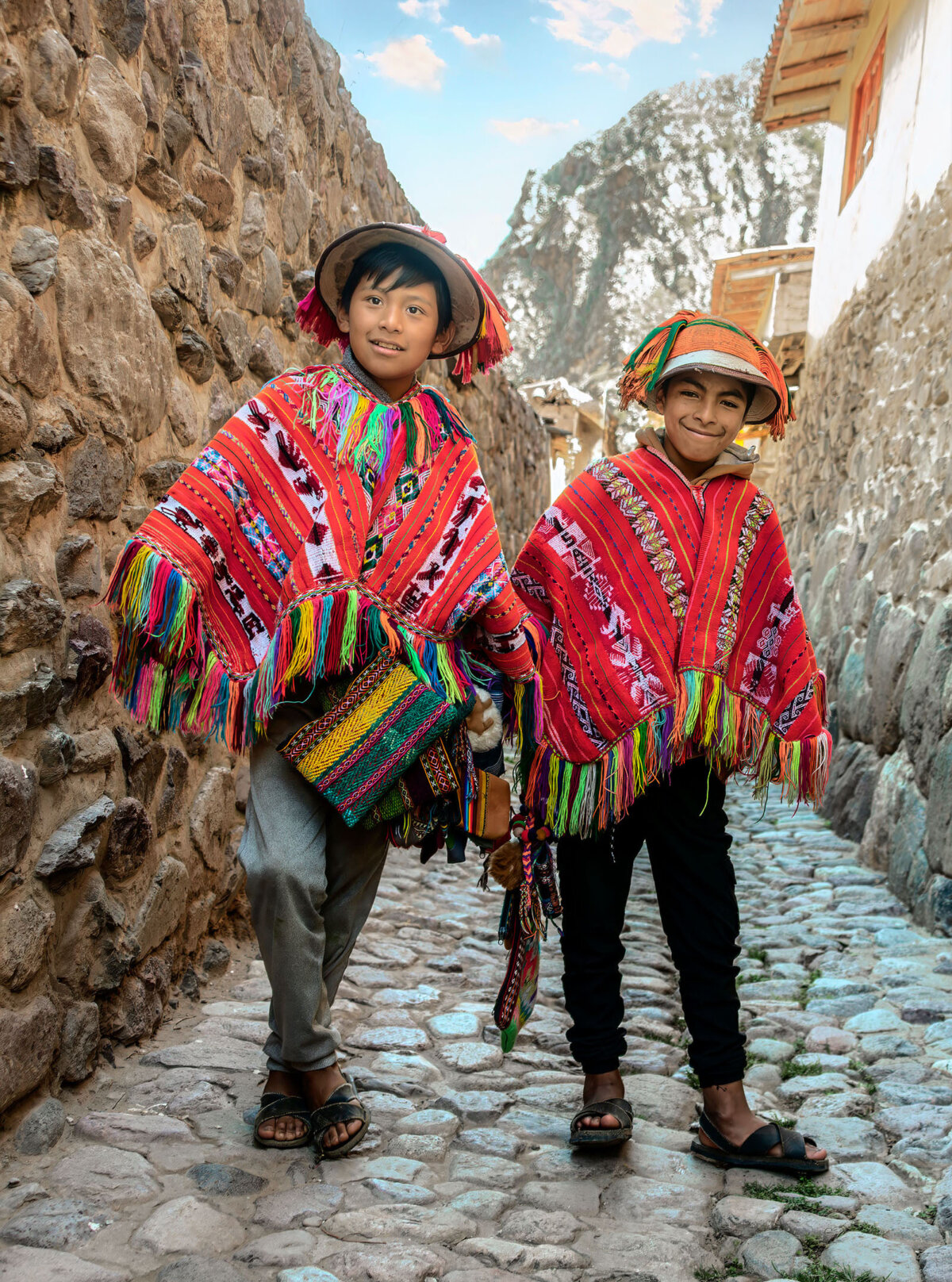
The unfinished Temple of the Sun crowns 17 terraces cascading down the mountainsides dominating the well-preserved Incan town of Ollantaytambo. We ambled the maze of narrow, cobblestone streets amiably, conversing through Castro with Andean-attired residents about their daily lives and customs.
For lunch in the El Albergue Restaurant’s secluded park, we gathered around the pachamanca. This age-old, earth-oven method of slow-cooking meats and vegetables buried in layers of scorching rocks and aromatic leaves is more than just a meal. It is a Peruvian culinary celebration of the earth’s bounty.
Lost City in the Clouds
In Ollantaytambo, we boarded a narrow-gauge train for the roughly hour-and-a-half ride through lush valleys and along rushing rivers to the town of Aguas Calientes. We spent the night at the superb Sumaq Hotel within the shadow of Machu Picchu.
Castro brought the sky-high site to life with his historical and cultural commentary all through our 5 1/2 hours of exploration of nearly every nook and cranny of the towering stone citadel that showcases the Inca civilization’s engineering ingenuity and architectural prowess. Built in the mid-15th century and abandoned about 100 years later, likely during the Spanish conquest, it housed between 750 to 1,000 residents.
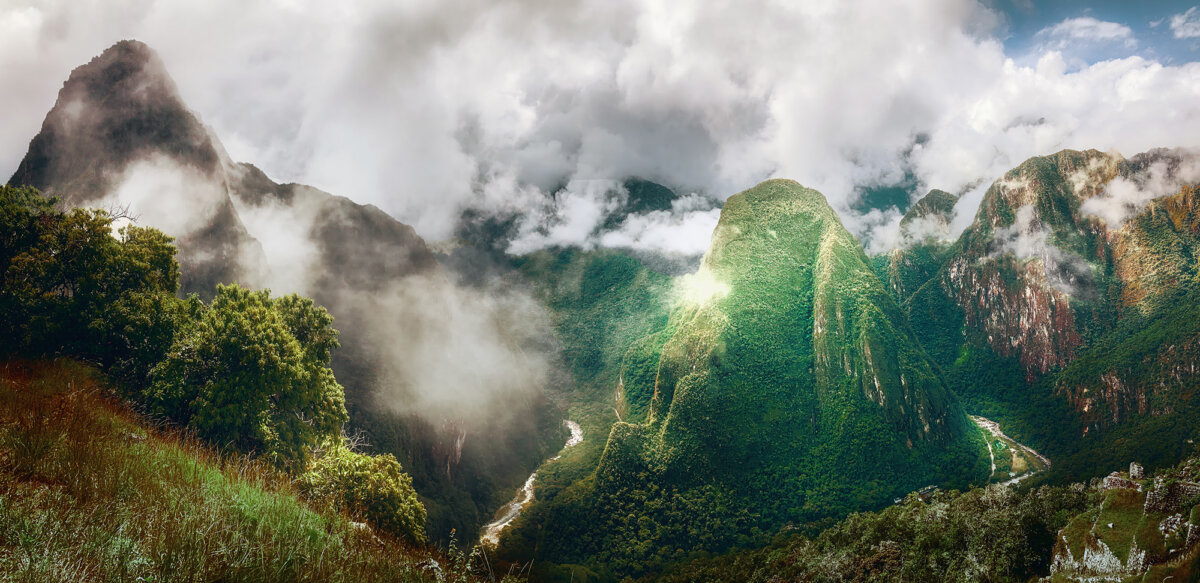
Machu Picchu offers more than venerable ruins.
“The beautiful blue of the tropical sky, the varying shades of green that clothe the magnificent mountains, and the mysterious charm of the roaring rapids thousands of feet below cannot be portrayed and can with difficulty be imagined,” Bingham wrote in National Geographic in 1913.
Inca Capital and Melded Cultures
Returning to Cusco, we stayed at the Palacio del Inka Hotel, where our room looked out on the Church and Convent of Santo Domingo. The restored five-century-old mansion reflects the melding of Inca masonry and Spanish Baroque architecture. It contains antiquities dating back to the pre-Inca period, as well as art from the 17th-century Cusco school.
History and culture are palatable in the 11,152-foot-high former Inca capital. Cusco was the political and spiritual epicenter of one of the most powerful and advanced civilizations in the world, which, at its pinnacle in the early 16th century, spread across modern-day Peru, Ecuador, Bolivia, Chile, and Argentina. However, the Inca Empire was but a brief 100-year chapter in the region’s millennia-old story.
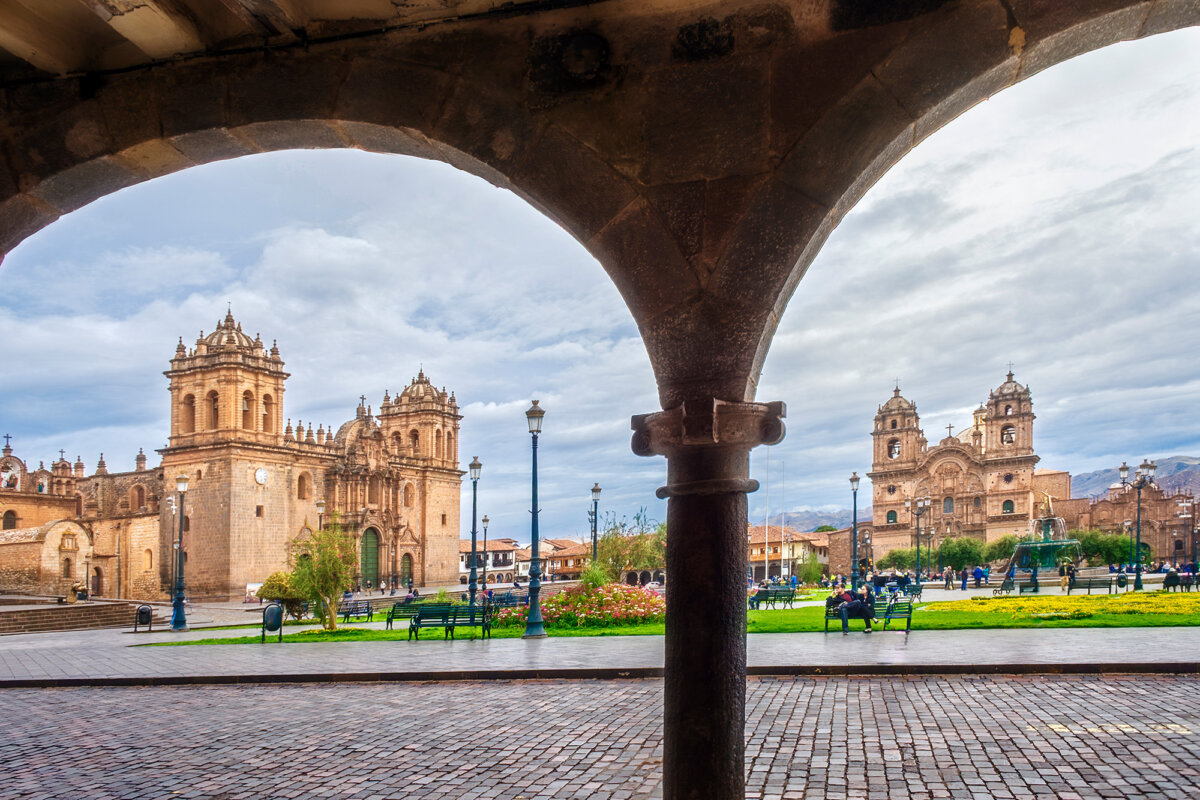
On the bustling main square, Plaza de Armas, the Cusco Cathedral, built over the site of the Incan palace of Viracocha, is a colonial masterpiece containing gilded artifacts and elements of indigenous culture—most notably, painter Marcos Zapata’s 1753 depiction of the Last Supper. Instead of bread and wine, Jesus and his disciples share a roasted guinea pig—sacred to the Incas and a popular Peruvian dish today.
Andean Camelids and Ancestral Craft
Just outside Cusco, we visited the Manos de la Comunidad haven for Andean camelids—llamas and alpacas and endangered vicuñas and guanacos—in a petting zoo setting. Its traditional textile center is a living museum where you can interact with local artisans.
Native women with long, black-braided hair, dressed in layered polleras (skirts) and embroidered jobonas (wool jackets), practiced their ancestral craft weaving. Some of the almond-colored faces were lined with deep wrinkles and were leathery from the harsh sun, but nimble fingers created intricate patterns from spools of naturally dyed wool yarn.
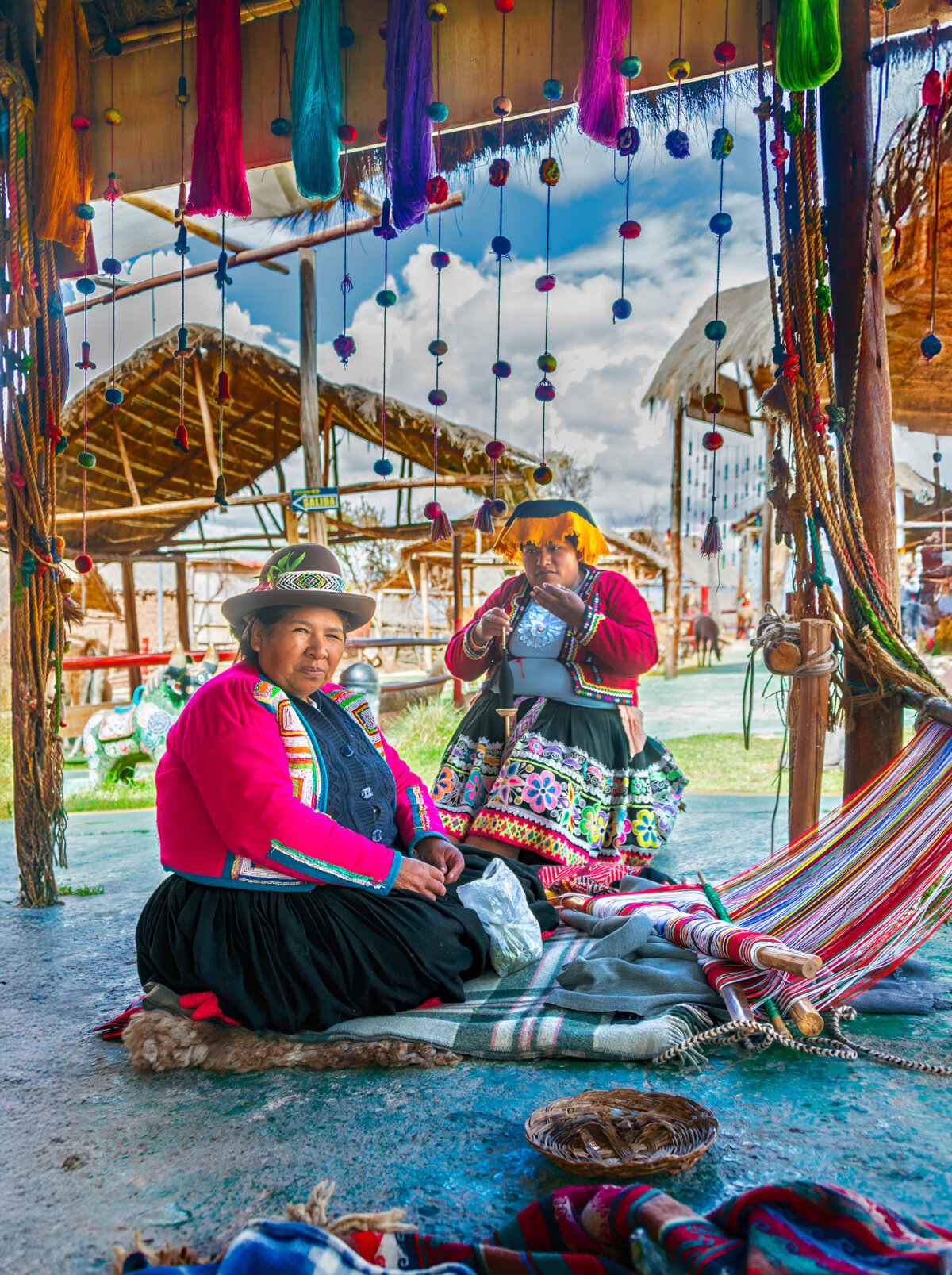
“For the Incas, the designs were a way to communicate, as they did not write,” Willie Espinosa Bustamante, 27, whose mother taught him to weave, told us. “Each of the designs are expressions of identity, history, and artistry.”
Floating Islands and Fanciful Charm
As the golden rays of sunrise gleamed on the cathedral dome, we cruised out of Cusco with Castro and our driver, destined for Lake Titicaca. After a 250-mile wayfare on remote Ruta del Sol, we arrived at the hilltop Casa Andina Hotel. Entering our room, we stood transfixed, staring at Lake Titicaca bathed in the pastel hues of sunset.
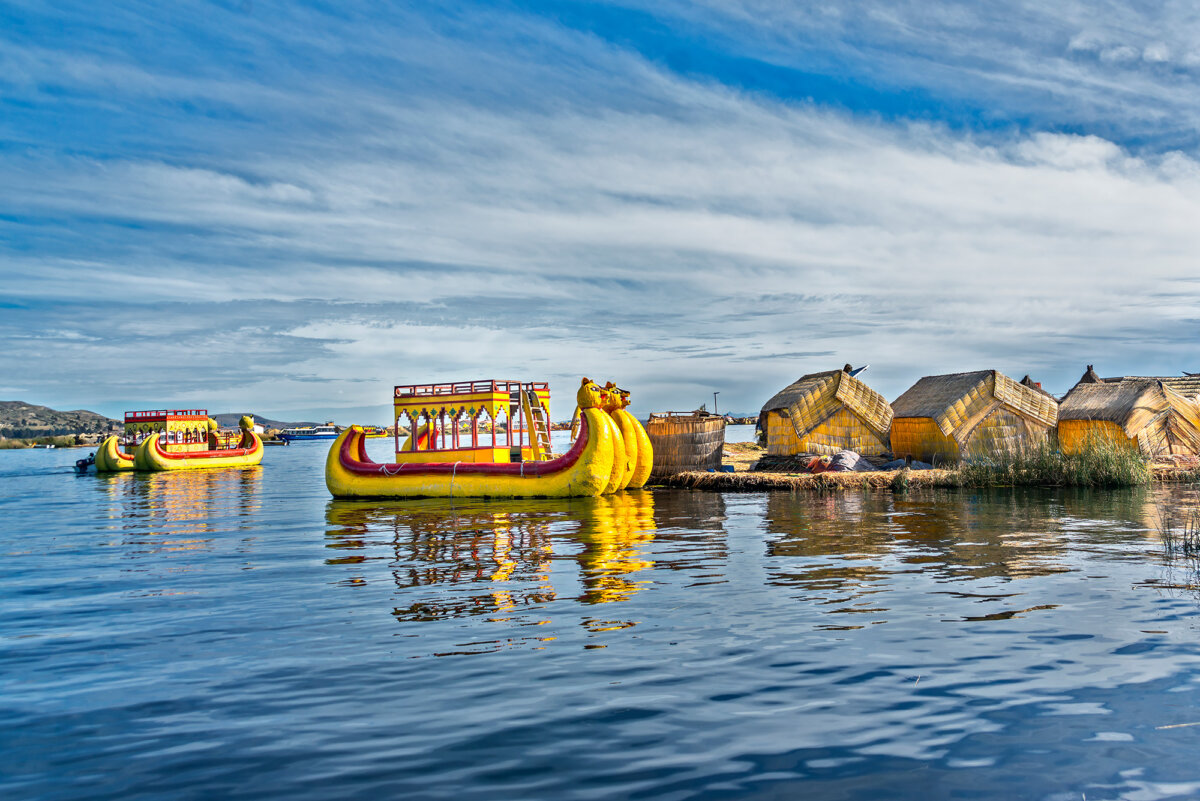
Kuoda chartered a private boat for us to the Uros Islands and Taquile Island on the world’s highest navigable lake, at an elevation of a little more than 12,500 feet. We moored among the dozens of Uros floating islands with small, thatched hut settlements. The man-made aquatic-reed atoll that requires constant maintenance is home to 1,200 indigenous Uros who fled the mainland more than 500 years ago in the face of Inca expansion.
The woven island surface that felt spongy underfoot is basically a wickerwork basket. Even the boats are fashioned out of totora reeds. Totora canoes were hauled up on shore for a Sunday get-together with young men playing soccer and young women playing volleyball in traditional dress.
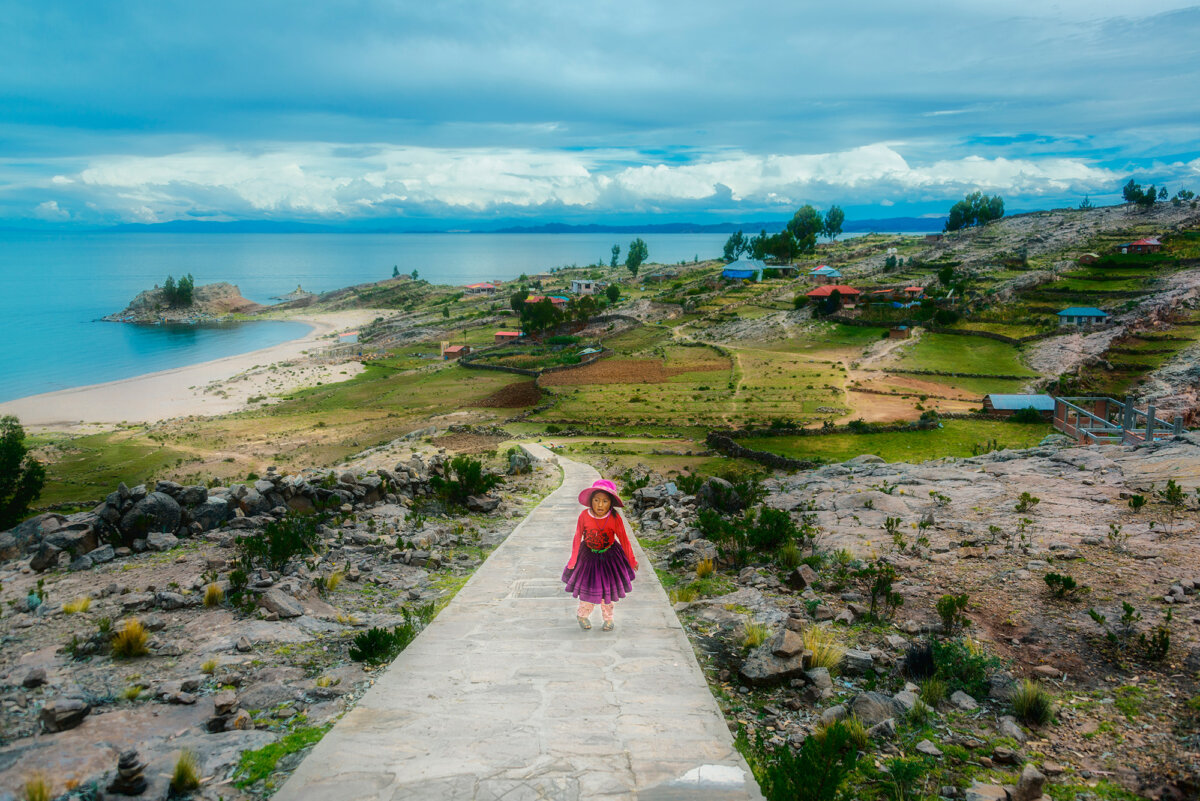
We sailed about an hour and a half across harvest-blue water to Taquile. The authentic Quechua experience on the island of two square miles conveys fanciful charm. The hilly terrain is blanketed with handkerchief-sized farmsteads bounded by thigh-high rock walls, accessed through wooden gates on hinges made from soles of old shoes.
Stone walking paths wind amid wildflower-sprinkled meadows, with grazing sheep and alpacas, in a whimsical way reminiscent of the yellow brick road. Men wearing vibrant vests and wide sashes stroll along the pathways, knitting decoratively patterned chullo hats with cactus thorns. Their marital prospects are measured against their knitting skill by the island’s women, who spin the wool.
We strode a mile or so to a summit restaurant at an elevation of nearly 13,300 feet for a fresh-caught trout lunch. Our patio table overlooked the immense, luminous lake with the heavily glaciated Cordillera Real range that rises upward to 21,000 feet visible beyond the distant Bolivian shore.
Spirit of Adventure and Soul of Service
Bingham first glimpsed the mountaintop marvel Machu Picchu buried beneath a veil of moss and tangles of vines. Calderón met our plane in Lima and hosted us for a farewell dinner at the Museo Larco surrounded by flowering bougainvilleas and luxuriant gardens. Bingham’s adventure-seeking spirit and Calderón’s white-glove service and warm hospitality woven into the culture’s DNA capture the essence of our unforgettable Peruvian journey.
If You Go
Kuoda luxury tours: KuodaTravel.com
