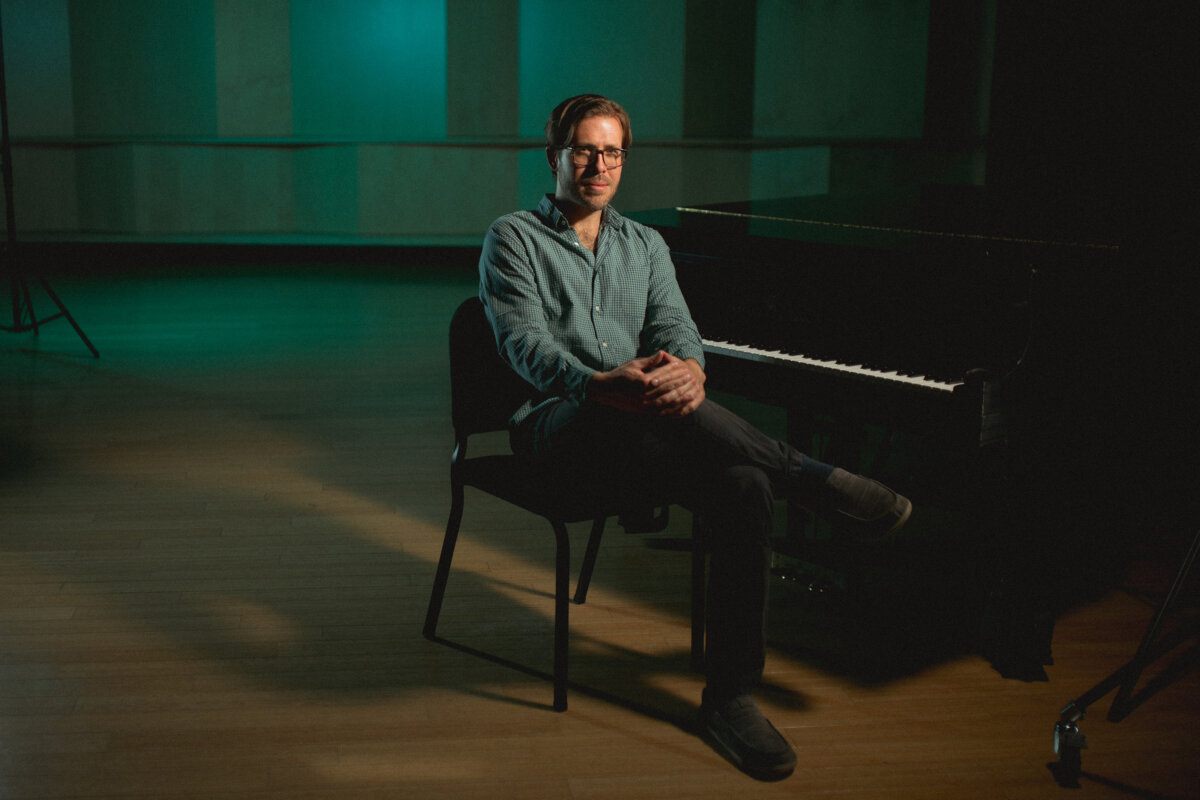
In the heart of Pendleton, Oregon, a town alive with legendary rodeos and endless skies, Chris Thomas discovered music as a child. What began as simple curiosity soon became a lifelong passion that would shape every part of his career. “I’ve been playing music for as long as I can remember,” he told The Epoch Times, recalling a world filled with melodies that never let go.
His upbringing played a decisive role. With a father who served as a choir director and a mother who sang and played piano, music was not just encouraged but also woven into daily life. What began at the piano eventually expanded to the cello, his primary instrument through college. But the defining moment came when he realized the melodies he heard in his mind were not borrowed but entirely his own.
“The biggest shift in my life was discovering the tunes I was always hearing in my head were original,” he said.
His father responded with a simple but lasting gesture, taking him to a sheet music store and pointing out blank staff paper. “He explained, as authors write books on blank paper, this paper was for telling musical stories if I filled in the notes,” Thomas recalled. “I knew immediately I was destined to become a musical storyteller.”
That instinct has guided a career spanning a diverse array of genres, from concert halls to film, television, and theme parks. Thomas, a graduate of the University of Southern California’s scoring program, has contributed music to Emmy-nominated and Academy Award-shortlisted films, and has been recognized with the Hollywood Music in Media Award and the American Prize in Composition for his work “Imagine Symphony Live.” His compositions have been performed at venues such as Carnegie Hall, the Hollywood Bowl, and the Sydney Opera House, with ensembles such as the Los Angeles Philharmonic and Pacific Symphony. His immersive work has also been featured in major theme parks, including Universal Studios.
Yet despite that range, Thomas continues to return to the same central idea. Music, at its core, is storytelling.
“While authors and visual artists have their own ways of evoking story, composers have their own language for doing the same,” he said. “We write motifs and themes that evolve and transform. We create chains of harmony that take you through the entire color wheel of emotional states.”
‘Poetic Compositions’
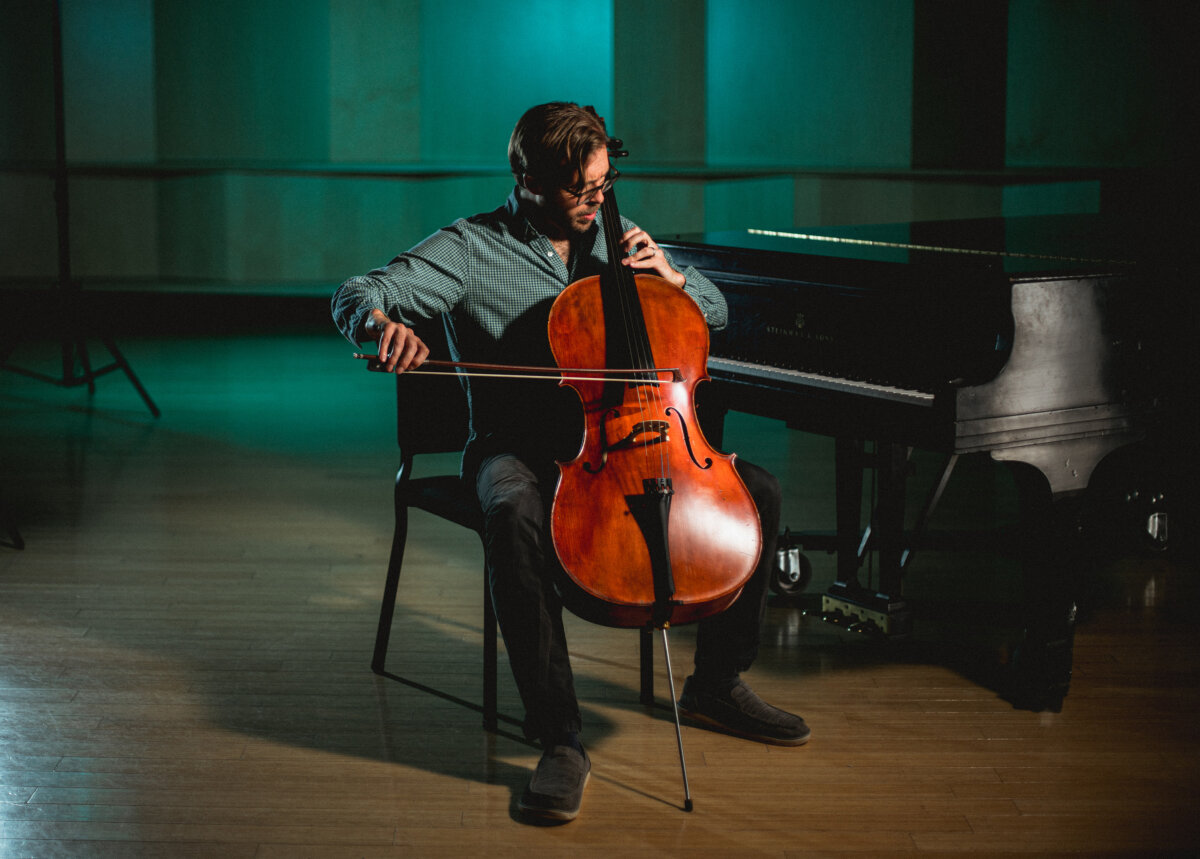
Storytelling is at the heart of Thomas’s latest composition, “Celestial Threads,” a song cycle for mezzo-soprano and chamber orchestra inspired by traditional Korean sijo poetry.
Thomas did not initially set out to explore sijo. Instead, the discovery unfolded gradually.
“I started reading lots of poems and saving ones that resonated,” he said. “I kept finding these little gems that reminded me of Japanese haiku. They were concise and elegant.”
Over time, a pattern became clear. “Eventually I noticed they all had something in common. They were sijo poems,” he said. What followed was an intense period of focus. “I became obsessed with it for about three months.”
What drew him in was not only the brevity of the form, but also its ability to transform meaning in a single turn.
“You get about two and a half lines developing an idea, and then the final few syllables introduce what’s called a twist,” he said. “That twist completely recontextualizes what you just read.”
As he studied further, Thomas began to see a broader philosophical thread running through the poems. “They often reflect on the relationship between the heavens, nature, fate, and the human soul,” he said. “There are these conceptual threads connecting heaven and earth.”
From that insight, the structure of “Celestial Threads” emerged. “I realized I could structure the work so the poems formed a conversation between heaven and earth,” he said. “Each movement alternates between the two. If you split the cycle in half, the poems actually mirror each other. Conceptually, it forms a circle.”
That sense of circularity is something Thomas sees echoed throughout music history itself.
“I’ve always been captivated by what I call the ‘great circular exchange,’” he said, referring to the way musical ideas travel across cultures and generations, influencing and returning to one another over time. Nineteenth-century European composers were influenced by Asian traditions, including gamelan music, and later Asian composers rediscovered aspects of their own heritage through Western reinterpretations. “The influence traveled in a big circle,” he said. “You can’t disentangle these traditions anymore. They’re already woven together.”
Thomas’s own musical voice reflects that interwoven quality, shaped by both Western and non-Western traditions.
Finding an Authentic Voice
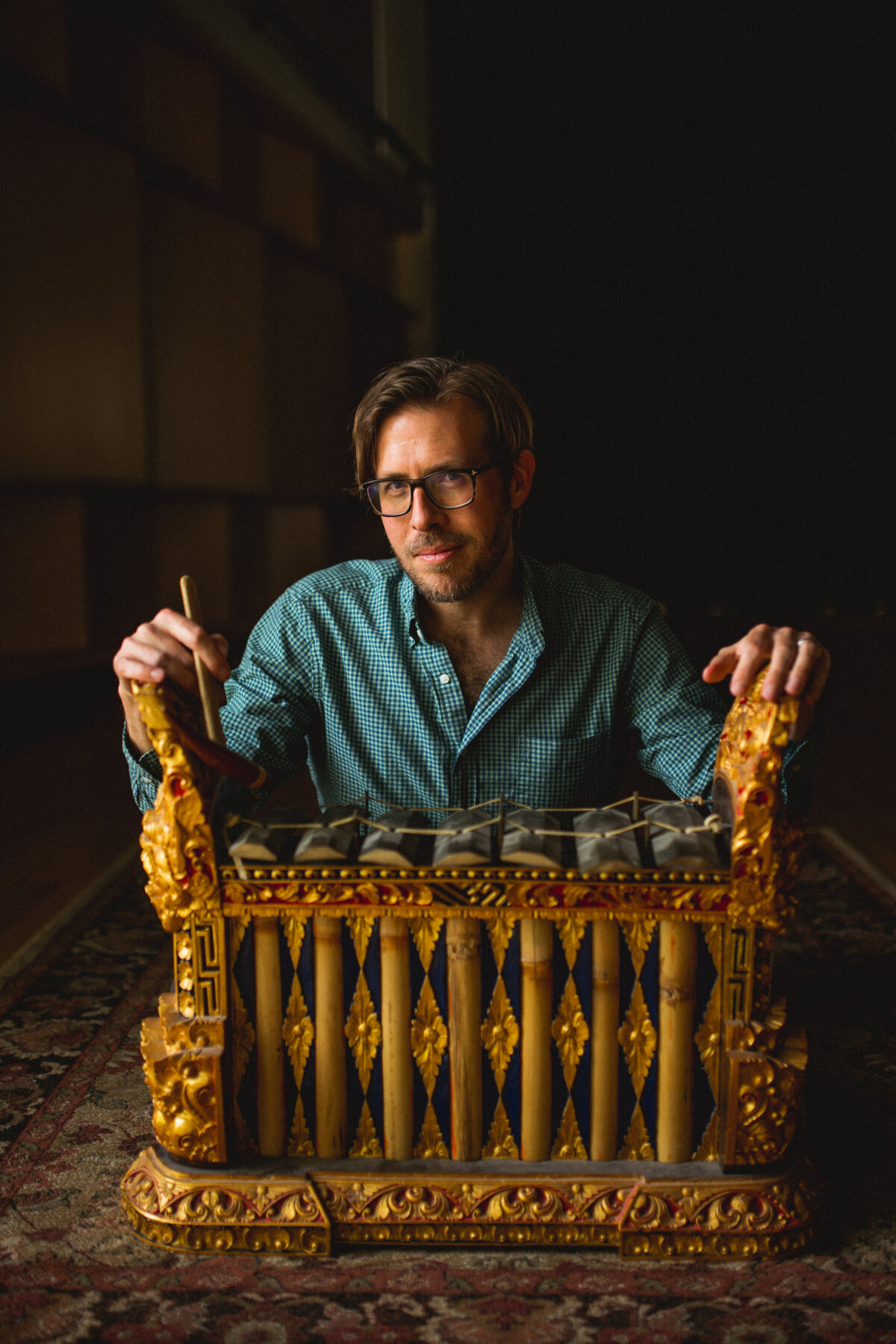
By age 10, Thomas had immersed himself in Beethoven, determined to play the composer’s keyboard works. But his path soon broadened. The cello opened doors to orchestras and ensembles that allowed him to experiment as a composer, while his growing interest in percussion led him into entirely new musical worlds.
“Personally, my favorite section of the instrumental world is percussion,” he said. “I spent years playing in Balinese gamelan ensembles, various mallet instruments, and lots of world percussion.”
That experience proved formative. “The Pelog scale, which comes from Balinese music, became central to how I understand harmony,” he said. “My concert music is also very rhythmic, which comes directly from that influence.”
Even so, finding his authentic voice required a period of reassessment.
“For years, I tried to fit myself into the European classical tradition, but it never felt authentic,” he said.
The realization that followed was simple, but transformative. “I’m just an American composer.”
He traces that identity back to his roots. “I grew up playing fiddle music and gospel music. That Americana sound is in my blood,” he said. “Once I stopped trying to imitate European traditions and embraced my own influences, everything changed.”
The shift was immediately apparent. “The first time I wrote something that truly felt like my own voice, my wife heard it and immediately said, ‘That’s you,’” he said. “It was the first time I felt like I was really speaking through music.”
That clarity now informs not only his concert work but also his approach to film scoring.
“Like any good score, it doesn’t begin with all the things you see around you,” he said. “It comes from something deep in the heart of a character.”
Even the most complex narratives, he said, are grounded in simple human emotion. “There’s always something a character yearns for or aches for—something understandable by anybody,” he said. “That’s the emotion that animates everything.”
Once that emotional core is found, the music can take shape in many forms. “If you can find the music for that one deep, internal part of them, then that theme can do everything you need it to do,” he said. “All good scores start right there, in the heart.”
‘Great Circular Exchange’
For “Celestial Threads,” Thomas also drew from established vocal traditions. Inspired in part by composers such as Gustav Mahler, he chose to write for mezzo-soprano, a voice he describes as having a darker, richer tone capable of conveying emotional depth.
At the same time, the work engages with broader questions about culture and artistic exchange.
“Well, I’m an American composer writing music based on Korean poetry,” he said. “Some people might question whether that’s appropriate.”
His response reflects both historical awareness and personal conviction. “My view is that culture grows through exchange,” he said. “Music history is full of examples where traditions influence each other. It’s all interconnected.”
He acknowledges that this perspective has not always been universally accepted. “There was a period where some of my works were actually removed from concert programs because they referenced musical traditions outside my background,” he said. Yet even those moments led to unexpected discoveries. “I discovered incredible music I might never have heard otherwise.”
For Thomas, the conclusion is clear. “At the end of the day, the beauty of art is how cultures influence each other,” he said. “They’re already woven together.”
Looking to the future, he sees both opportunity and challenge. While music continues to evolve, his concern lies in preserving the integrity of the creative process.
“My greatest concern is that we avoid creative outsourcing to AI,” he said.
For Thomas, creation is not simply about producing a finished work. It is a process that shapes the artist.
“The struggles, setbacks, and challenges to your vision are the weights in the creative gym,” he said. “To welcome that process is the path of true personal growth.”
It is a demanding path, but one that he believes is essential.
“It will transform you into a person of greater authenticity and insight,” he said.
In that sense, “Celestial Threads” is more than a composition. Like the ancient poems that inspired it, it reflects an ongoing dialogue between past and present, between cultures, and ultimately between the inner life of the artist and the world around him.
What arts and culture topics would you like us to cover? Please email ideas or feedback to features@epochtimes.nyc.