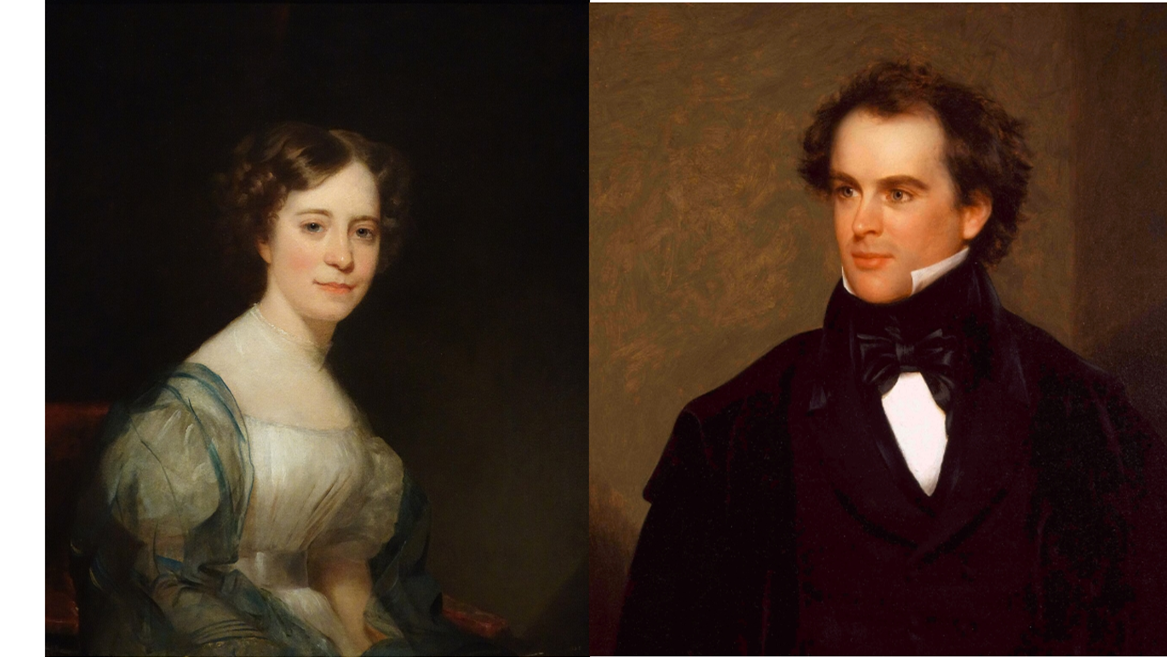
History classes today tend to focus on politics, government, and military events, which could be considered the body of the nation. Nevertheless, art is the nation’s soul. The mid-19th century was a period of rich artistic development across art, music, and literature.
Cities on the East Coast, especially in New England, nurtured critical thinking and education. The three Peabody sisters influenced this American Renaissance through their writing, artwork, and business pursuits. They also supported and influenced some of the most important creative men of the day.
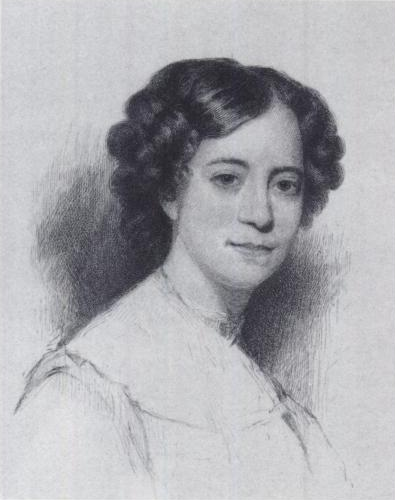
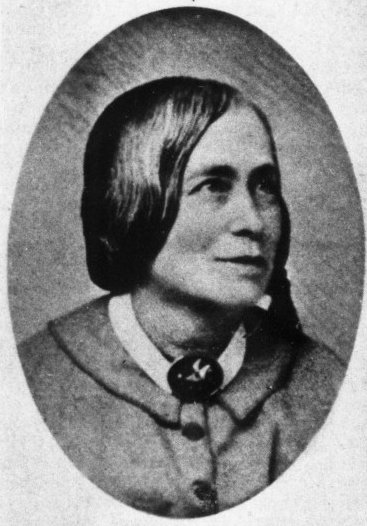
The youngest of the Peabody sisters, Sophia, was a sensitive woman of fragile health who managed to capture the heart and hand of New England’s most eligible literary bachelor, Nathaniel Hawthorne. She was a painter, sculptor, illustrator, and writer, whose greatest masterpiece was, perhaps, her husband’s literary reputation.
The Peabodys
Sophia Amelia Peabody (1809–1871) was born in Salem on Sept. 21, 1809. She was the third daughter of schoolteacher Elizabeth “Eliza” Palmer and Dr. Nathaniel Peabody, a general practitioner turned farmer and, later, dentist. Eliza had married young for security, yet her mild-mannered husband often failed to provide a good living for her and their six children.
The strong-minded Eliza supplemented the family income by teaching and tutoring, particularly girls, since she passionately believed in the education of women. Not wishing her daughters to be restricted by obligatory marriage, she taught them thoroughly and created a cultured, intellectual environment in which they could flourish.
Sophia was in poor health, suffering from severe migraines, which required her mother’s care.
For over 50 years, Louise Hall Tharp’s biography, “The Peabody Sisters of Salem” (1950), was the definitive source on the talented trio, although the author relied on conjecture rather than research and generalization rather than fact.
According to Megan Marshall’s biography of the three sisters, “The Peabody Sisters: Three Women Who Ignited American Romanticism” (2005), Sophia was the sister who “everyone agreed possessed the greatest degree of genius.”
Marshall’s book, which is the result of two decades of in-depth research, paints a very different picture from Tharp’s. The sisters’ lives were tightly interwoven; they relied on each other and their own intellectual abilities rather than husbands for much of their early lives. Although least credited for making an impact on the world, Sophia was the most creative of the three.
An Artistic Life
In childhood, Sophia studied ancient and modern languages, classical literature, and poetry. However, she found her true love when she began drawing at age 13. As she grew into womanhood, Sophia saw the visual arts as her creative calling—a possible means of support if she didn’t marry. She was one of the earliest serious female painters in the United States. She gained artistic mentors not through family connections but through genuine admiration of her talent.
In the cultured environment of Boston, Sophia’s first art mentor was German illustrator Francis Graeter, who taught at her sister Elizabeth’s school. He taught her how to copy paintings to learn technique and brought her to the Boston Athenaeum to study and critique the art.
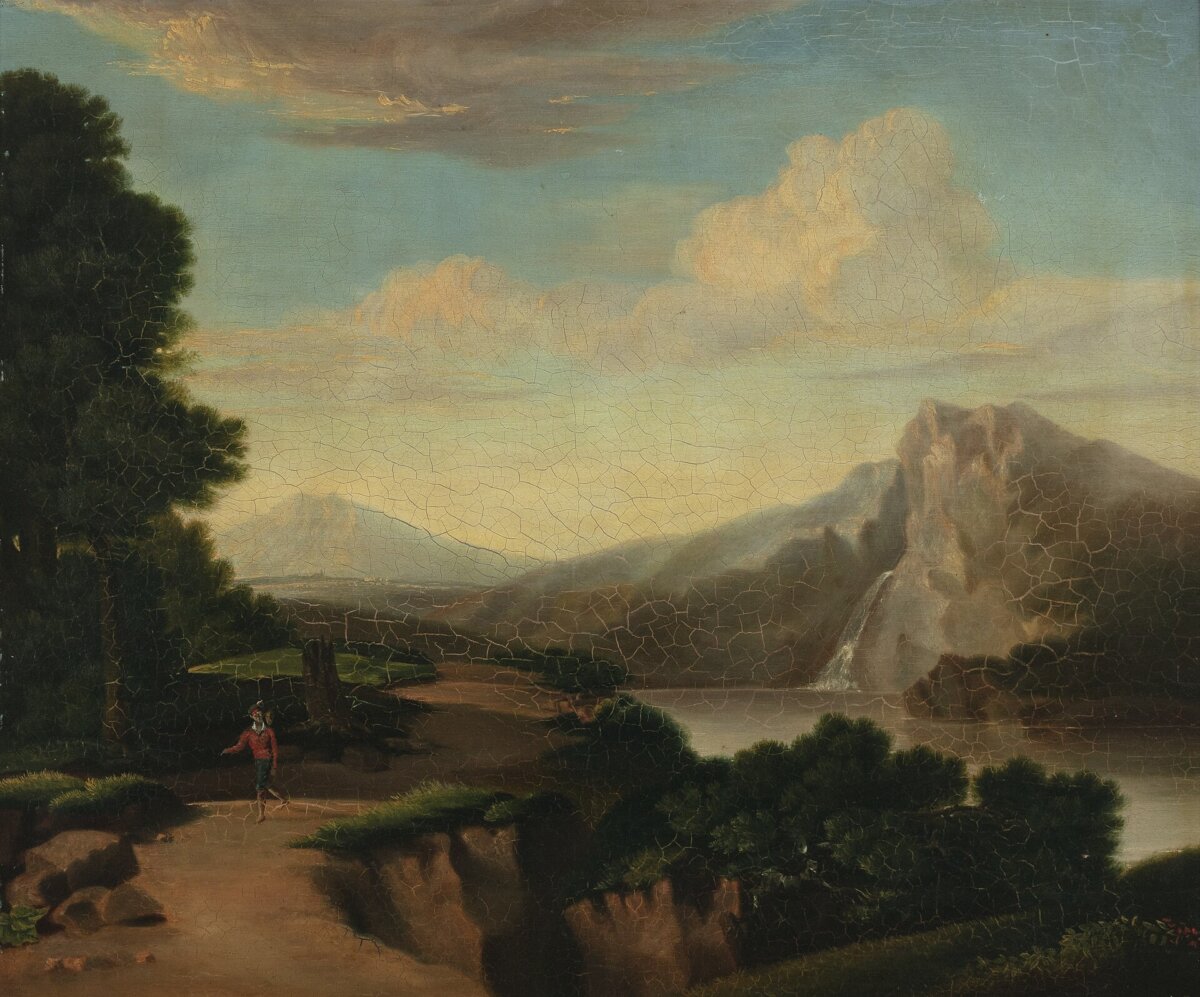
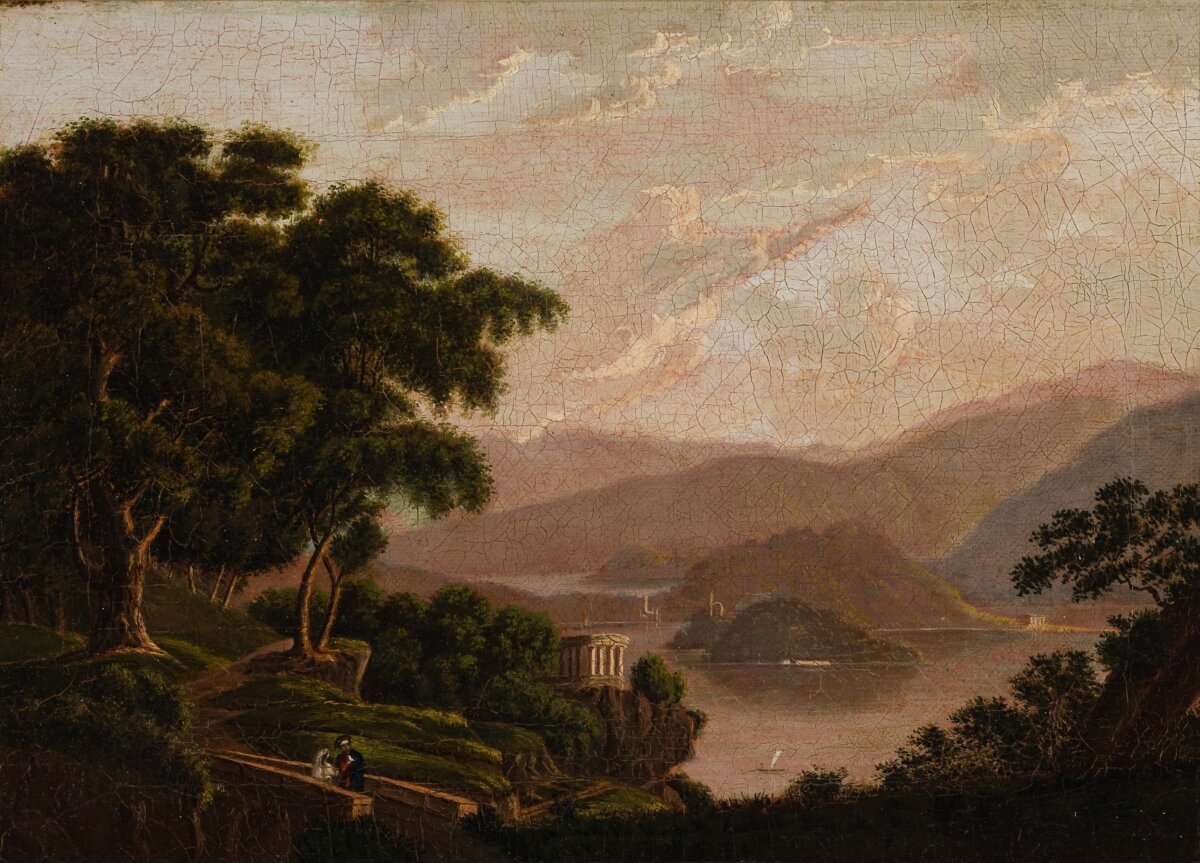
Her greatest mentors were Chester Harding, Thomas Doughty, and Washington Allston. Influential American artists of their day, each taught her important lessons about art and developed a deep, personal bond with her.
This time would be the most creative of her life. By 1832, Allston had encouraged her to create her own paintings. Sophia produced several original landscape paintings in a flurry of inspiration.
In 1833, she produced lithographic prints to illustrate a volume of Greek mythology her sister was publishing. The effort strained her nerves, so she took an extended vacation to Cuba to recover. There, she leisurely explored portraiture, sculpture, restoration, and decorative art. After returning to Boston in 1836, Sophia and her sister Mary compiled the letters from the trip into a collection called “The Cuba Journal.”
Creating art was a two-edged sword for her health. Painting sometimes left her with “the unalloyed agony of overstretched nerves.” Nevertheless, she recognized her talent as a rare privilege, wondering, “Why am I so privileged to exercise this divinest art?”
The pursuit inspired her to improve her health; at other times, the work overstimulated her mind and spirit to the point of exhaustion. Debilitating headaches kept her bedridden for weeks or months on end.
An Inspiring Love
Sophia wed Nathaniel Hawthorne on July 9, 1842, at age 32. The first of the sisters to marry, she had seemed the least likely due to her persistent infirmity, which may have have stemmed from mercury treatments she received as an infant.
The retiring artist won the heart of the 38-year-old author, whom she called “the very king and poet of the world.” Sophia was not alone in her admiration for the handsome Nathaniel.
Her older sister Elizabeth first introduced Hawthorne into the intellectual Peabody household. As his literary patron in New England, Elizabeth truly recognized his genius. She also became a close confidante who loved him deeply.
However, Hawthorne found a kindred spirit in the younger, more sensitive Sophia. He met her in 1837, which inspired his 1838 short story “Edward Randolph’s Portrait.” She opened his eyes and mind to the visual arts. The paintings of the woman he called his “Little Dove” inspired the symbolism and beautiful imagery of his later writing.
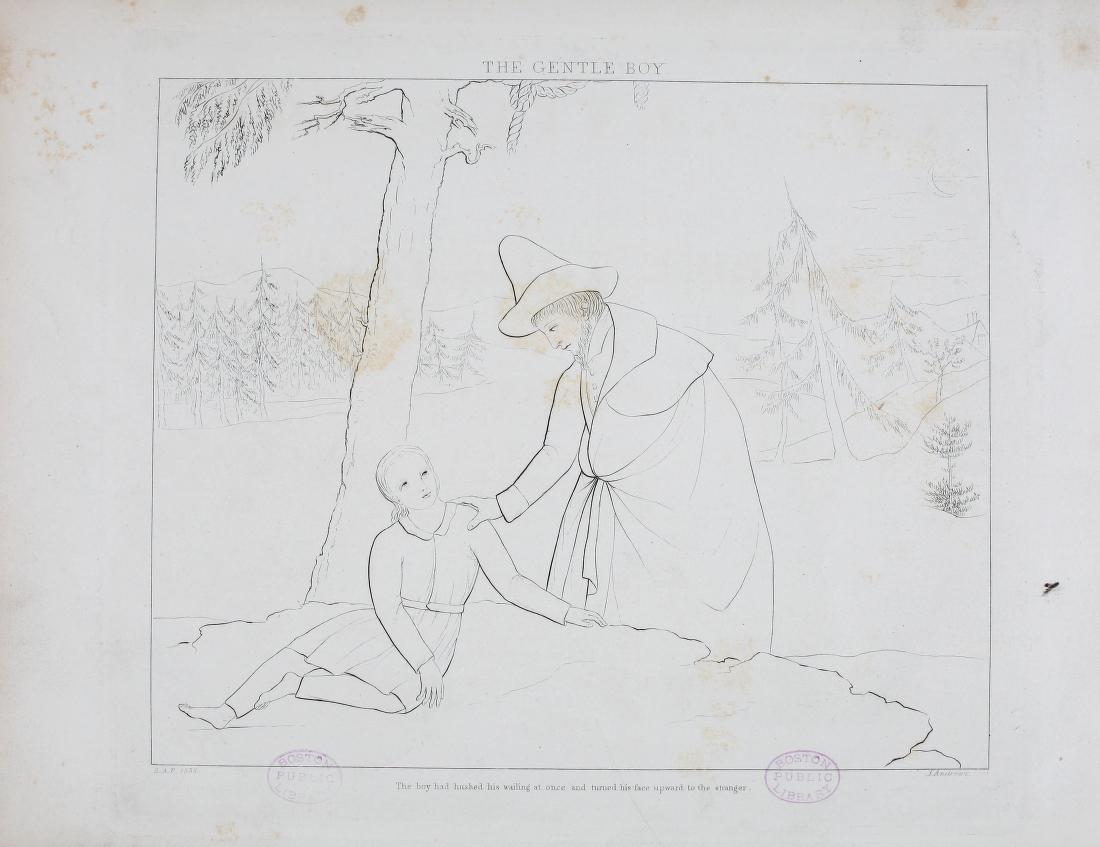
Sophia created an illustration for one of Hawthorne’s short stories, which was republished in December 1838 as “The Gentle Boy: A Thrice Told Tale.”
After their marriage, Sophia stopped painting and writing, for the most part. However, it would be a discredit to both Hawthornes to assume that Nathaniel masterfully commanded his wife to give up her beloved art form. It was most likely a mutual decision for the good of her health and their family, as she eventually had three children.
Sophia’s greatest art had just begun, however, as she would inspire her husband to do his best literary work and gave him the emotional and imaginative impetus to write novels and produce masterpieces that remain classics of American literature.
During their engagement, Hawthorne described his vision for their future:
“Oh, beloved, if we but had a cottage, somewhere … and have a place to BE in. … And you should draw and paint, and sculpture, and make music, and poetry too, and your husband would admire and criticize; and I, being pervaded with your spirit, would write beautifully, and make myself famous for your sake.”
What arts and culture topics would you like us to cover? Please email ideas or feedback to features@epochtimes.nyc