



NR | 1 h 32 min | Drama | 1936
“The White Angel” represents one of the earliest portrayals of the undeniable nurturing aspect of femininity, which persists even outside the preserves of marriage and family.
In mid-19th-century England, the film hints, Queen Victoria, a female leader, was an outlier. In general, women were considered inferior to men, rarely allowed to hold contrarian opinions, let alone pursue contrarian lives; most women became wives, then mothers.
Many widows, forced to support their families, became nurses. In England’s slovenly, resource-starved district hospitals, overworked nurses were rarely reliable; it was more commonplace for them to drown their despair in drunkenness.
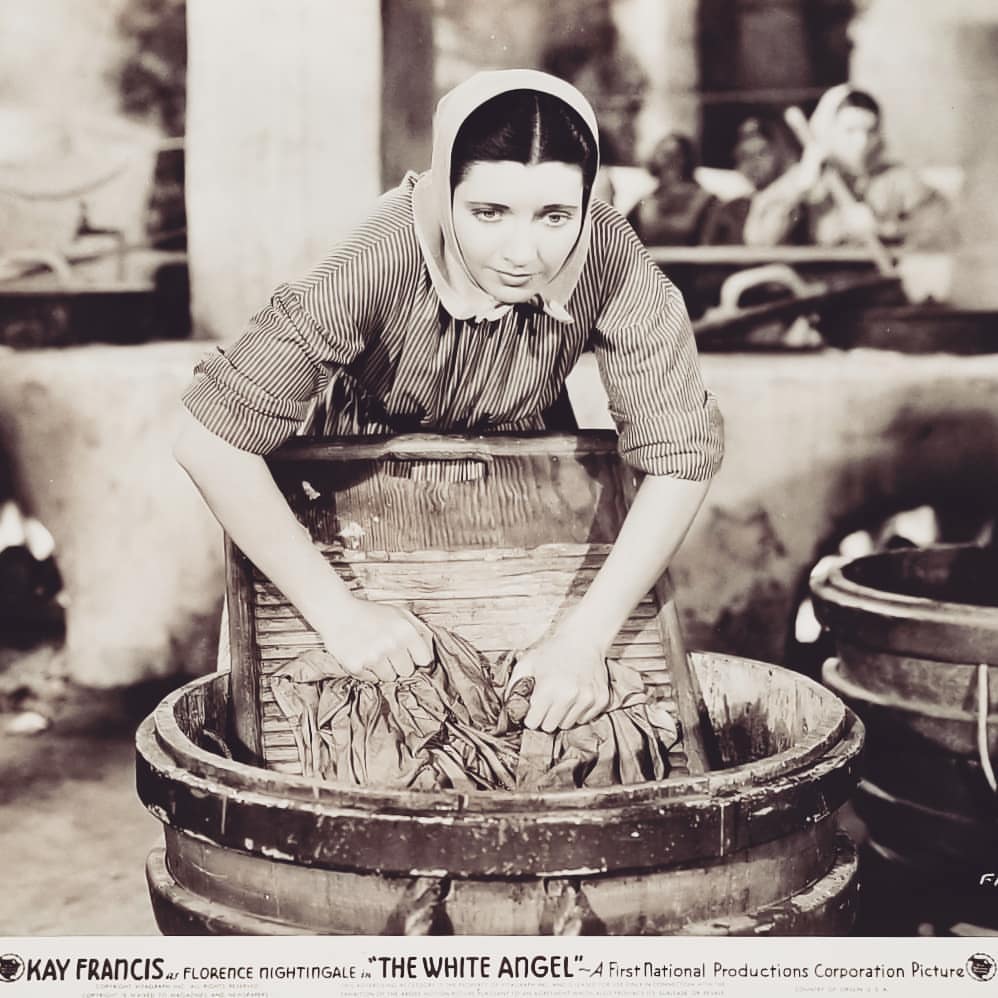
Stirred by the needs of neglected patients, a young woman from a prosperous family, Florence “Flo” Nightingale (Kay Francis), declines married life, dedicating herself to nursing instead. Against the odds, she qualifies as a nurse; authorities spurn her insistence on the feminization of nursing, let alone its professionalization.
Crimean War
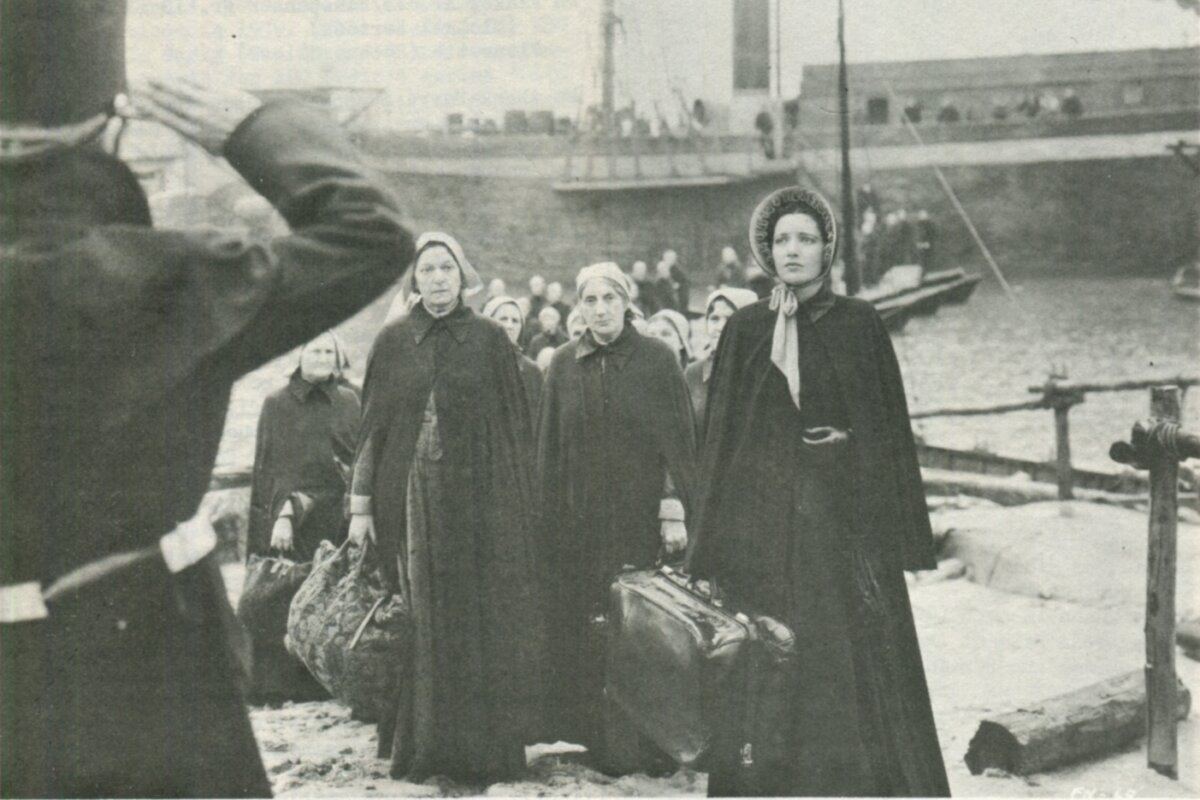
The Crimean War and the sudden need to nurse thousands of sick and wounded soldiers change all that. War correspondent Fuller’s (Ian Hunter) truthful reporting about Flo’s crusade helps, too.
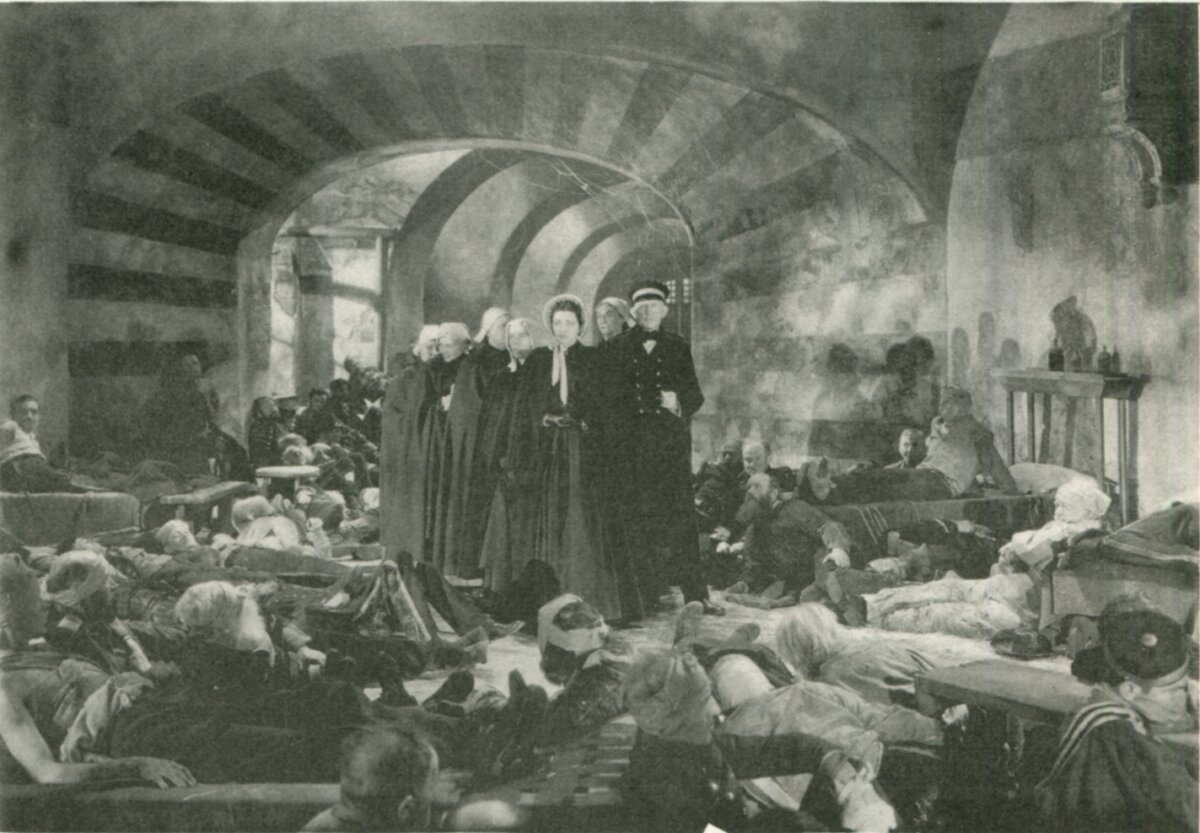
Flo and her band of nurses reach Scutari, Turkey. Many men are dying of wounds, but even more are dying from typhoid and cholera. Flo decides to overhaul the system.
Dr. Hunt (Donald Crisp), the chief medical officer in Scutari, abhors the very idea of female nurses in the army. To him, soldiers need rough treatment to stay tough, not womanly coddling that’ll weaken their resolve.
Offscreen, Francis later famously volunteered to cheer homesick and hospitalized allied World War II troops. It wasn’t her fault that this film’s screenwriters, anxious to portray Nightingale’s saintliness, end up caricaturing legitimate expressions of womanhood. Wives and mothers come off looking one-dimensional, pampered, and self-preoccupied. Nuance would’ve done Francis and her fellow actresses justice.
Compassion and Gratitude
Ultimately, this movie is a hagiography. The point isn’t so much about how venerable Flo appears. It’s more about how people respond to her compassion with a deeper sense of their own value, and a sense of gratitude. If you cut Warner Bros. slack for the halo they put on her, the film may be rewarding in ways that few hagiographies are.
Much of contemporary feminism demands sameness, not equality, between the sexes, ignoring the distinct and often complementary characteristics of women and men. Women who’re comfortable in their femininity practice and even perfect their nurturing instinct; men who’re comfortable in their masculinity do likewise with their instinct to protect and provide. Of course, both women and men can dull such instincts, as many of these characters do.
Flo’s suitor, Charles Cooper (Donald Woods), imagines that nothing’s better than being at her side. Only when he savors the horrors of injury and sickness in her wards does he admit that he hasn’t the stomach for the herculean empathy nursing demands. He’d rather put his manly speed, size, and strength to better use—in the trenches and on the battlefront.

Combating entrenched sexism, Flo finds herself in adversarial positions against men. Nevertheless, she’s the first to seek out men for jobs where they’ll make more of a difference, and women for positions where it’s they who’ll be more effective.
As she takes her vocation from the ward to the warzone, Flo’s patron, Minister of War Sidney Herbert (George Curzon), summarizes her impact on the army: In just two years, death rates plummeted from 56 percent to 6 percent.
Work Ethic
Ironically, when it comes to principles like loyalty and work ethic, there’s little to separate the sexes here. Flo insists on sharing the army’s ethic, telling herself almost as much as she tells her nurses, “No more doing what you like, when you like … no half-measures.” Businesslike when recruiting, she’s less interested in over-qualified women who believe they’ve nothing new to learn than in honest hard–workers who are desperate to learn.
One sequence of scenes shows Flo attaining mythic status. First, a nurse explains how each night, lamp in hand, Flo walks past four miles of beds, reassuring herself that all’s well with her patients. Next, we see Flo doing just that. Finally, there are scenes of her family and friends reading H.W. Longfellow’s poem “Lady with the Lamp” (“Santa Filomena”), which immortalized her stewardship of sick and scarred soldiers.
At one point, war-weary soldiers shrug off fear of the dreaded cholera, and insist on carrying an infected Flo on a stretcher to the isolation hut. It’s as if they’re finding common ground with their downed buddies, memorialized in Longfellow’s lines:
And slow, as in a dream of bliss,
The speechless sufferer turns to kiss
Her shadow, as it falls
Upon the darkening walls.
You can watch “The White Angel” on YouTube and DVD.
‘The White Angel’
Director: William Dieterle
Starring: Kay Francis, Ian Hunter, Donald Woods
Not Rated
Running Time: 1 hour, 32 minutes
Release Date: June 25, 1936
Rated: 3 stars out of 5
What arts and culture topics would you like us to cover? Please email ideas or feedback to features@epochtimes.nyc
