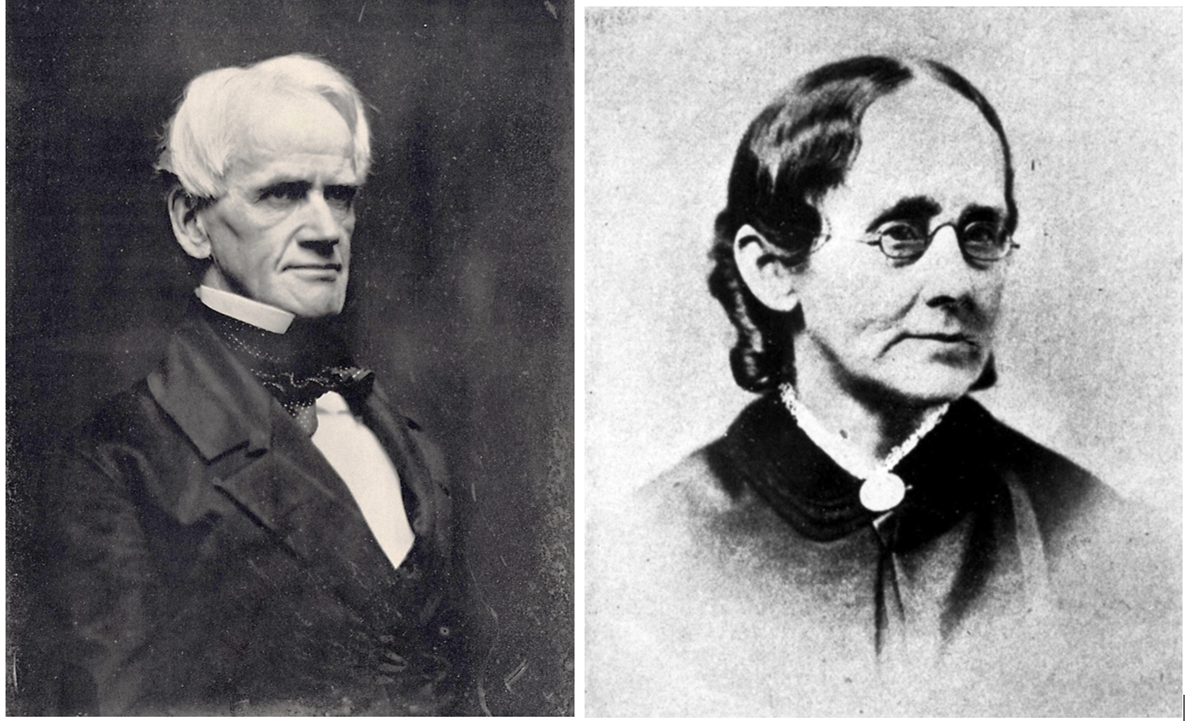
It’s a common trope that the middle child of a family is often the misfit, the oddball, and the one left out. While this is a generalization, it’s a fact that the second of three children can end up caught between the leadership of the firstborn and the pampering of the youngest.
In the 19th-century trio of the Peabody sisters, Mary (1806–1887) was the middle girl. The family later had three sons, making six children in all. The eldest was the strong-minded Elizabeth (1804–1894), who made decisions and financial provisions for the whole family. The artistic youngest girl was Sophia (1809–1871), whose health problems required her mother’s constant care.
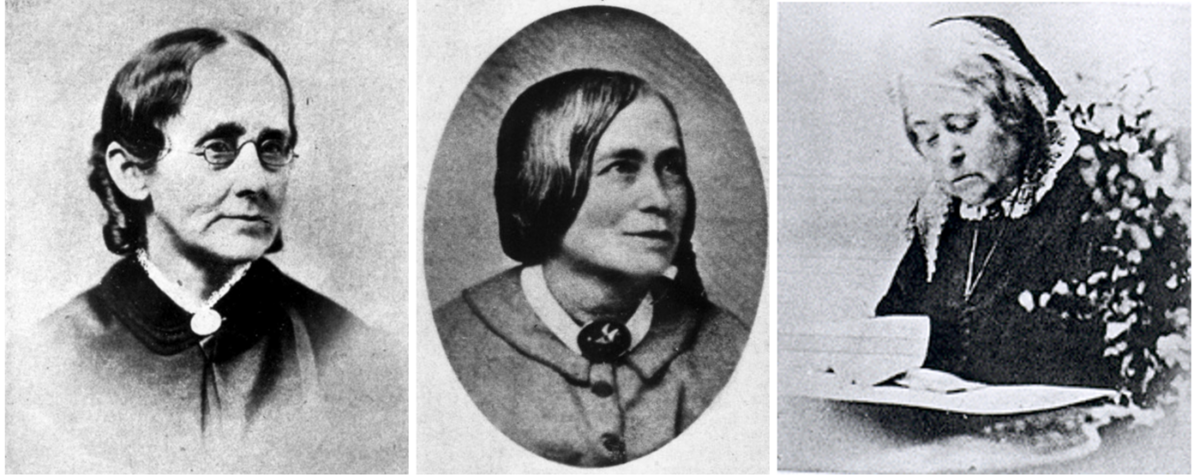
Between them was Mary. This caring woman worked alongside both of her sisters and her husband to further the cause for spiritually nurturing education in America. As a teacher, wife, mother, and author, Mary Peabody Mann left her long life and impressive literary output as proof of a forgotten truth: Teaching, when it comes from a generous heart as well as a studious mind, is an art.
Learning and Teaching
Mary Tyler Peabody was born on Nov. 16, 1806, in Cambridge, Massachusetts. Her parents were Dr. Nathaniel Peabody, a general practitioner who worked as a farmer before eventually becoming a dentist, and Elizabeth “Eliza” Peabody, a teacher.
Largely because her mild-mannered husband struggled to support their large family as the sole breadwinner, Eliza provided a second income by teaching boys and girls in their preschool years. This wasn’t just a financial necessity; Eliza was passionate about education for both sexes.
Often teaching out of their home, Mrs. Peabody created an intellectual atmosphere in which her three daughters could flourish intellectually, artistically, and spiritually, choosing their own paths to fulfilment instead of automatically settling for practical marriages.
Inheriting her mother’s fervor for education, Mary began teaching at age 18. She worked as a governess for affluent families in Maine in positions that her elder sister Elizabeth arranged.
Although she was regarded as the beauty of the family, Mary was just as eager to develop her mind as her sisters. Mary and Elizabeth worked together throughout their lives. In 1825, Mary taught at the school Elizabeth had started in Brookline, Massachusetts. The school flourished until a minor financial scandal (not involving either of the sisters) forced its closure in 1832.
The year after their school closed, Mary accompanied Sophia to Cuba on a much-needed extended retreat for the latter’s health. While Sophia studied art and grew healthier away from Boston, Mary worked as a governess.
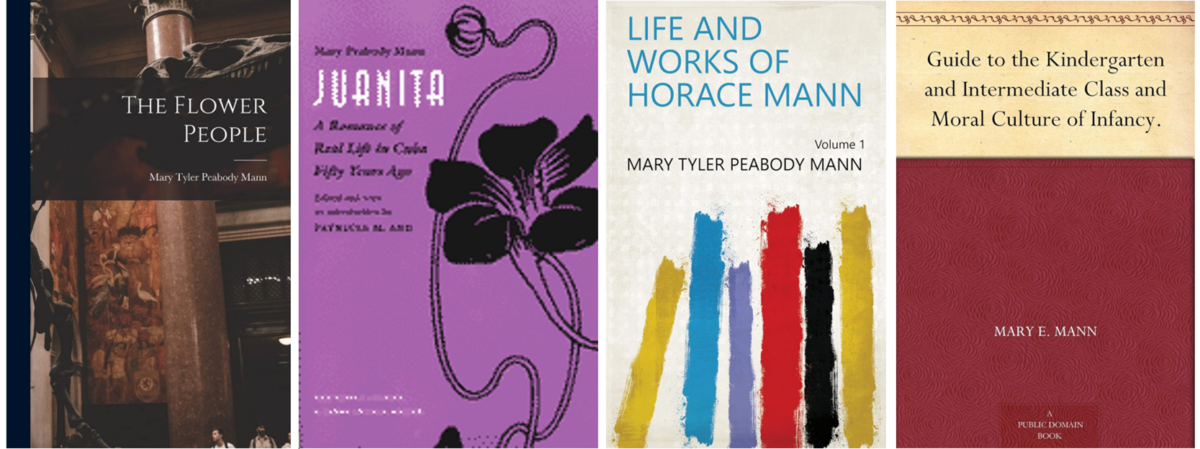
This trip inspired Mary’s sole novel, “Juanita: A Romance of Real Life in Cuba Fifty Years Ago,” which was published posthumously in 1887. The novel tells the story of an enslaved mixed-race woman who captures her master’s son’s heart. This poignant historical romance was based on Mary’s personal experiences as governess on a plantation and shows her strong abolitionist convictions.
Mary’s other published writings include the 1838 children’s book “The Flower People: Being an Account of the Flowers by Themselves”; the religious yet health-conscious 1857 cookbook “Christianity in the Kitchen, a Physiological Cook-Book”; and the 1865 biographical tribute to her husband “Life of Horace Mann.” Her most influential work is “Moral Culture of Infancy, and Kindergarten Guide,” an 1863 handbook for kindergartens that she co-authored with Elizabeth.
Mrs. Horace Mann
Mary found her romantic soulmate in a fellow educator and champion of social causes, Horace Mann (1796–1859). Elizabeth and Mary first met Mann in 1833. At the time, both the sisters and Mann were living at Rebecca Clarke’s Ashburton Place, a Boston boarding house that attracted an eclectic group of deep thinkers.
Mann, an attorney and member of the Massachusetts state legislature, was in deep mourning over the sudden death of his wife the year before. He found some consolation for his intense grief in the friendly companionship of the sympathetic sisters and enjoyed intelligent discourse with the cultured young ladies.
Mary quickly noticed that her older sister was more capable of holding deep conversations with “Mr. M” than she was, while Elizabeth’s and Horace’s bond seemed to be growing into more than casual friendship.
This grieved Mary, who was developing deep feelings for Mann herself. Years later, she confessed that she lost her heart when the widower held a door open for her and smiled, writing in “Estimate of Horace Mann,” “It was not much longer before I had the prophetic vision that somewhere in eternity if not in time, I should be one with him and he would be one with me.”
This vision seemed unlikely to be realized in Mary’s earthly life, however, when she reluctantly left for Cuba in December. During her two-year absence, Mann visited Elizabeth at least weekly. They had personal conversations, read letters aloud, and shared intimate moments that Miss Peabody insisted were strictly platonic.
Nevertheless, the main draw to Elizabeth’s parlor for Mann was the chance to hear Mary’s letters. When Mary returned in 1835, she began seeing Mann regularly herself, and eventually she was no longer ashamed to admit her feelings. After a month-long engagement, they wed on May 1, 1843; the bridegroom was 46 years old, and the bride was 36.
The Manns only enjoyed 16 years of marriage, as Horace died suddenly in 1859. However, during that time, they shared their work as well as their home. They had three sons together, whom Mary homeschooled.
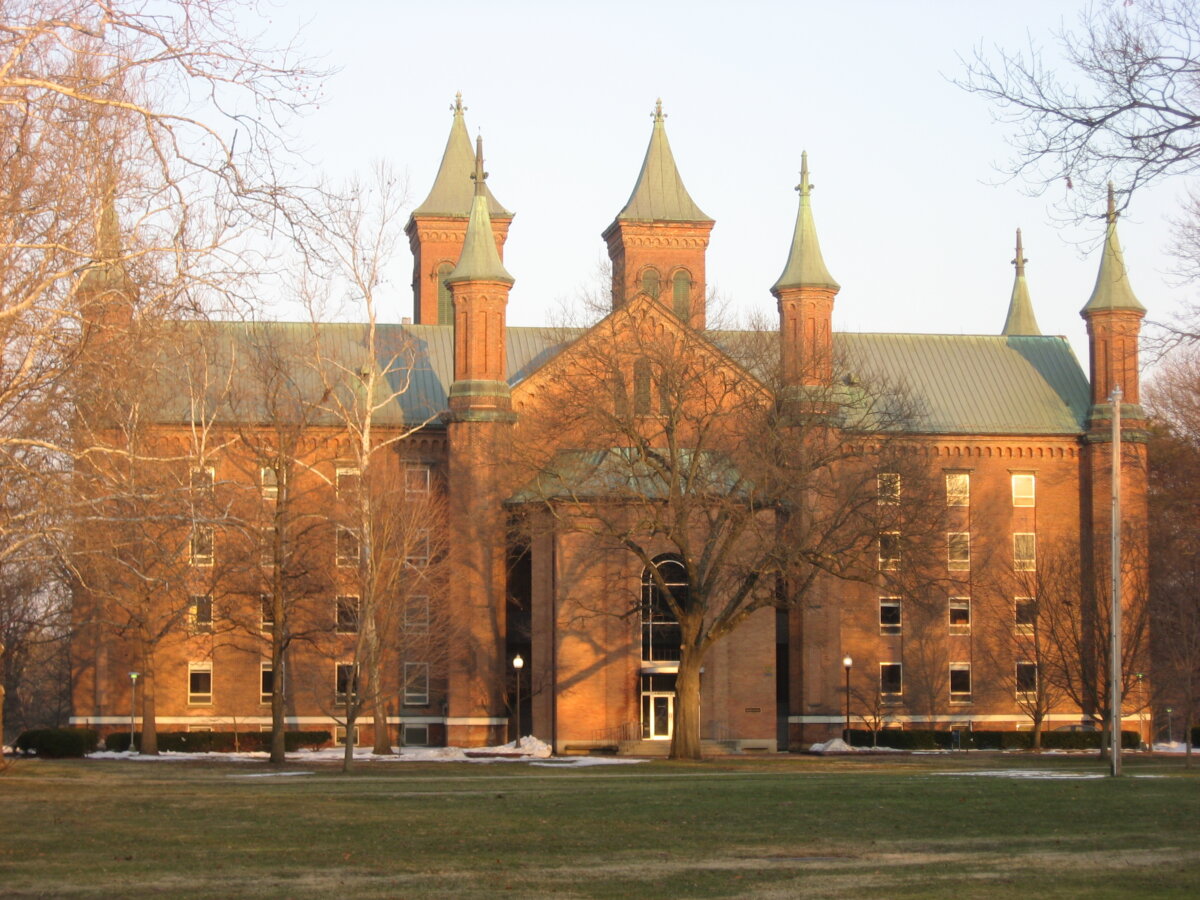
Besides her maternal duties, Mary was Horace’s helpmate in his cause of education reform. She contributed lessons to his publication “Common School Journal.” She was also his great supporter at the newly formed Antioch College, America’s first coeducational college, of which Mann was the first president.
Mother of American Education
Mary Peabody Mann dedicated most of her earthly span to teaching and furthering the cause of public education. This resolve was further strengthened by her husband’s dedication to the idea.
After she was widowed, she bought a house in Concord with Elizabeth. There, the sisters advocated the adoption of German educator Friedrich Froebel’s kindergarten system in America. They started the first American public kindergarten in 1860. The sisters further influenced the concept’s spread through their popular book “Moral Culture of Infancy,” several editions of which were published during their lifetimes.
Mary combined her strong Unitarian Christian faith with the Transcendentalist ideas that had influenced all three sisters through their literary friends and colleagues. She brought the experience of motherhood to her later schooling endeavors; she also honored her late husband’s admirable principles of prioritizing public education’s focus on general Christian morality instead of pushing specific sectarian ideology.
Generations later, “Moral Culture of Infancy” remains an inspiring guide to what education should be. It’s not a one-size-fits-all mold but a living, breathing study of each individual’s spirit. The book explained:
“Kindergarten means a garden of children, and Froebel … meant to symbolize by the name the spirit and plan of treatment. How does the gardener treat his plants? He studies their individual natures, and puts them into such circumstances of soil and atmosphere as enable them to grow, flower, and bring forth fruit.”
In her long teaching career, Mary Peabody Mann helped countless children bring forth the excellent fruit of citizenship, knowledge, and patriotism.
What arts and culture topics would you like us to cover? Please email ideas or feedback to features@epochtimes.nyc