Spring is here. “Spring it is that clothes the glades and forests with leaves … and the meadows ungirdle to Zephyrus’s [the West Wind’s] balmy breeze; the tender moisture avails for all,” wrote the ancient Roman poet Virgil in his “Georgics.”
For centuries, artists have depicted mythological themes, such as Zephyrus, god of the west winds, and his wife Flora, in frescoes, paintings, sculptures, tapestries, furniture, and even snuffboxes.Ancient Pompeii artists frescoed the couple’s wedding. In the Renaissance, Sandro Botticelli (circa 1445–1510) captured Zephyrus’s balmy breeze along with more than 138 plants in his tempera painting “Primavera.” One of the last masterpieces that the Sun King, Louis XIV (1638–1715), commissioned was the dynamic marble sculpture “Zephyr, Flora, and Love” by Philippe Bertrand, René Frémin, and Jacques Bousseau.
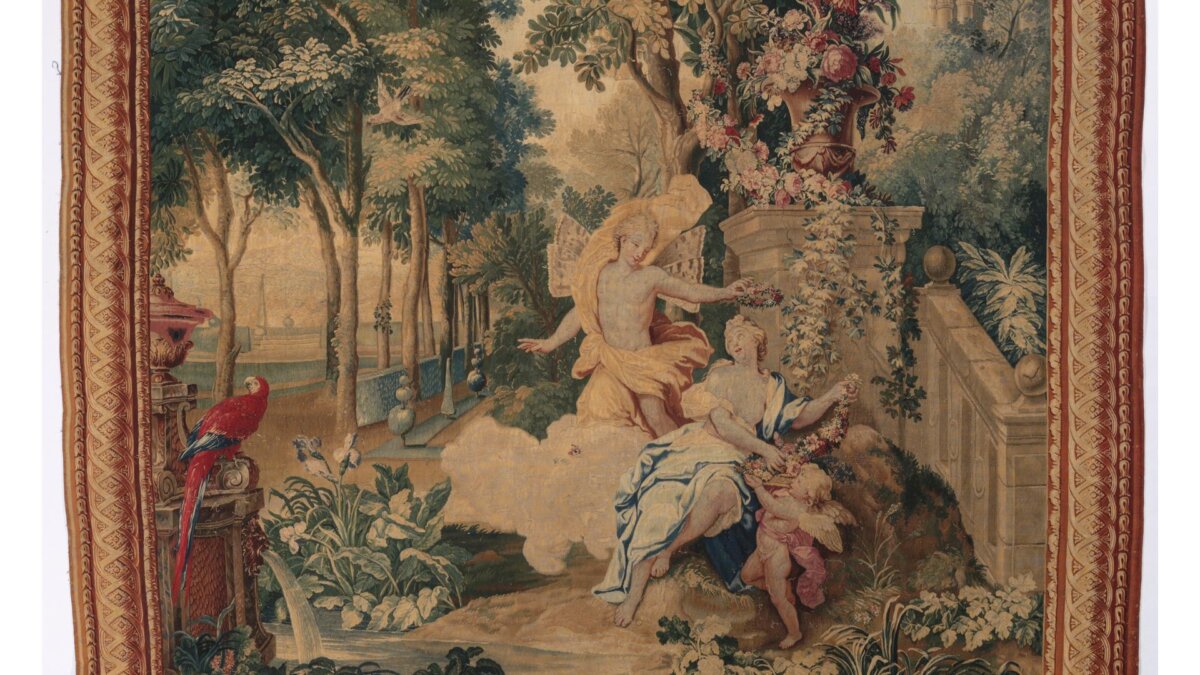
Around the same time as the Sun King’s marble sculpture, the French monarch’s Gobelins Manufactory wove a vision of spring in the tapestry “Flora and Zephyrus” that’s now at the Cleveland Museum of Art. It seems to illustrate the “‘perpetual spring” that the ancient Roman poet Ovid described when Zephyrus first saw the nymph Flora in Elysium and named her his bride. Ovid wrote as if he were Flora:
“I have no complaints about my marriage. I enjoy perpetual spring: the year always shines, trees are leafing, the soil always fodders. I have a fruitful garden in my dowered fields, fanned by breezes, fed by limpid fountains. My husband filled it with well-bred flowers, saying: ‘Have jurisdiction of the flower, goddess.’”
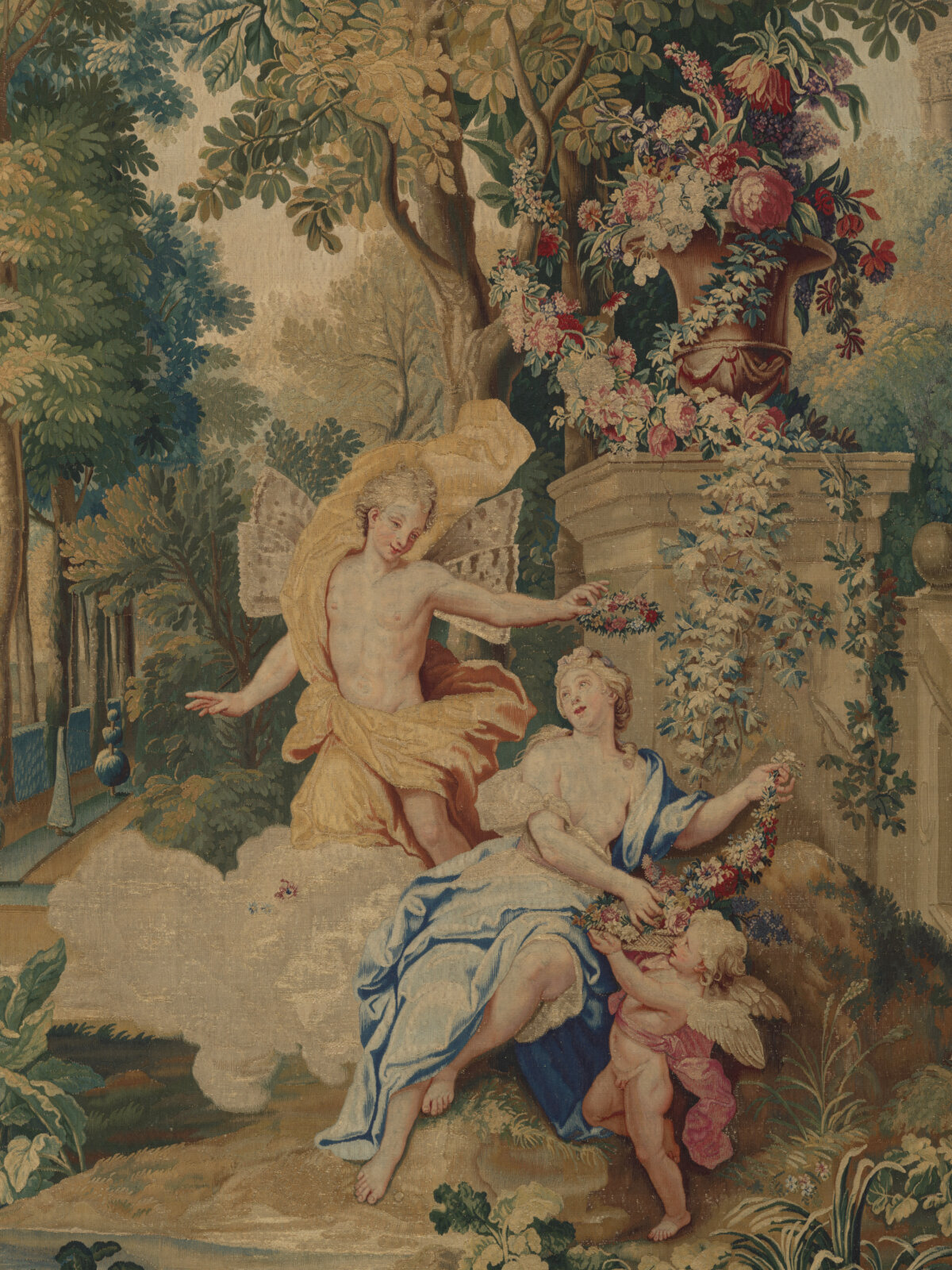
In the tapestry, the winged youth Zephyrus gracefully descends from the heavens with a rose wreath to crown his wife, Flora. Both are in the presence of “Love,” who presents Flora with a garland of spring flowers. Personifying Love as a young boy might symbolize the purity of love.
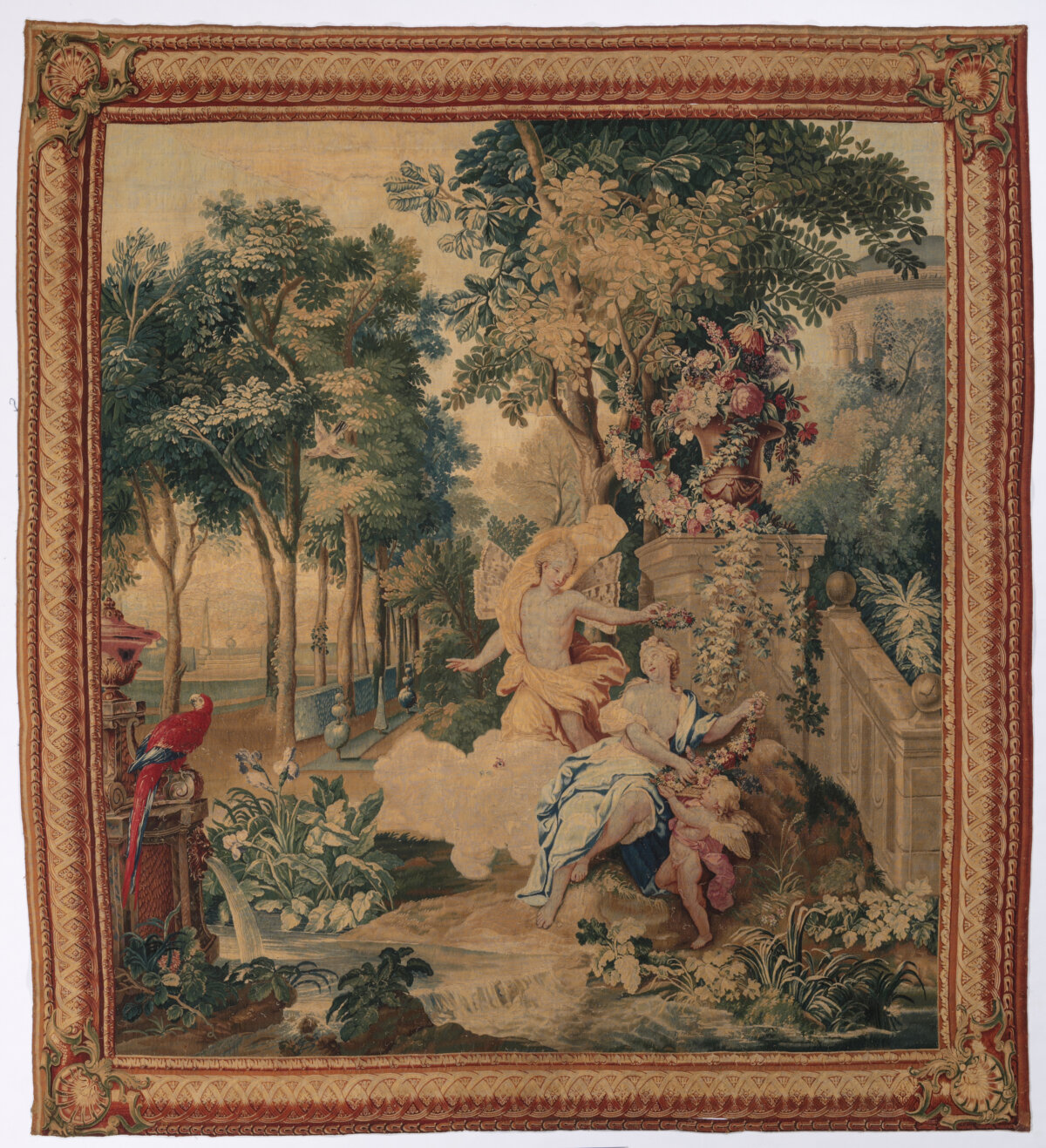
Although faded with time, Flora’s “perpetual spring” thrives in this rich tapestry. Greenery of all shapes and sizes—from towering trees to tiny grasses—fills the foreground, middle ground, and background. On the left of the tapestry, a formal garden of topiary trees, box hedging, and an avenue of trees firmly plants the tapestry in the French baroque period.
Festoons of flowers burst forth from a stone urn above the lovestruck trio, and fountain water gushes along a stream at their feet. The urn, fountain, and a rotunda in the background hark back to ancient times.
The parrot, perhaps a scarlet macaw, perched on the fountain was much admired at Versailles, in the aviaries, and as companions for the royal children.
In the 17th and 18th centuries, Gobelins tapestries were the finest in Europe. Eighteenth-century tapestries, like “Zephyrus and Flora,” featured elaborate architectural borders and the introduction of hundreds of new dyes, which gave the compositions a more painterly effect. Although centuries of sunlight destroyed some of these subtle effects, in “Zephyrus and Flora,” spring’s brilliance still shines forth.
To find out more about the ‘Flora and Zephyrus’ tapestry, visit ClevelandArt.org.
What arts and culture topics would you like us to cover? Please email ideas or feedback to features@epochtimes.nyc.