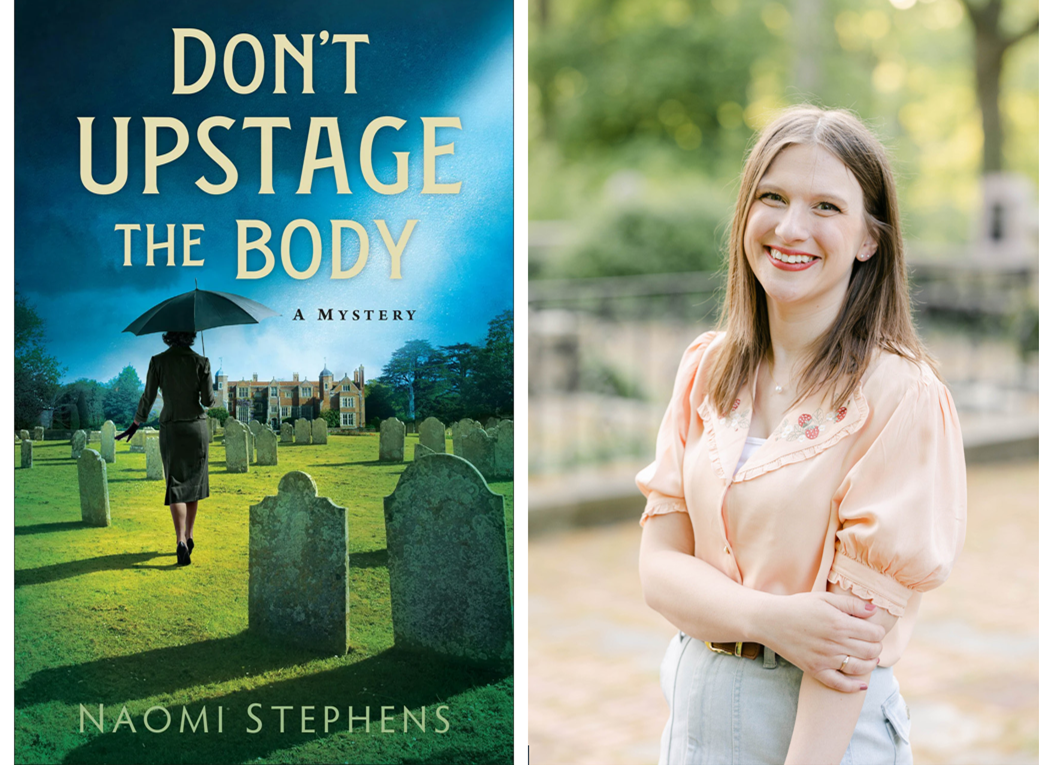
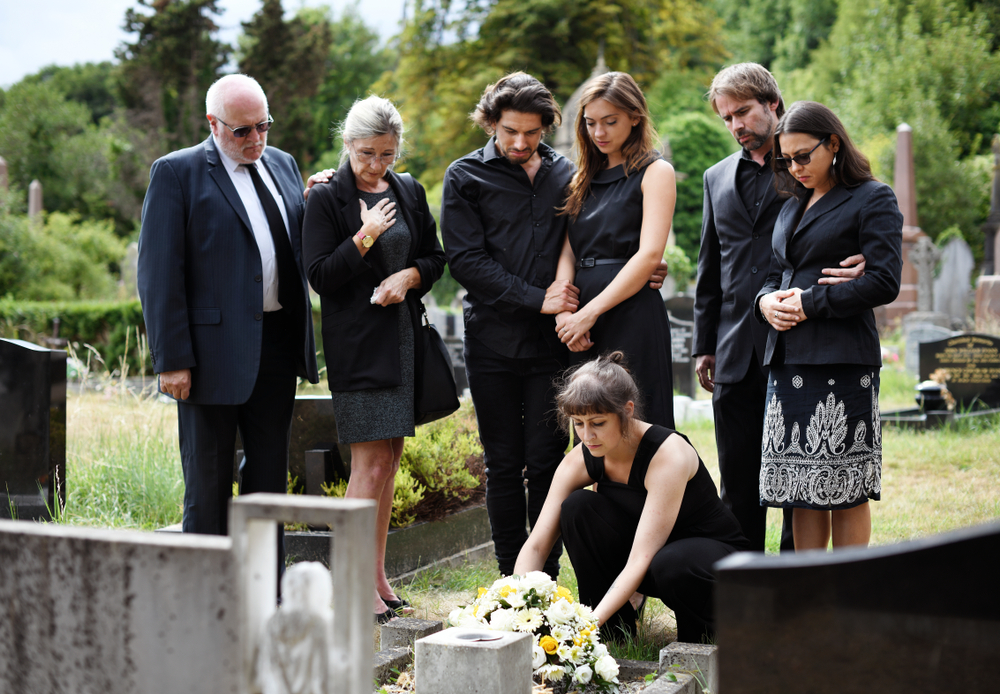
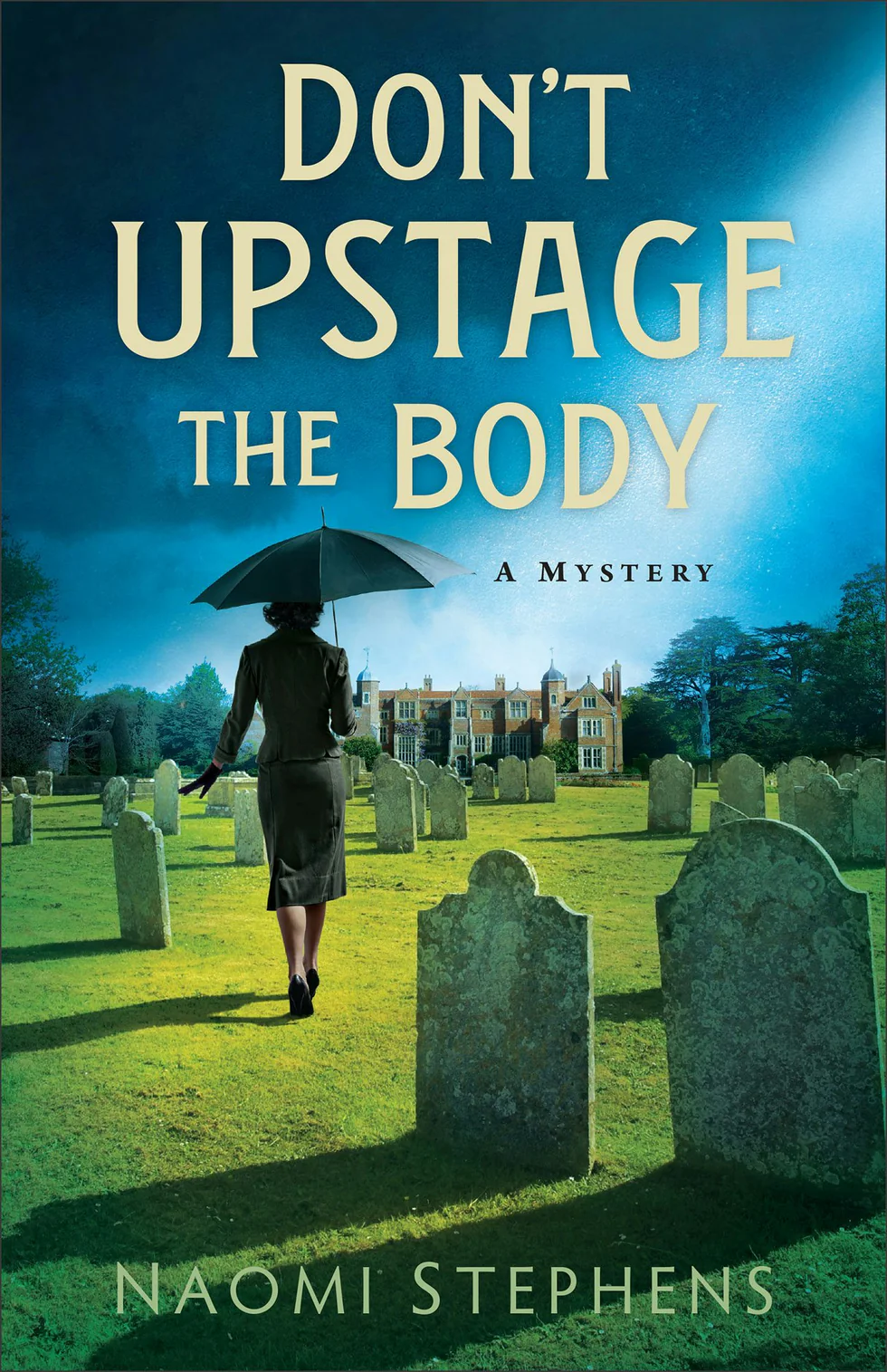
Hippolyta Halfpenny is a quiet, steady presence in a family that thrives on theatricality and makes their living in an unusual way: They’re professional mourners.
In Naomi Stephens’s soon-to-be-released murder mystery, “Don’t Upstage the Body,” when a client wants a bigger crowd or a more respectable-looking send-off, Halfpenny’s family shows up in black under aliases, padding the pews and dabbing dry eyes.
In truth, Hippolyta isn’t much of a fan of the idea. She dislikes the spectacle, but her faith keeps her grounded in the work. She holds onto her father’s favorite verse: “Weep with those who weep” (Romans 12:15). She earnestly tries to offer genuine comfort to the bereaved, often shedding real tears even when everyone around her is faking it.
The whole family travels under strict rules: arrive separately, never use fake accents, maintain total discretion, and, above all, never upstage the deceased.
A Manor Unbecoming
Their current assignment is the funeral of Lord Basil Montfort. Basil was a famed recluse, and the newspaper headlines following his death suggest he may have been a scoundrel who rarely spoke a kind word to anyone.
Montfort Manor, where the funeral is taking place, is a 17th-century estate that reads like the man himself. It’s isolated 10 miles from the nearest neighbor, tucked against a massive lake, shrouded in October fog, and built to keep the outside world at bay.
The actual mourners are a small, mismatched group. Some of the prominent members include Lady Montfort, the widow, who remains entirely dry-eyed and sharply observant. Then there’s Tula, an outspoken American family friend who doesn’t hesitate to call Basil a cheat. Duke Pritchard, a boisterous old schoolfellow, shows up mainly for the food and conversation.
Crispin Cavendish, the late earl’s son and the new Lord Montfort, arrives late in an Aston Martin. He looks every bit the restless playboy the papers describe. Sharp-tongued and quietly watchful, he immediately clocks that something is off about Hippolyta.
Once everyone has retired to the manor, Hippolyta quietly panics as she realizes a letter has vanished from her coat pocket. Her godmother, Auntie Joan, had sent an offer for her to leave the faux mourning business behind, move to a quiet village, and finally live a normal, uncomplicated life.
Hippolyta desperately wants to say yes; she’s tired after 10 years of deception and has already mentally packed her bags. However, if the wrong person reads that letter, the Halfpennys’ business might be ruined.
Slipping away from the wake, she begins retracing her steps. The last thing she expects to find in the shadowed library of the manor is a body slumped behind a heavy desk. Before she can fully process the discovery, detectives have locked down the property, and Hippolyta is suddenly standing in the center of a murder inquiry.
She knows she’s a potential suspect, but telling the police her real identity isn’t an option. Strangely, Crispin steps in, casually claiming they were together, thereby handing her an instant alibi. Is he genuinely trying to protect her, or is he using her as a convenient smokescreen while he untangles his own dangerous situation?
Christian Fiction
Naomi Stephens is a Christian fiction author and teacher who describes herself as a lifelong bookworm. Her previous books include “Shadow Among Sheaves,” a Victorian-era retelling of the Biblical story of Ruth and Boaz; “The Burning of Rosemont Abbey,” a 1950s mystery; and “The Scarlet Ribbon,” a Revolutionary War retelling of Old Testament heroine Rahab’s story. She also has a dog named Sherlock—so, extra cool points to her.
Christian readers will likely discover a deep resonance with Stephens’s thoughtful handling of grief, her quiet integration of Scripture into Hippolyta’s daily life, and the way grace consistently outshines judgment.
Her heroine’s commitment to “weep with those who weep” isn’t treated as a gimmick but as a lived-out expression of compassion that drives the narrative’s moral center. The story honors the sanctity of mourning, celebrates restorative love, and gently weaves redemption into every character’s journey without ever feeling heavy-handed.
Readers of any background can easily lose themselves in the richly drawn cast, the atmospheric tension of the fog-draped manor, and the clever, well-plotted twists that keep you guessing until the final reveal.
It strikes the right balance between suspense and warmth, delivering a mystery that prioritizes human dignity over shock value and capping it with a smart, well-constructed conclusion.
“Don’t Upstage the Body” proves that you don’t need cynicism to tell a compelling story or graphic content to maintain suspense. Whether you’re drawn to its thoughtful faith elements or are simply looking for a well-crafted whodunit, Stephens delivers exactly what cozy mystery lovers crave: charm, intellect, and a deeply satisfying happy ending.
Here’s a great example of how faith and mystery can share the same page without either being compromised. This is a standout title for anyone seeking wholesome entertainment with real emotional depth.
‘Don’t Upstage the Body’
By Naomi Stephens
Baker Publishing Group: June 23, 2026
Paperback, 304 pages
What arts and culture topics would you like us to cover? Please email ideas or feedback to features@epochtimes.nyc