



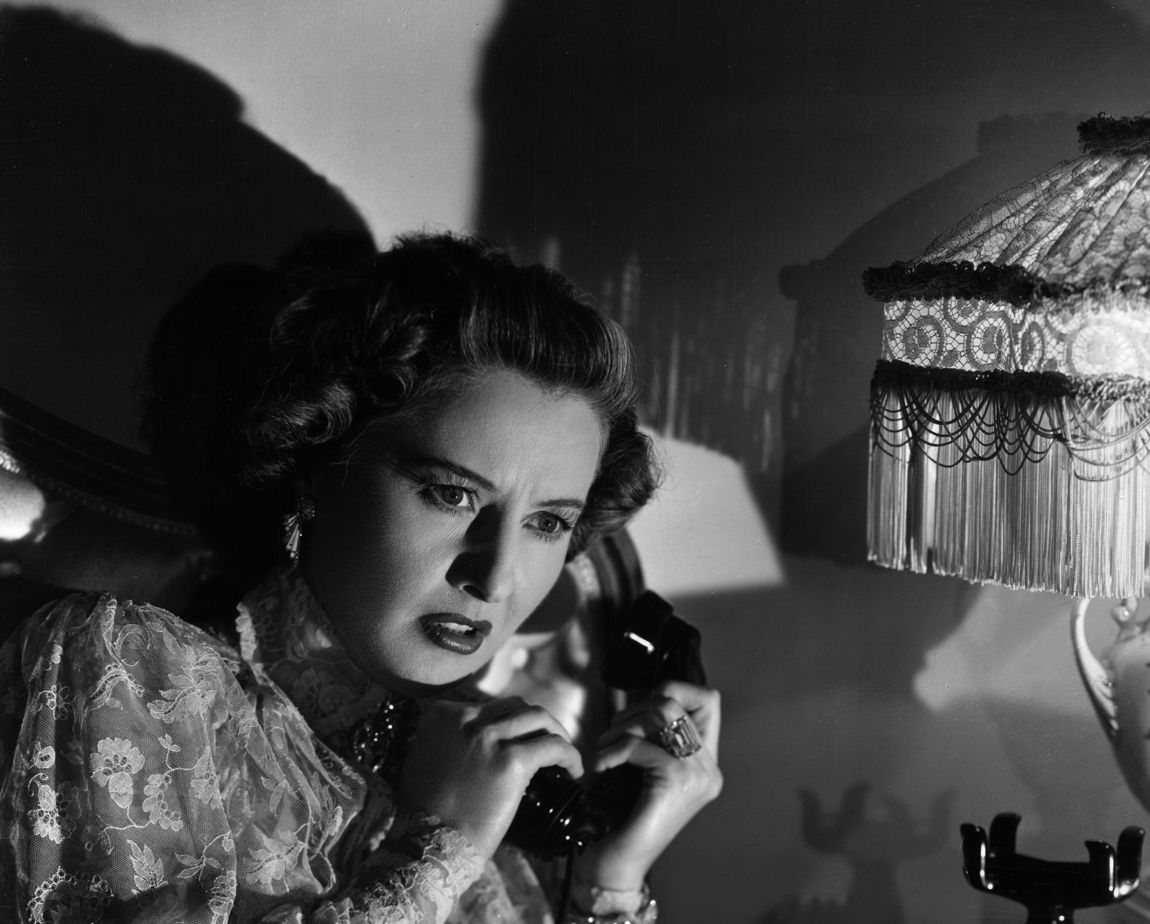
NR | 1 h 29 min | Drama | 1948
Classic thriller “Sorry, Wrong Number” (1948) is set in an age of switchboard operators and chronically crossed wires. Anatole Litvak directs Lucille Fletcher’s screenplay, which was based on her own hugely popular radio play of the same name.
A sick, bedridden woman, Leona Stevenson (Barbara Stanwyck), stumbles on a murder plot. It’s no more than a snatch of conversation, intercepted while telephoning. Her husband, Henry Stevenson (Burt Lancaster), and the home-nurse, usually on duty, are away.
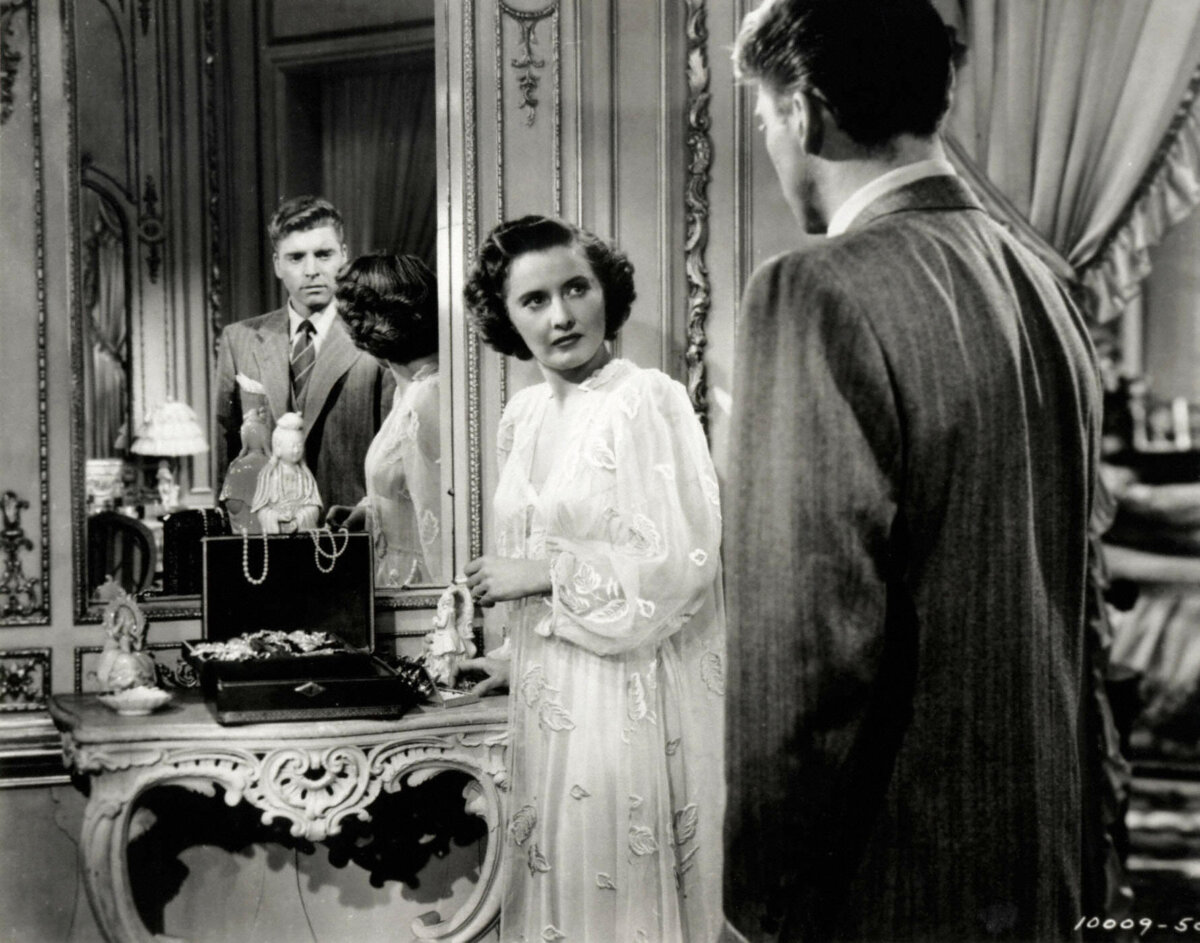
Alone, she reports this via telephone, trying to stop the murder scheduled for that night. However, with barely any clues to constitute reasonable grounds, no one takes her seriously: not her father, James Cotterell (Ed Begley), owner of the company of which Henry is vice president; not her physician, Dr. Philip Alexander (Wendell Corey); and not even the police.
Suspecting that Henry’s carrying on with his old flame, Sally Lord (Ann Richards), Leona calls Sally. As it turns out, Sally’s been trying to call Leona about Sally’s lawyer husband, Fred (Leif Erickson), and Henry’s work colleague Waldo Evans (Harold Vermilyea).
Will the congested phone lines stay open and clear long enough for Leona to stop the killer? Or have her troubled marriage and weak health killed her ability to separate the real from the imagined?
Knowing how intense the filming would be, Litvak filmed Stanwyck’s bedridden scenes back-to-back, in the space of a fortnight. There are many phone calls in the movie, but it’s Stanwyck who makes or receives about half of them. She dials in every shade of emotion required, from suspicion to snark, from relief to regret, and from fear to outright terror.
Expertly, Fletcher considers the success or failure of communication, telephonic or not, as a measure of success or failure in relationships. The phrase “person-to-person” recurs as operators connect callers.
Fletcher shows that, just as physical distance can garble the faithfulness of a message, emotional distance can strain faithfulness in a marriage. If not addressed soon enough, distances will cease to matter; even those closest to us will find it impossible to reach us.
Crossed wires here double as symbols of disconnection, between what’s hollered on one end and what’s heard on the other and between what’s merely deliberated and what’s actually done. Only inches separate mouthpiece from earpiece, but as Henry and Leona drift apart emotionally, even when together in the same room, they might as well be in different cities.
It’s a rainy night. Henry offers Evans a lift in his car. Evans rambles on about his love of horses, clarifying that he’d never have them tethered in a stable because it’s “far too cruel.” He’d much rather they roam free, “as nature intended,” in a meadow.
Litvak draws the audience into the car, as if to eavesdrop on an imaginary phone line. Suddenly, a throwaway reference to a free-spirited horse seems to signal a hemmed-in Henry, irredeemably beholden to his wife and her father.
Later, Litvak’s camera zooms in on Rosa Bonheur’s painting “The Horse Fair.” Yes, as the hectored Henry, Lancaster plays against type. Nevertheless, it’s because he’s usually so fiery on screen that his casting clicks here; you can almost see him as a stallion, straining at the bit. Watch for Litvak’s cameo at a diner.
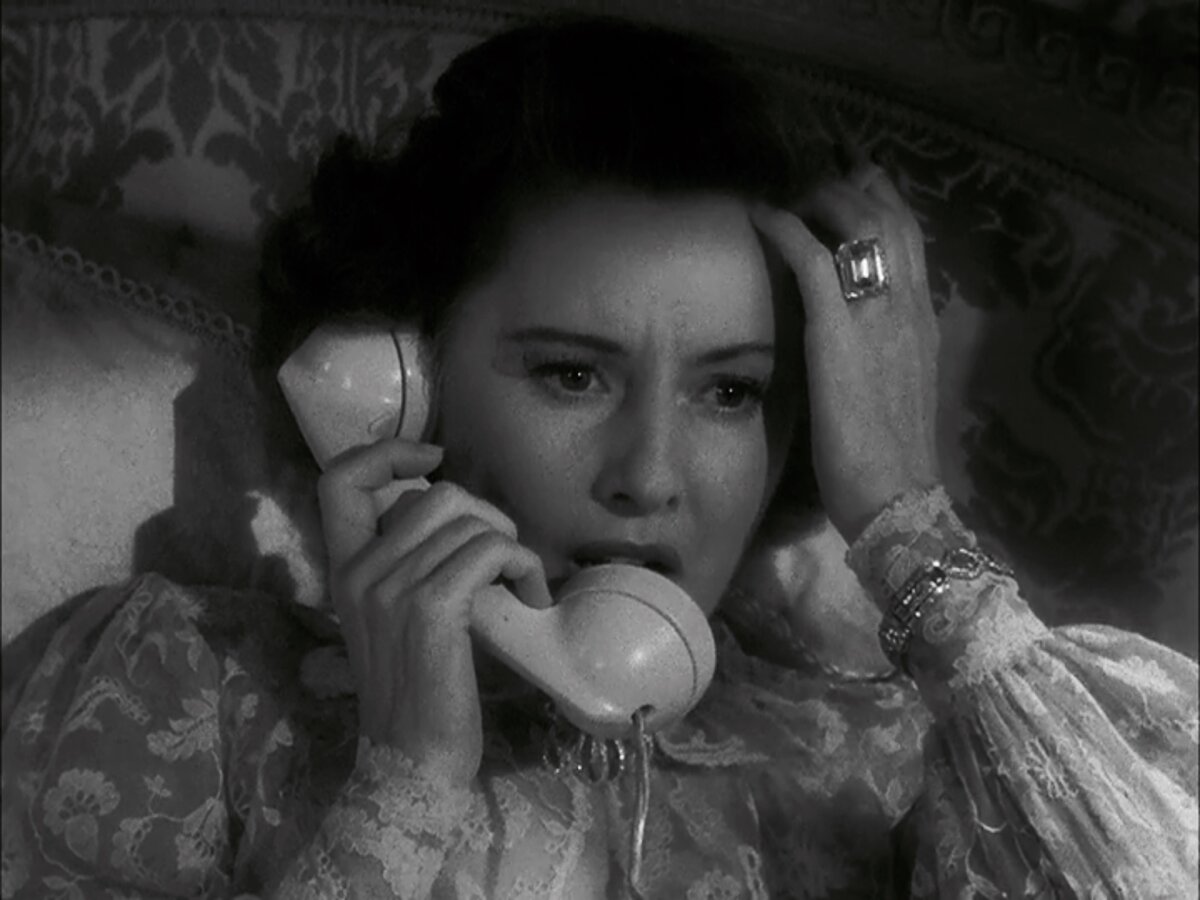
Leona can walk, but she hobbles, unable to take more than a step or two without holding on to something. Metaphorically, though, it’s Henry who hobbles, insecure about his rural upbringing. Having married into a high-class family, he struggles to stand up for himself. If Leona seems imprisoned in her bedroom, he seems imprisoned in his marriage.
The shrill cry of a phone mimics Leona’s symbolic cry for the love she believes she was denied by her business-centered father and which she now demands from her no less ambitious husband. Even the staircase of Leona’s apartment appears foreboding, wound tight like some giant phone cord. It’s as if what’s said downstairs at the metaphorical mouthpiece may be heard, even fulfilled, upstairs in Leona’s room, the metaphorical earpiece.
After you’ve watched the film, try this. Listen to the song “Memphis Might as Well Be on the Moon” by the great Mel McDaniel. Don’t those lyrics ring out as hauntingly as a ringing telephone?
Well, it’s only just a matter of a few hundred miles.
If I left now, I’d be there by tomorrow afternoon,
But add the reasons why she left me to the miles she put between us,
And Memphis might as well be on the moon.
You can watch “Sorry, Wrong Number” on Prime Video, Kanopy, and Hoopla.
‘Sorry, Wrong Number’
Director: Anatole Litvak
Starring: Barbara Stanwyck, Burt Lancaster
Not Rated
Running Time: 1 hour, 29 minutes
Release Date: Sept. 1, 1948
Rated: 3 stars out of 5
What arts and culture topics would you like us to cover? Please email ideas or feedback to features@epochtimes.nyc
