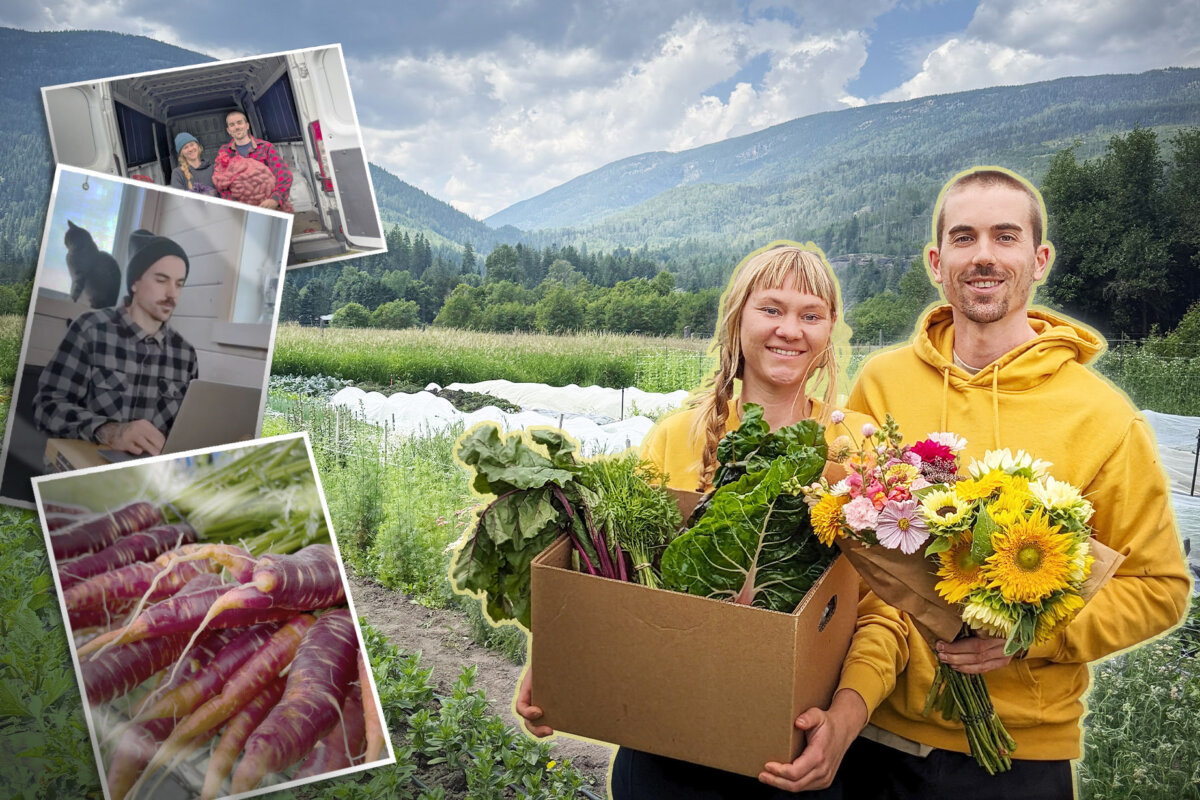
If you ask Nathan Wiebe and Emily Woody why 80 percent of small-scale farmers laboring to grow their own healthy food fail, they will tell you organic vegetables don’t sell themselves.
The young couple, who started a local online farm hub to sell clean, no-till produce, moved into one of North America’s local food economy hotspots with a thriving food scene and grower co-ops: the Kootenay Mountains around Nelson, B.C., where hippies and hopeful organic farmers have, for decades, sought respite from the dominance of large, industrial farms.
Draft dodgers and bohemians had arrived here from the United States in the 1960s and 1970s, long after Russian Doukhobors had established a tradition of fruit farming. Later, during the coronavirus pandemic, wealthy Vancouverites joined the crowd, seeking farmland to grow fresh food.
But while many small-scale farmers have tried growing and selling produce here, in this expensive and highly competitive milieu, few have succeeded.
Into this busy farm scene stepped Wiebe, a city boy from Edmonton who studied marketing, and his new wife, Woody, who hails from small-town Wisconsin and has a degree in sustainable agriculture. Suspicious of supermarket food, his passion for fresh food matched her love for farming, and her experience working on several farms after college. In the past six years, they started Confluence Farms and are staying afloat, unlike countless others, thanks to a novel marketing strategy.
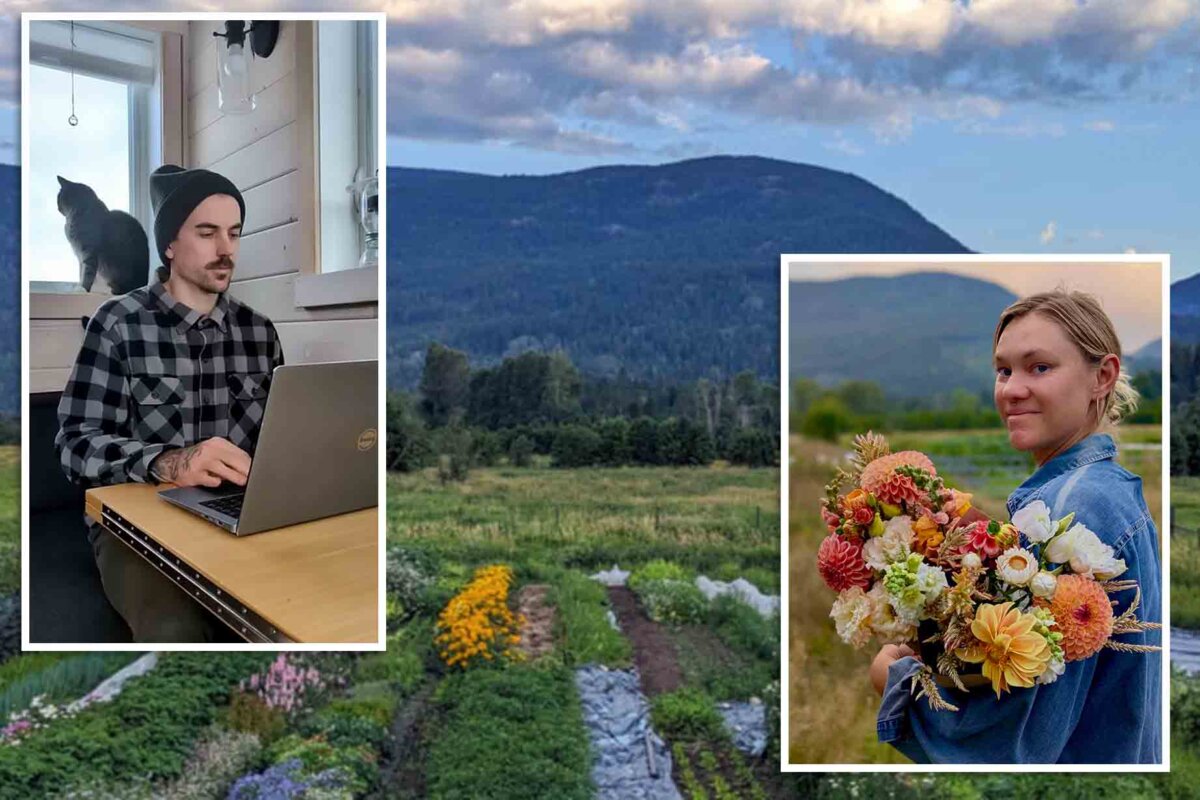
“It’s a tough way to make money,” Woody, 33, told The Epoch Times. “There’s a lot of competition in our area from other market gardeners that are our size.”
Wiebe, 34, added, “So we don’t just sell vegetables, we came up with a business model that we call the farm hub model.”
Land Matching in the Kootenays
Five years ago, the young couple made the transition from consumers to food producers relatively easily thanks to the Young Agrarians farmer-to-farmer network, which pairs landowners who need labor to grow things with young hopeful farmers willing to work. The contracts can vary, typically involving work trades, but theirs was to pay rent plus free vegetables in return for land to farm in the Kootenays.
These matchups don’t aways work, as the couple discovered with their first—they farmed to exhaustion for their landlord, leaving little time to grow for themselves. “The first two years we were not okay,” Woody said. “It was not good. But you just push through.” Eventually they gained a foothold by building up customers—and, with it, a network—which led to a philanthropic landowner connecting with the couple’s values and leasing them land at reduced cost.
They have experienced overabundance of produce before, with too few customers, forcing them to give food away by the roadside or to neighbours. “Anyone, honestly,” Wiebe said. They hadn’t yet graduated from being just gardeners to market gardeners.
Market Gardeners
The term small-scale regenerative market gardener sounds great on paper: no poisons, clean, nutritious, better-tasting food, building topsoil instead of eroding it. The method the couple uses is called “no till.” After an initial mechanical tilling to establish the garden, the couple wields only hand tools so as to disturb the soil as little as possible. This builds soil health, makes microbes “much happier,” pumps nutrients into the ground, and bolsters ecological diversity. It’s the polar opposite of industrial farming, where soil is depleted until dead before synthetic chemicals are added.
“I try to sprinkle in different plants that attract beneficial insects, like sweet alyssum,” Woody said. The good bugs then eat the bad ones, effectuating a natural pest control.
By year three, the garden was “humming with life.” “There was bugs I’ve never seen before, so much variety of bugs, birds, and snakes, and bats,” Wiebe said. “It was like a little ecosystem.”
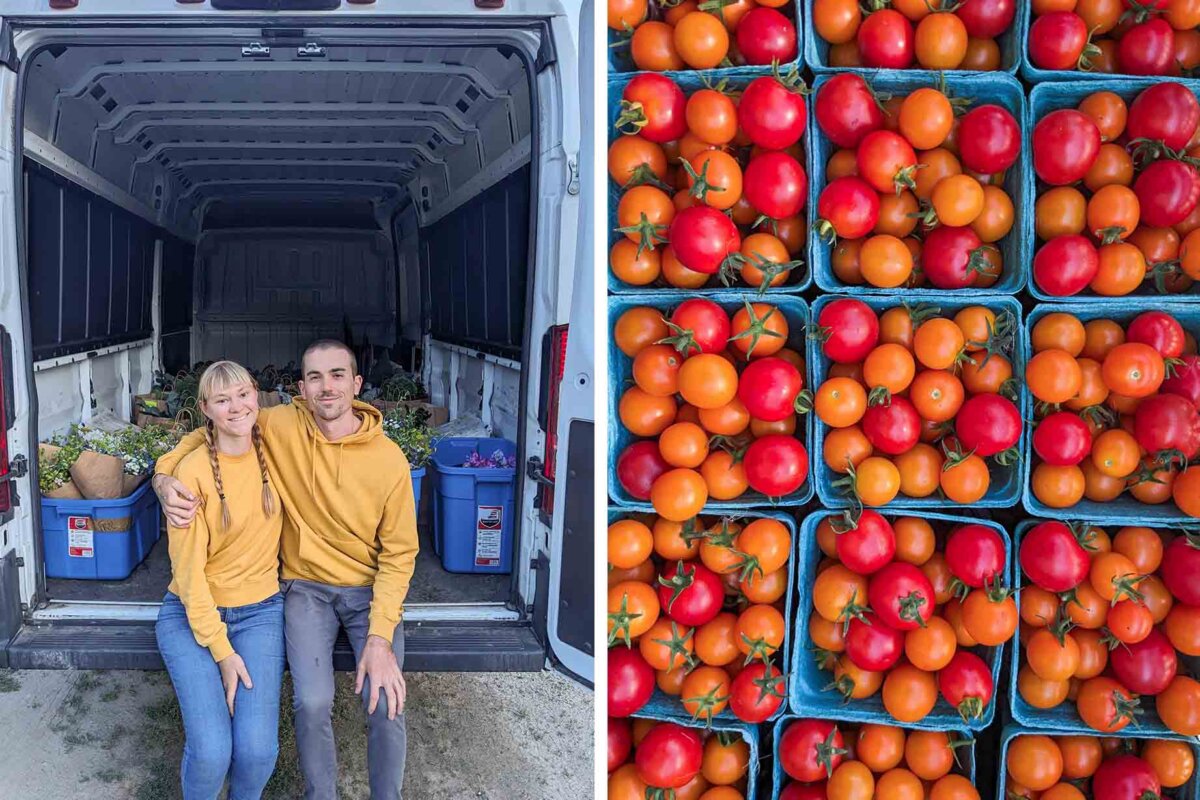
But the couple understood this would all be for naught without buyers and, impelled by the insanely crowded markets, decided to build an excellent online farm store modeled after Amazon. “It’s really easy to use. It’s beautiful. All the photos are really nice,” Wiebe said. “So when people shop, it’s actually like an enjoyable experience. We’re exclusively online.”
“We realized we’d never be able to make enough money just selling vegetables at the scale that we’re at,” Woody added. “So we started aggregating other local food products, like meats and baked goods and pantry items and dairy products, and selling those through our online farm store.” Reaching out to local farmers to join their hub was a gamechanger, turning competitors into partners, and multiplying their variety to attract new customers.
“We became a one-stop shop for all things local,” Wiebe said, adding that they bought a van to ship year-round to Nelson and Castlegar. “We do free home delivery, which is pretty rare for farms to do. We do the collaborative full diet offering.” They became the Kootenays’ first digital farmers market.
It’s tempting to imagine that hitting their niche launched Confluence Farms to full sustainability, if not to be the next Amazon. Within three years, their farm hub model—along with digital marketing, social media, and newsletters—boosted vegetable sales from $55,000 to $201,000. Free delivery services attracted sales while an online tipping function at the checkout generated clear profit.
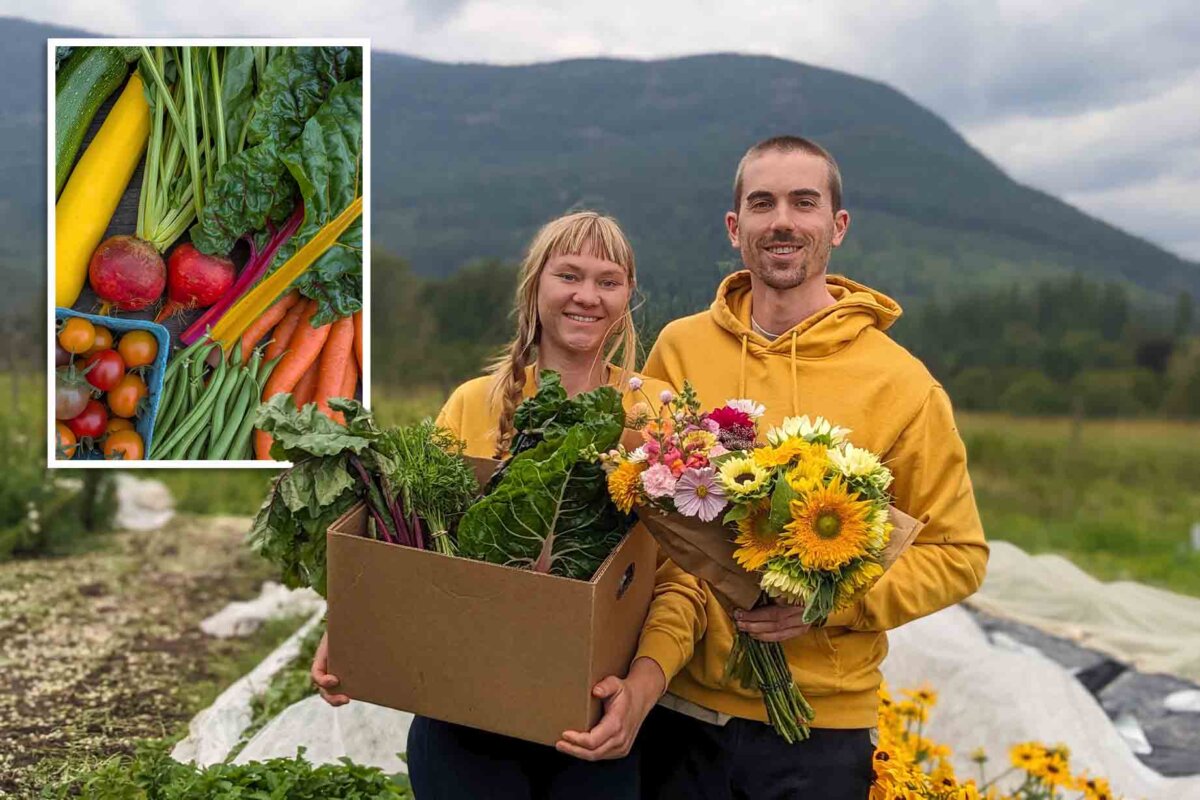
But Wiebe will be the first to tell you farming in the Kootenays is hard. You can’t buy land in this remote vacation hotspot by selling vegetables, he says. A single acre costs $100,000, matching prices in Vancouver. Margins are thinner than you would think. “The take-home on that $200,000 was like $60,000 between the two of us,” Wiebe said. “And that’s before taxes.”
To be comfortable, Woody guesses they’ll need $300,000 from selling vegetables. “We can buy new pants without holes in them,” she added, jokingly. “We can be more sustainable, a more sustainable business.”
To reach that point, they believe mentoring new farmers is, potentially, a win-win solution.
A Small-Scale Rebellion
Wiebe and Woody want to teach others to build farm hubs like theirs and ultimately join their blossoming network. In their words, they want to start a “small-scale rebellion” (which is their Instagram handle) against the “supermarket industrial complex” to make local eating mainstream. But before hopeful farmers dive in headfirst, Woody wants to offer them a warning.
“It is a recipe for failure to spend all your money to start a farm without having any experience,” she said. And it’s a huge mistake to “spend all the money and then they realize that no one wants to buy what they’re trying to sell.”
Wiebe offers a tip: “You should probably work on an actual farm for a season or two and then also do a ton of research into business and marketing and come up with an actual business plan.”
At the end of the day, though, starting a hub “doesn’t really cost a lot, so to build a website is a lot cheaper than building a physical farm store,” he added. “All you need is a website and a delivery vehicle.”
Today, Wiebe and Woody are working to stabilize their land situation before, hopefully soon, growing more vegetables and hiring their first employees. But for now they’ll keep mentoring while perfecting their online vegetable business.