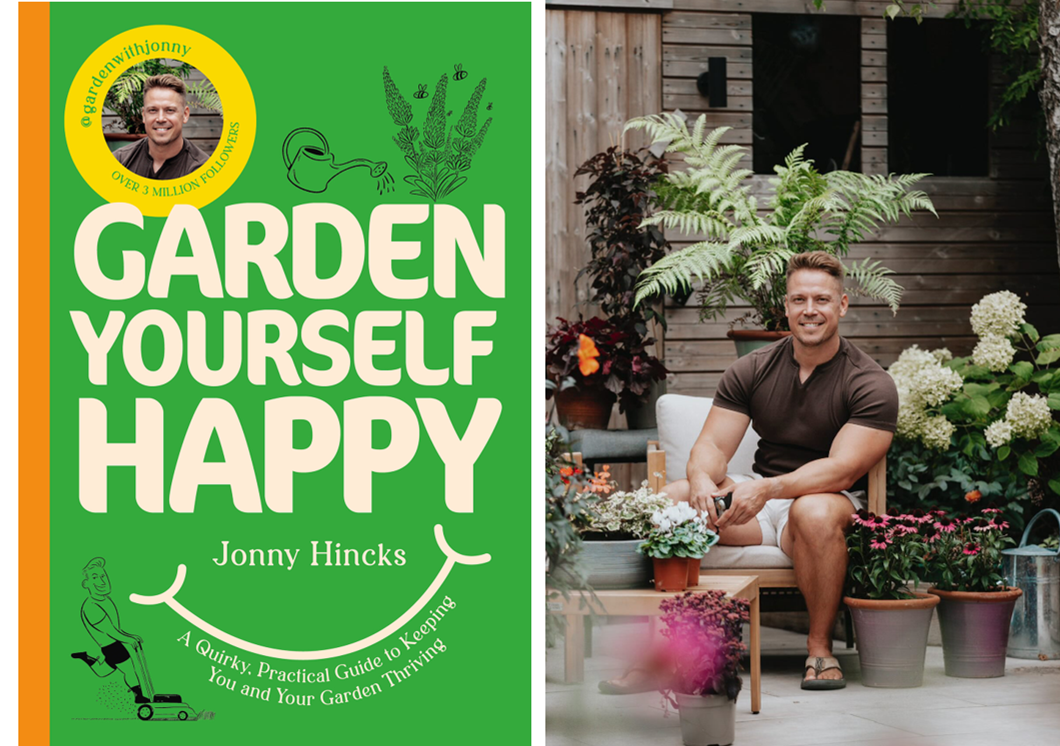
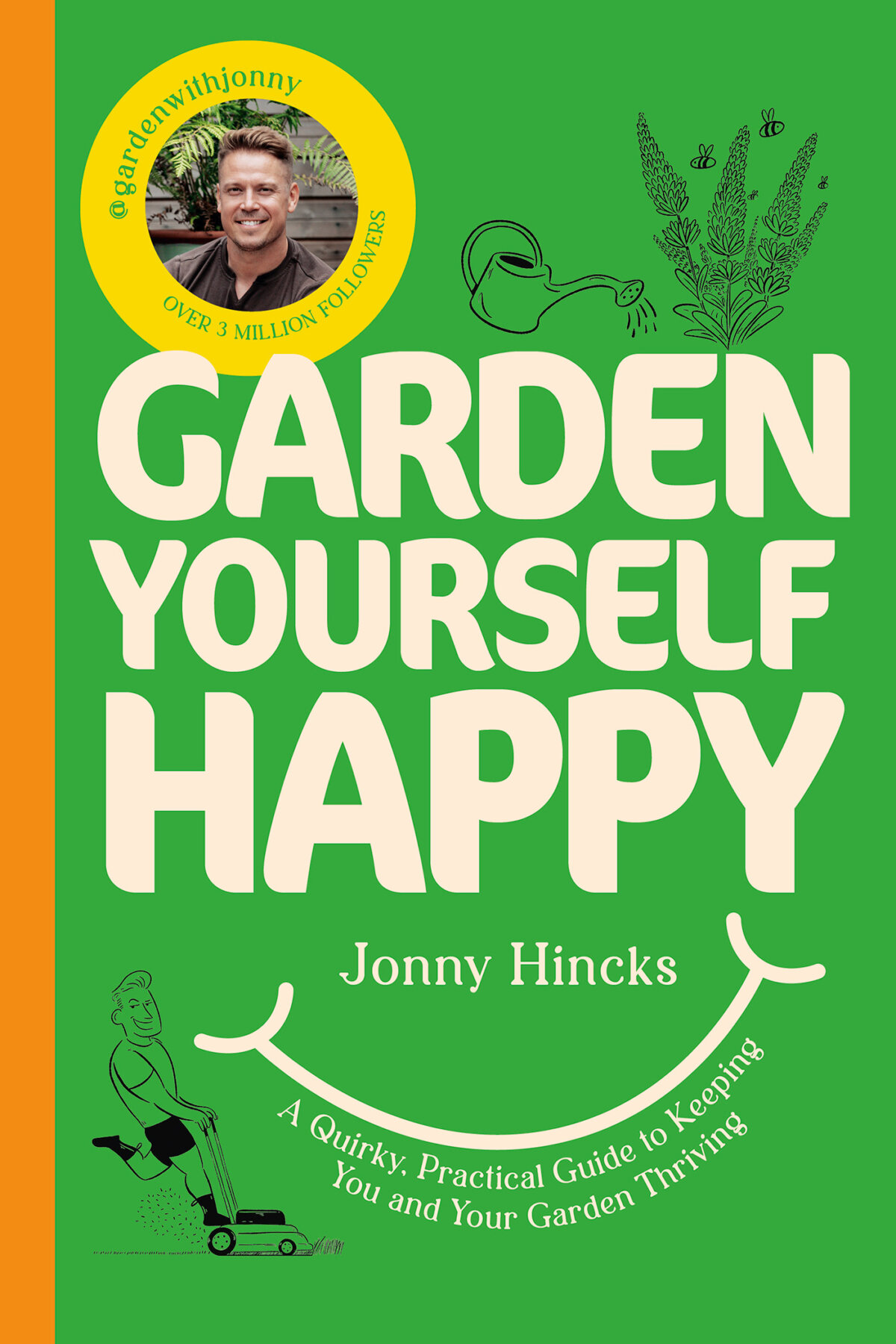
Over the past few years, British firefighter Jonny Hincks has generated a robust following on social media for his @GardenWithJonny pages, where he mixes horticulture and humor.
While his gardening tips and observations are practical, Hincks can often be found clowning for the camera. Whether dancing to a disco sampling or striking “Zoolander”-worthy poses by his garden shed, Hincks is a jolly sort who’ll seemingly do anything for a laugh.
Thanks to nearly 2 million Instagram followers and roughly a million more coming from a combination of the other social media sites, Hincks has also become popular in the offline world. He’s turned up on British television with planting tips and made personal appearances at gardening exhibitions.
“Garden Yourself Happy” is his first book. It carries a more serious focus on the subject than his social media posts, although his free-spirited vibe shines through in his user-friendly text.
Significant Little Victories
Throughout the book, Hincks stresses the value in small triumphs, which can add up to a serene appreciation of gardening. An amusing example involves his early attempt at growing carrots. This mostly produced dismal results until he was able to pull up a smaller-than-usual vegetable, which nonetheless tasted wonderful.
Hincks observes, “One of the biggest lessons I’ve learned in gardening is this: Little and often beats big and exhausting. Every time.”
Gardening requires time and patience, he continues, and he recommends trying to put at least a few minutes per day into the garden’s maintenance. This is preferable to ignoring it during the week before launching into a weekend blitz that could lead to burnout.
Hincks also warns that mistakes can and will occur. He freely admits to drowning his tomatoes and lavender through overwatering, and he confesses to destroying lupins because he failed to realize that the heavy clay soil at his home was incompatible with their cultivation. However, he insists dead plants can have a valuable afterlife when recycled into compost that can feed the next season’s soil.
A Seasonal Activity
Hincks highlights how to maintain a garden during all four seasons. Spring is obviously the preparatory season, and he compares it to a warm-up prior to a workout.
The author provides tips on the best plants, vegetables, and herbs to plant during the spring. However, not everything should go into the ground. For example, he recommends planting mint in pots because it can be “a thug” that takes over the garden. He also outlines best practices for springtime pruning, focusing on roses, hydrangeas, and fruit trees.
For the summer, the book provides amusing insight on how to properly water a garden. Hincks shares his rookie mistake of operating under the belief that more water is always better, which obliterated his initial attempts at creating a vegetable garden.
He also considers the impact of extreme summer weather. To confront hotter than usual summers, he recommends strategies that include drought-tolerant plants such as lavender and echinacea, more generous mulching, and adjusting planting times to cooler months.
Perhaps the most interesting seasonal chapters involve autumn and winter, which are compared to hitting a reset button. Hincks’s writing about autumn garden chores is the most enriching, with wise and loving advice on planting bulbs and collecting seeds along with observations on leaf gathering and seasonal trimmings.
Winter gardening is viewed as the perfect time for maintenance. He ruminates on how one can see what worked during the year and what was problematic through “the bones of your garden, the lines of hedges, the curves of borders, the shapes of trees.” Hincks also counsels on caring for tender plants during the cold weather. He notes which varieties need wrapping or removal from the soil.
Weeds and Wildlife
The gardener is often not the only denizen moving in the surroundings of the garden. The book provides insight on encouraging wildlife that helps replenish the surroundings while discouraging the pests that are anything but beneficial.
Hincks offers solutions for dealing with “weed villains,” including dandelions, nettles, and clover. Nevertheless, he cautions against eradicating these weeds completely because they offer food to helpful pollinators.
There are a few unsatisfactory aspects of the book that should’ve been considered before publication. For starters, there are no photographs and only a handful of drawings to illustrate the ideas that the author is putting forth.
Also, the book is positioned for a strictly British readership. Hincks uses colloquial expressions that could confuse American readers and discusses some uniquely British concerns, such as disruptive hedgehogs.
As for the author, Hincks is depicted in a series of whimsical cartoons that show him careening around the garden. These drawings barely capture the humor and charisma of his social media presence.
Still, the book ends on an upbeat note with Hincks’s view of gardening as an experience for the whole family to share. He’s especially keen on directing children away from screens and toward an appreciation of the outdoors.
These activities, he playfully observes, can plant seeds to last a lifetime from both a botanical and human perspective.
‘Garden Yourself Happy: A Quirky, Practical Guide to Keeping You and Your Garden Thriving’
By Johnny Hincks
Hay House LLC: April 21, 2026
Hardcover, 256 pages
What arts and culture topics would you like us to cover? Please email ideas or feedback to features@epochtimes.nyc