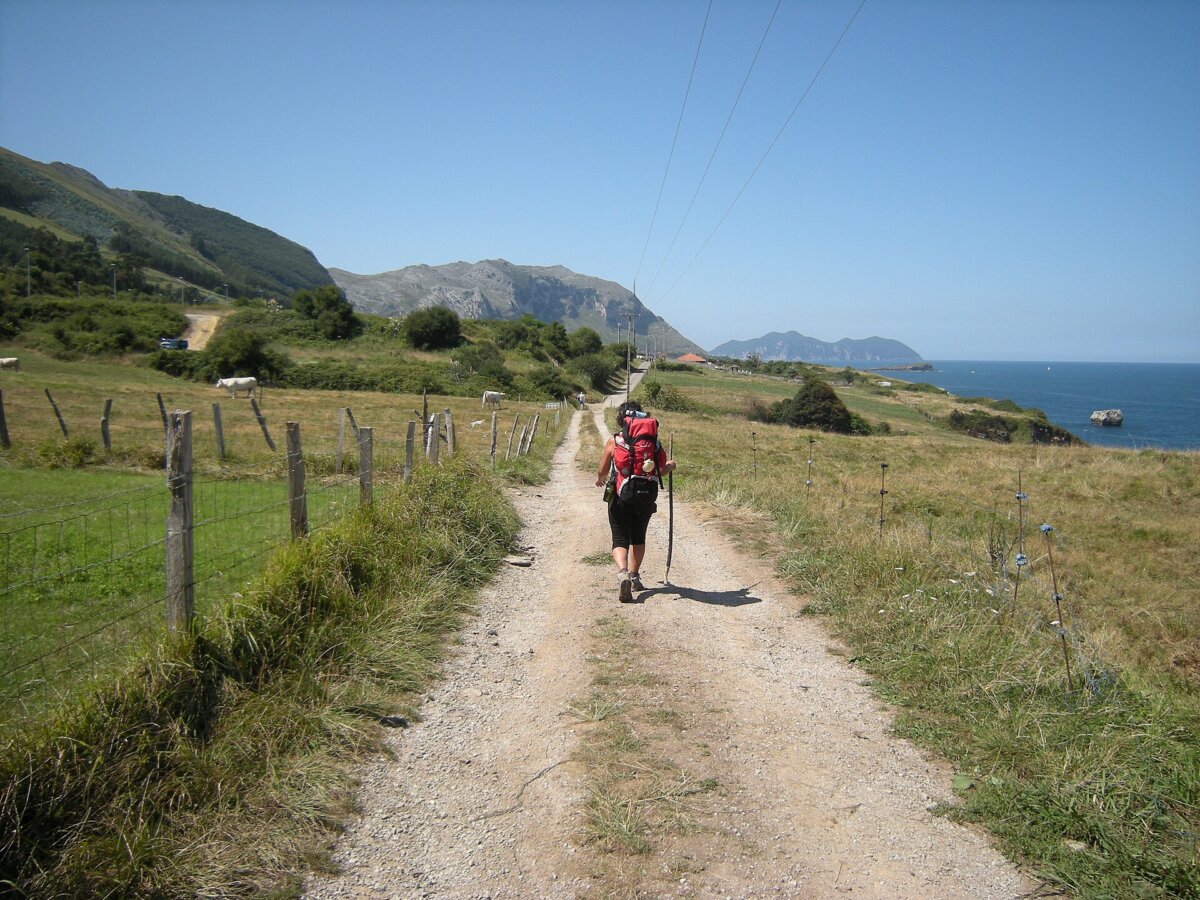
Pilgrimage has long been a cross-cultural phenomenon.
Throughout 2025, around 33 million Christians from 183 countries visited Rome to participate in the centuries-old Holy Year, otherwise known as the Jubilee of Hope.
In Saudi Arabia, Mecca continues to attract millions of yearly Muslim visitors, for whom a pilgrimage to the holy site is a requirement they must fulfill at least once in their lifetime.
Similar journeys to sacred places have helped individuals deepen their spirituality since time immemorial. Wayfarers occasionally left behind accounts of their travels like the three below, which illustrate the spiritually transformative power of pilgrimage.
An Ancient Practice
“Pilgrimage” comes from the Latin noun “peregrinus”: a foreigner, or a traveler, who has come from afar. Merriam-Webster defines the related verb “peregrinate” as “to travel especially on foot.” Although this terse definition rightly stresses pilgrimage’s physical and often intentionally strenuous nature, it omits a crucial fact. Pilgrimage is a religious activity. It has always had spiritual aims and specific destinations.
Ancient Egyptians routinely journeyed to cult centers like Abydos, where they gathered to celebrate festivals, receive blessings from priests, and worship common deities. In ancient Greece, people flocked to the sacred precincts of Delphi, where they sought insight into the future from an oracle who dispensed mysterious prophecies. Even the Olympic Games and similar events began as religious pilgrimages; Greeks assembled to venerate their gods with community rituals and athletic competitions.
 An attic red-figure kylix from ancient Italy, 440 BC–430 B.C. Kodros Painter. (Zde/CC BY-SA 4.0)
For most people then and now, pilgrimages cost hefty sums and days of irrecuperable labor. Yet they were worthwhile, since they enabled travelers to receive wisdom and commune with the divine.
The ‘Bordeaux Itinerary’
In 313, the Roman Emperor Constantine (272–337) legalized Christianity, which had long been forbidden with the penalty of imprisonment or execution. A few decades later, Christianity became the Roman Empire’s official creed. This radical change allowed Christians to practice their faith freely. It also enabled them to travel across the Empire for explicitly religious purposes.
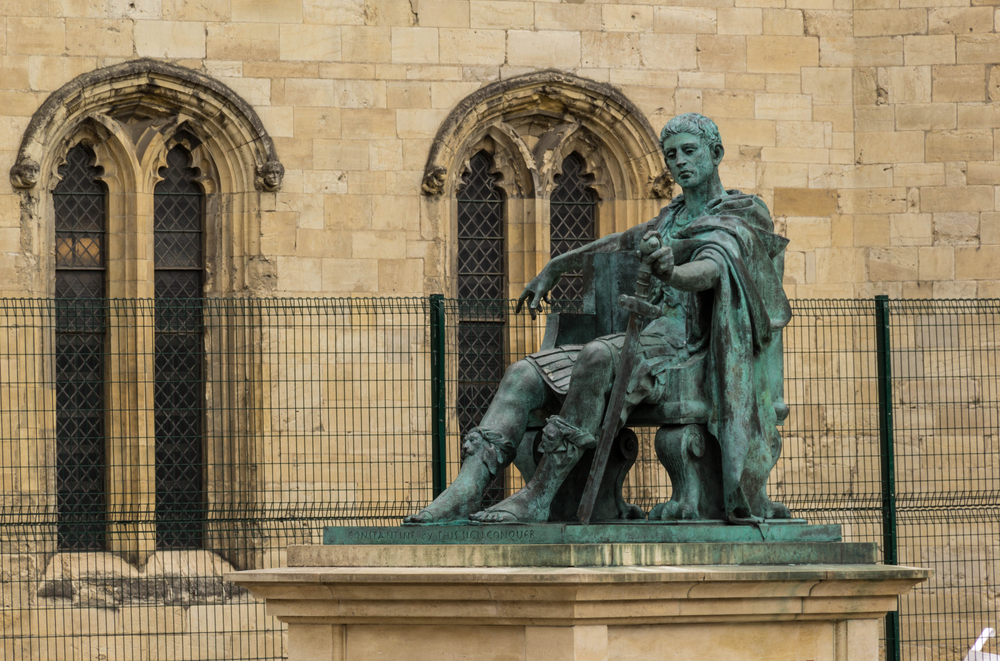 Statue of Roman Emperor Constantine the Great at York Minster. (Immigrant92/Shutterstock)
The first recorded Christian pilgrimage took place in 333. An anonymous pilgrim set out from Bordeaux (modern France) on a year-long journey to Jerusalem. His detailed log is the oldest known Christian travel guide. It lists dozens of cities where the pilgrim passed or stopped to change horses. Except for a few mentions of important figures or events, the list is incredibly concise.
The “Itinerary” becomes more descriptive only in Jerusalem. Although the pilgrim doesn’t share his personal reflections, it’s clear that he felt awe and excitement. He cites virtually every major site mentioned in the New Testament, which relates significant events from the life of Jesus, whose example Christians seek to imitate. He also speaks of the many basilicas “of wondrous beauty” built by Constantine, who tried to restore Jerusalem to commemorate its pivotal role in Christianity’s birth and growth. Between the pilgrim’s stops, we have to imagine moving moments of prayer and contemplation, which he may have deemed too private to share.
Brevity notwithstanding, the “Bordeaux Itinerary” set a precedent for Christian pilgrims for centuries to come. The pilgrim embarked on a strenuous, likely dangerous journey to visit the earthly sites where his spiritual teacher had once walked.
In the Middle Ages, this devotion to sacred sites as portals for spiritual communion became an increasingly integral part of the religious life.
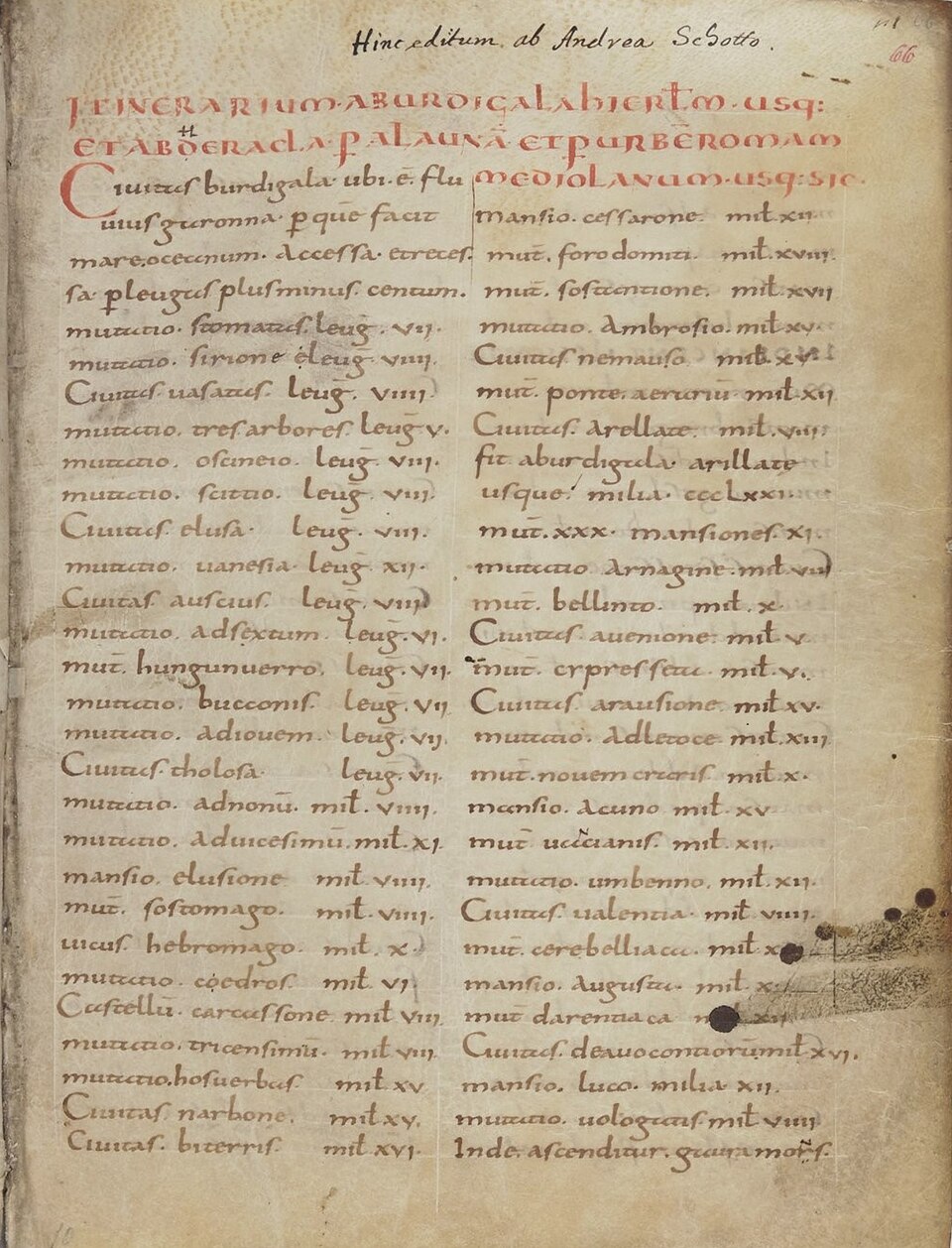 A copy of the first page of the “Bordeaux Itinerary,” held at the National Library of France. (Cnfy1cnfy1/CC BY-SA 4.0)
Margery Kempe’s Pilgrimages
Margery Kempe (1373–1438) was a controversial woman. Despite her aristocratic background, she couldn’t read or write. Yet she had an extraordinary life animated by visions and religious experiences. She reported regularly seeing angels, demons, and other spiritual entities. For some, the visions demonstrated a mystical gift. To others, they sparked suspicion about her health and motivations.
Ever since Jesus’s life, Christians have revered relics: hair, bones, clothes, or other physical remains from saints and martyrs that are believed to possess miraculous powers. A devout Christian, Kempe set out on three major pilgrimages in search of relics. She later dictated her experiences to two scribes, who compiled them into the “The Book of Margery Kempe.” The text relates her extensive travels, describes her visions, and comments on religious issues that concerned her. Some consider it the first English autobiography.
Kempe first went to Jerusalem, where she visited the same sites as the anonymous pilgrim a millennium earlier. Speaking in the third person, she recalls the bliss she felt as she approached the city, the sight of which almost made her fall from her donkey. She wrote:
“She thanked God with all her heart, praying Him for His mercy that, as He had brought her to see His earthly city of Jerusalem, He would grant her grace to see the blissful city of Jerusalem above, the city of Heaven. … Then for the joy she had, and the sweetness she felt in the dalliance with Our Lord, she was on the point of falling … for she could not bear the sweetness and grace that God wrought in her soul.”
Kempe’s second journey was to Santiago de Compostela, which is the alleged resting place of Jesus’s apostle James and one of the world’s most famous pilgrimage destinations. On her way back to England, Kempe was accused of heresy and duplicity, possibly because she wailed in public during some of her visions.
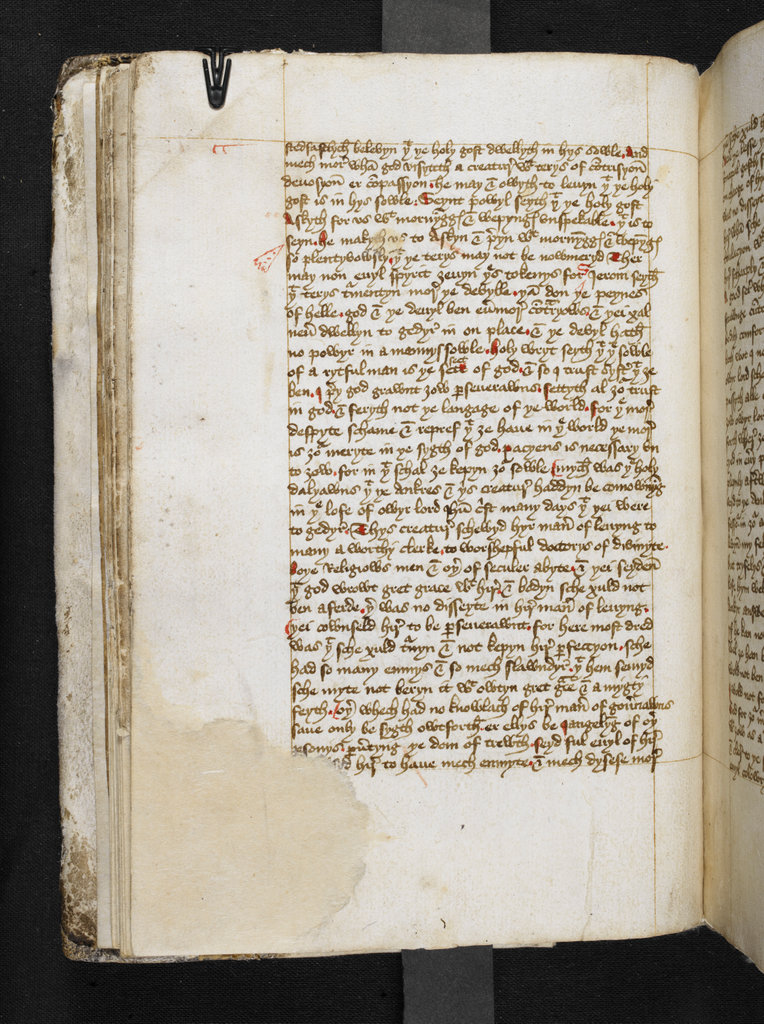 The only known copy of the British mystic Margery Kempe’s autobiography, owned by the British Library. (Public Domain)
Her last trip was to modern Poland, where she continued her search for relics by touring major churches with her daughter-in-law.
As her detailed account suggests, Kempe’s pilgrimages were continuous tests of faith. When faced with accusations about her religious beliefs, she took to prayer more intensely than usual, trusting that God would protect her, no matter what.
The three journeys also enabled Kempe to commune with the divine while living on earth. As she noted in her remarks about Jerusalem, her pilgrimage made her appreciate the created world and, more importantly, glimpse its transcendent creator.
‘The Way of a Pilgrim’
Pilgrimage’s transformative power is fully expressed in another anonymous work, this time from 19th-century Russia. “The Way of the Pilgrim” was first translated into English in 1930. It has since become a classic, not least because of the author’s ordinary background.
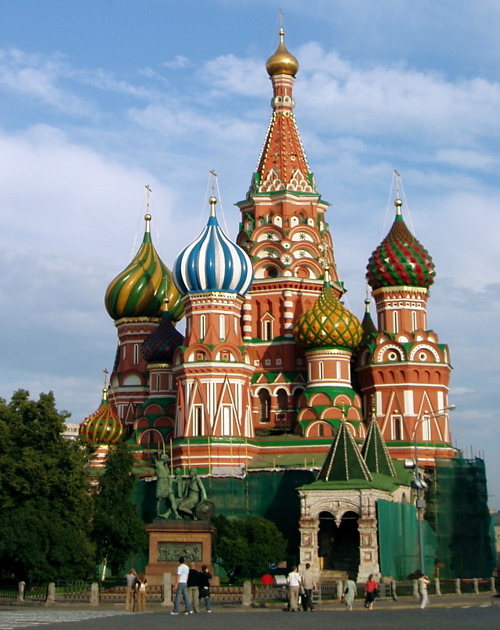 St. Basil’s Cathedral in Moscow. (Knutux/CC BY-SA 3.0)
While attending the Liturgy, the Eastern Orthodox pilgrim was captivated by three words from Paul’s First Letter to the Thessalonians: “Pray without ceasing.” heard a voice that told him to “pray without ceasing” (5:17). He tried to understand the injunction but couldn’t. How was it “possible to pray without ceasing, since a man has to concern himself with other things also in order to make a living”? He set out in search of a spiritual mentor.
As he noted in the first paragraph of his memoir, his “worldly goods are a knapsack with some dried bread in it on my back, and in my breast pocket a Bible. And that is all.”
The pilgrimage took him through southern and central Ukraine, western Russia, and Siberia, where he met several teacher-like figures. Each gave him hints. They showed him enlightening passages from the Bible, pointed him to relevant works by Christian saints, and reminded him that prayer wasn’t an intellectual task, but a practice of the heart.
His travels led him to a “starets,” an elder monk who taught him what is now called the Jesus Prayer: “Lord Jesus Christ have mercy on me.” The more he recited these words, the more he began to understand what it meant to live a truly Christian life. His renewed spiritual awareness also affected the people around him, who began attending more carefully to God.
Although this pilgrim didn’t visit ancient holy sanctuaries like Jerusalem, his journey illustrates the transformative potential of pilgrimage more clearly than Kempe or his Roman counterpart’s. As he told his host in the remote town of Tobolsk, Russia, “we are alienated from ourselves and have little desire really to know ourselves; we run in order to avoid meeting ourselves and we exchange truth for trinkets.”
Pilgrimage offered the man space to contemplate his life’s guiding principles—goodness, truth, and faith—and whether he was upholding them as he should. It prompted him to view himself as the creature of a mysterious yet omnipresent creator, and to find solace in recognizing things greater than himself.
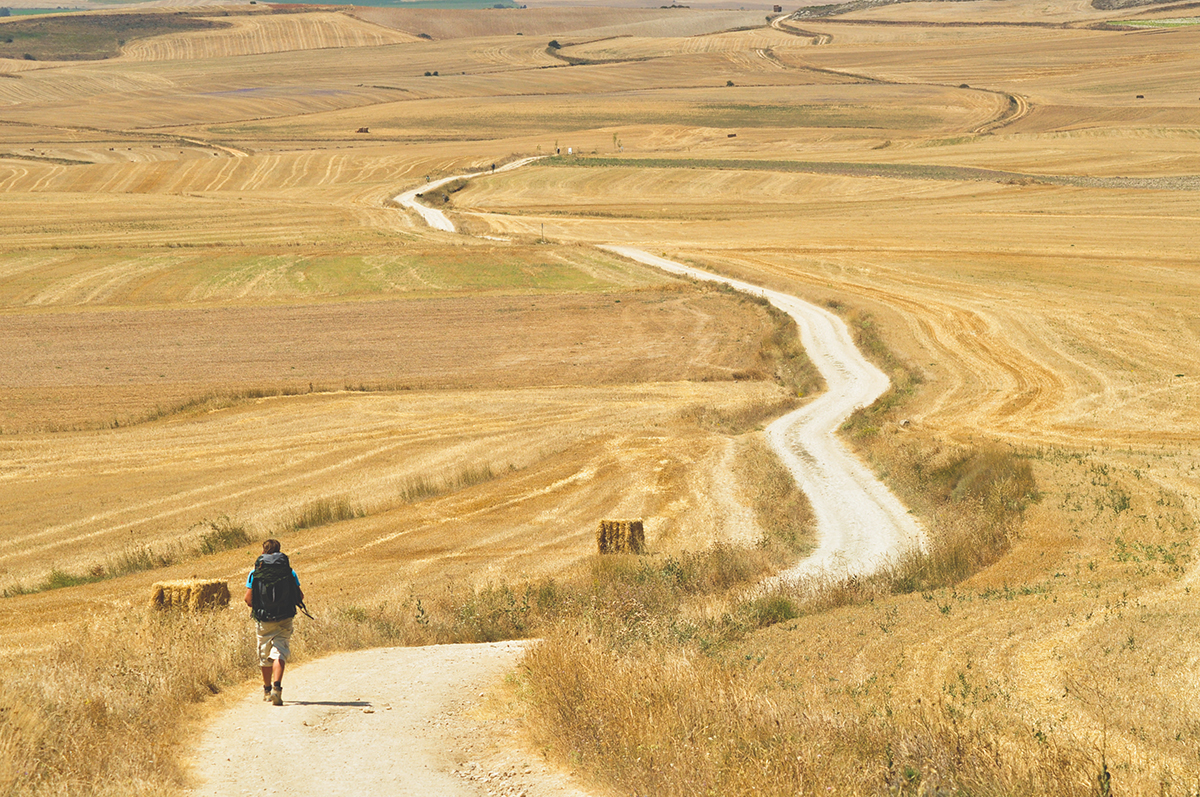 The pilgrimage to the cathedral of Santiago de Compostela is a lengthy walking tour. (Dmi.Bo.S/Shutterstock)
A similar message about pilgrimage as a journey out of the self appeared in a 2010 address by Pope Benedict XVI, delivered during a visit to Santiago de Compostela. Although it was meant for a Christian audience, the speech describes the value of pilgrimage in universal terms:
“To go on pilgrimage is not simply to visit a place to admire its treasures of nature, art or history. To go on pilgrimage really means to step out of ourselves in order to encounter God where he has revealed himself, where his grace has shone with particular splendour and produced rich fruits of conversion and holiness among those who believe.”
What arts and culture topics would you like us to cover? Please email ideas or feedback to features@epochtimes.nyc