



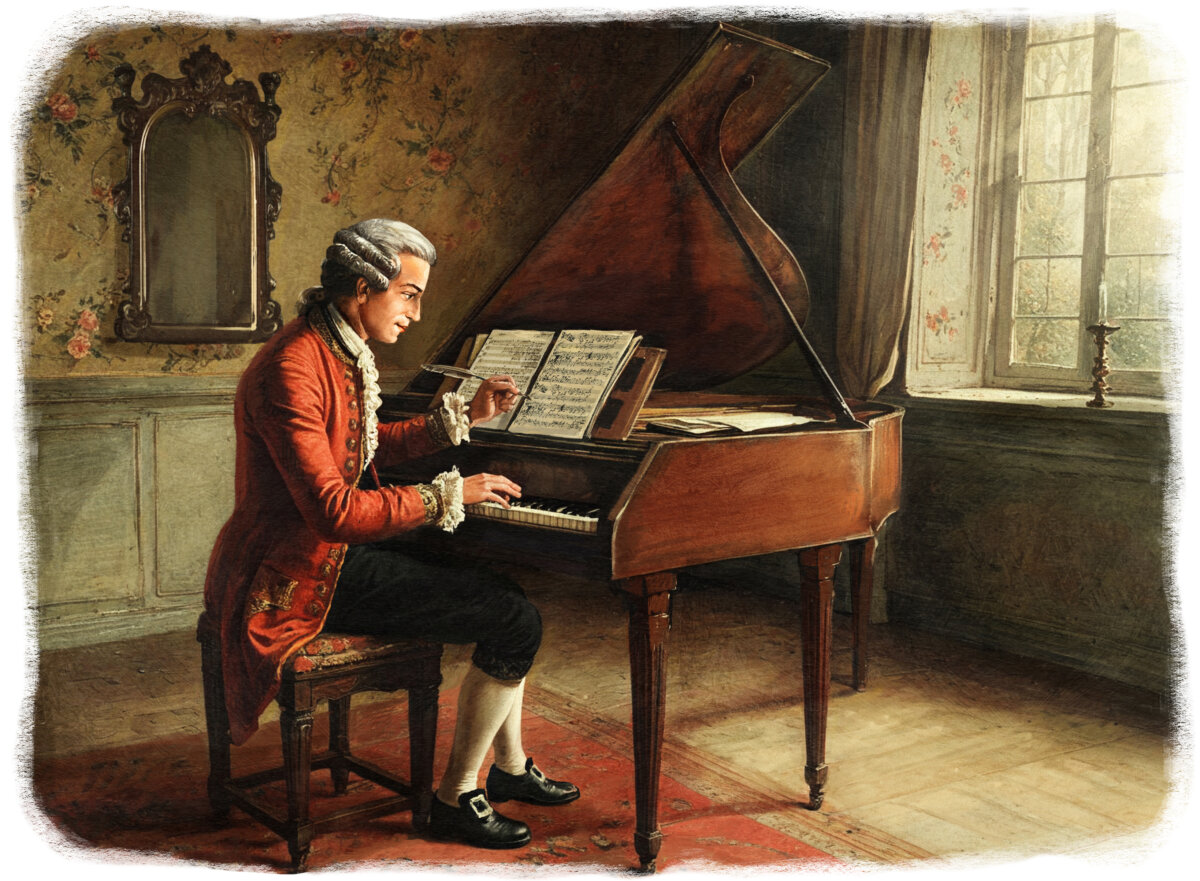
The violins enter with a sorrowful tune. A choir enters, uttering the Latin “Lacrimosa dies illa,” a reference to the Catholic Requiem Mass. The Day of Judgment has come—God will judge all souls, and none can escape their fate.
So begins the famous opening notes of the “Lacrimosa” from Wolfgang Amadeus Mozart’s Requiem in D Minor. One of the most expressive movements in classical music, this three-minute work is brief yet powerful. As it turns out, the solemn Requiem would become the final testament of one of the most influential composers of the Classical era, surrounding his death with an air of mystery.
Today’s recording is Wolfgang Amadeus Mozart’s Requiem in D Minor: Sequentia: Lacrimosa, by the Berliner Philharmoniker conducted by Claudio Abbado.
The Requiem’s Origin
The Requiem owes its origin to Austro-German nobleman Franz von Walsegg. Stricken by the death of his wife, the count sought to commission a Requiem Mass in her memory.
The count regularly had works written on his behalf, though he did so with a twist. Anonymously contacting composers, he would pass off their works as his own at private gatherings, taking pleasure in the deception.
The commission of the Requiem was no different, with von Walsegg sending a discreet intermediary to engage Mozart. Portrayed in biographies and retellings as a figure “dressed in gray,” the arrival of the shadowy figure was said to have disturbed the composer.
Suffering from financial strain and illness, Mozart was nearing the end of his life. After completing “The Magic Flute” to great success, the composer became bedridden, afflicted by fever and swelling. Creatively, however, he was at the peak of his powers, even while undergoing physical decline.
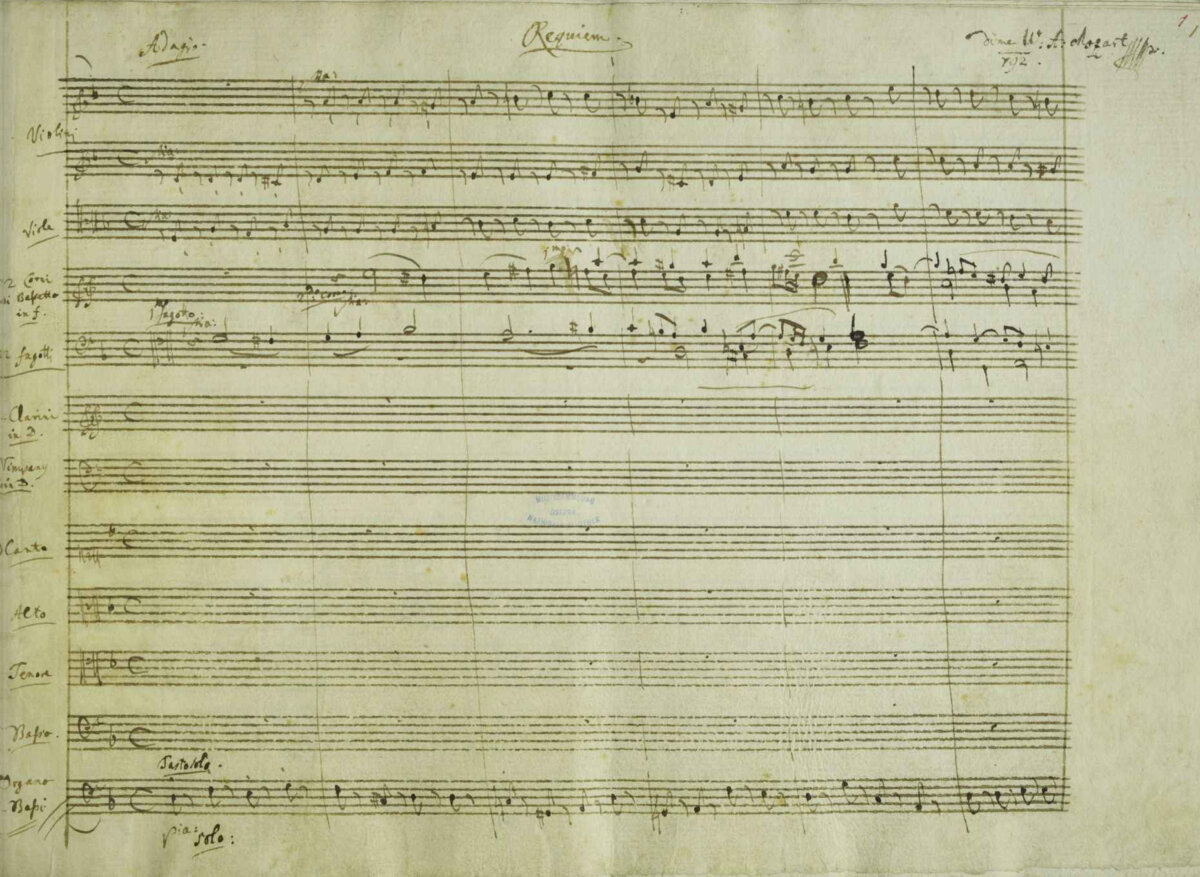
It was under these circumstances that Mozart began composing his Requiem in D Minor. After completing the “Introitus” and “Kyrie,” he went on to sketch much of the central sections before beginning the famous “Lacrimosa.” According to legend, Mozart became increasingly unsettled by the commission, preoccupied with thoughts of death. The arrival of a mysterious messenger, instructing him to compose a Mass for the dead, contributed to the later belief that he was composing a Requiem for his own funeral.
The “Lacrimosa” has become a symbol of Mozart’s grappling with mortality. He composed only the first eight bars before his death, with the remainder completed by composers Joseph Eybler and Franz Xaver Süssmayr. The opening bars have since been mythologized as Mozart’s swan song—a final musical farewell.
What arts and culture topics would you like us to cover? Please email ideas or feedback to features@epochtimes.nyc
