



CHICAGO—There are critics and Shakespearean scholars—including Harold Bloom (“Shakespeare: The Invention of the Human”), A.C. Bradley (“Oxford Lectures on Poetry”), Samuel Johnson (“Preface to Shakespeare”), and Bertrand Evans (“Shakespeare’s Comedies”)—who argue that William Shakespeare’s “The Merry Wives of Windsor” is not as funny as his other comedies. But the revival of “Merry Wives” at Chicago Shakespeare Theater is so lively and inventive that it challenges their opinions.
A long-standing rumor holds that Queen Elizabeth I commissioned Shakespeare to write a play showing Falstaff in love. The rumor originated with playwright and critic John Dennis, who wrote in 1702 that the queen was amused by Falstaff in “Henry IV,” in both Parts I and II, and asked Shakespeare to revive the character in a new play. Nicholas Rowe later popularized the account in his 1709 biography of Shakespeare, claiming the queen was eager to see the corpulent buffoon in love.
First published in 1602, “Merry Wives” is a farcical romp often cited as one of the first English plays to focus on the middle class. Earlier works typically centered on kings and nobility, with commoners relegated to minor roles.
Rather than simply placing Falstaff in a romance, Shakespeare gives the portly knight a comic scheme. Down on his luck, he attempts to restore his fortunes by seducing the wives of two wealthy men. Mistress Ford and Mistress Page uncover the plot and conspire to humiliate him—and their jealous husbands—through a series of elaborate pranks.
The play explores love, jealousy, revenge, wealth, and reputation, while celebrating the wit of its female characters. Director Phillip Breen leans into the broad comedy with satire and mistaken identities to energize the production. Breen updates the humor with contemporary touches, including sharp innuendo and playful references to modern life. The result is a fast-paced performance that frequently had the audience howling with laughter.
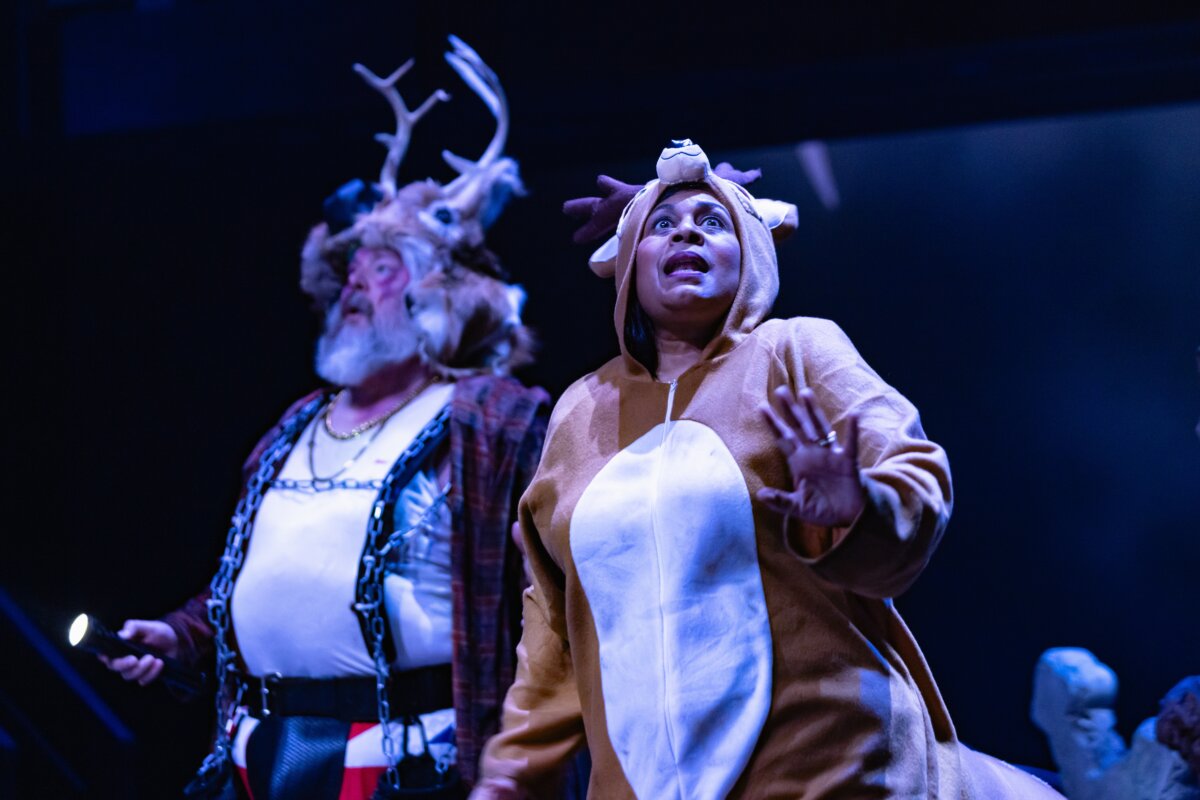
Breen sets the action in modern-day England during autumn, as Windsor prepares for a holiday celebration. Scenic and costume designer Max Jones creates a Halloween-inspired setting, complete with a black cat, pumpkins, and elaborate costumes. Lighting designer Marcus Doshi and sound designer Lindsay Jones heighten both the spooky atmosphere and the comedy—particularly in a scene in which Falstaff tries to turn down music by Marvin Gaye but accidentally dims the lights instead.
Among the most uproarious antics are Falstaff being stuffed into a laundry basket and dumped into the River Thames, disguising himself as an old woman mistaken for a witch, and his misadventure in a ghostly graveyard.
A central challenge of the play is ensuring the characters feel like real people rather than caricatures. To its credit, the Chicago Shakespeare Theater ensemble meets that challenge, bringing dimension to even the broadest roles.
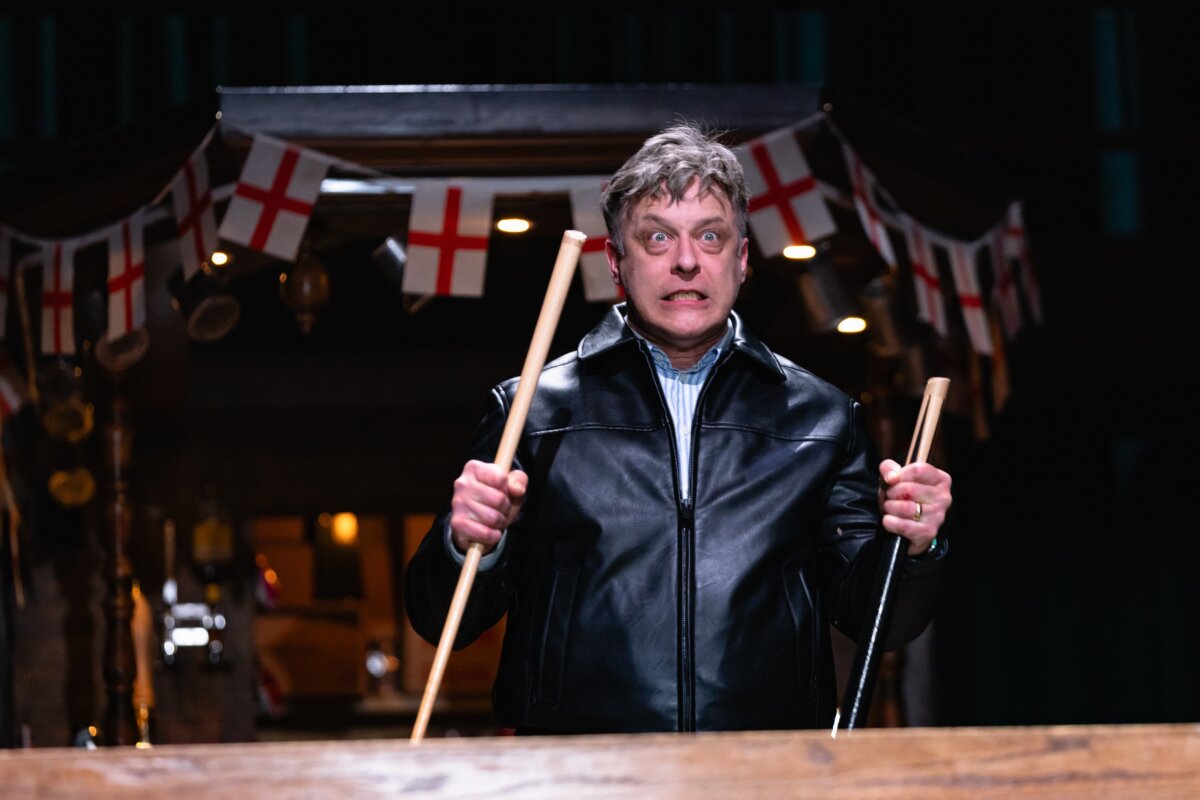
The production rises and falls on Falstaff, and Jason Simon delivers a confident, comic performance. He captures both the character’s vanity and vulnerability, particularly in the line, “O powerful love, that in some respects makes a beast a man, in some other a man a beast!”
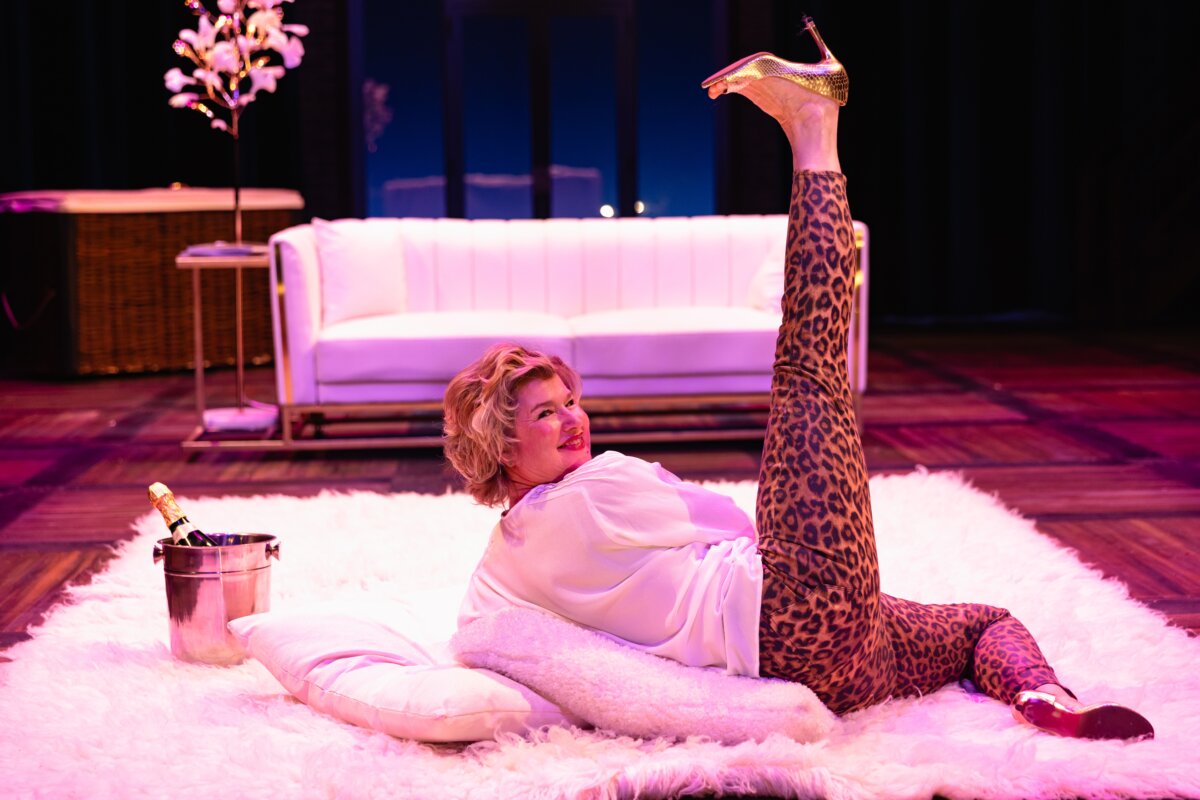
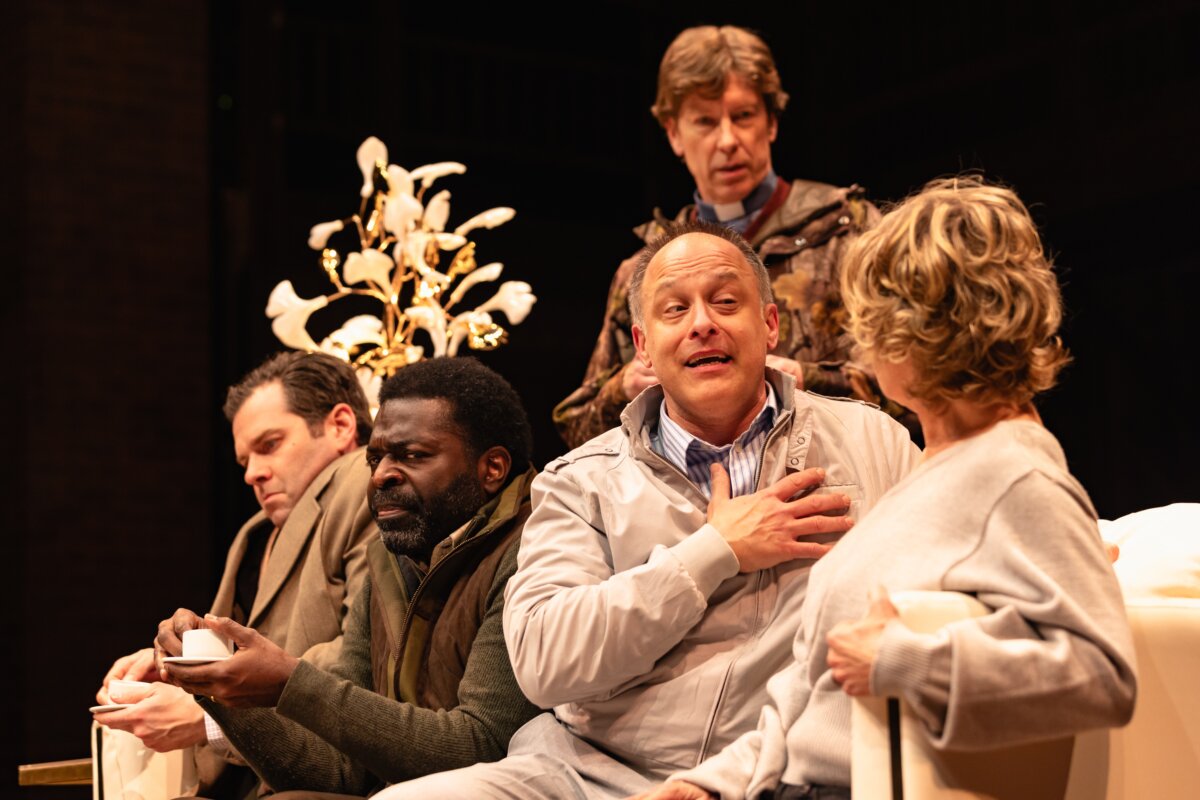
Issy van Randwyck as Mistress Ford and Ora Jones as Mistress Page are equally strong, creating a spirited partnership that drives the play’s mischief. Timothy Edward Kane as Master Ford and Chiké Johnson as Master Page provide effective foils as their increasingly suspicious husbands. One of the production’s chief pleasures is watching the two wives make fools of them all.
Nancy Voigts adds humor as the frivolous, snooping Mistress Quickly, and Nate Burger is a hoot as Dr. Caius, whose exaggerated French accent becomes one of the production’s most hysterical highlights.
Shakespeare aficionados know they can expect strong productions of the Bard’s work at Chicago Shakespeare Theater. The company has long proven itself to be among the world’s leading stages. With “The Merry Wives of Windsor,” it outdoes itself.
‘The Merry Wives of Windsor’
Chicago Shakespeare Theater
800 E. Grand Ave., Chicago
Tickets: 312-595-5600 or ChicagoShakes.com
Runs: 2 hours, 45 minutes (one intermission)
Closes: May 3, 2026
What arts and culture topics would you like us to cover? Please email ideas or feedback to features@epochtimes.nyc
