Raphaelle Peale (1774–1825) was a member of a renowned artistic family who settled in Philadelphia, Pennsylvania. His father, uncle, siblings, and cousins were among the most important American artists of the late 18th and early 19th centuries. Peale is notable for being the first professional American still life painter. His pioneering paintings in this genre feature food and tabletop objects. The works are characterized by harmoniously balanced compositions, dramatic lighting, and the sensitive rendering of form, color, and texture. Despite his short life, Peale painted as many as 150 still lifes, with an estimated 50 known today.
Peale was the eldest surviving son of the solider, scientist, and artist Charles Willson Peale (1741–1827). Patriarch Charles was a portraitist of Revolutionary Founding Fathers, including President George Washington, and established one of the first museums in America. He taught painting to the young Raphaelle, as well as many of his other children who were also named after famous historic artists.
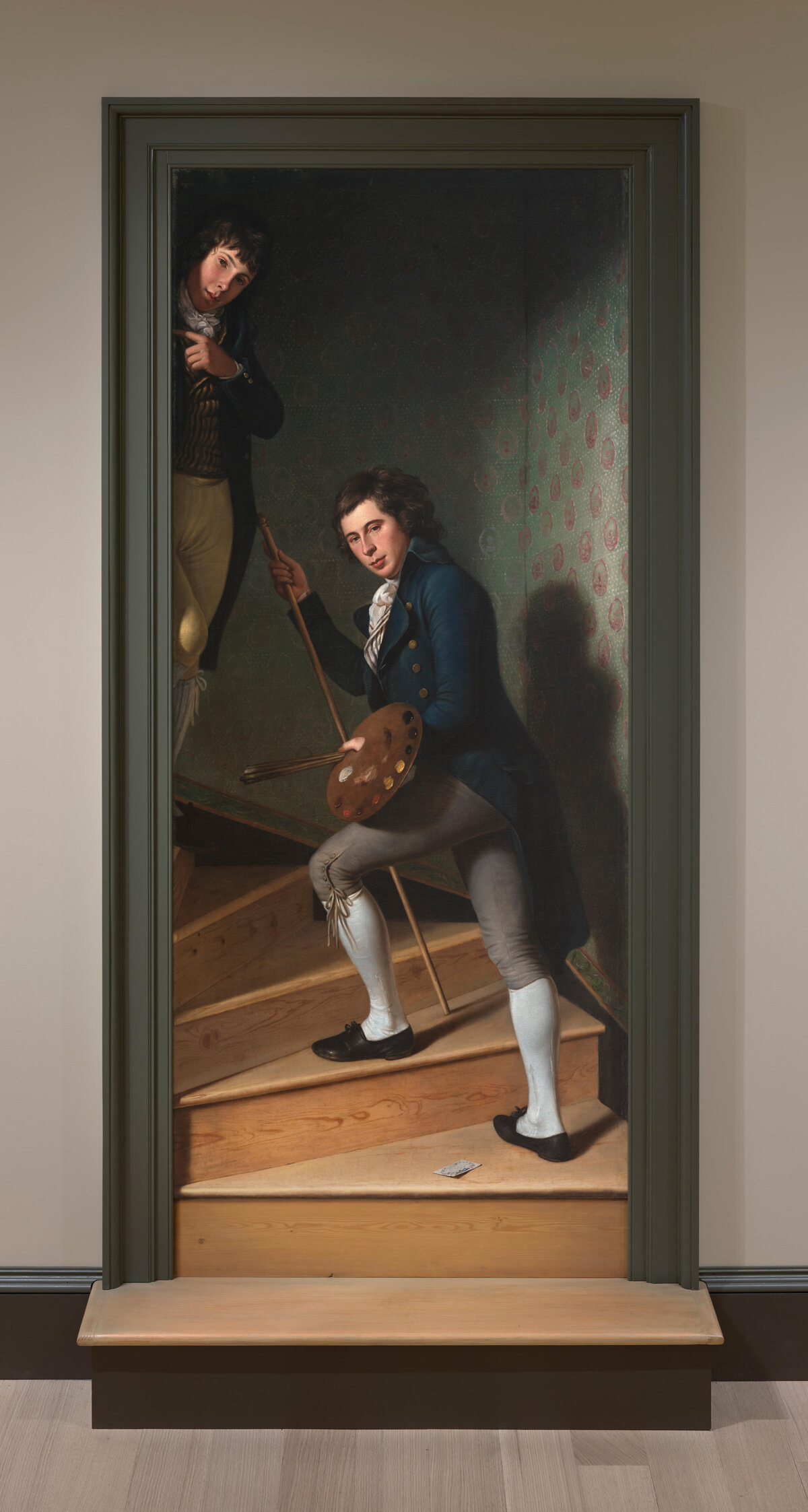
Raphaelle is portrayed in one of Charles’s most beloved works: “Staircase Group (Portrait of Raphaelle Peale and Titian Ramsay Peale I).” The illusionistic 1795 oil on canvas is housed at the Philadelphia Museum of Art (PMA). Raphaelle, depicted with a palette in hand, alights up a painted step; a real step is attached to the canvas’s base.
Raphaelle began his career primarily painting portrait miniatures. However, he felt an affinity for still lifes and pursued it. At the time, portraiture was a more esteemed genre in newly formed America, conferring prestige and brimming with commission opportunities. Charles entreated Raphaelle to practice portraiture but acknowledged his talent for his preferred subject. Raphaelle’s exhibited still lifes brought him critical acclaim, but he struggled financially and his paintings have a pervading melancholic air.
International Influences
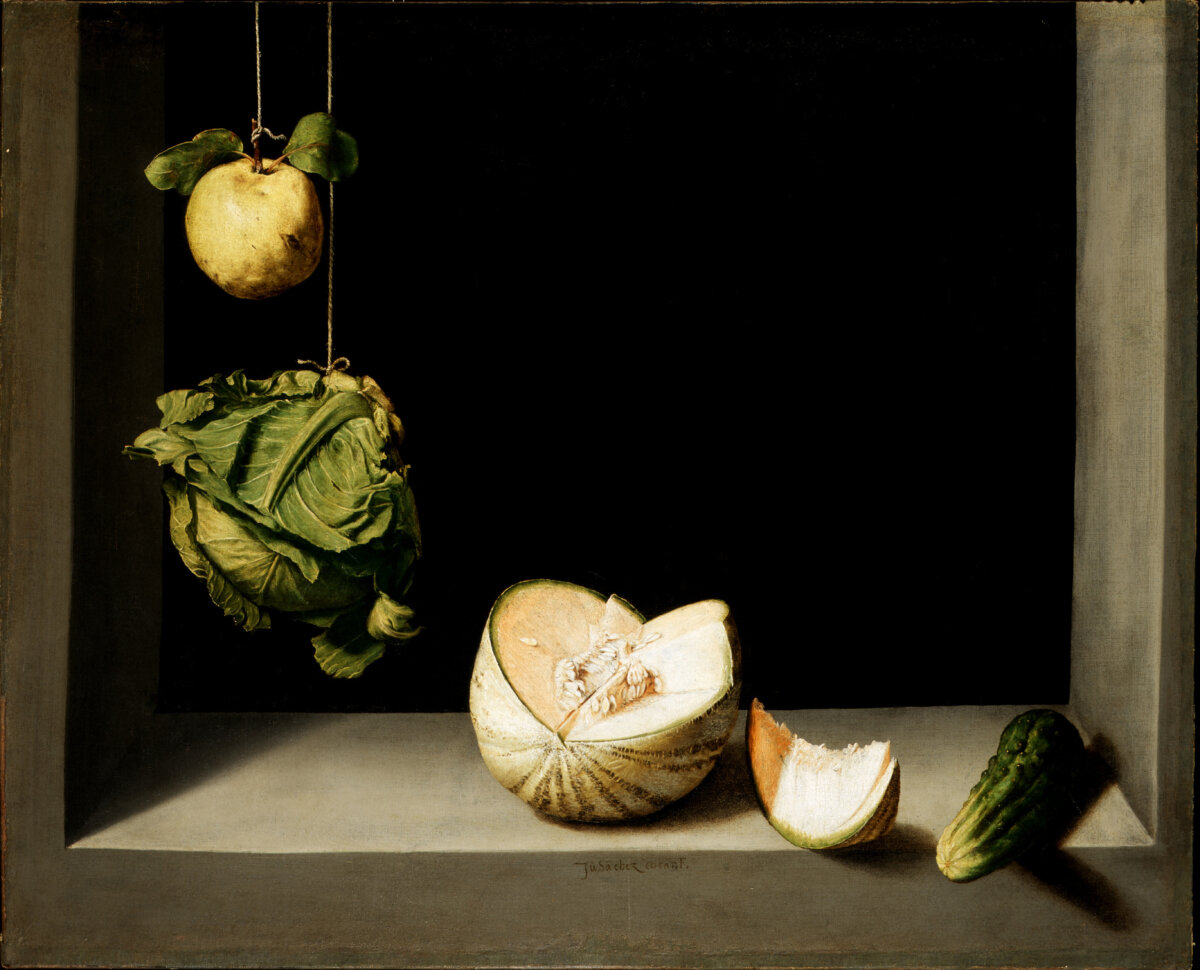
The younger Peale’s spare style is believed to have been influenced by Spanish still lifes (bodegón), including that of the baroque artist Juan Sánchez Cotán (1560–1627). Cotán was one of the first artists to paint still lifes. His small output is striking for its austerity, realism, and chiaroscuro, elements found also in Peale’s work.
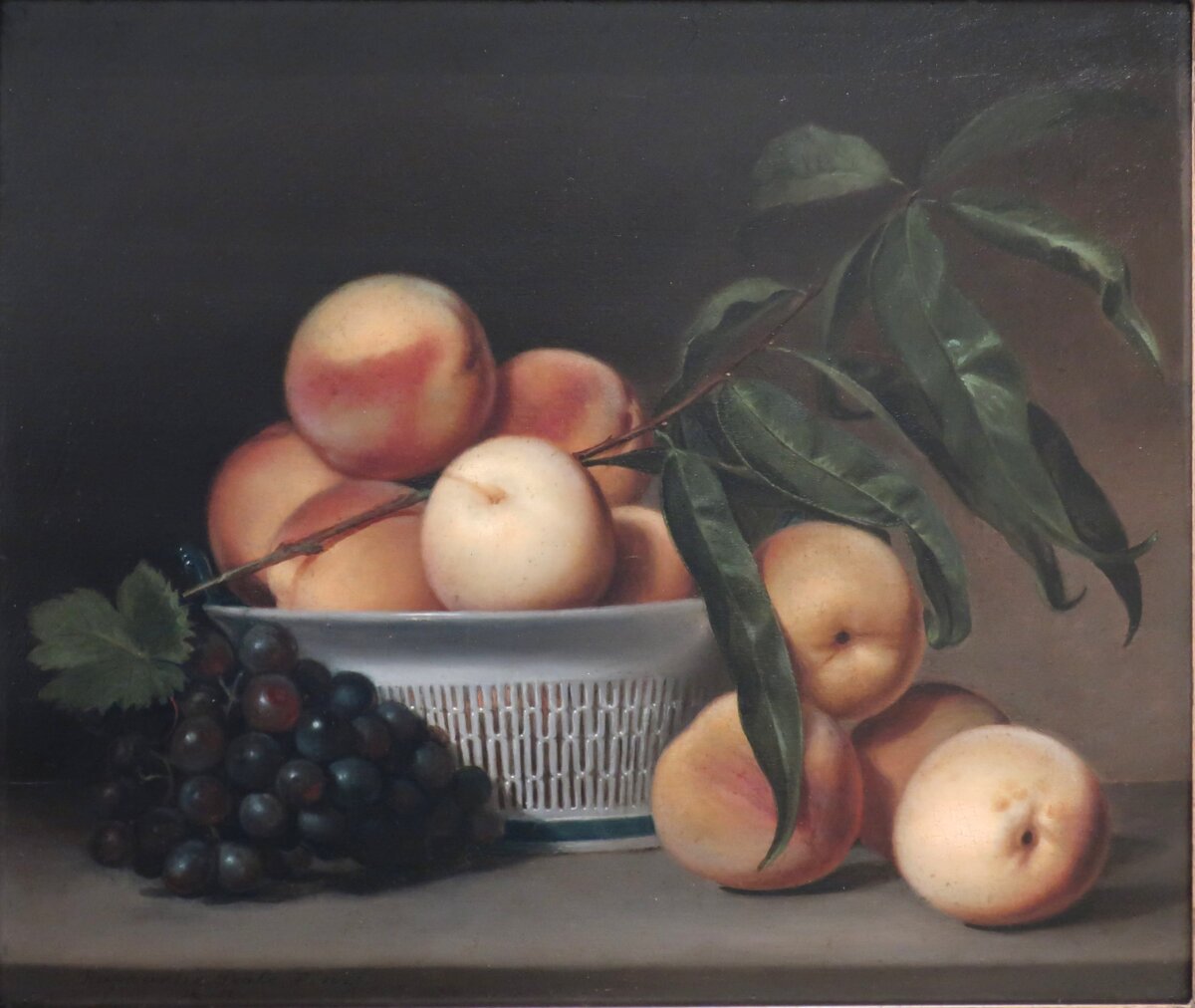
Precise Dutch still lifes, with their imported luxury goods, also inspired Peale. “Peaches and Grapes in a Chinese Export Basket” at the Fort Worth Amon Carter Museum of American Art is one of Peale’s earliest signed and dated still lifes. Created in 1813, it includes a Chinese export blue and white porcelain basket. This type of vessel denoted cultural refinement and America’s increasing wealth and internationalism; it is unlikely that Peale owned it. However, the fruit may be associated with the Peale family and their experimental farm with heated greenhouses, called hothouses, outside of Philadelphia that provided out-of-season fruits and flowers.
A Feast for the Senses
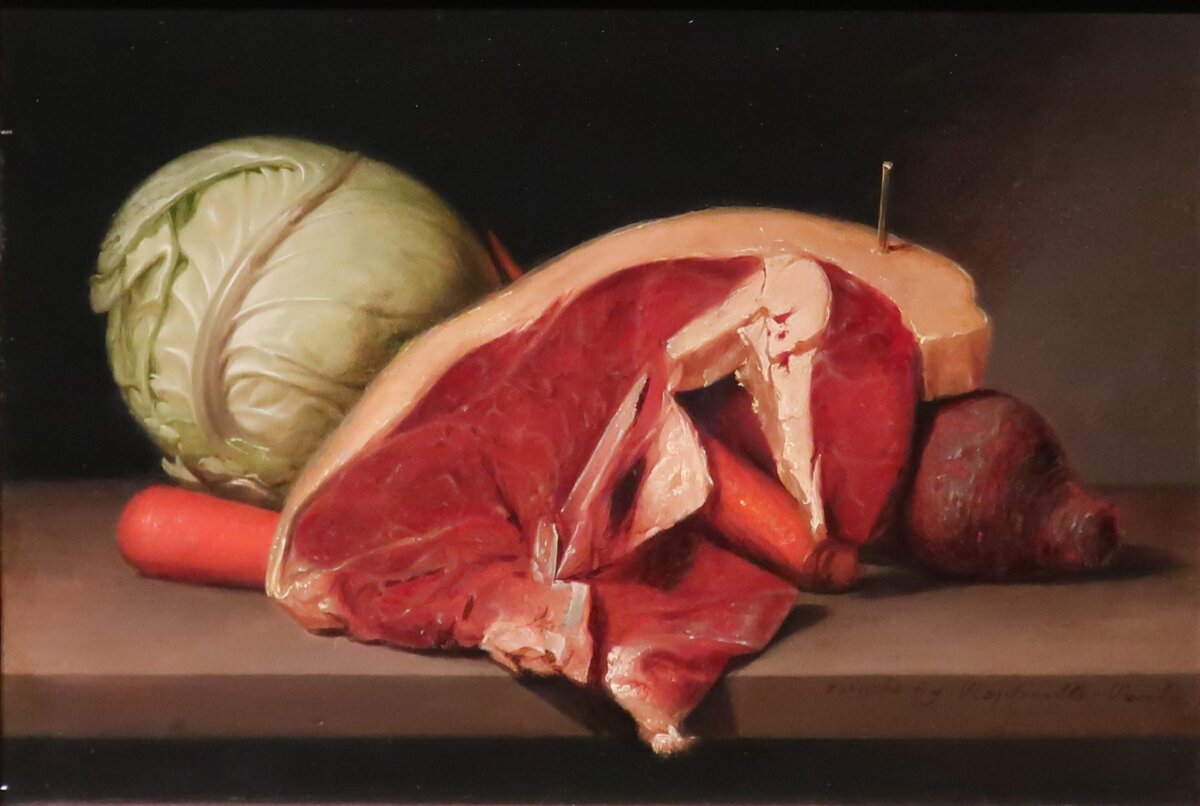
Unlike in Dutch still lifes, Peale’s painted food is shown in peak condition and does not display decay. Fruits are the most prevalent items in his compositions. There are only two known works of his depicting meat and vegetables. One is the 1816 to 1817 “Still Life With Steak” at the Munson fine arts center in Utica, New York.
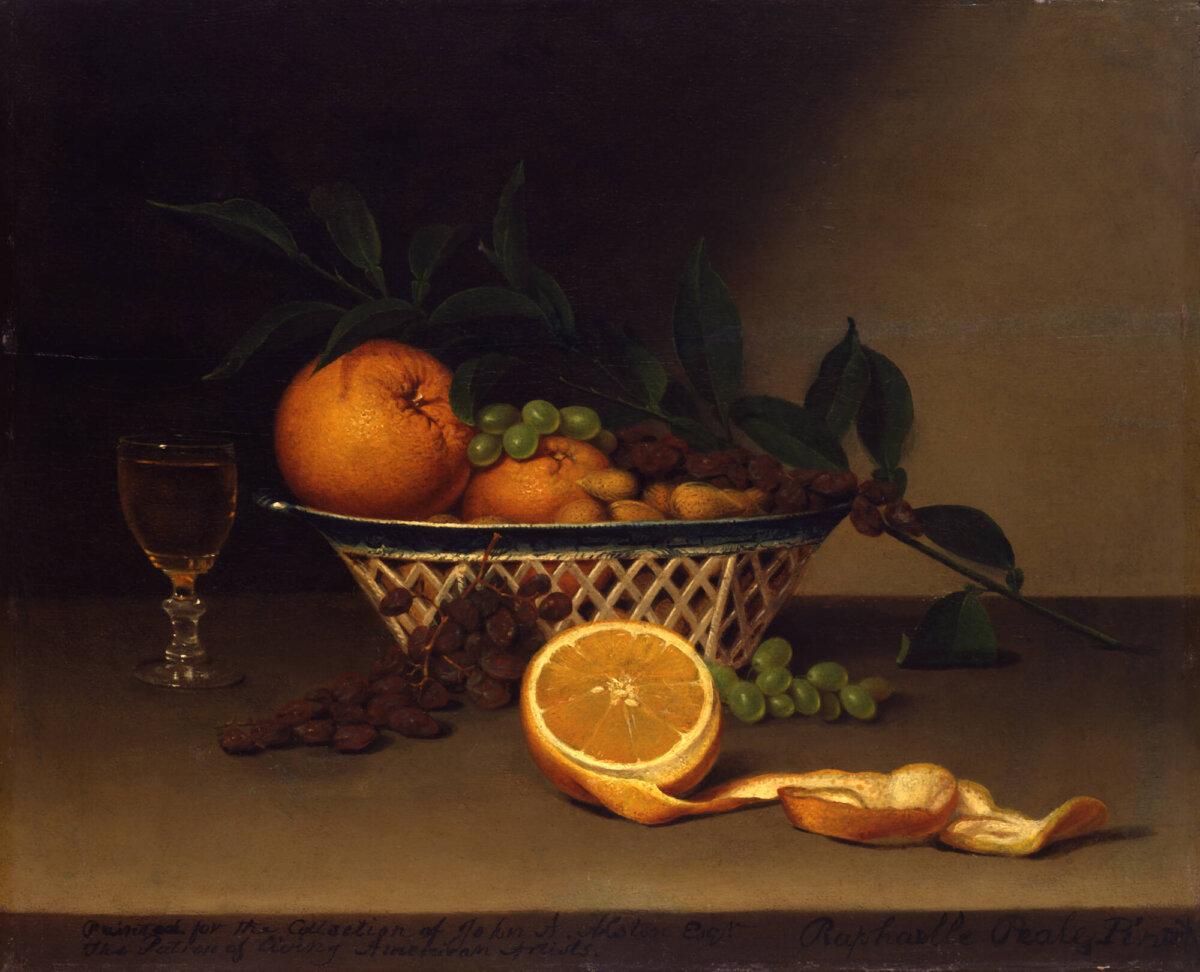
While oranges and lemons are not native to Philadelphia, they were grown in many hothouses during the period. In an 1818 panel at the Toledo Museum of Art in Ohio, “Still Life With Oranges” reveals Peale’s humor: A spiraling orange peel is a pun on his last name. As is typical with Peale’s pictures, the objects are placed on an indeterminate ledge—perhaps a table, shelf, or board—close to the viewer’s space and against a neutral half-dark and half-lit background. Some works have an all-dark background.
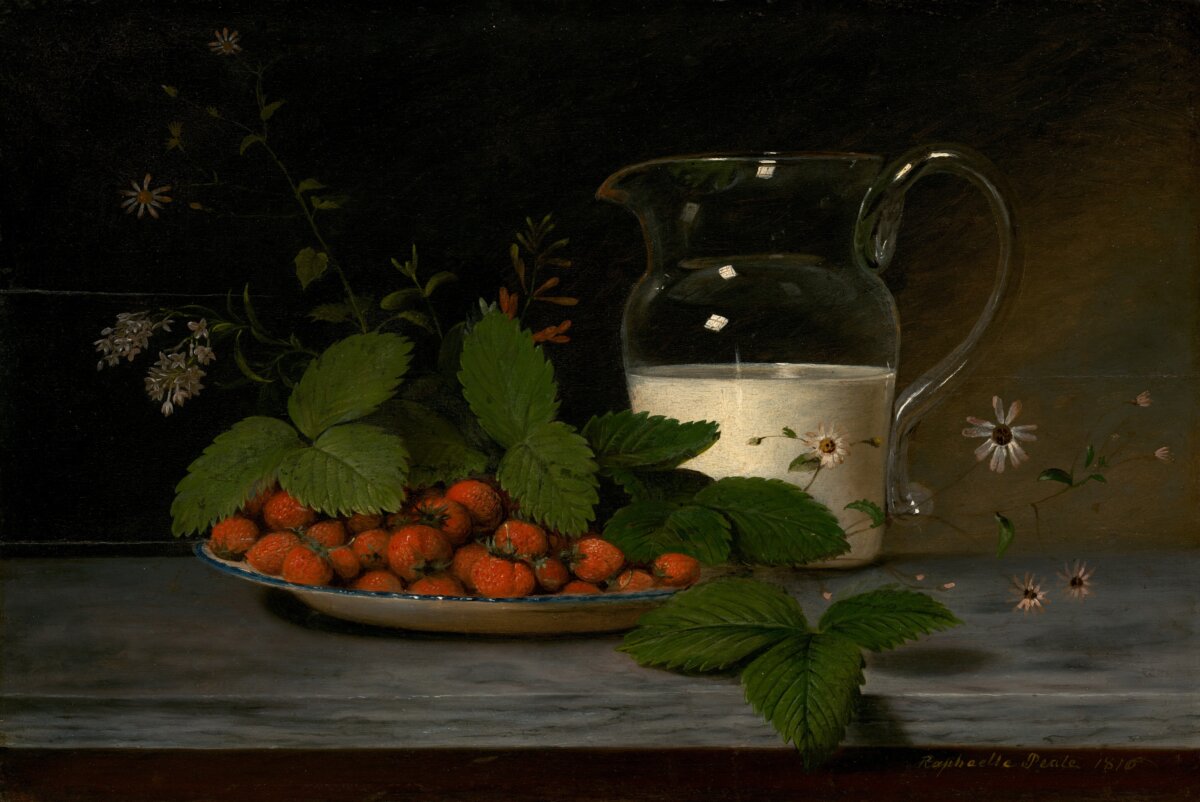
Strawberries, like those in his beautiful 1816 “Strawberries and Cream” at Washington’s National Gallery of Art (NGA), were also grown in hothouses. Peale’s intimately scaled food paintings were usually hung as decoration in owners’ dining rooms. Whether Peale portrayed humble or fine foods, he always created a feast for the senses.
Horticultural History and Symbolism
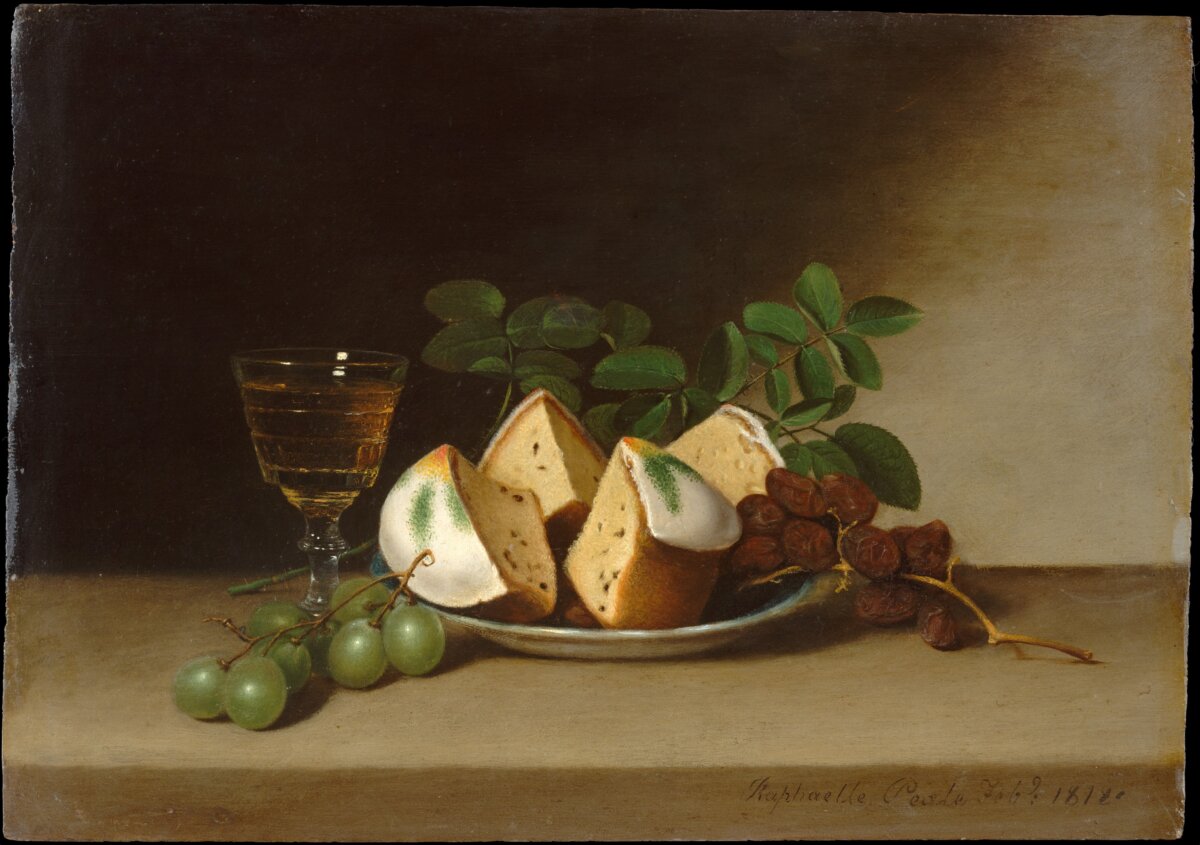
Raisin cakes are a recurring subject in Peale’s still lifes. Like the fruit grown at the Peale farm, he may have had a personal connection to the delicacy. A similar cake was sold by a Philadelphia shop located down the street from his family’s home. Consequently, Peale’s work can be studied to learn about culinary and horticultural history.
The circa 1814 “Corn and Cantaloupe” at Bentonville, Arkansas’s Crystal Bridges Museum of American Art reflects both personal and national symbols. The cantaloupe is specifically an Anne Arundel melon. The variety was named after a county in Maryland, which was the birthplace of his mother. Corn, unlike some of the food Peale painted, was a local crop. It was also already considered emblematic of early American history.

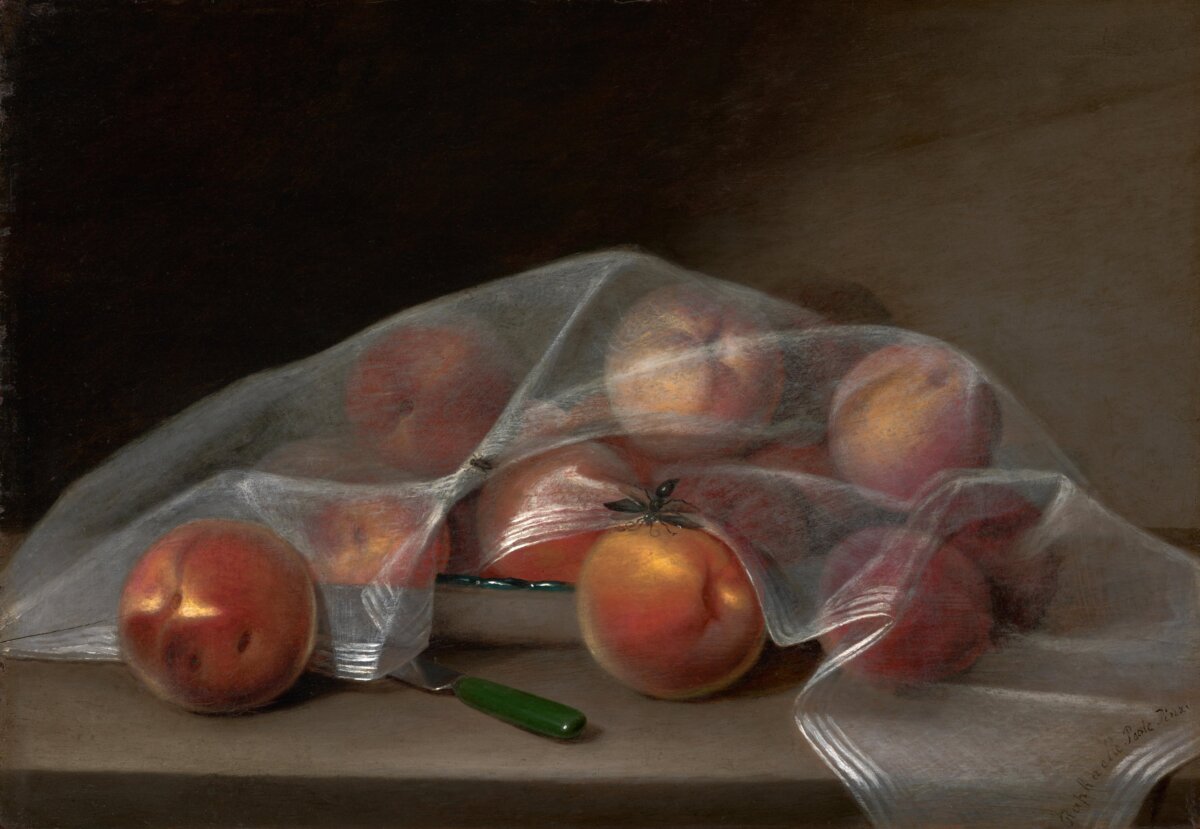
“Peaches Covered by a Handkerchief” is a testament to Peale’s technical skill. He renders brilliantly sheer fabric and its silky ribbonlike edge as well as the light passing over the textile. Peale’s inclusion of a large wasp near the center evokes European still lifes. The 1819 panel is part of the PMA, and the Museum notes how:
“Raphaelle’s addition of a tiny, less immediately visible fly, to its left, asserts both his personal whimsy and his well-known ability to create illusionistic pictures designed to ‘fool the eye’ of a viewer, who might attempt to brush the insect away.”
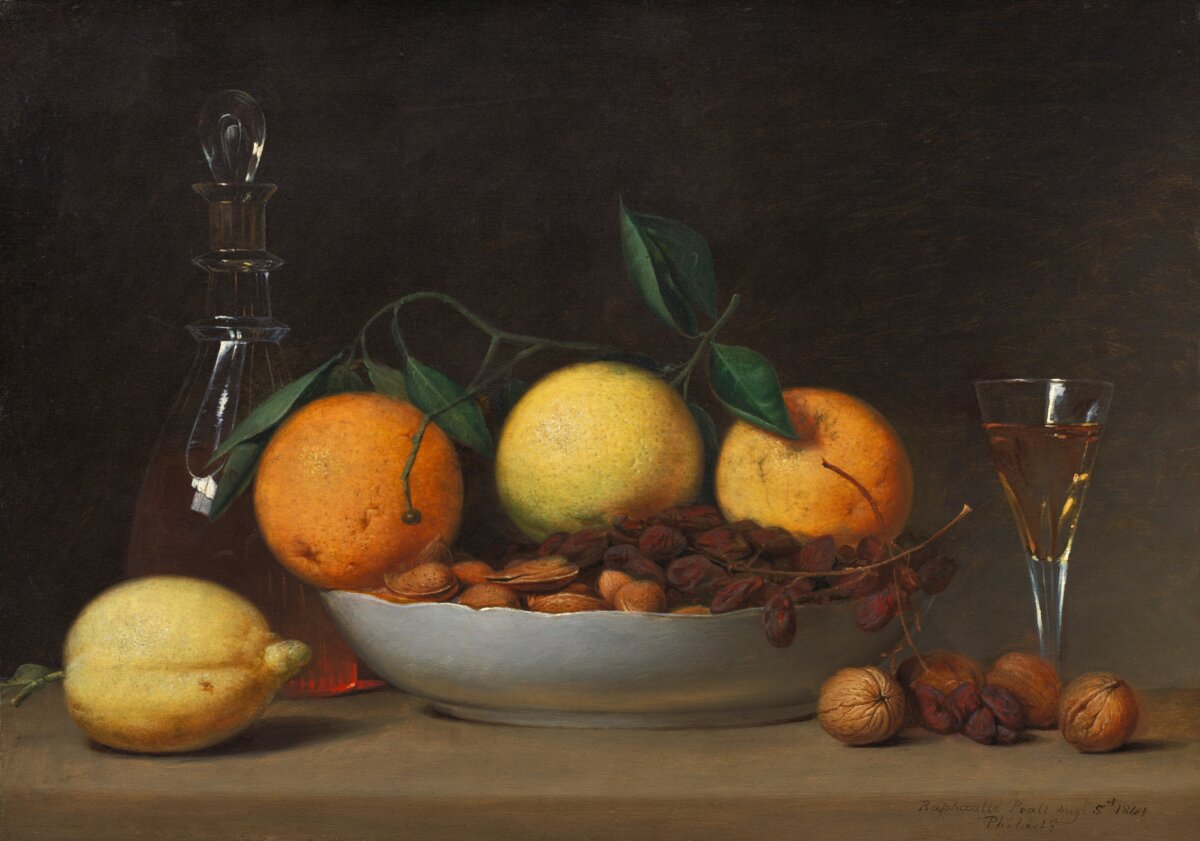
The late art historian and curator at the National Gallery of Art Nicolai Cikovsky Jr. considered the museum’s 1814 panel “A Dessert” to be Peale’s “greatest and most perfect” picture. A white bowl with a gracefully scalloped rim contains oranges, grapes, and nuts. The peachy liquid in the decanter seems to glow.
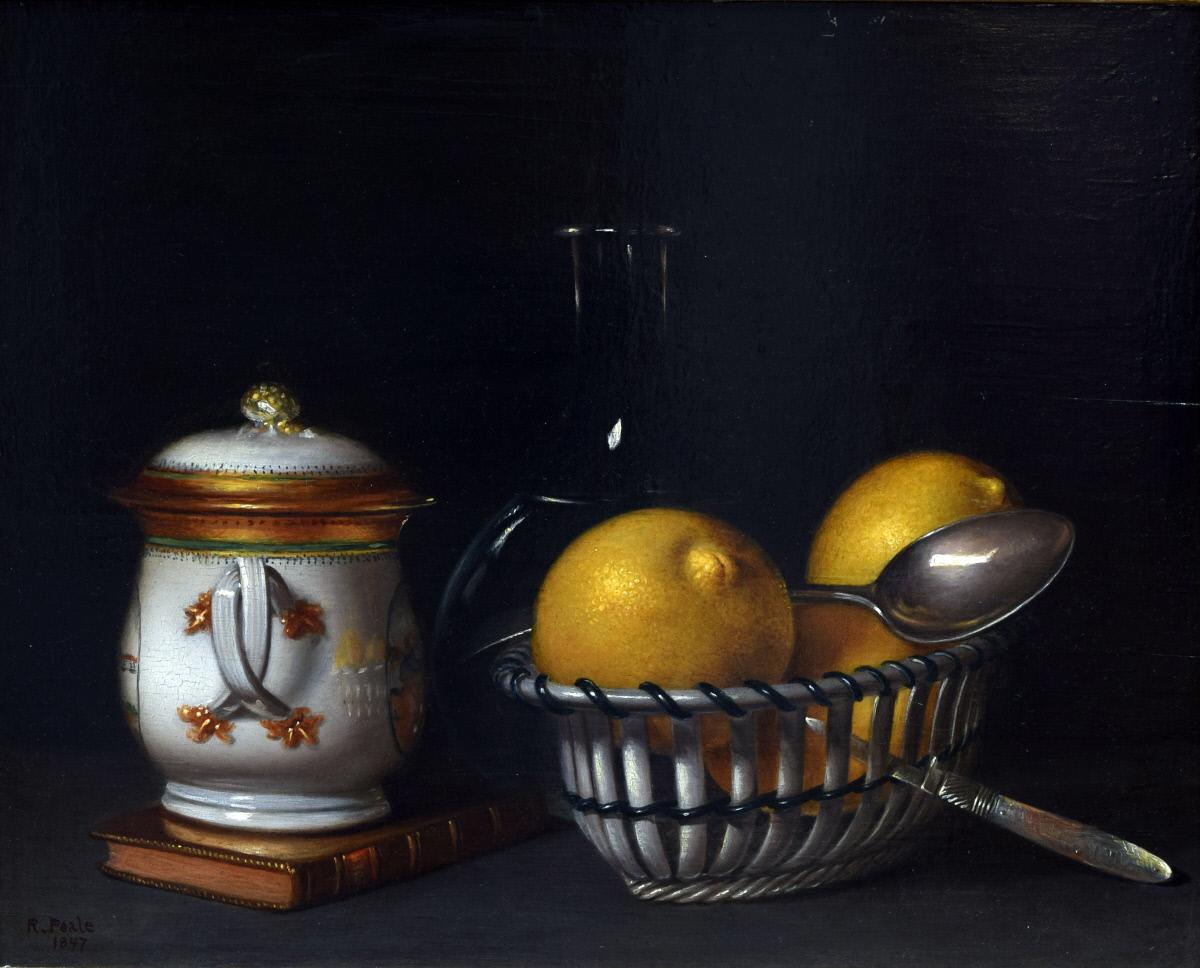
The exquisite 1822 “Lemons and Sugar” at the Reading Public Museum in Pennsylvania was painted three years before Peale died at 51. With diffused light and softly gradated brushwork, the carefully composed mundane objects emit a serene aura that belie Peale’s personal difficulties and health problems. He suffered from arsenic and mercury poisoning, resultant from his taxidermist work at his father’s museum, along with other ailments.
Peale’s important body of work established the still life tradition in America. Cikovsky memoralized him, writing:
“Of all the Peales, he was the truest and greatest artist. He had the finest artistic sensibility and intelligence, and despite his lack of self-confidence and ambition, he was artistically the most daring. In the end his art had the most lasting influence as well.”
What arts and culture topics would you like us to cover? Please email ideas or feedback to features@epochtimes.nyc