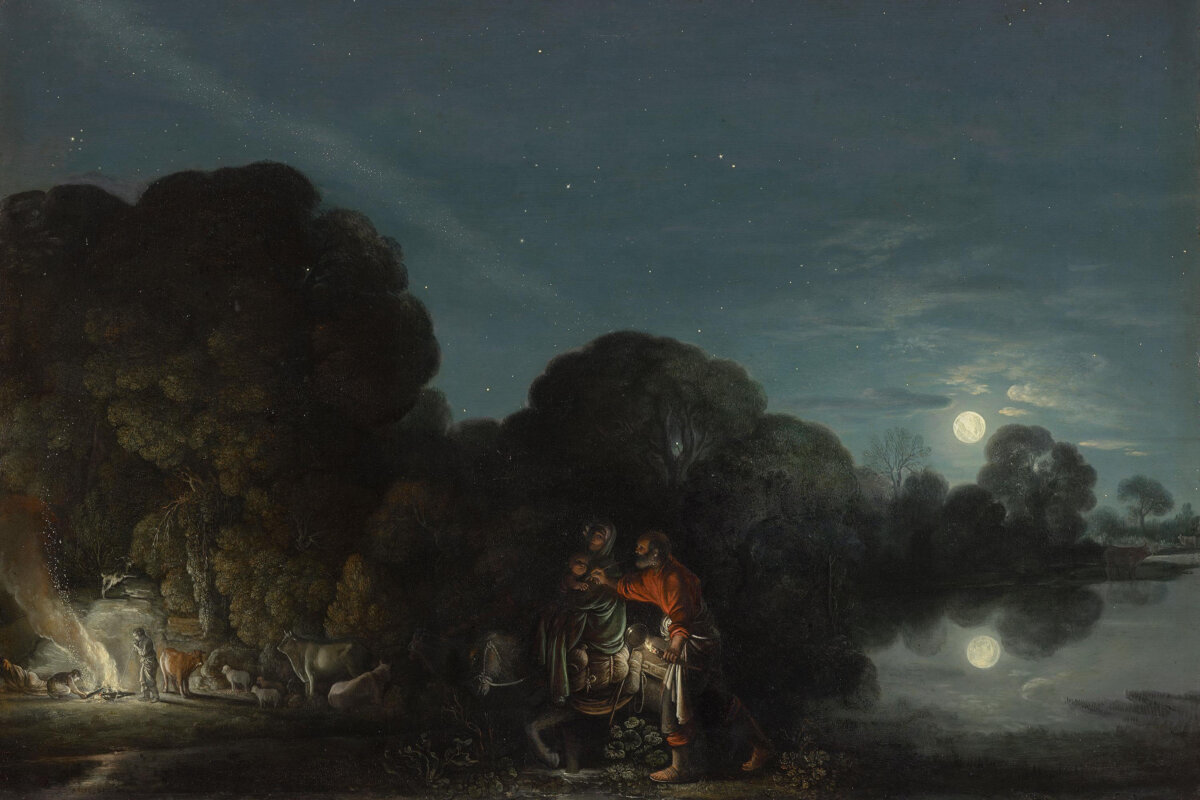
Adam Elsheimer (1578–1610) may be little known today, but he was one of the most important German artists of the 17th century. Dying at 32, he left behind a small body of work in terms of both output and scale. Only around 30 finished Elsheimer paintings on copper have survived to the present day. Although small-sized artworks, they are tours de force, evoking painting on a grand scale due to their intricate details, dynamic compositions, and dramatic lighting.
Two of his copper paintings of the biblical narrative “Flight Into Egypt” give insight into his innovative artistry that inspired canonical artists such as Peter Paul Rubens, Nicolas Poussin, Claude Lorrain, Rembrandt, and Caspar David Friedrich.
An Artist Whose Work Was Coveted
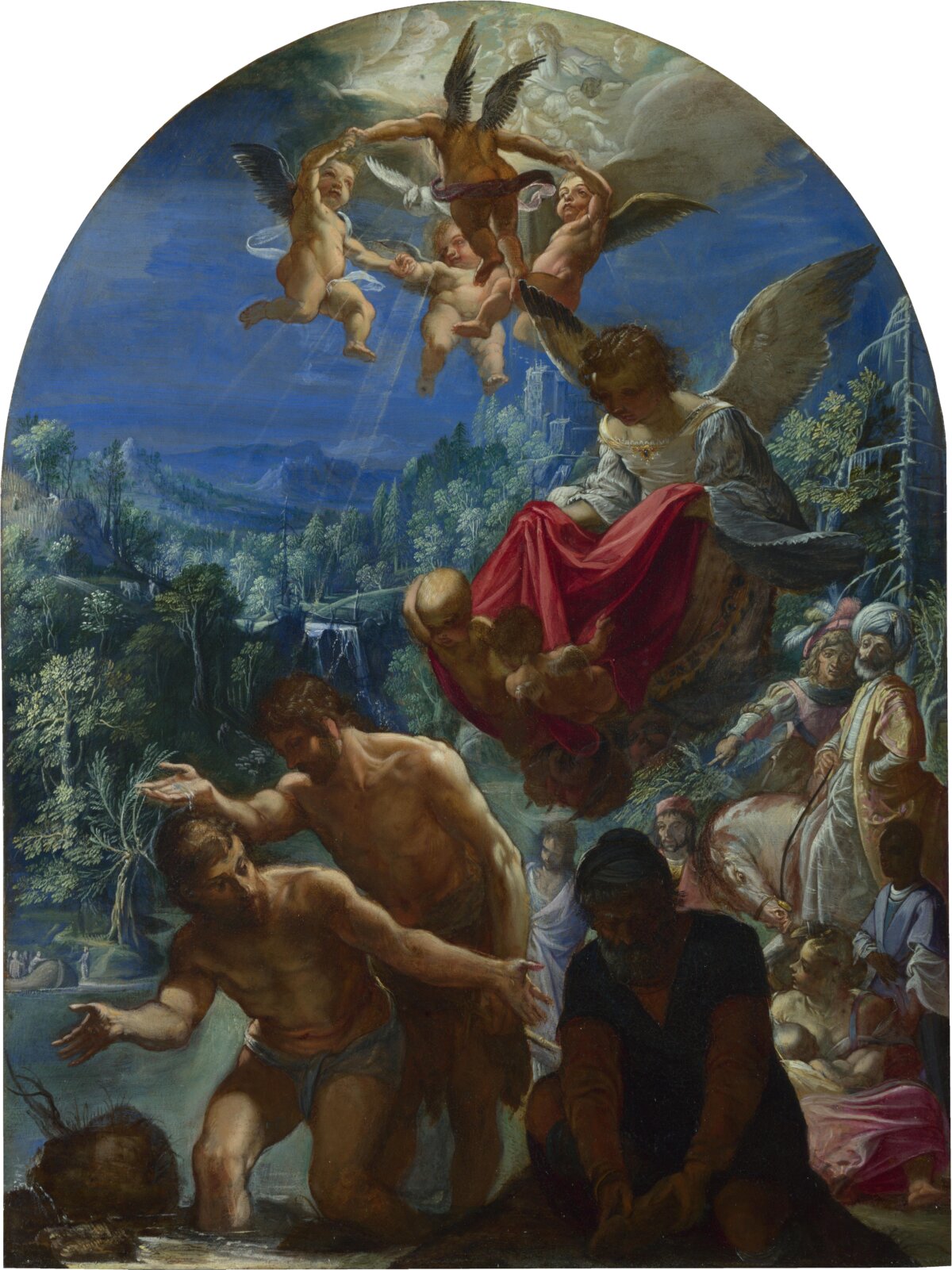
The son of a tailor in Frankfurt, Elsheimer trained first under a local artist. He traveled widely during his early career, visiting Strasbourg, Munich, and Venice. In 1600, he settled in Rome, spending the last decade of his life there. Part of a circle of intellectuals, his friends included Rubens.
The “Eternal City” was a font of inspiration, from its antique monuments to Caravaggio’s contemporaneous paintings, which displayed chiaroscuro.
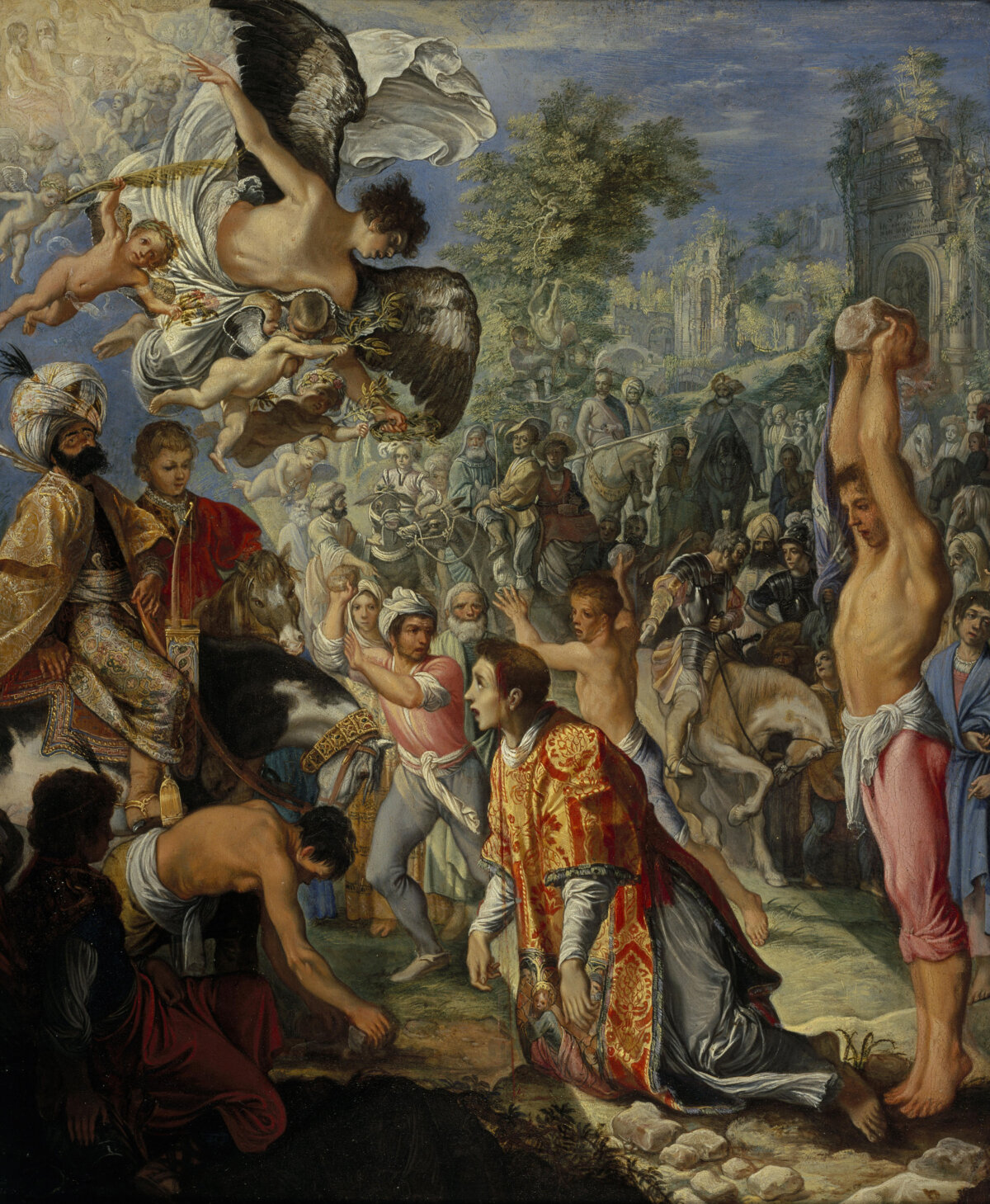
Elsheimer’s preferred medium was a small copper plate because the smooth surface of the material allows for minute details. His exquisite baroque works have a jewel-like quality. The artist’s carefully composed paintings, which he worked on slowly, are marked by fluid brushwork, an innovative emphasis on landscape, and a poetic atmosphere. While collectors coveted his art, he died in poverty. After Elsheimer’s death, his contemporary Giulio Mancini noted that his paintings were “in the hands of princes and those persons who, in order that they should not be taken from them, keep them hidden.”
Flight Into Egypt

The New Testament’s story of the flight into Egypt has been a frequent subject in art. From the Gospel of Matthew, it describes how Joseph was warned by an angel that King Herod intended to kill Jesus, so he fled with Mary and the Christ Child to Egypt. In a 1605 oil on silvered copper now at the Kimbell Art Museum in Fort Worth, Texas, Elsheimer depicts the Holy Family in active flight through a naturalistic rocky topography.
This tiny picture reflects the interpretation of their journey as symbolic of “a pilgrimage of life toward salvation, necessary to redeem humankind,” according to the museum. The broad-brimmed hats of the figures are traditionally used by pilgrims for protection from harsh sun. The sturdy oak tree in the background, highlighted by a divine light, evokes the Tree of Life.
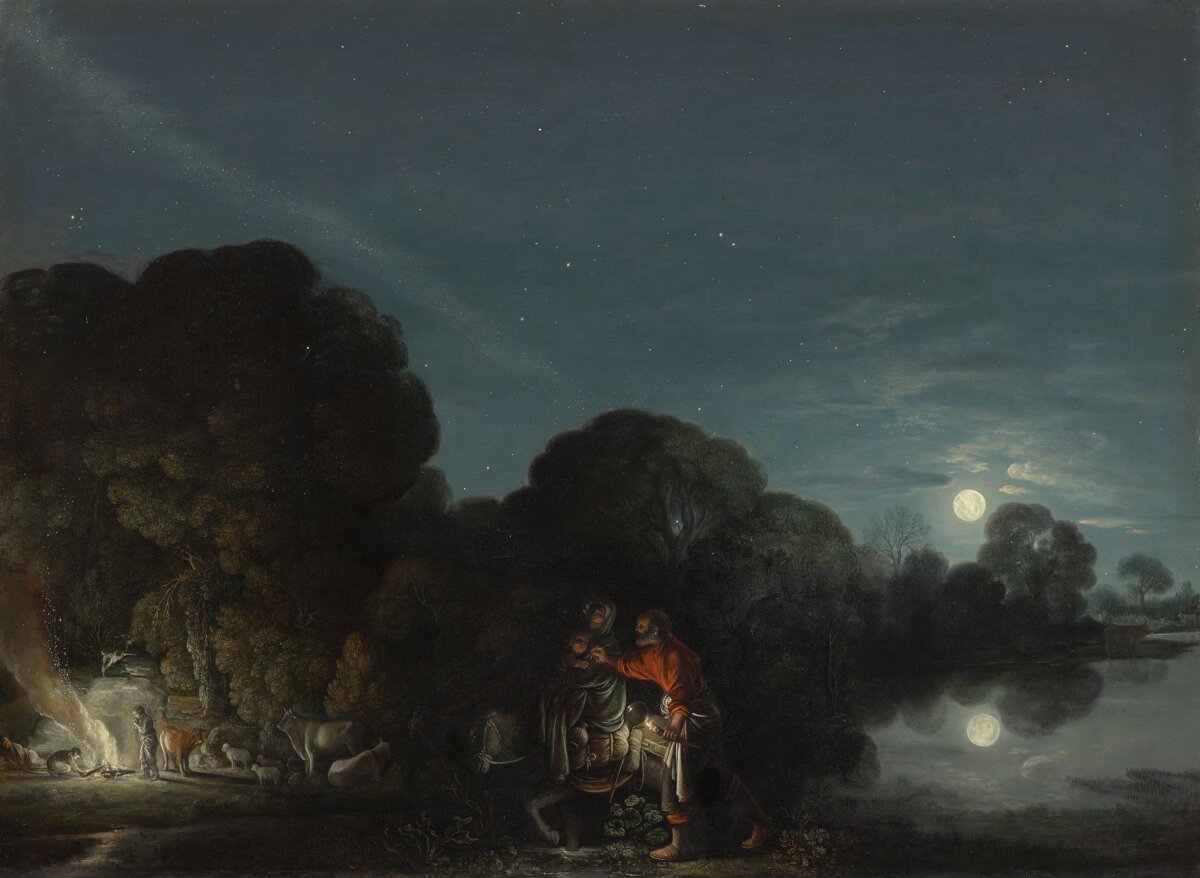
Elsheimer’s masterpiece is “The Flight Into Egypt” nocturne, part of the collection of the Alte Pinakothek in Munich, Germany. The setting of this oil on copper is a darkened forest. The painting is the oldest known artwork to depict the Milky Way, which is visible from the top left corner. The accurate detailing of the night sky is based on observations by Galileo Galilei and Federico Cesi using the telescope that had just been invented.
Elsheimer’s masterful manipulation of light, both natural and manmade, amplifies the scene’s drama. Punctuating painted night skies with fires comes from the Flemish tradition and was popular among collectors in Rome. In this work, Elsheimer juxtaposes cool moonlight with warm fire to illuminate the darkness. The Madonna and Child on a donkey are in the foreground’s center. Joseph lights their way through a stream with a torch despite the full moon, whose reflection is seen in the body of water. In addition to the flaming torch, herdsmen at left have created a fire that draws the viewer’s eye through the painting.
This picture was made in 1609, a year before Elsheimer died. After his death, Rubens lamented: “Surely, after such a loss, our entire profession ought to clothe itself in mourning. It will not easily succeed in replacing him; in my opinion he had no equal in small figures, in landscapes, and in many other subjects.” Elsheimer’s luminous work shines on, worthy of more widespread appreciation and close viewing.
What arts and culture topics would you like us to cover? Please email ideas or feedback to features@epochtimes.nyc