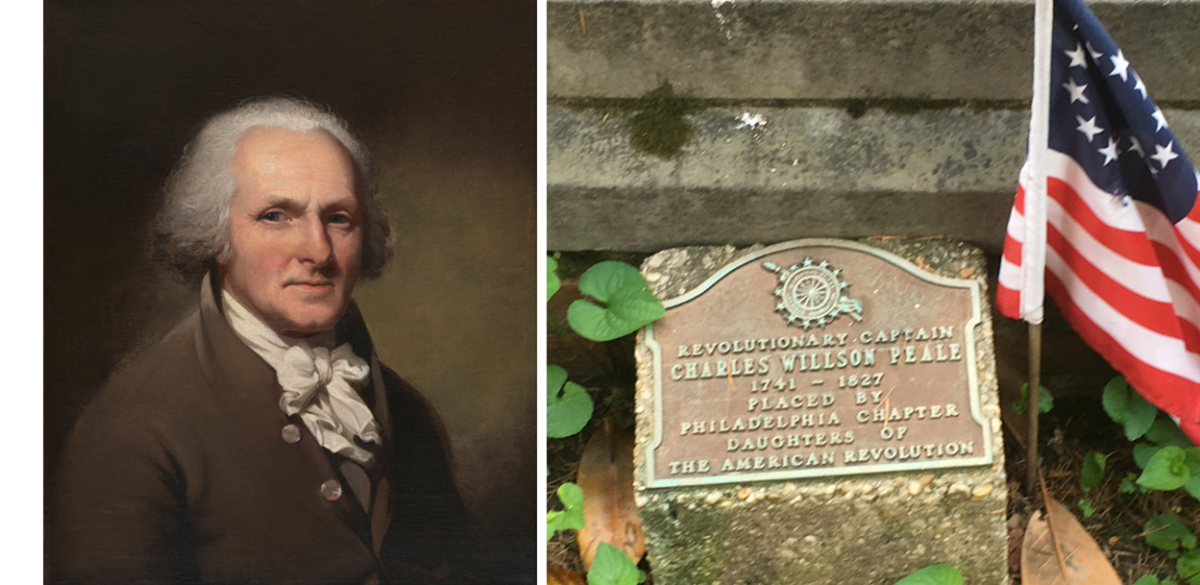
In the late 18th century, art flourished in Europe with painters like Eugène Delacroix and John Constable creating masterpieces. Meanwhile, the American colonies focused on fighting for freedom from England, leaving little time for art. Nevertheless However, key figures of the American Revolution became celebrities whose images were worth immortalizing.
Before the advent of photography, portraiture was the main way to capture a likeness. Portrait painters played a vital role in portraying public figures. One significant artist from early America was Charles Willson Peale (1741–1827), who fathered a family of artists.

Painter and Patriot
Peale found his passion for painting in his early 20s. The Maryland native apprenticed as a saddle-maker at age 13, but a trip to Norfolk, Virginia, at age 21, where he saw poorly executed paintings, inspired him to pursue art. He studied under colonial painters and learned art techniques from Robert Dossie’s book “The Handmaid to the Arts.” Trading “one of his best saddles with its complete furniture,” he gained valuable lessons from renowned portraitist John Hesselius (1728–1778) for three sessions in his studio.
Believing he had “infinitely lightened the difficulties of the new art,” Peale began promoting his skills as both a sign painter and a saddler.
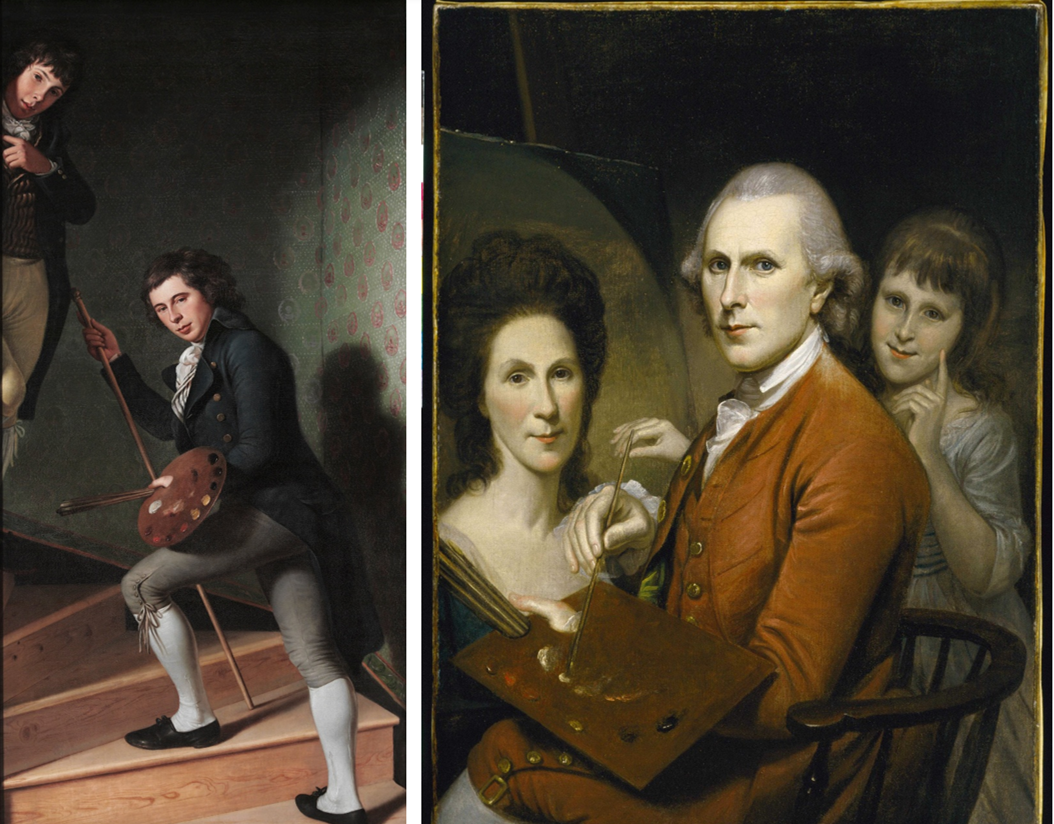
Alongside his interest in art, Peale was involved in the political scene, joining the Sons of Liberty in 1764. When the colonies declared independence 12 years later, he moved to Philadelphia and joined the Pennsylvania militia, rising to the rank of captain. He served in the Continental Army, fighting in key battles like Trenton and Princeton, and later served in Pennsylvania’s state legislature.
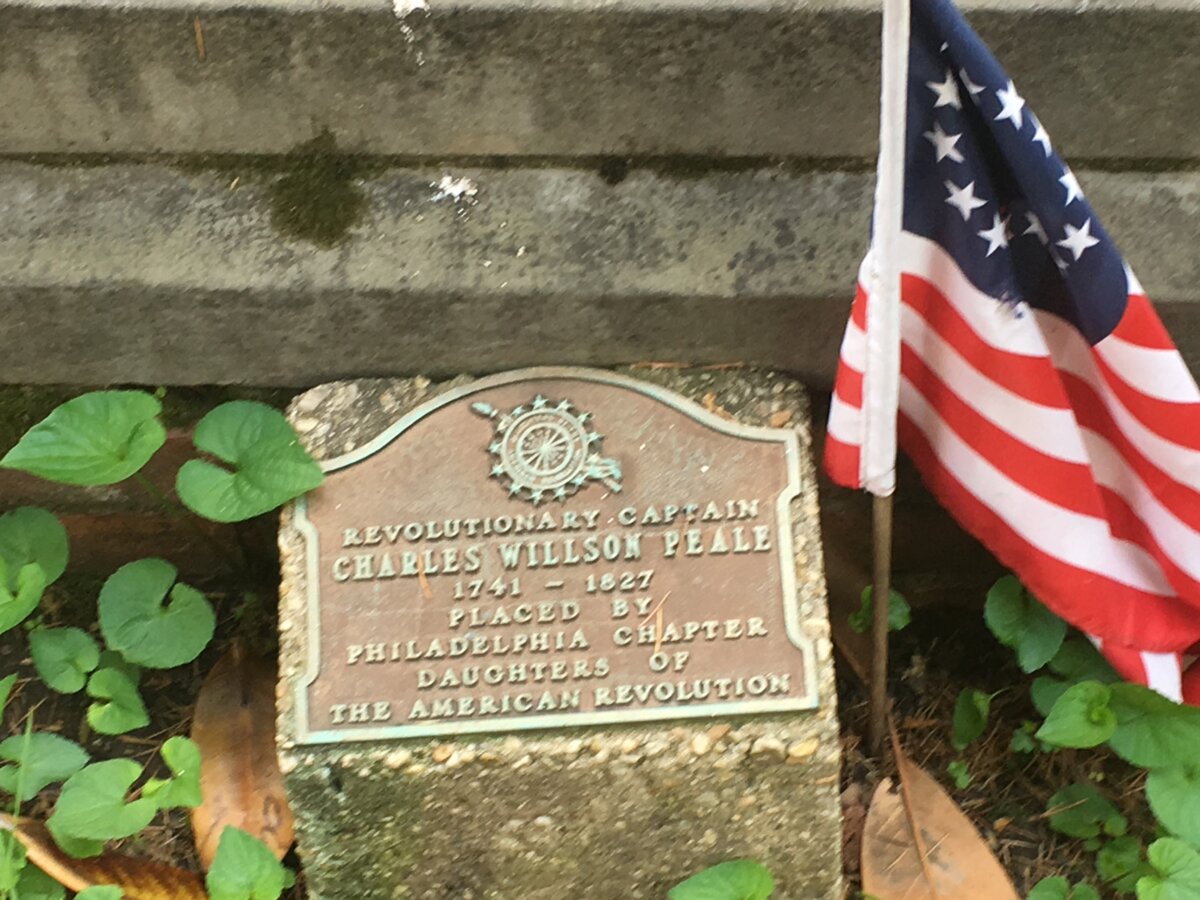
As a self-taught artist, Peale recognized the importance of training. He studied briefly with Bostonian portraitist John Singleton Copley (1738–1815) before traveling to London. There, he learned from from Benjamin West (1738–1820) and exhibited with the Society of Artists of Great Britain. Peale then returned to Annapolis, establishing himself as a respected portrait painter before the Revolution.
An American Renaissance Man
Peale built his career and legacy by painting portraits of American citizens, including his neighbors, family members, prominent businessmen, merchants’ wives, and political figures. Notably, he painted portraits of Benjamin Franklin, both Lewis and Clark, Alexander Hamilton, Thomas Jefferson, and Martha Washington. George Washington sat for Peale seven times, producing 60 different paintings.
Peale’s 1779 portrait “Washington at Princeton,” named after the decisive battle, sold for approximately $21.3 million at a 2006 Christie’s auction. It was the largest amount paid for an American portrait up to that point. This significant piece is now in the Pennsylvania Academy of the Fine Arts, while Peale’s copies are found in museums and government buildings worldwide.
Although not a household name, Peale is crucial to American history for his many portraits of influential figures. Without him and his contemporaries, we would have no visual record of leaders like Washington, Adams, and Jefferson.
A true Renaissance man, Peale also engaged in various hobbies, including taxidermy, showcasing his curious and brilliant mind. He contributed significantly to the developmental of American natural history, where he displayed fossils alongside stuffed birds. He also loved farming, shoemaking, and dentistry.
With all his accomplishments, the great love of Peale’s life was his family, particularly his talented children. Outliving three wives, Peale had 16 children by his first two spouses. He named many of his sons and daughters after great artists, including Raphaelle, Rubens, Rembrandt, and Angelica, who became accomplished painters, scientists, or inventors in their own rights.
Through his work, his inspiration, his training of others, and the legacy he left of patriotic artwork, Peale painted a beautiful portrait of the art of liberty.
What arts and culture topics would you like us to cover? Please email ideas or feedback to features@epochtimes.nyc