We tend to think of numbers as neutral—mere counters of quantity. Yet some numbers resist that modest role. They gather meaning, pattern, and association across cultures. Among them, the number nine holds a distinctive place. If seven suggests completion, and eight a step beyond it, then nine stands at the edge: the final point before renewal, the last moment before something turns. Perhaps this should not surprise us as nine is the square of three, and three itself is the most momentous and magical of numbers: Nine, then, is divinity squared!
It is the number of fulfillment—but not of rest. There is a sort of turmoil built into the number nine which we see hints of even in its mathematical behavior. However far a multiple number of it extends, reduce its digits and it will always return to nine: 18 (1+8=9), 27 (2+7=9), 36 (3+6=9) and so on. Nine gathers things back to itself, as though marking a limit beyond which change must occur.
Another mathematical illustration of this is: Take any three numbers (for example, 541) and invert them (145). Subtract the smaller from the larger number and the middle number is always nine: 396. Nine is the last single digit number—a limiting number, and that sense of limit appears repeatedly in human thought.
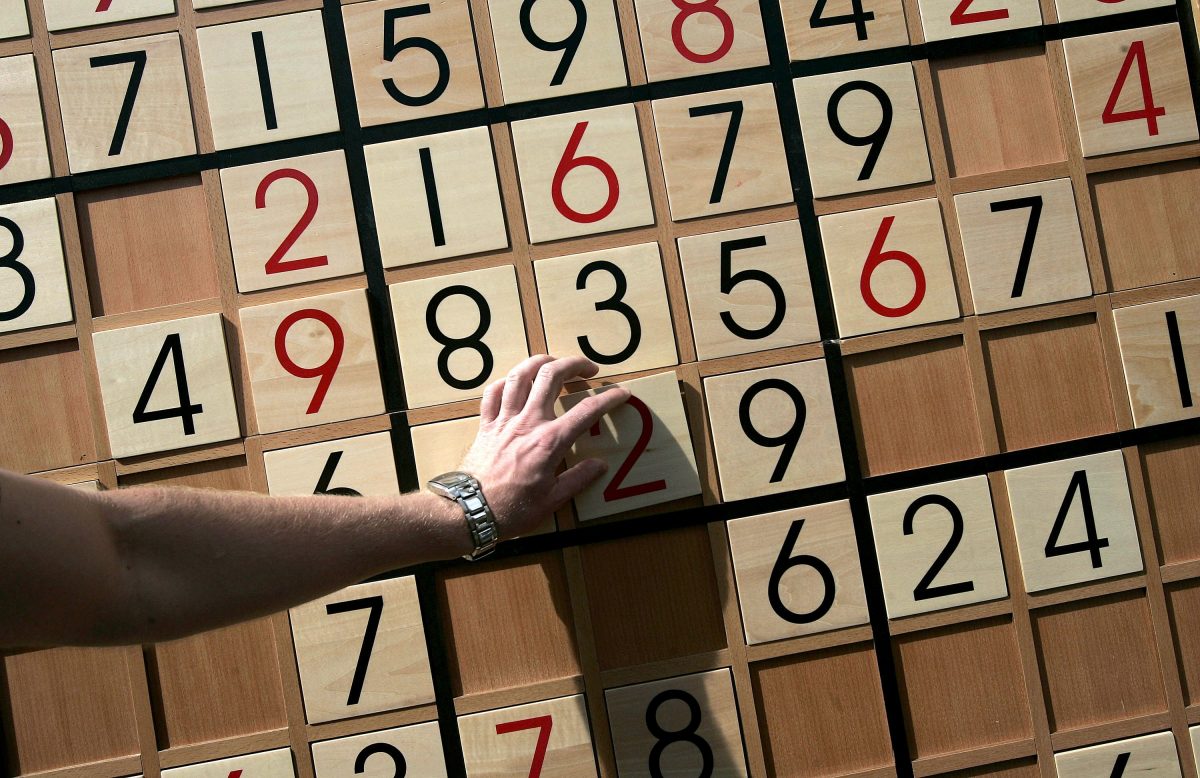
Perhaps the most staggering example of mathematical properties of the number nine are the nine squares on each side of a Sudoku square. In 2005, Bertram Felgenhauer of the Department of Computer Science in Dresden, Germany, worked out that there are 6,670,903,752,021,072,936,960 different permutations on a Sudoku grid! Wow, a pretty astonishing number, but if we reduce this to a single digit number: [6+6+7+0+9+0+3+7+5+2+0+2+1+0+7+2+9+3+6+9+6+0=90 and (9+0) = 9], we find nine at the core of it all.
In Language
We instinctively use nine to suggest near-totality: “Nine times out of 10” means almost always—but not actually always. “Possession is nine-tenths of the law” implies something close to certainty, without quite being absolute. The number hovers just below completion, carrying weight without finality.
Even in everyday language, nine carries this sense of tension. We speak of being “nine-tenths of the way there”—not finished, but close enough for the final step to feel qualitatively different. The last movement is not more of the same; it is a transition.
And sometimes the number appears in more curious forms, as though hinting at something slightly off-kilter. In English slang, the expression “bent as a nine-bob note” suggests distortion, something not quite true to form (in old England a bob was a shilling, and there were only ten-shilling notes). The number, here, marks a deviation—a reminder that nearing completion can also expose imperfection.
Then there is the old saying that cats have nine lives. Taken literally, it is fanciful; taken symbolically, it suggests resilience stretched to its limit—the capacity to endure again and again, but not indefinitely. Even here, nine marks a boundary. An early English echo appears in clergyman William Baldwin’s “Beware the Cat,” where he writes that “a witch may take … a Cat’s body nine times.” So, as with the nine-bob note, not all nines are benign; yet, once more, the number marks a limit—the furthest reach before change must occur.
Across Cultures
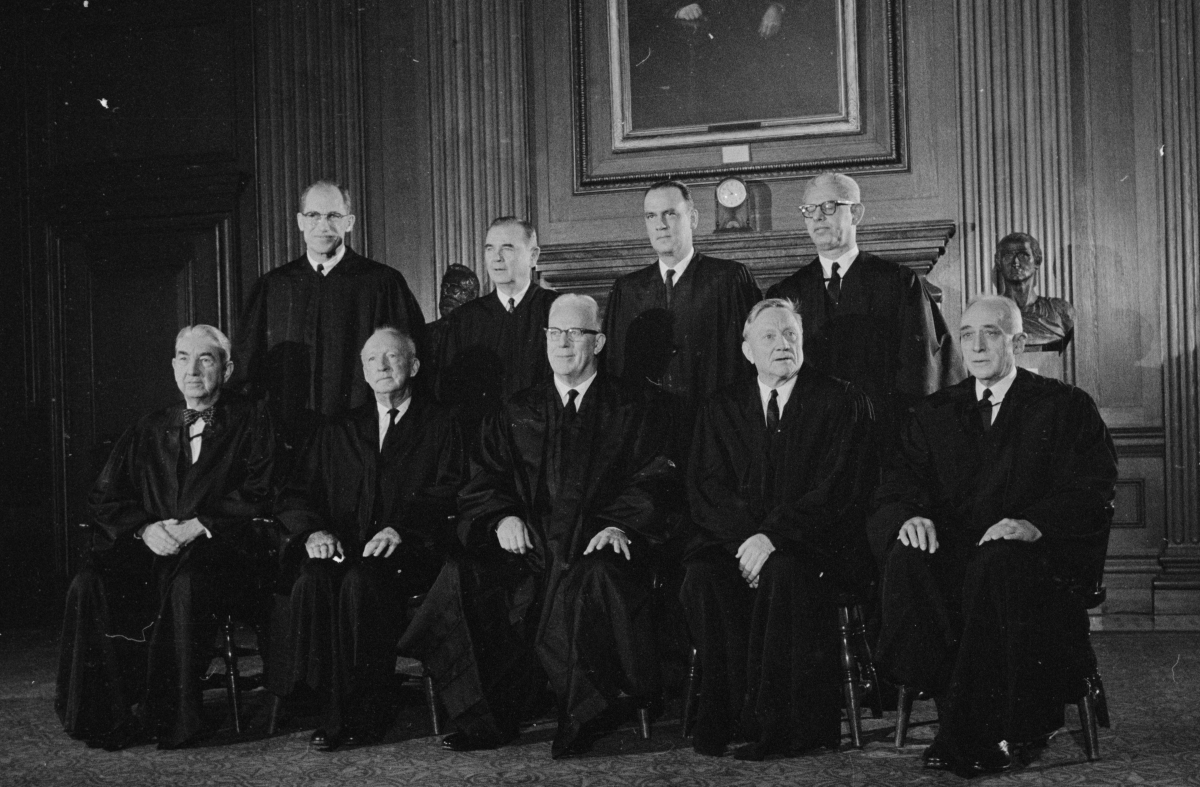
Institutions reflect the same instinct. The U.S. Supreme Court consists of nine justices—enough to represent completeness of judgment, yet still capable of division, debate, and decision. Nine gathers authority, but does not freeze it. Across cultures, the pattern deepens.
In ancient Egypt, there were nine gods in the Ennead—a complete divine order. In China, the number nine is associated with longevity (“Nine” is a homophone for “long-lasting” or “everlasting.”) and endurance; it is the number of the emperor (Emperors wore robes with nine dragons, and the Forbidden City is famously reputed to have 9,999-and-a-half rooms!), and, at traditional birthday banquets, nine dishes are served to signify a long life. In Norse mythology, there are nine worlds held within the structure of the cosmos itself.
In the Western classical tradition, there are the nine Muses—figures who represent the full range of human expression. Poetry, history, music, tragedy, comedy, and so on—each brought to its highest form. Nine here is not simply abundance; it is fullness of articulation. Yet in none of these cases does nine signal an end. The Muses inspire, but they do not conclude. The nine worlds exist, but they do not resolve into stillness. The nine gods govern, but they do not terminate the story. Nine completes a system—but does not close it, for what is complete is not therefore finished.
And this is most demonstrably shown in Dante’s epic and Muse-inspired masterpiece, “The Divine Comedy.” He is guided through the nine circles of Hell and of Heaven, but at the completion of the poem, the poet alludes to something even more incomparable than what he has already experienced. He says, “How my weak words fall short of my conception,” arriving at the ultimate—final—vision, and yet clearly something is intimated beyond it.
Finally, the greatest of the personality-spiritual inventories that have come down to us from time immemorial is the Enneagram: a nine-point system for classifying the human personality into types (see the first of my ten articles linking the Enneagram to the Odyssey here. Again, the tool does not fix people into a static sense of themselves but points to ways to achieve a greater completeness within the framework.
Embedded in Reality
This is perhaps why the number so often appears in the rhythms of life itself. Human gestation lasts nine months. It is a period of development brought to full term—but its purpose is not completion but emergence. The cycle ends precisely in order for something new to begin.
Talking of such rhythms, natural health author Andreas Moritz observed: “Research shows that the immune system needs eight to nine hours of sleep in total darkness to recharge completely.”

In spiritual thought, too, the pattern holds. In the New Testament we have—traditionally numbered—the nine fruits of the Spirit (Galatians 5:22–23) and the nine Beatitudes (Matthew 5:3–12; sometimes listed as eight). These lists gesture toward a fullness of character, a shaping of the inner life. But they are not an end-state; they describe a readiness, a condition from which something further may unfold.
What, then, does nine ultimately signify? Not completion in the sense of closure. Not the finished circle. Rather, the moment when something has become fully what it is—and must therefore change. There is a quiet urgency in that idea. To reach fulfilment is not to arrive at rest, but to approach a threshold. Ripeness does not last; it leads on. A fruit at its peak cannot remain there. It must be consumed, or fall, or give rise to something new.
So, too, with human endeavor. A work completed, a goal achieved, a life-stage fulfilled—these are not endpoints, however much we may wish them to be. They are moments of gathering, after which the question inevitably arises: What next? In such moments, we find ourselves in the territory of nine.
It is the number that reminds us that fulfilment is not finality; that to reach the height of something is also to stand at its limit; and that beyond that limit lies not emptiness, but transformation. Nine does not end the sequence. It prepares us to begin again. Life is always inviting us into a new condition—and in recognizing this, we glimpse something of its deeper excitement.
What arts and culture topics would you like us to cover? Please email ideas or feedback to features@epochtimes.nyc.