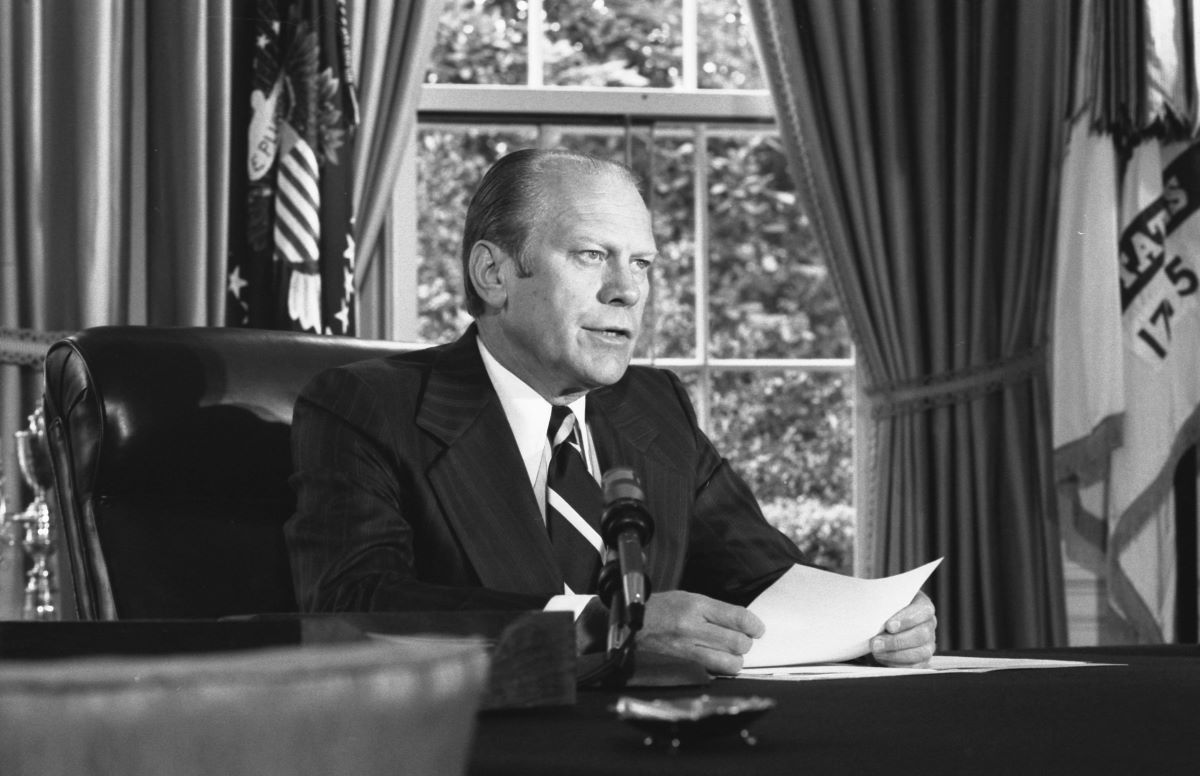
The daily diary of President Gerald Ford (1913–2006) reveals that on Sunday Sept. 8, 1974, he took breakfast at 7 a.m., attended an early service at nearby St. John’s Episcopal Church, and then spent approximately two hours in the Oval Office speaking by phone with certain members of Congress, including luminaries like Tip O’Neill and Barry Goldwater.
Shortly after noon, he departed for the Burning Tree Country Club, where he spent approximately six hours playing golf and visiting with friends. On his return to the White House, he retired for the rest of the evening to his private quarters, dining with his wife Betty, his teenage daughter Susan, and one of her friends.
Seemingly a leisurely day, especially for a man in his position, but with one exception: Shortly after 11 a.m., Gerald Ford issued a statement from the Oval Office to the press and to the American people that he was granting a pardon to former president Richard Nixon.
The news caused a firestorm across the country.
A Proposal Refused
On July 24, the Supreme Court had ruled that Nixon must give up the White House tapes, the secret recordings from the Oval Office that would lend evidence to his involvement in the cover-up of the Watergate scandal. In revealing the tapes, Nixon would likely be impeached by the House of Representatives and removed from office by the Senate. In refusing to reveal them, he likely awaited the same fate.
Thwarted and desperate, Nixon asked his chief of staff, Gen. Alexander Haig, to approach Vice President Ford with a proposal: If Nixon agreed to resign, would the newly sworn-in president agree to pardon him?
Haig met with Ford, but left without an answer. The vice president then spent a day seeking the opinions of family members and several advisers, all of whom told him to refuse the deal. Ford heard them out, weighed the matter in view of looking not just for the expedient solution but a just one, and then said no to the pardon.
Consequently, on Aug. 8, when Nixon announced he would step down from the presidency, he understood that his future might yet include a jail cell. With the Watergate investigation still underway and with several of those involved in Watergate and the cover-up already convicted or indicted for crimes, he was also aware of the political turmoil his administration had created in the last two years. In his resignation speech, he stated, “I would have preferred to carry through to the finish whatever the personal agony it would have involved, and my family unanimously urged me to do so. But the interest of the Nation must come before any personal considerations.”
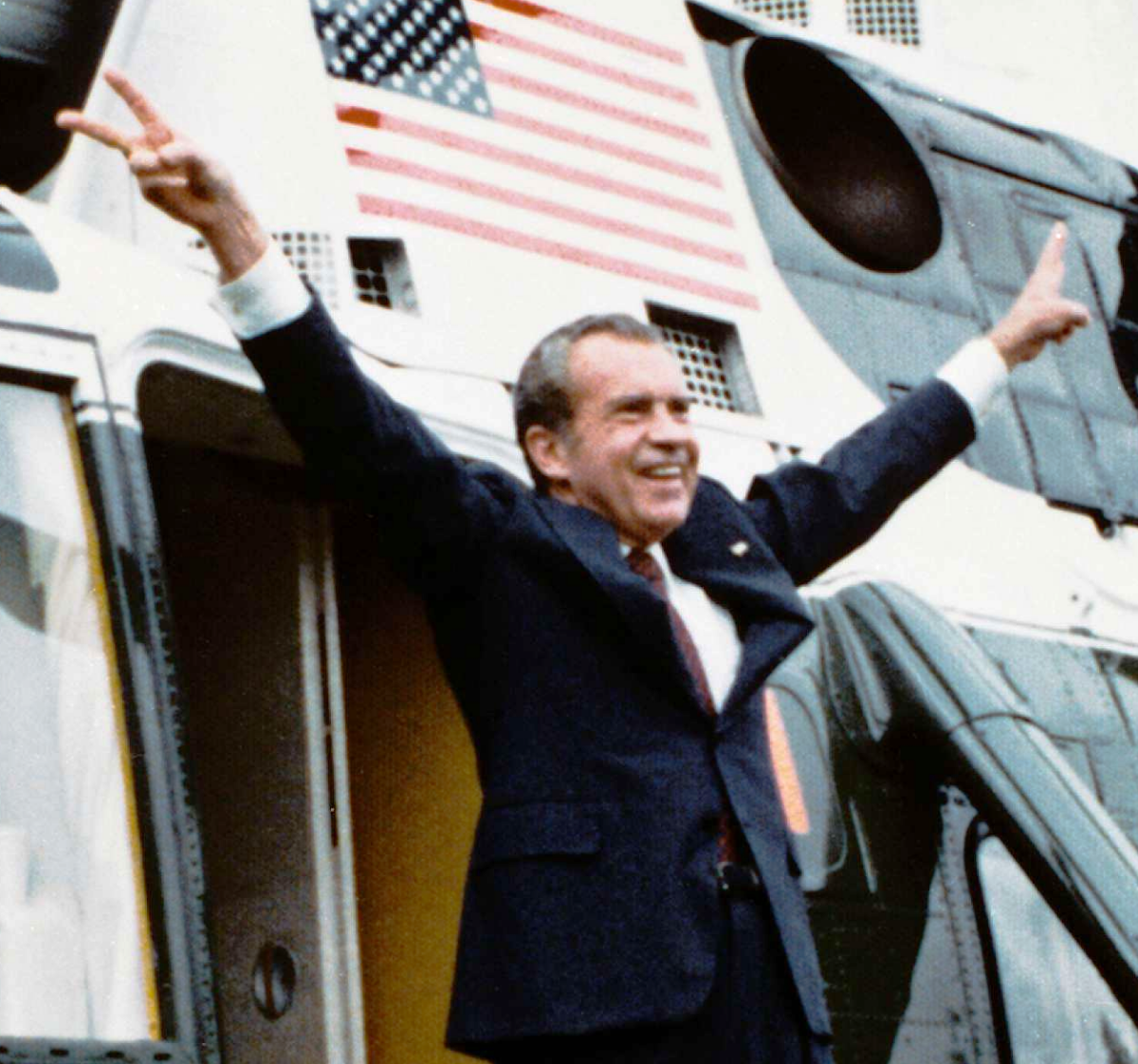
On Aug. 9, Gerald Ford became the nation’s chief executive.
The Pardon Reconsidered
By all accounts, Ford was a decent and truthful man, admired by his colleagues in Congress. He was a politician, skilled in the law and the way things work, but in the eyes of those who knew him he was an admirable figure. When he took office, the country as a whole breathed a sigh of relief and within a short time gave him a 71 percent approval rating.
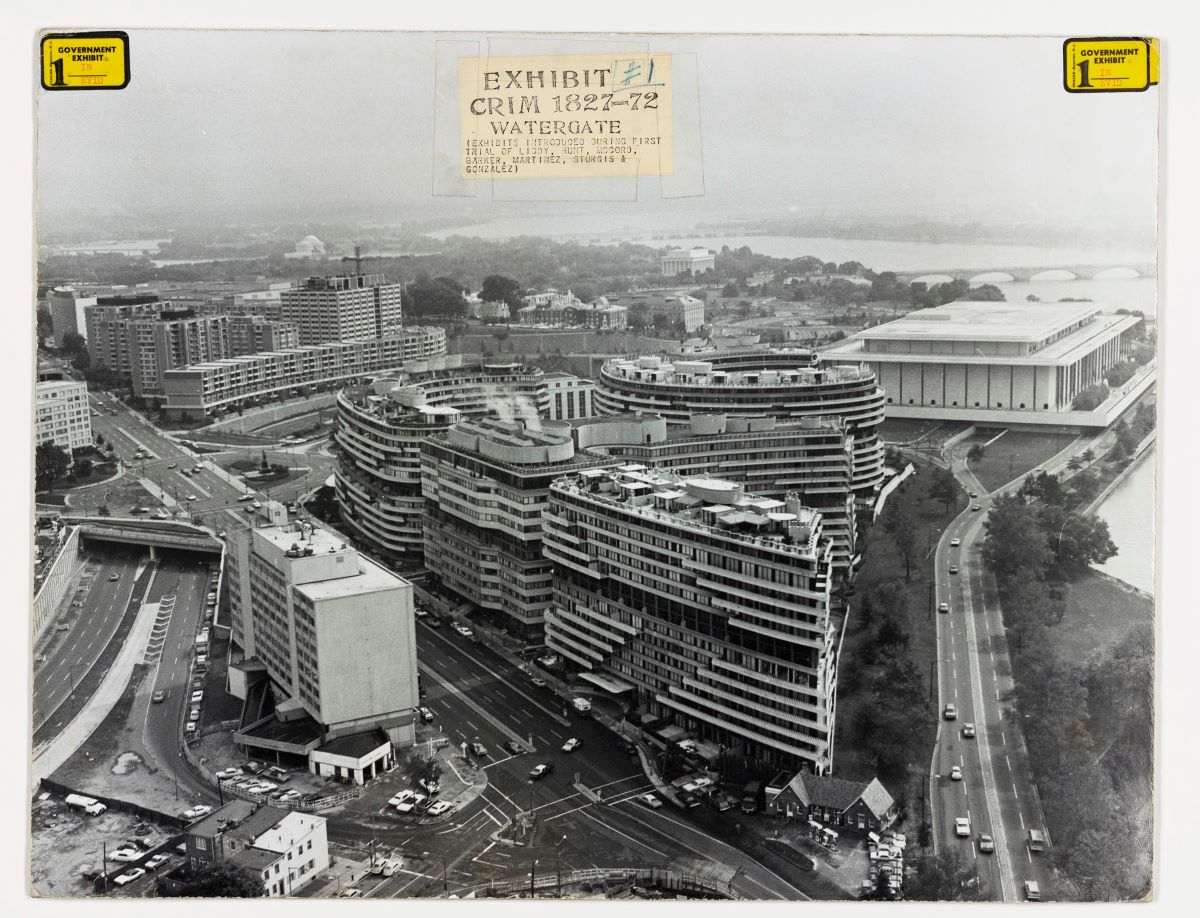
Meanwhile, many were demanding that criminal charges be brought against Nixon for what they regarded as his crimes. Some were longtime opponents, while others were simply appalled by the revelations of his involvement in the cover-up of the attempted burglary and illegal wiretapping at the Democrat headquarters at Washington’s Watergate complex.
Ford was not politically naïve. He’d spent 25 years in Congress, and he understood what might be coming in the near future—the arrest and even conviction of a former president of the United States and the unpredictable and divisive outcome of such a catastrophe. Should he allow events to take their course, or should he let his predecessor off the hook with a pardon? What would be the consequences either way? Which course of action would best serve the interests of the country?
He chose the way of forgiveness and issued the pardon without cutting a deal with anyone. For him, it was the right thing to do.
Courage Under Fire
The backlash was swift and brutal. His approval rates dropped to 37 percent. Photographer David Kennerly, who was in the White House on the day Ford announced the pardon, later wrote, “What I found shocking was that almost everyone who called in that morning privately told the president that he had done the right thing, but publicly went out and lambasted him.” In a speech, Senator Ted Kennedy remonstrated, “So we operate under a system of equal justice under the law? Or is there one system for the average citizen, and another for the high and mighty?”
Others accused the president of striking a secret bargain with Nixon. To allay these fears, Ford followed his customary habit of forthright action and in October defended his pardon before the Congressional Subcommittee on Criminal Justice.
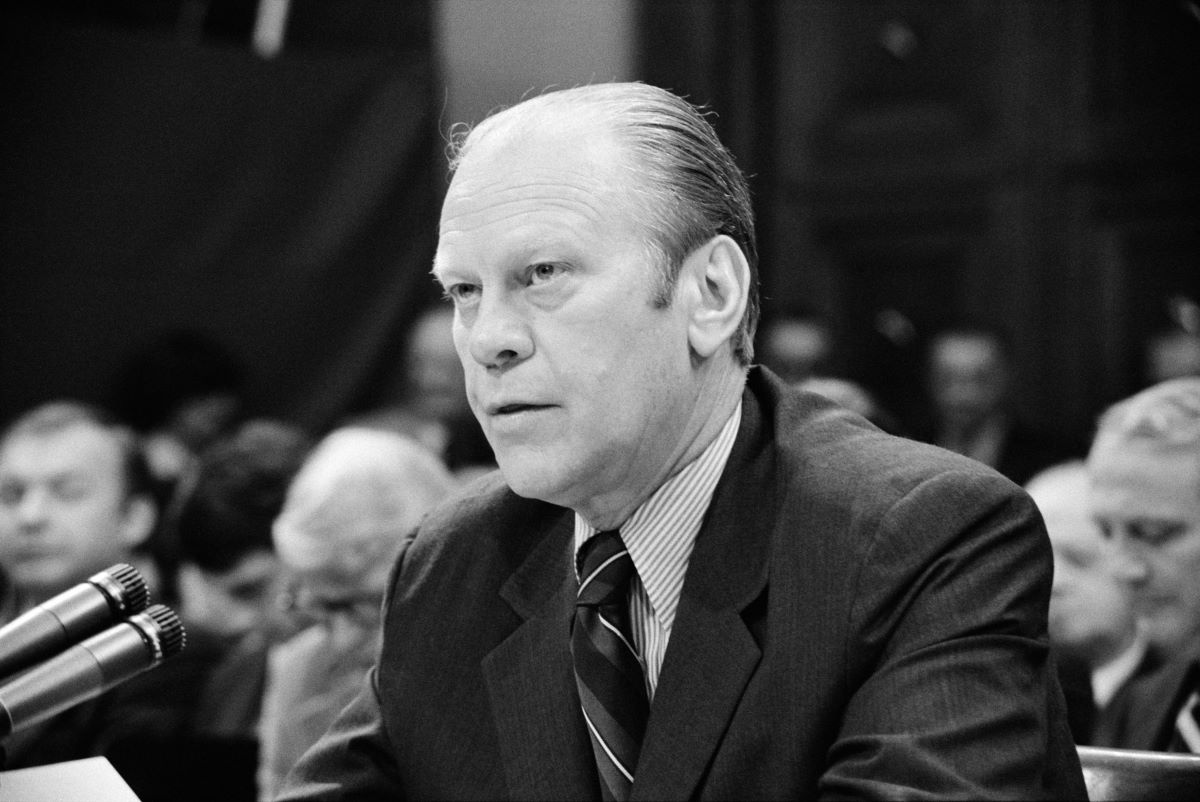
In addressing the subcommittee, Ford at one point brought up the other troubles facing the country and explained:
“We would needlessly be diverted from meeting those challenges if we as a people were to remain sharply divided over whether to indict, bring to trial, and punish a former President, who already is condemned to suffer long and deeply in the shame and disgrace brought upon the office he held. Surely, we are not a revengeful people. We have often demonstrated a readiness to feel compassion and to act out of mercy. As a people we have a long record of forgiving even those who have been our country’s most destructive foes.”
Two years later, in the fall of 1976, the incumbent Ford lost his race for president to Jimmy Carter. Many commentators attribute that defeat directly to his pardon of Richard Nixon.
Reevaluation
As time passed, historians and political commentators praised rather than condemned Ford’s principled decision. The country did come back together. The wounds did heal, so much so that in 2001 Senator Kennedy and his niece, Caroline, presented Ford with the prestigious JFK Profile in Courage Award. “Unlike many of us at the time,” said the senator in making the presentation, “President Ford recognized that the nation had to move forward, and could not do so if there was a continuing effort to prosecute former President Nixon. His courage and dedication to our country made it possible for us to begin the process of healing and put the tragedy of Watergate behind us.”
Not for himself, not for his party: Ford wanted what was best for his country.
And that’s called character. In spades.
What arts and culture topics would you like us to cover? Please email ideas or feedback to features@epochtimes.nyc.