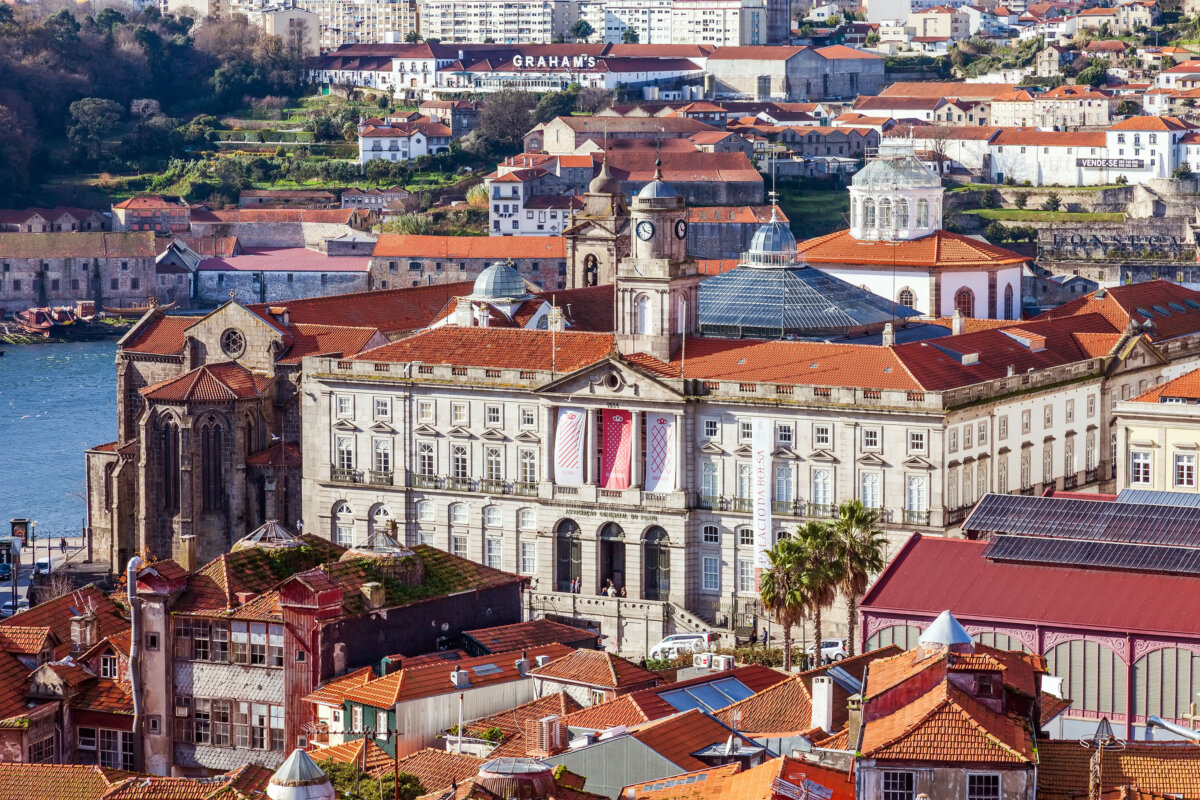
The stately Stock Exchange Palace is situated among the dense historical architecture in Porto, Portugal. Dominating a section of the skyline, the structure’s wide, granite facade is topped with a red tile roof and features a central clock tower that includes a columned rotunda and a copper dome. Its facade showcases symmetrically positioned entryway arches atop a bifurcated staircase. The window pediments match a central, upper-level portico pediment supported by four Tuscan columns. (StockPhotosArt/Shutterstock)
Situated beside each other in the heart of Portugal’s coast city, Porto, are the impressive architecturally stellar structures: the Church of Saint Francis (Igreja de São Francisco) and the Stock Exchange Palace (Palácio da Bolsa). Built in the mid-1800s, the Stock Exchange Palace asserts neoclassicism with Palladian influences, sometimes referred to as neo-Palladian architectural style. Roman and Greek classical designs as well as the upper-level, signature Palladian portico clearly point to aspects of this prominent architectural style.
While the common characteristics of classical architecture are in the building’s granite facade—pediments, arches, and columns, its exterior appears monumentally stately, but staid compared with its interior. Inside are paintings, carvings, gilding, sculptures, and glassworks constructed by late 19th- and early 20th-century artists.
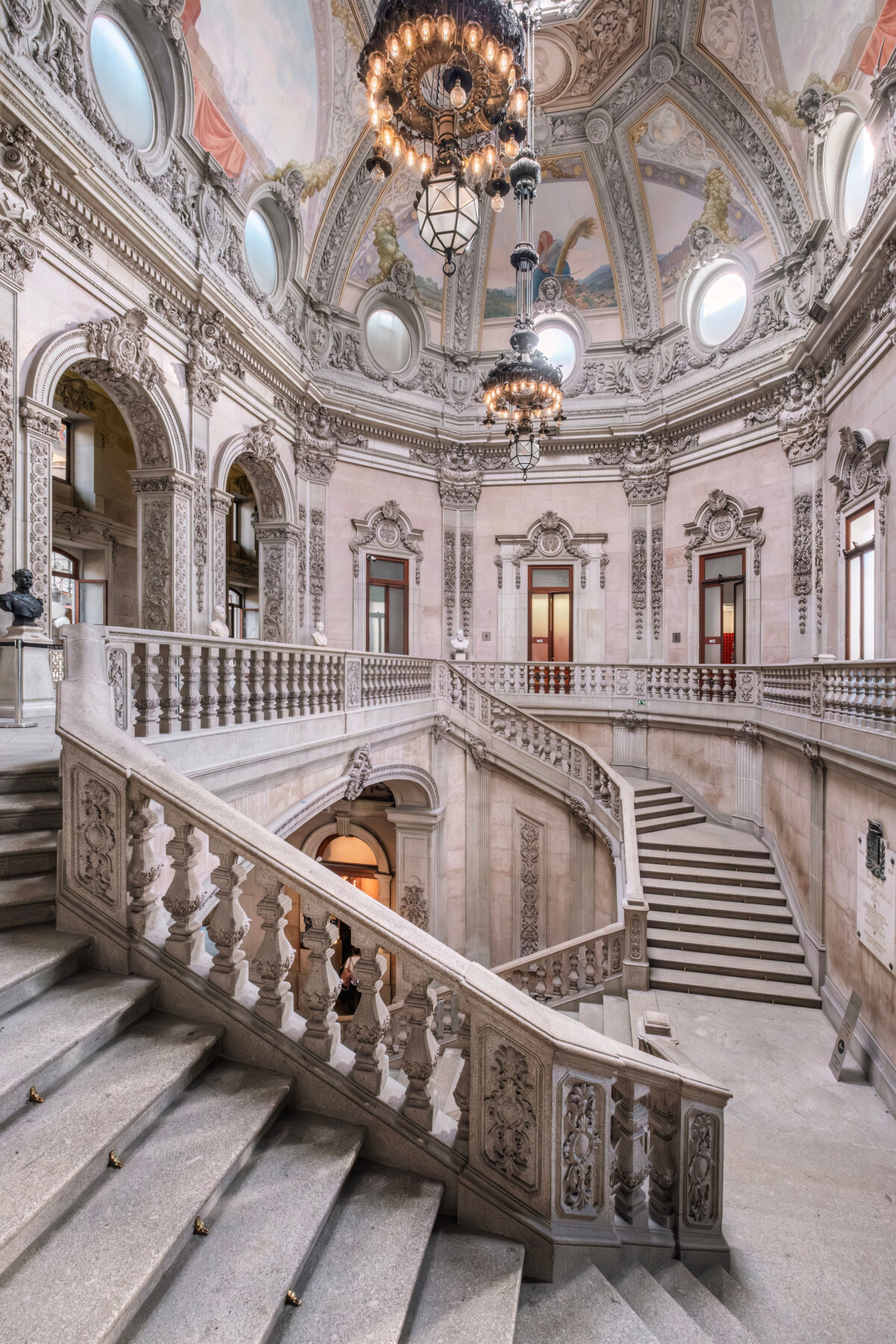
Fresco-adorned walls, elaborately painted ceilings, an octagonal glass dome, and parquet floors convey an ambiance of palatial extravagance. The first-floor staircase alone is an opulent, visual indulgence. Made of granite, the sweeping staircase features countless balustrades and frieze panels of carved designs decorating the vast railings.
However, what appears to be a lavish residence suitable for royalty has always been a practical use building. The Stock Exchange Palace contains a jury room, library, courtroom, multiple reception rooms, and offices. It’s one of the most toured buildings in northern Portugal.
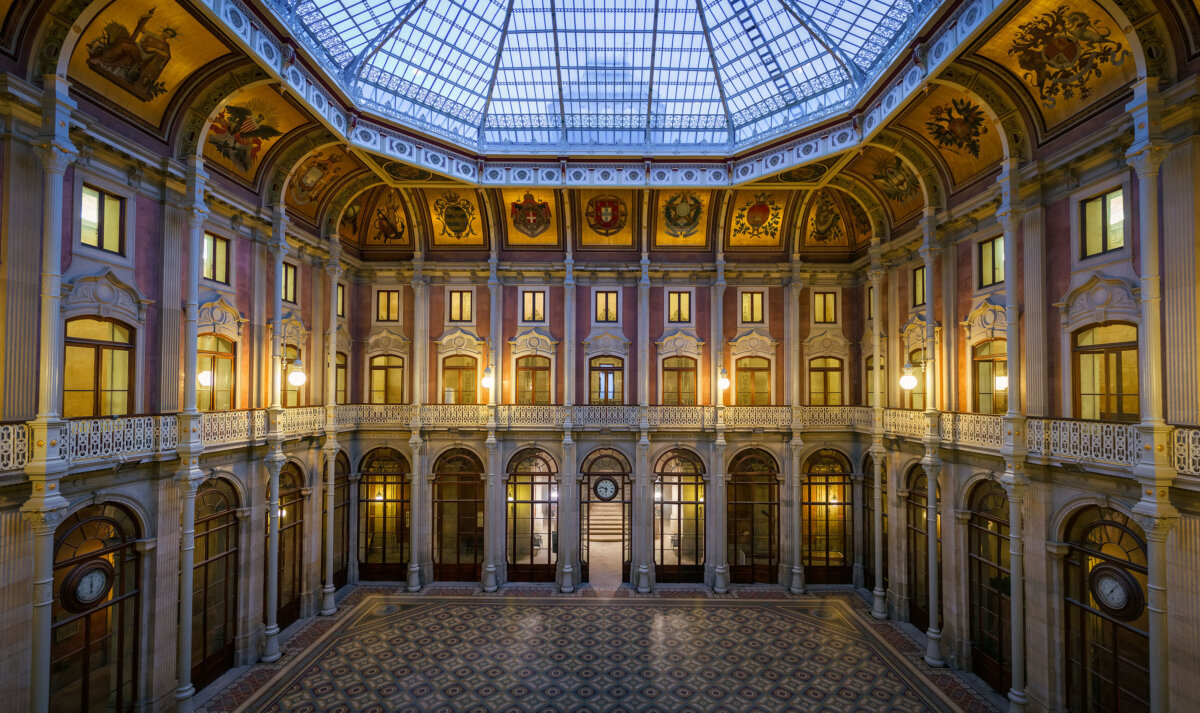
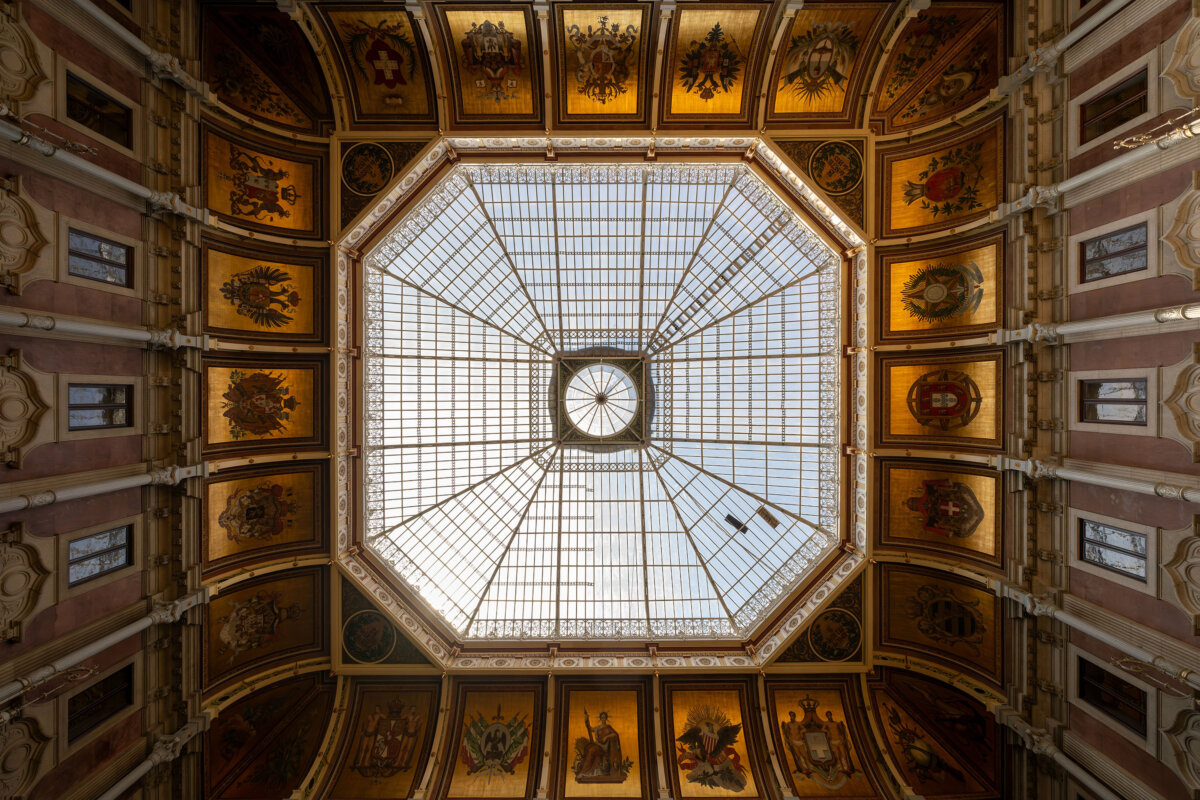
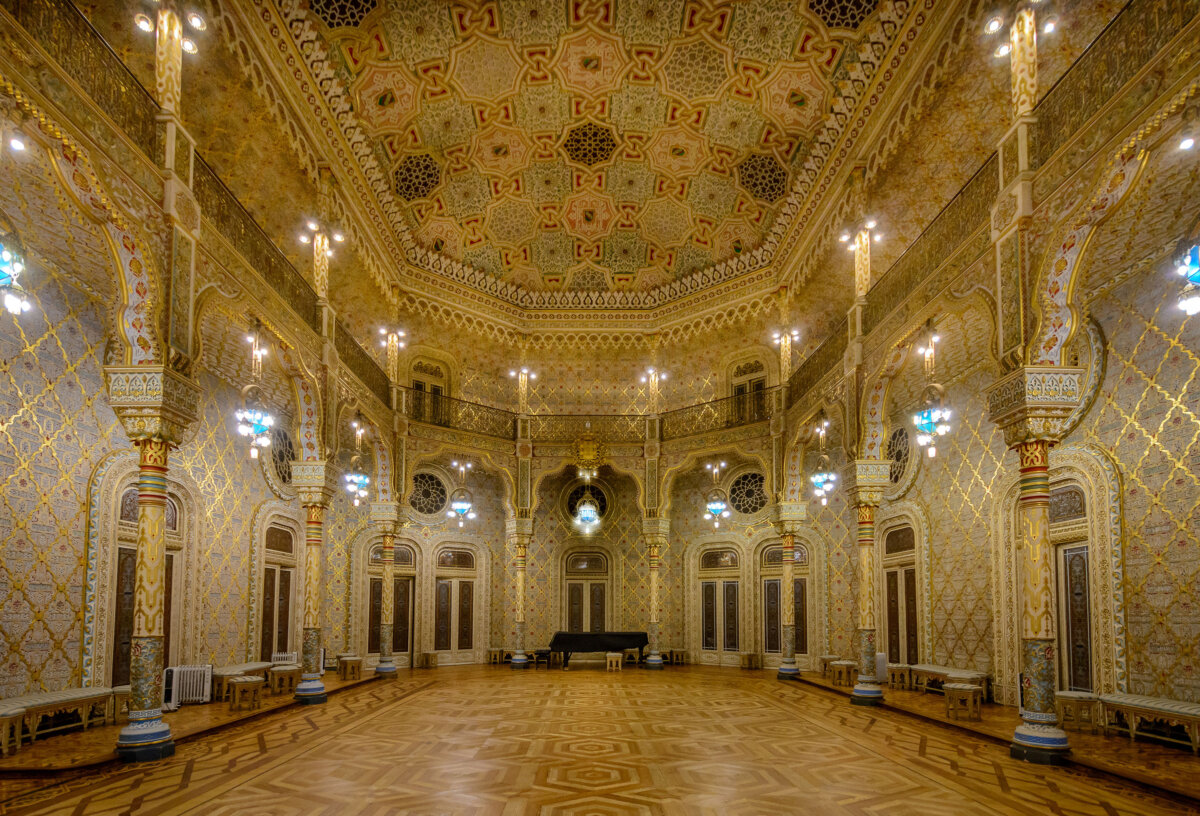
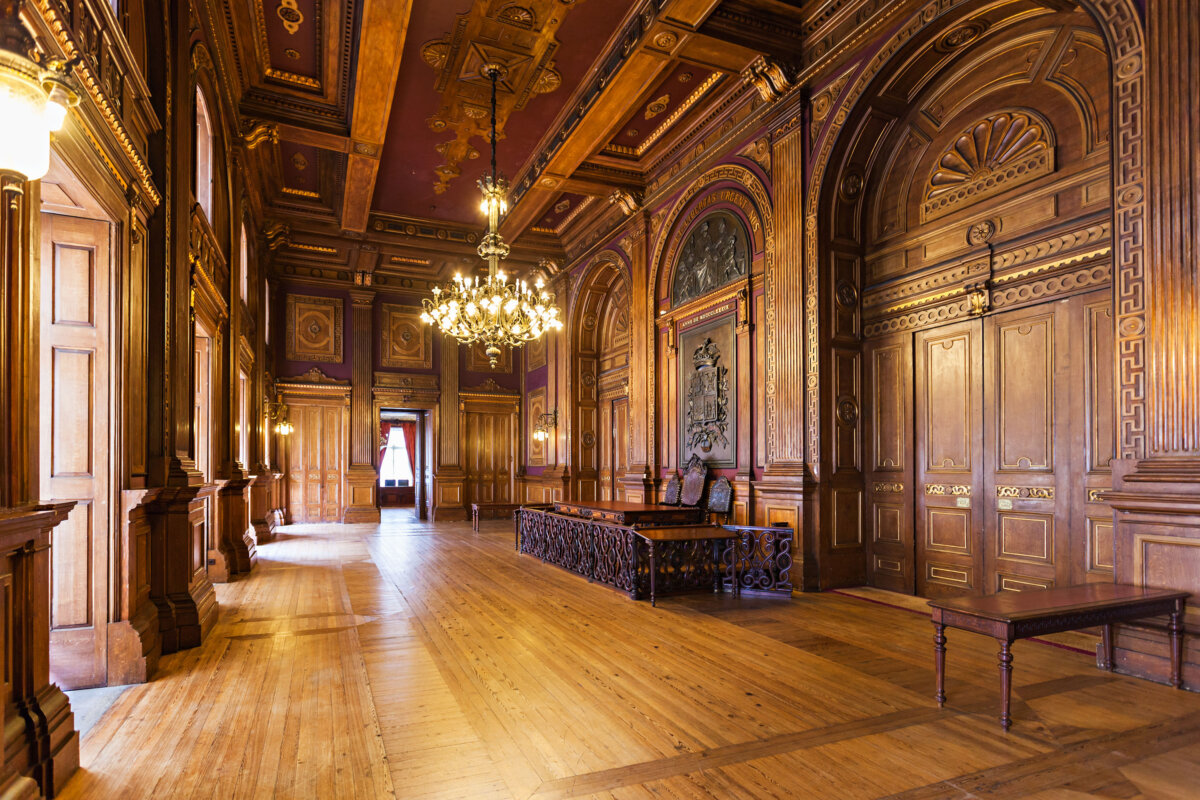
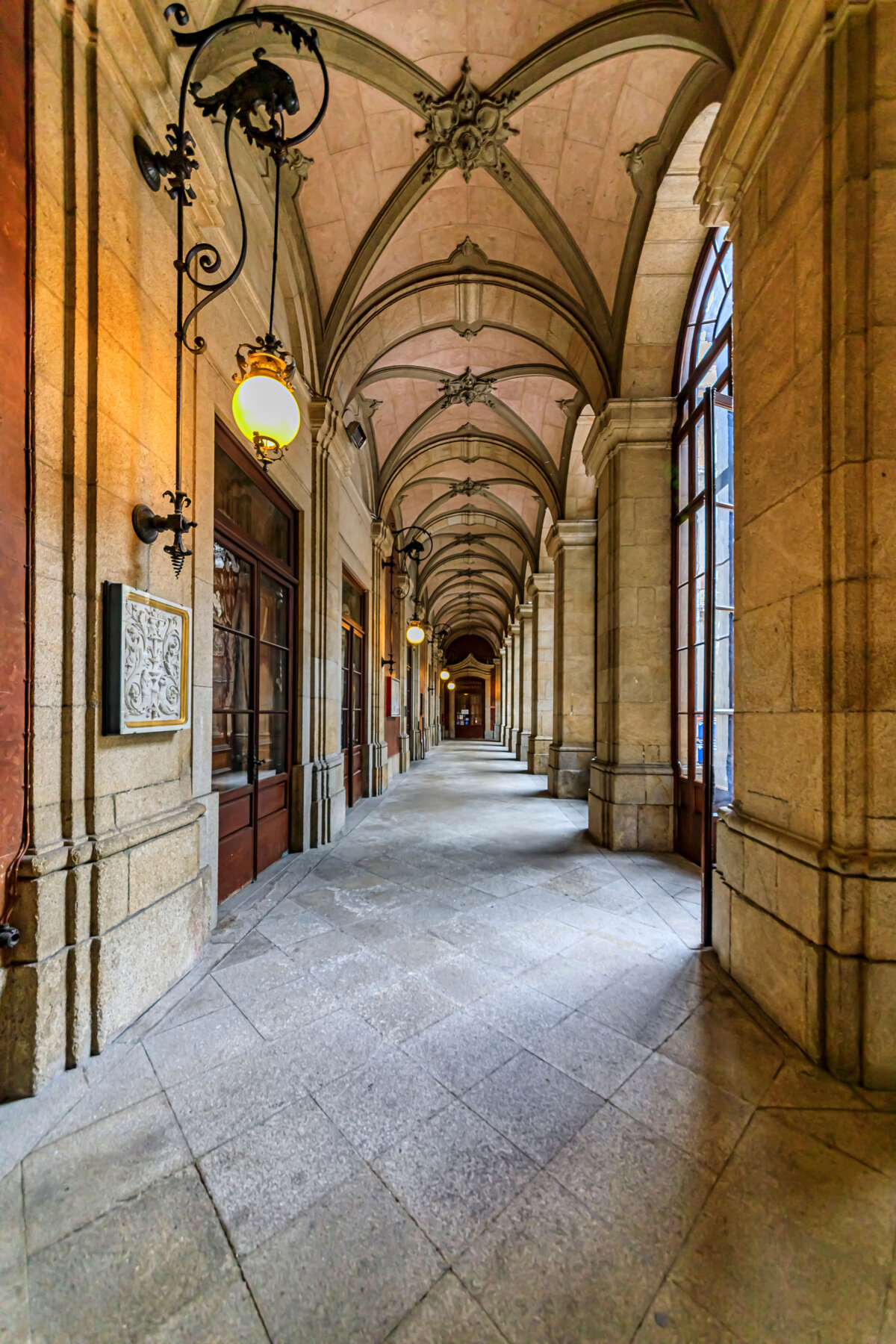
Called the Courtyard of Nations, this internal courtyard’s focal point is a large octagonal glass dome. Numerous first-floor arched windows and door openings, topped with a second-level surround balcony, are flanked by columns. The flooring in this immense space is a repeating Byzantine ceramic tile pattern. (Kraft_Stoff/Shutterstock) The multi-piece, octagonal-shaped glass ceiling allows natural light to flood the vast Courtyard of Nations. A complex iron framework of geometric shapes secures the pieces of glass. Yet, the standout artistic achievements are just below the dome: 20 painted coats of arms are set against a gilded backdrop and represent global countries with which Portugal has engaged in business. (Felix Lipov/Shutterstock) Split over two flights, the grand staircase coordinates with the Stock Exchange Palace’s highly bedecked entryway. The marble staircase, leading from the Hall of Nations to the first-floor rooms, is sumptuously decorated with garlands, fluted pilasters, and columned arches, each festooned with a lavish keystone. Contrasting with all the granite and marble are two large bronze chandeliers and frescoes on the domed ceiling. (ikumaru/Shutterstock) Considered the jewel room of the palace-like building is the Arab Hall. The Moorish Revival-style hall features trefoil-design arches supported by ornamental, multi-layered columns with exaggerated abacuses above the square capitals. Octofoil shapes marry with quatrefoil shapes in the jewel-toned ceiling, while a gilded, diamond-shaped pattern decorates the room’s walls. The parquet flooring of hexagon shapes was created using pieces of mahogany, rosewood, satinwood, and rosewood. (shuttermee/Shutterstock) On the third floor is the Assembly Room. While each room in this grand structure is distinct, this room may be the most different due to its ambiance created by floor-to-ceiling, carved wood. However, much of what appears to be wood, such as doors, ceiling, and walls, is actually painted plaster that gives the appearance of wood. The wooden flooringexhibits a simple parquet pattern. The room’s adornments are the paintings in the tray ceiling and the centerpiece chandelier, which weighs approximately 1 ton. (saiko3p/Shutterstock) The Stock Exchange Palace’s most noteworthy hall features stone block columns flanking arched windows and a stone-block ceiling with rib vaulting. Each rib vaulting intersection is bedecked with carved keystones, also called bosses. Glass globe lighting fixtures hang from tall iron sconces. (SvetlanaSF/Shutterstock)
What arts and culture topics would you like us to cover? Please email ideas or feedback to features@epochtimes.nyc.
A 30-plus-year writer-journalist, Deena C. Bouknight works from her Western North Carolina mountain cottage and has contributed articles on food culture, travel, people, and more to local, regional, national, and international publications. She has written three novels, including the only historical fiction about the East Coast’s worst earthquake. Her website is DeenaBouknightWriting.com