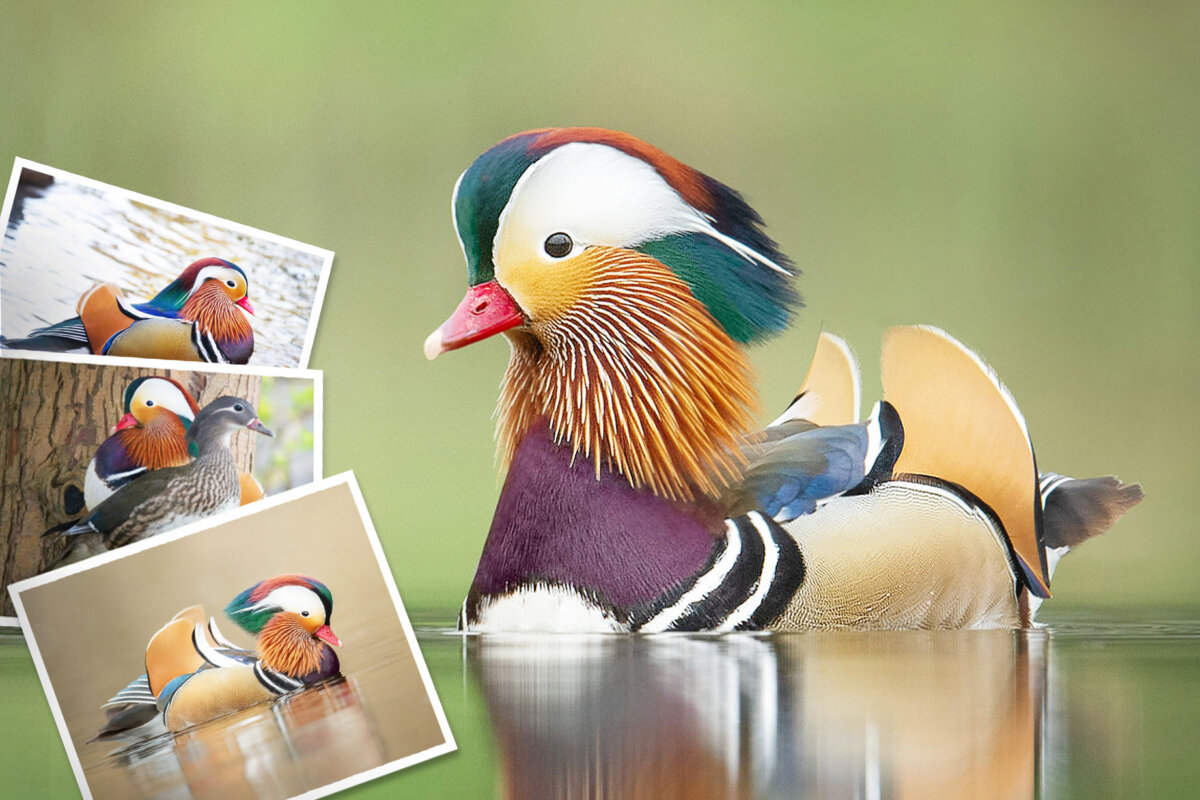
Haagse Bos in The Hague isn’t exactly New York’s Central Park, however the two public greenspaces do share similarities: they’re both urban oases, both have idyllic ponds and walkways, and both have hosted the rare and exotic mandarin duck to great fanfare.
Often called the world’s most beautiful duck, this gorgeous bird, if seen in New York City, would most likely be a lost pet or zoo escapee, not from a native population. Yet the Netherlands has a naturalized population of roughly 800 mandarin ducks that originated from captive specimens. While that may not sound like a lot, it does offer more photo opportunities than elsewhere in the world.
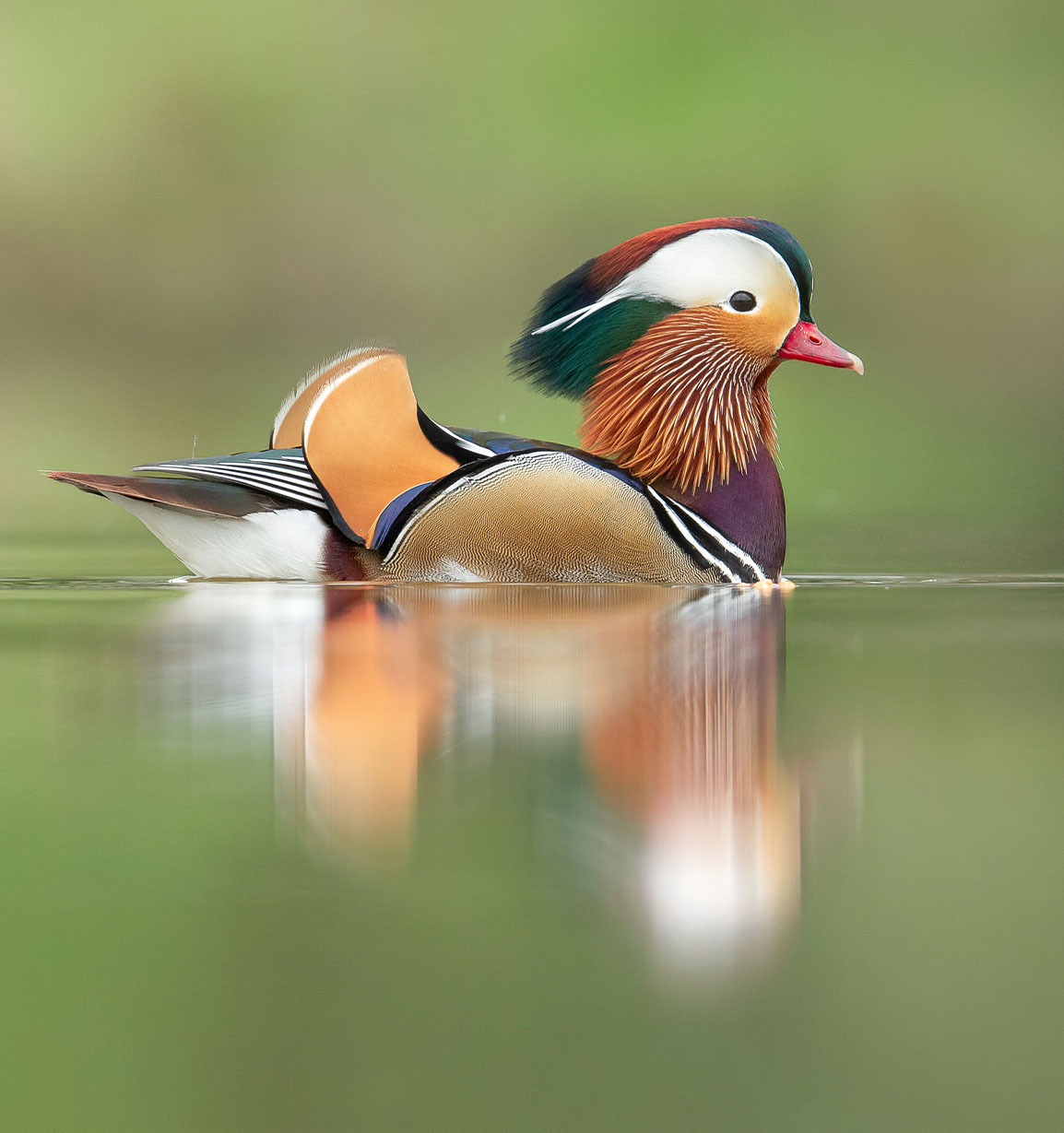
So it was a big deal when one was famously spotted in Central Park in 2018, stirring a media buzz while attracting throngs of photographers. Likewise for Dick van Duijn, 41, an amateur photographer from the Netherlands, seeing his first mandarin duck swimming in a pond in The Hague in 2025 was a “lifer” moment.
“The colors, patterns, and overall appearance almost don’t seem real,” van Duijn told The Epoch Times after his encounter with the male mandarin duck. “It’s easily one of the most stunning ducks in the world.”
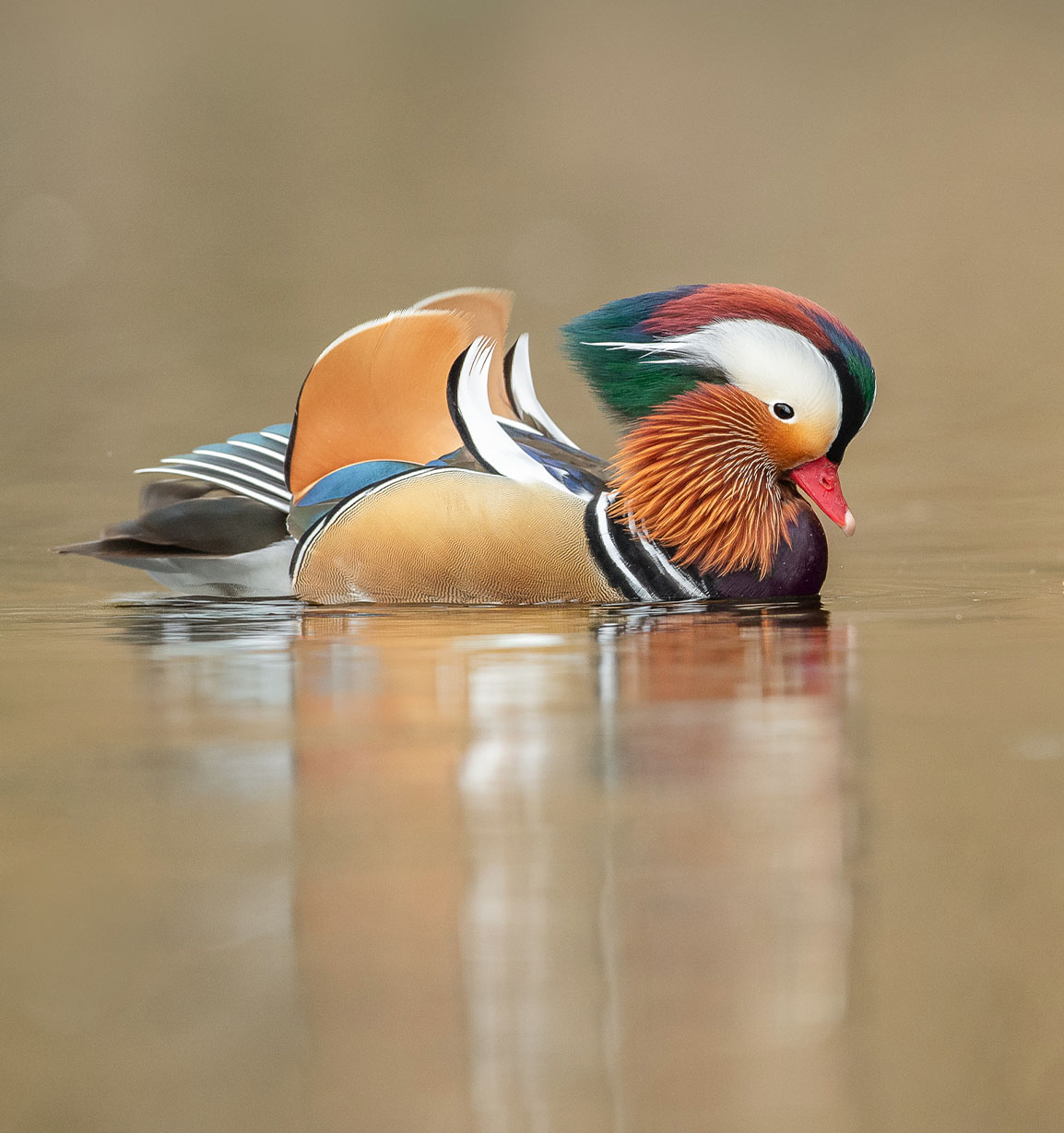
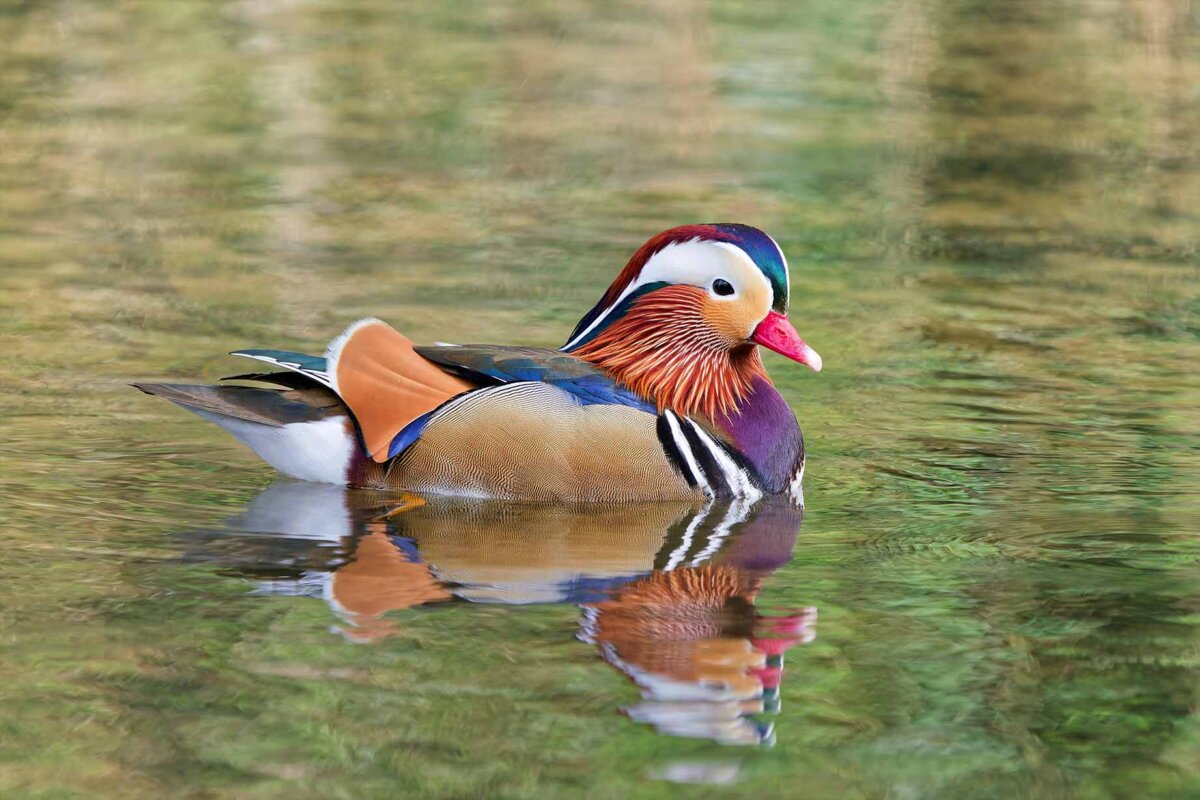
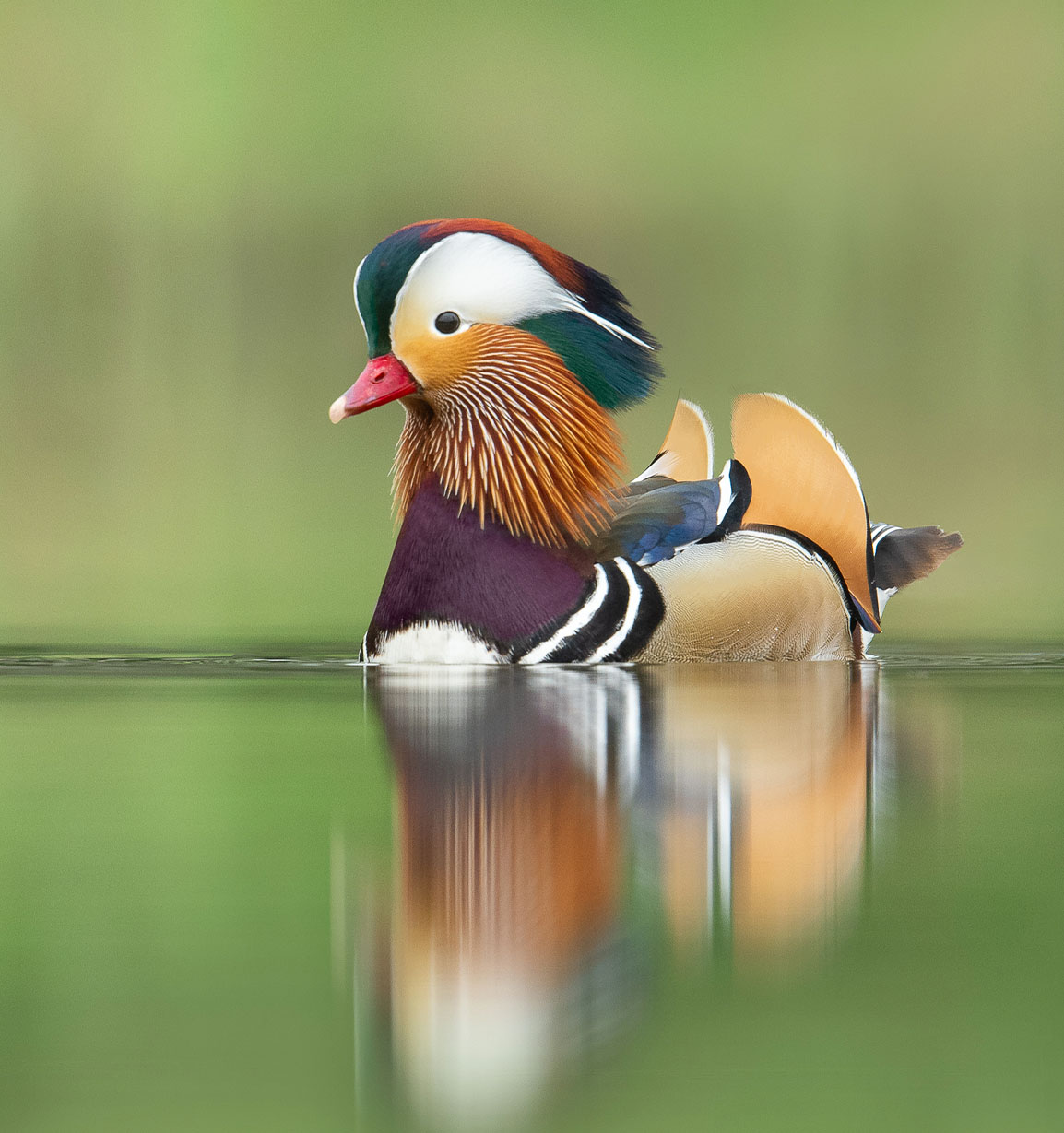
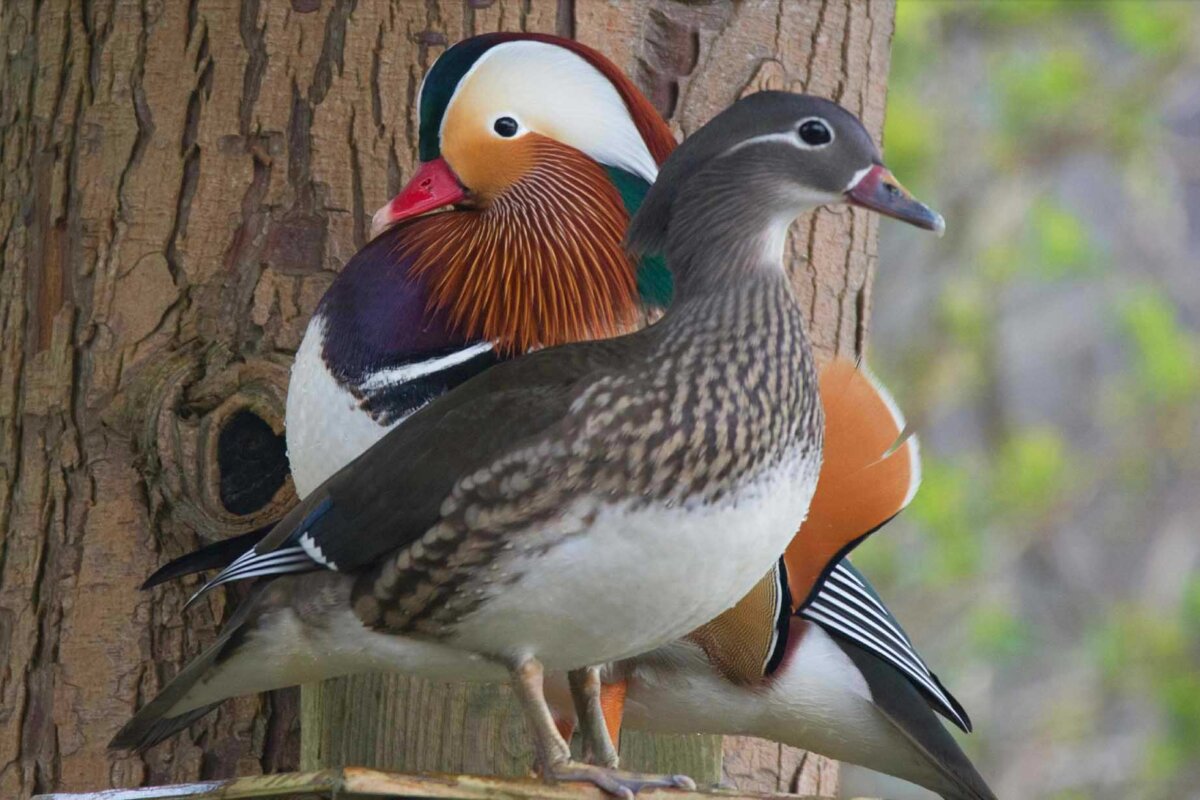
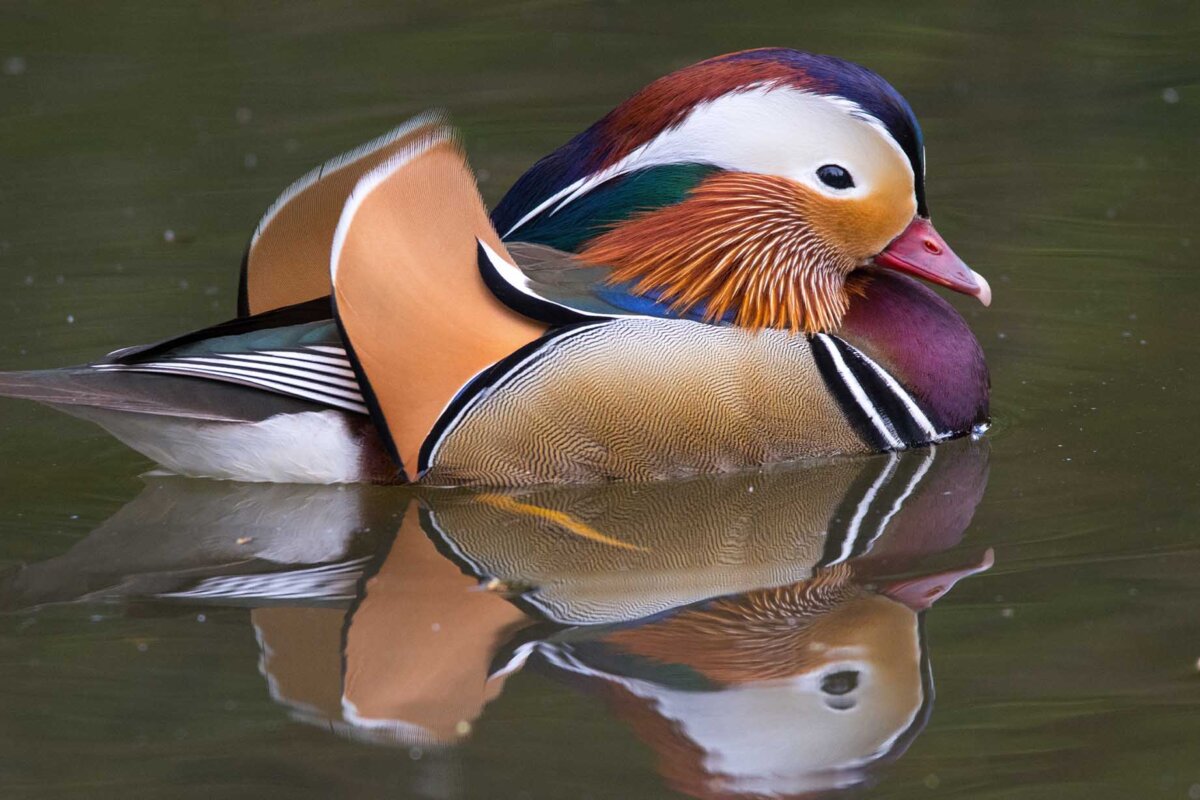
Like most duck species, this distinctive bird displays strong sexual dimorphism with only males boasting the flamboyant array of colors mandarins are known for. Their purple crests and golden-orange sideburns and whiskers contrast vividly with their bold, white eye stripes. Their rich shades of deep maroon, emerald green, and intense red coloring on their bill contribute to their name—the ornamental robes of mandarin officials in China come to mind. Females, meanwhile, don drab, grayish-brown feathers.
Van Duijn, whose family runs a seafood stand in Noordwijk and who trips the globe photographing wildlife, learned of a mandarin duck sighting around his hometown while browsing the observation.org website. He grabbed his photography gear, jumped in his car, and drove 30 minutes south to The Hague where a mandarin was spotted in local parks.
“I planned my visit and chose a day with suitable weather conditions,” van Duijn said. An overcast sky meant less harsh contrast, making the colors more natural and balanced.
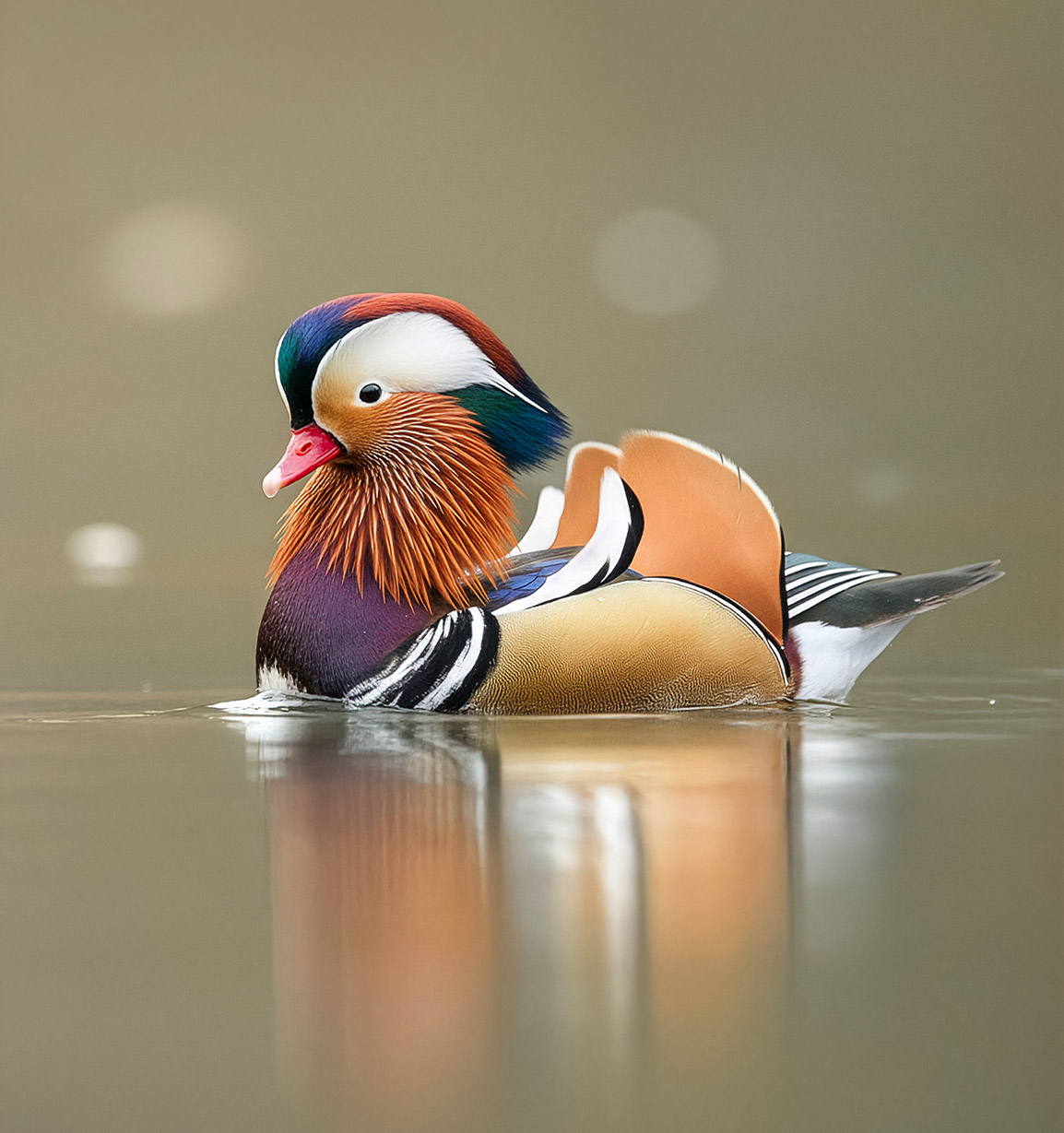
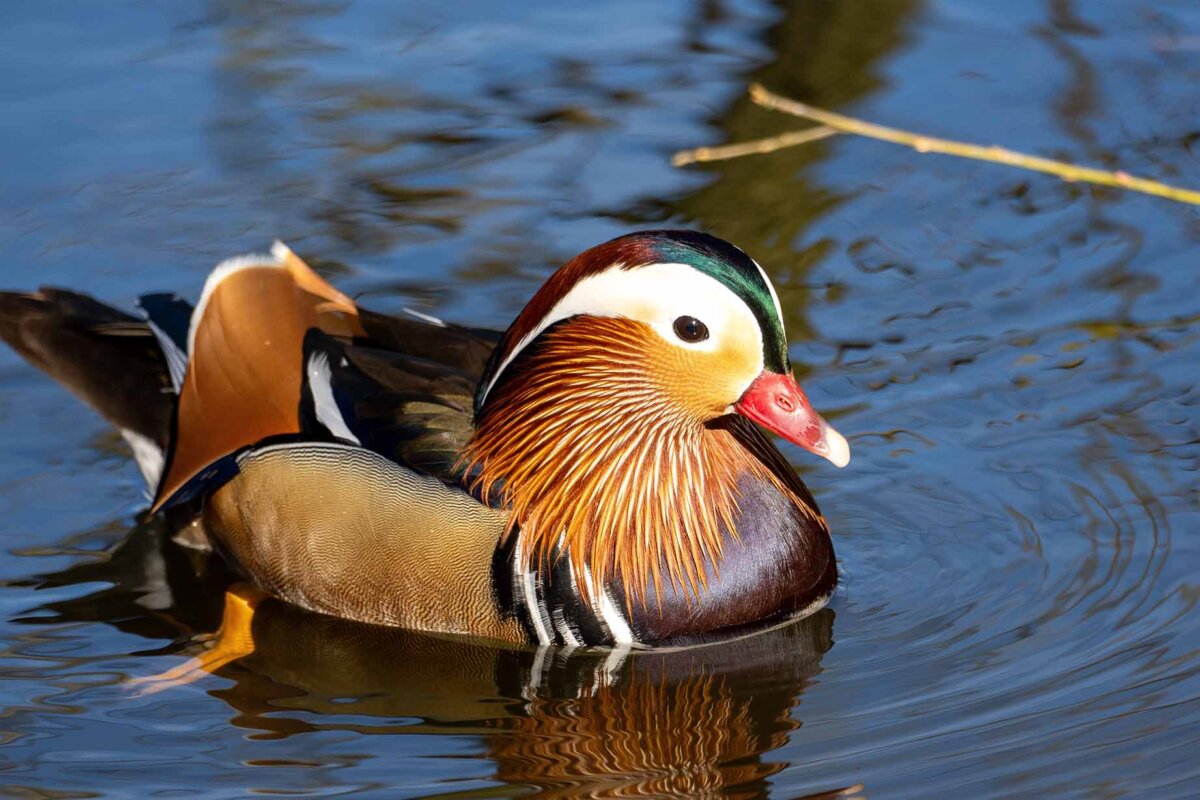

“When I arrived the park was quiet with only the subtle sounds of birds and water in the background,” he said. “Finding the ducks still required some patience. Even though I knew the general location, I had to carefully scan the area and wait for the right moment. Eventually, I spotted them calmly swimming in the pond.”
He positioned his camera, he said, taking full advantage of the soft lighting to capture “the images I had envisioned.”
“As a photographer I’m always thinking about composition, so I tried to keep the scene as simple and natural as possible,” he said. “In the end, there were a number of shots that really stood out that I captured.”
Van Duijn had never seen a mandarin duck in the wild, he added. “So that first encounter was definitely a special moment for me as a photographer.”
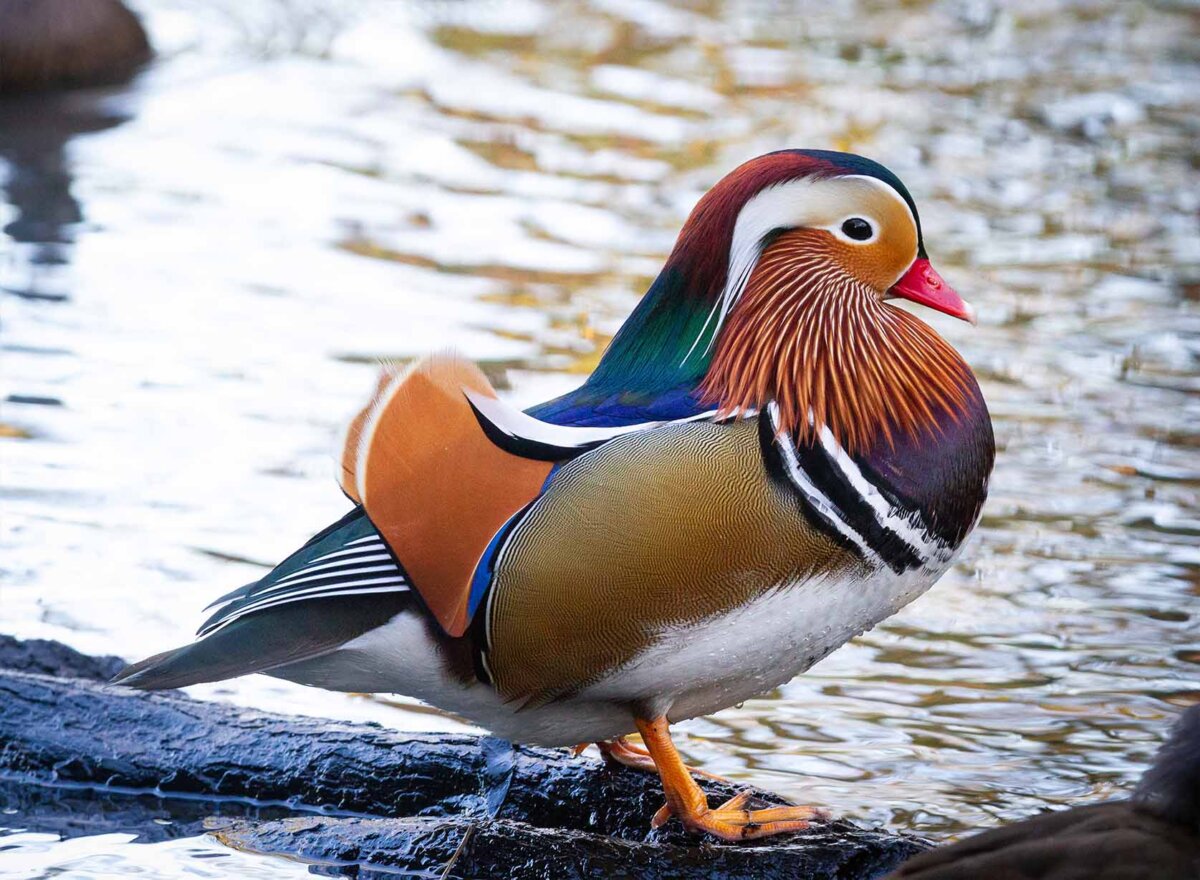
While mandarin ducks are not threatened, they also no longer thrive in their native habitats, such as in eastern Russia, China, and Korea, though their numbers are still fairly strong in Japan where 5,000 pairs are known to exist. The 18th-century explorer Engelbert Kaempfer, who wrote extensively on Japanese history, made particular mention of the species:
“Of Ducks also there are several differing kinds,” Kaempfer wrote in “The History of Japan.” “One kind particularly I cannot forbear mentioning, because of the surprising beauty of its male, call’d Kinmodsui, which is so great, that being shew’d its picture in colours, I could hardly believe my own Eyes, till I saw the Bird it self, it being a very common one.”
Survival for the mandarin duck has historically been a struggle. Destruction of forests in the Far East shrank its original Asian habitat, while poachers have long sought them as trophies because of their regal beauty.
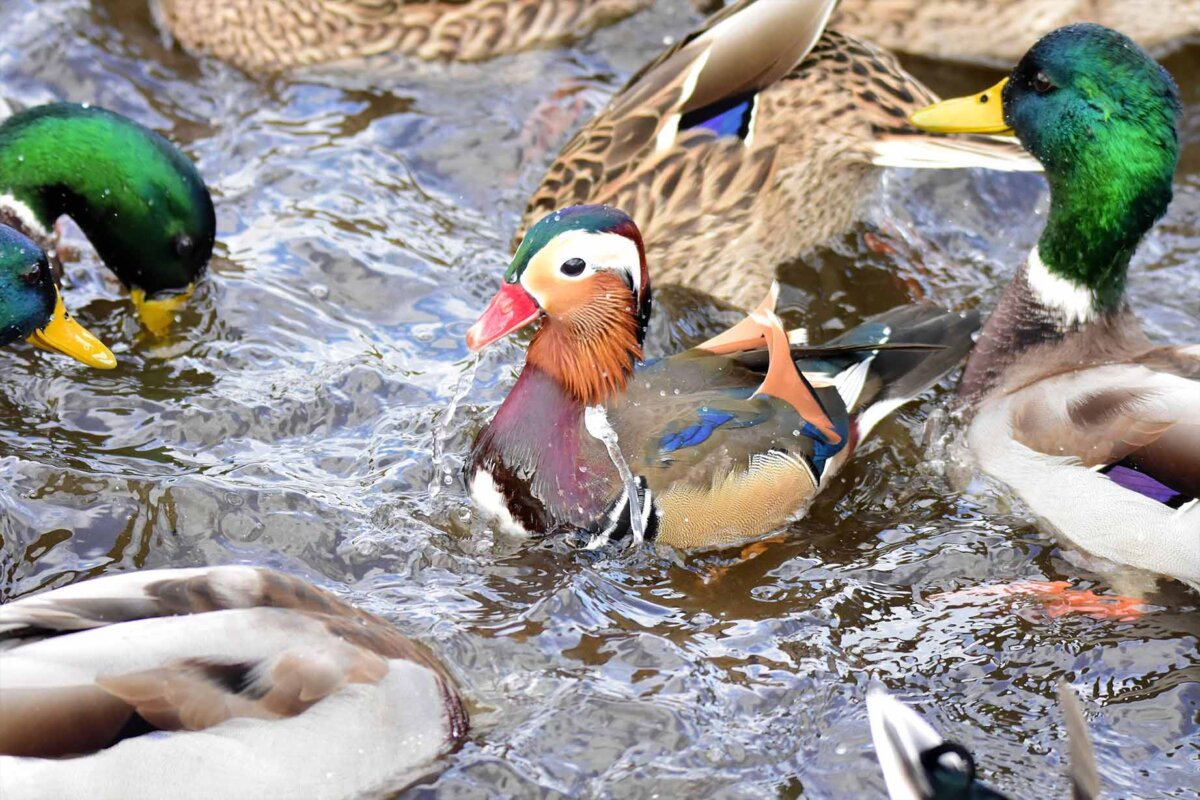
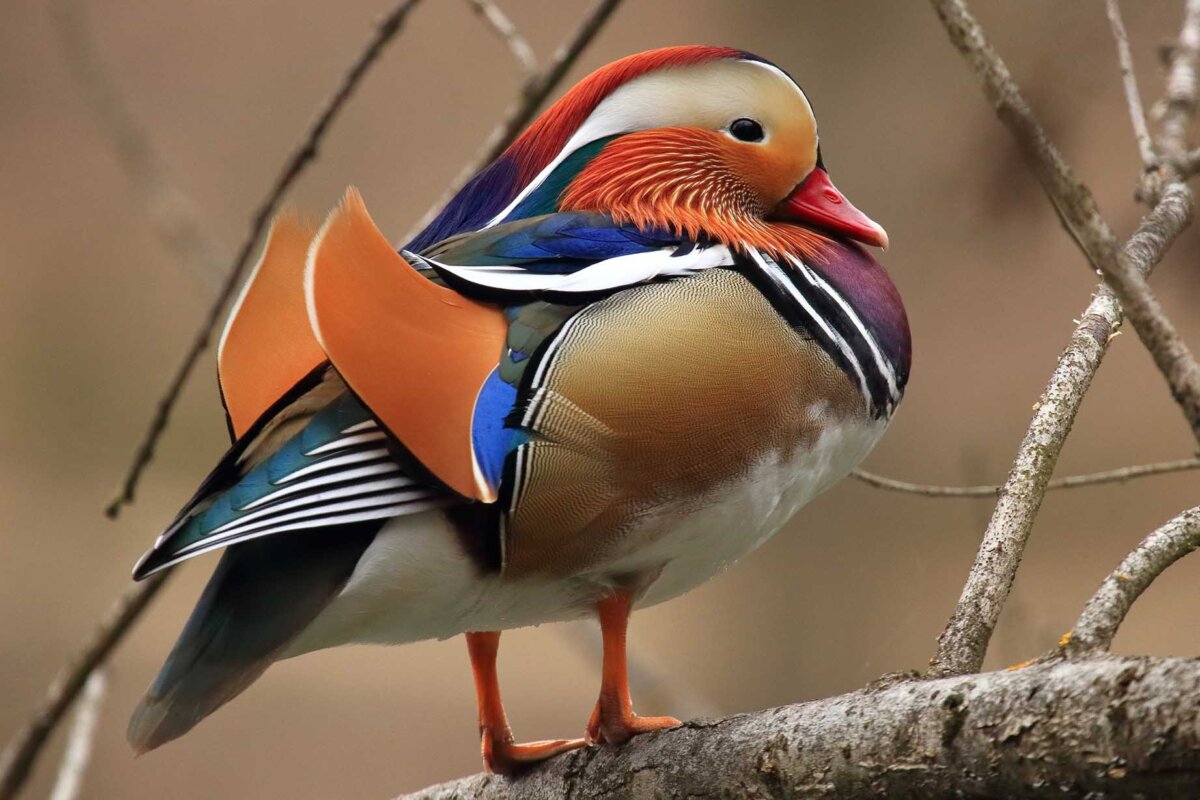
Today, mandarin ducks thrive, more than anywhere else, in parts of Europe and the UK where they’ve established non-native populations in greater numbers.
A number of special traits has helped this bird survive not just hunters but also its natural predators. They, like other duck species, perform a summer “disappearing act” by seasonally shedding their bright feathers. This creates a bland camouflage that makes males blend in with females. And unlike other ducks, which nest on land, mandarins, which have sharp claws, are tree dwellers that can be found nesting in the hollows of trees, sometimes 30 feet up. Their ducklings are “daredevils” that immediately leap from the nest after hatching, sometimes bumping branches on the way down.
As far as habitats go, the mandarin duck has yet to truly move into North America. But while New Yorkers may have to wait several more years for the mandarin’s return, one thing is clear: they’ll continue calling the Netherlands and The Hague home—even if they are rare.