



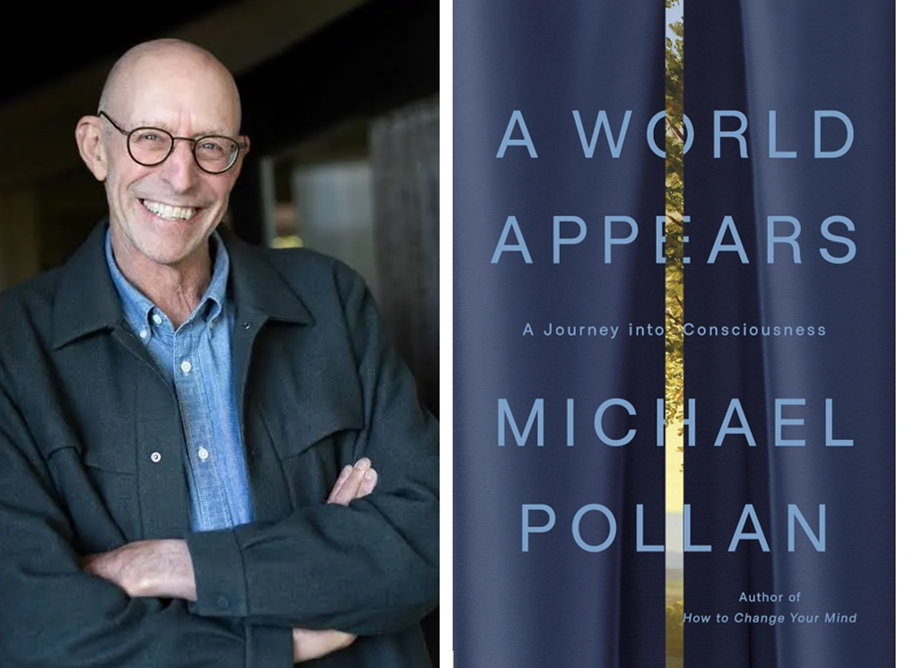
In his collection of bestselling nonfiction books, author Michael Pollan has developed a well-regarded reputation for dissecting complicated topics. He’s written a book on the modern industrial food culture, one on the deeper meaning behind how we prepare our food, and another on the increased use of psychedelics in the treatment of mental illness.
“A World Appears: A Journey Into Consciousness” may be considered a follow-up to his 2018 release “How to Change Your Mind.” In it, Pollan discussed a variety of psychedelics, mystical experiences, and consciousness.
In this new study, the author expands on the topic of “consciousness,” a term that describes our ability to be aware, to think, and to understand the concept of being alive. He admits to being as curious as he hopes his readers are, and he approaches the subject as a student rather than a philosophy professor.
With stories, interviews, and examples of how consciousness is explained and realized, Pollan does an exceptional job of opening our eyes to what it means to be human and why it’s something to care about.
Struggling to Understand
One of the more enjoyable aspects of this read is that, just when it seems too complex to comprehend, the author admits to his own inability to fully understand it. “If I sound confused, that’s because I am,” he says after sharing one of his own experiments into consciousness. He says it’s frustrating that while he can observe the thoughts in his mind, he can’t observe what it is that’s thinking them.
In a disarming and easily readable introduction, he explains the intentions for this exploration into the deepest parts of the mind. The desire to contemplate the notion of the self is due, in part, because of phrases we use often, like “self-confidence” and “self-esteem.” We place a great value on standing up for one’s “self,” so, as Pollan suggests, we should be able to define something which we strongly defend.
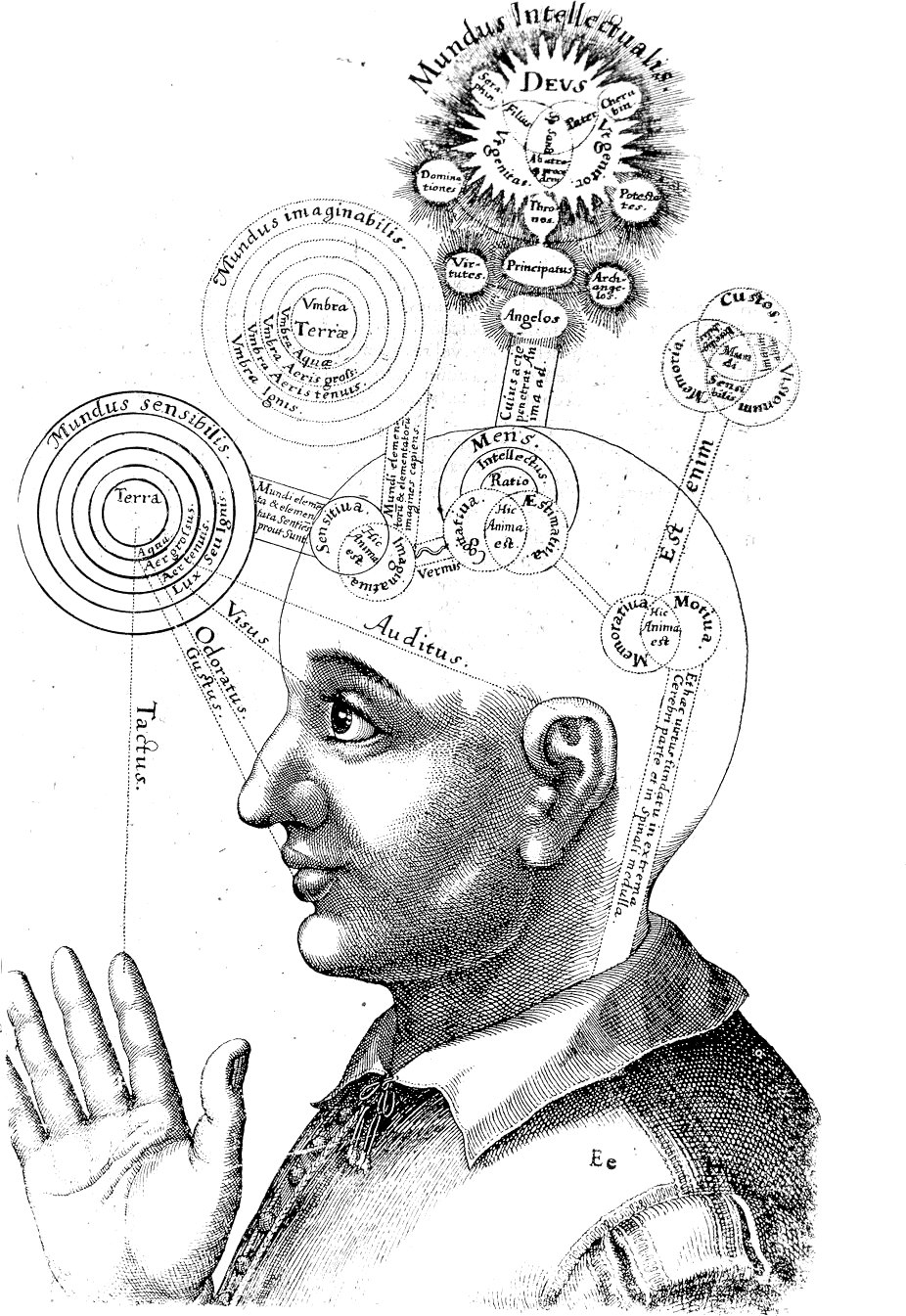
Pollan has deftly broken–down consciousness into four dimensions: the self, or the “thinker of our thoughts;” sentience, or the ability to be aware of sensations and respond with some intelligence, as even a plant might; feeling, a dimension that animals and humans share; and lastly, thought, or the everyday activity of the mind, something Pollan feels has received little attention from scientists.
There are passages describing the experimentation with psilocybin, the chemical found in mushrooms responsible for “changing our experience of consciousness.” He compares it to how caffeine sharpens our thinking, making us feel more awake. These experiences encouraged Pollan to pursue his research, convinced it assisted in debunking the belief that the mind works “one way, and one way only.”
Psychedelics
When consciousness is altered by psilocybin, much within the mind can change, such as the perception of time, emotions, and how we visualize the environment. When used in a serious scientific experimentation, these magic mushrooms can “soften our resistance to various forms of magical thinking.”
The author shares his own experience after ingesting a handful. He spent time with the plants in his garden. Though they were eyeless, he said they “returned my gaze.”
In his notetaking during the session, he felt the plants “wished me well.” Though he doubted the plants had such power, he did sense they were “awake” and “watchful.”
Subsequently, the drugs wore off, and Pollan returned to his scientifically thinking mind. Nevertheless, the question remains. Which perception is more accurate: the drug-induced connection to growing things or observing them as nothing more than plants growing in the garden?
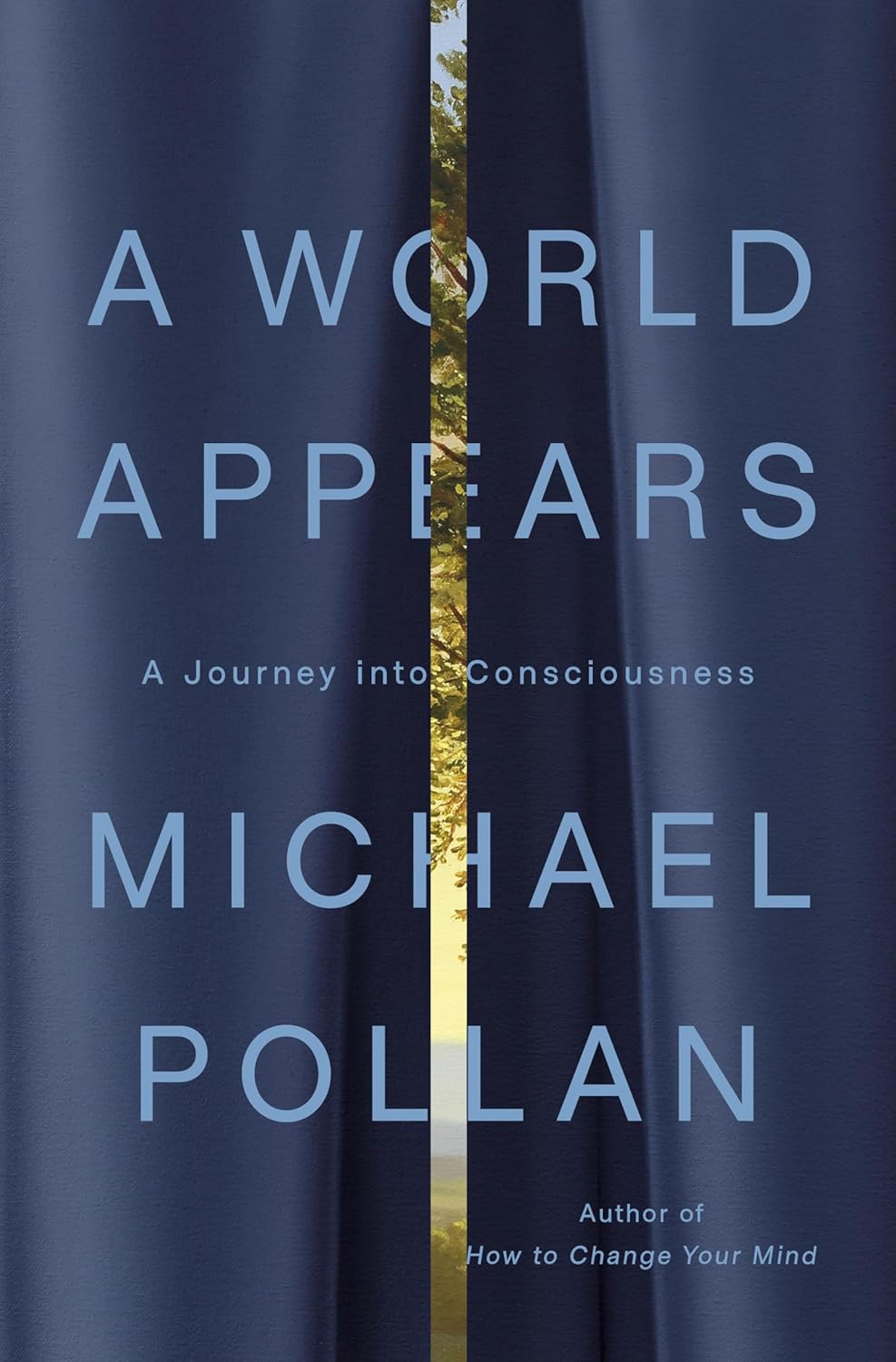
Readers aren’t required to have any neuroscientific or philosophical background. All that’s needed is a desire to understand the human mind and what makes us who we are. The title, “A World Appears,” comes from a 2021 book on consciousness by neuroscientist Anil Seth, “Being You.” It’s used in the book’s epigraph, which reads, “I open my eyes and a world appears.”
It’s this notion which Pollan finds exciting. He hopes that readers come away with a new appreciation of the world that appears as they open their eyes.
Credibility
For anyone questioning the author’s qualifications for writing this book, Pollan’s resume and credentials more than satisfy. He’s the author of 10 books, including bestsellers like “This Is Your Mind on Plants,” “How to Change Your Mind,” and “The Omnivore’s Dilemma.”
A Guggenheim and Radcliffe fellow, he’s taught writing at the University of California, Berkeley and at Harvard University. Time Magazine named him one of the 100 most influential people in the world because of the attention he brought to the ethical, environmental, and health consequences of our food choices.
The research and in-depth theories Pollan include will certainly encourage wonder and awe of this thing we use to think our thoughts. Readers may wish to read a few pages of a chapter and put the book aside to ponder its message. Expect to reread passages more than once.
However, it’s certainly worth the challenge for its enjoyable explanations, ability to expand our thinking, and the help offered to feel more connected to our world.
We know so much about the physical body, but the goings on in our thoughts are considered one of humanity’s oldest mysteries. It can be said that “A World Appears” comes at a precipitous time. Artificial intelligence is gaining more ground, matching and sometimes surpassing what humans can do.
If there’s more to the mind than we realize, now’s the time for it to come to light. Doing so may make the future of humankind limitless.
‘A World Appears: A Journey Into Consciousness’
By Michael Pollan
Penguin Press: Feb. 24, 2026
Hardcover, 320 pages
What arts and culture topics would you like us to cover? Please email ideas or feedback to features@epochtimes.nyc
