



NR | 1h 38m | Documentary | 2026
Jeremy Kenyon Lockyer Corbell looks more like a rock musician than a journalist. Perhaps that’s fitting, because he’s a legit rock star to those in the Unidentified Aerial Phenomenon (UAP) community.
UAPs used to be called “UFOs,” but Corbell’s work was instrumental in rebranding and mainstreaming the movement, to an extent. The UAP footage Corbell received from a confidential source grabbed the attention of the U.S. Congress and the establishment news media, but UAP skeptics will most likely remain unmoved by Michael Lazovsky’s new documentary, “Sleeping Dog.”
Corbell never went to journalism school, but that probably counts as a point in his favor for many viewers. His background was in martial arts and visual arts, but he mostly pays his bills by refurbishing and managing rental properties.
Watching open-minded interviews conducted by Las Vegas CBS affiliate anchor-reporter George Knapp first enticed Corbell into the world of UAP activism. Knapp regularly appears as a guest and co-host on the paranormal-themed radio show “Coast to Coast AM.”
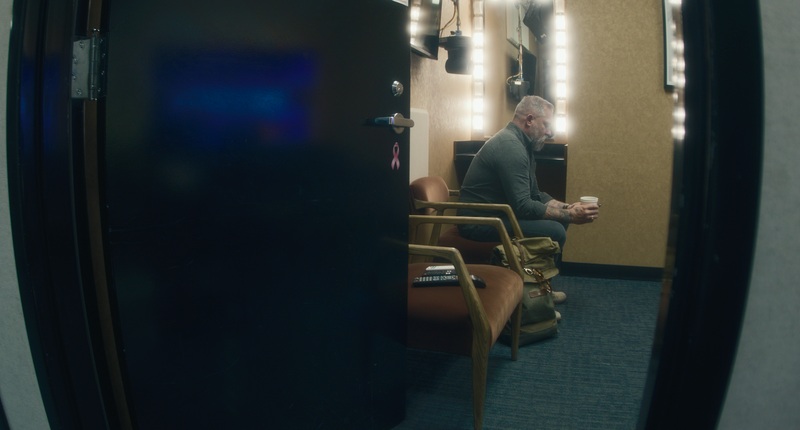
Two Experts
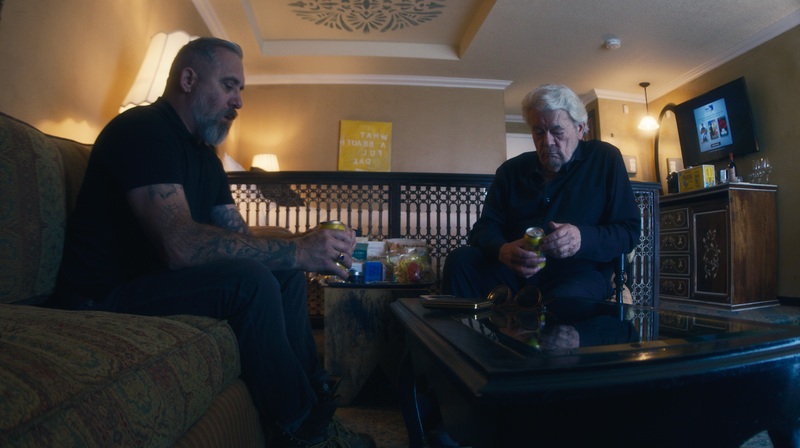
Wanting to ask his own questions and judge the unfiltered responses for himself, Corbell sought out some of Knapp’s interview subjects, starting with John Lear, the son of the Learjet founder, whom he came to consider a friend. Through Lear and others in his circle, Corbell subsequently met Area 51 “whistleblower” Bob Lazar, with whom Corbell similarly forged a close camaraderie.
As a result, both Lear and Lazar serve as major voices in “Sleeping Dog”; This raises some unacknowledged credibility issues. For instance, Lazovsky and Corbell completely ignore Lazar’s legal problems, particularly a guilty felony plea. This could drastically alter viewers’ perception of him. After all, this film is all about “disclosure,” so it’s a bad idea to hide information the audience might find relevant.
Also, it seems as if the late Lear never heard a conspiracy theory he wasn’t willing to amplify, including the fringe belief that the Apollo Moon landing was faked. Corbell clearly wants to tiptoe around that topic.
Lear’s skepticism about the moon landing draws criticism from two of the film’s most believable commentators, retired U.S. Army Col. John B. Alexander and former astronaut Edgar Mitchell. Mitchell is the sixth man to walk on the Moon and happened to grow up near Roswell, New Mexico.
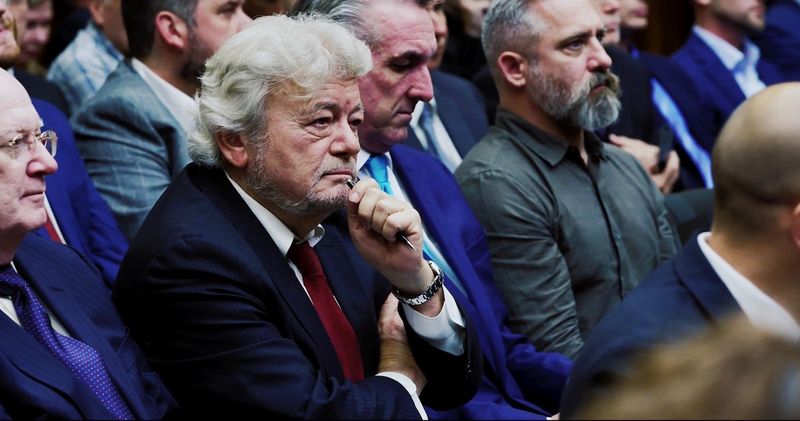
Leaked Footage
Regardless, rather perversely, Lazovsky only shows the UAP videos that brought Corbell to national prominence briefly, despite frequently referring to his scoop. This is exactly what many viewers will be watching for, yet Lazovsky makes them wait until the film’s final minutes. When the video finally comes, his leaked footage is far more convincing and compelling than the extensive time Corbell spends arguing and kvetching with Lear.
Instead, the film’s intended centerpiece scenes ostensibly capture Corbell holding tense cellphone conversations with his anonymous source. The source is described as the son of a former cyber-security specialist posted to Los Alamos National Laboratory, who left behind a secret stash of highly sensitive UAP videos and documents.
Despite all the breathless paranoia, the film never presents any concrete evidence that Corbell or his source ever faced any physical or legal jeopardy for their muckraking activities. Frankly, some of these sequences have a performance-like vibe.
“Sleeping Dog” clearly seems like it was made for true believers, by true believers. Consequently, it compares unfavorably with the more rigorous recent UAP documentary, Dan Farah’s “The Age of Disclosure.” That documentary’s filmmakers and participants scrupulously avoid making assertions they cannot prove.
In Farah’s film, nobody outright claims UAPs are of alien origin, even though it’s implied to be a potential explanation. However, Corbell and his associates use the word “alien” early and often.
Corbell’s unique presence that translates well to the screen. For those who follow UAP news and rumors, he’s already a larger-than-life figure. His admirers will be fascinated to learn more about his early life. His blue-collar charisma serves his cause and the film well.
Still, Lazovsky’s sensationalistic editorial decisions make “Sleeping Dog” too easy to dismiss, whereas the extremely disciplined approach of “The Age of Disclosure” forces the audience to seriously reconsider their skeptical preconceptions.
Lacking sufficient perspective and restraint, “Sleeping Dog” never rises above the level of History Channel UFO programming, which simply isn’t enough to recommend it.
‘Sleeping Dog’
Director: Michael Lazovsky
Documentary
Not Rated
Running Time: 1 hour, 38 minutes
Release Date: May 8, 2026
Rated: 2 stars out of 5
What arts and culture topics would you like us to cover? Please email ideas or feedback to features@epochtimes.nyc
