In recent generations, the desire to be self-sufficient and independent has encouraged many young Americans to deliberately avoid their parents’ profession. Unfortunately, that’s often led to the decline of technical skills, useful trades, and the closure of small businesses.
In past centuries, many Americans embraced the vocations of their parents and grandparents, not just because it was the family trade but because their relatives’ passion genuinely inspired them. Early American artist Rosalba Peale followed in the footsteps of her acclaimed father and grandfather to become a successful painter.

Three Generations of Art
Rosalba Carriera Peale (1799–1874) was born on July 28, 1799, in Philadelphia. Her father was Rembrandt Peale (1778–1860), a renowned painter and portraitist in the early days of the United States of America.
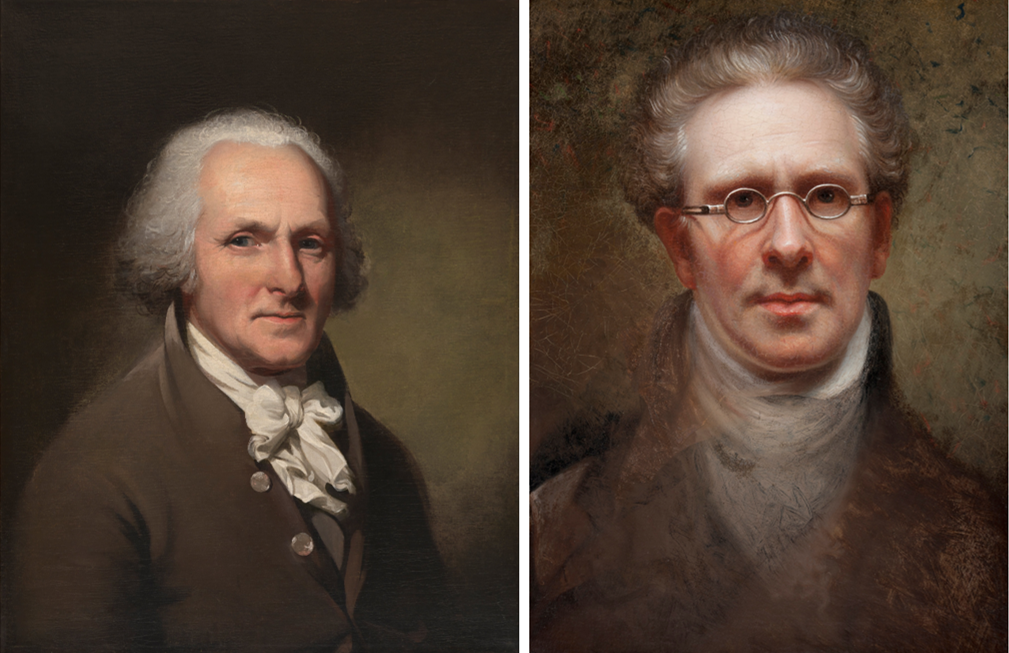
She was born when he was just 21, the first of nine children he had with his first wife, Eleanor May Short. Rembrandt Peale left his mark on the world by painting the portraits of many leading figures in early 19th-century America. He experimented with painting classical subject matter, and started a museum in Baltimore.
His father, Charles Wilson Peale (1741–1827), was a Revolutionary War hero and one of the most renowned portraitists in the Colonies before and after the Revolution. Because of his love for the classical art of the Old World, the older Peale named most of his 17 children after his favorite painters.
Rembrandt Peale followed his father’s example by naming several of his children after great artists. Rosalba was the only one who was inspired by her moniker to pick up the brushes as her vocation.
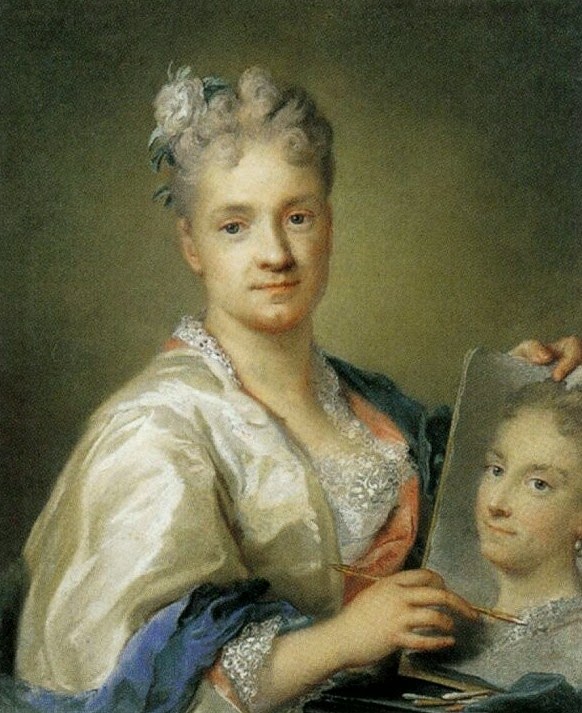
Although her namesake isn’t as famous as her father’s, “Rosa” Peale was indeed named after a talented artist. Rosalba Carriera (1673–1757) was perhaps the most famous pastel portrait painter before 1800. She painted in the Italian Rococo style and popularized pastels in Europe.
An American Artist
Rosalba received art training from her father in childhood. She eventually became “a constant aid in her father’s work,” according to the Brooklyn Museum. Besides tutoring her in the use of paint and brushes, he also taught his daughter (and his other children) to be an independent, intelligent woman who could think for herself.
She received proposals from several young men, but she was determined not to marry “the everyday man,” as she described him. She waited until she was 62 to marry widower John Allen Underwood (1798–1869).
Among her suitors was John Neal, an influential man of letters in the American Renaissance. As America’s first art critic, Neal frequented her father’s Peale Museum and was acquainted with the Peale family during the 1820s.
He courted Rosalba, whom he clearly admired for her intellect, writing: “Her mind is excellent. Her father has always taught her to think for herself, to reason, and to be firm, without wrangling or argument, in the expression of her opinions.”
Like her father, Rosalba became a successful portraitist. Like her uncle, Raphaelle Peale, she was an accomplished landscape painter.
She was perhaps most successful as a copyist, a useful skill in those days for replicating one’s own paintings and those of others with technique and accuracy. She honed her skills in her youth by copying her father’s work and that of her other relatives. She also was a skilled lithographer, using this specialized printing technique to reproduce her paintings.
A Beautiful Legacy
The most famous paintings related to Rosalba are ones of which she is the subject, not the painter. Rembrandt Peale painted three lovely portraits of his eldest daughter; they display not only her physical beauty and feminine grace but her beautiful spirit and personal creativity.
Best known is her 1820 portrait, in which she wears a striking red gown and a small ruff recalling the era of earlier artists, with soft curls framing her intelligent yet sensitive face.
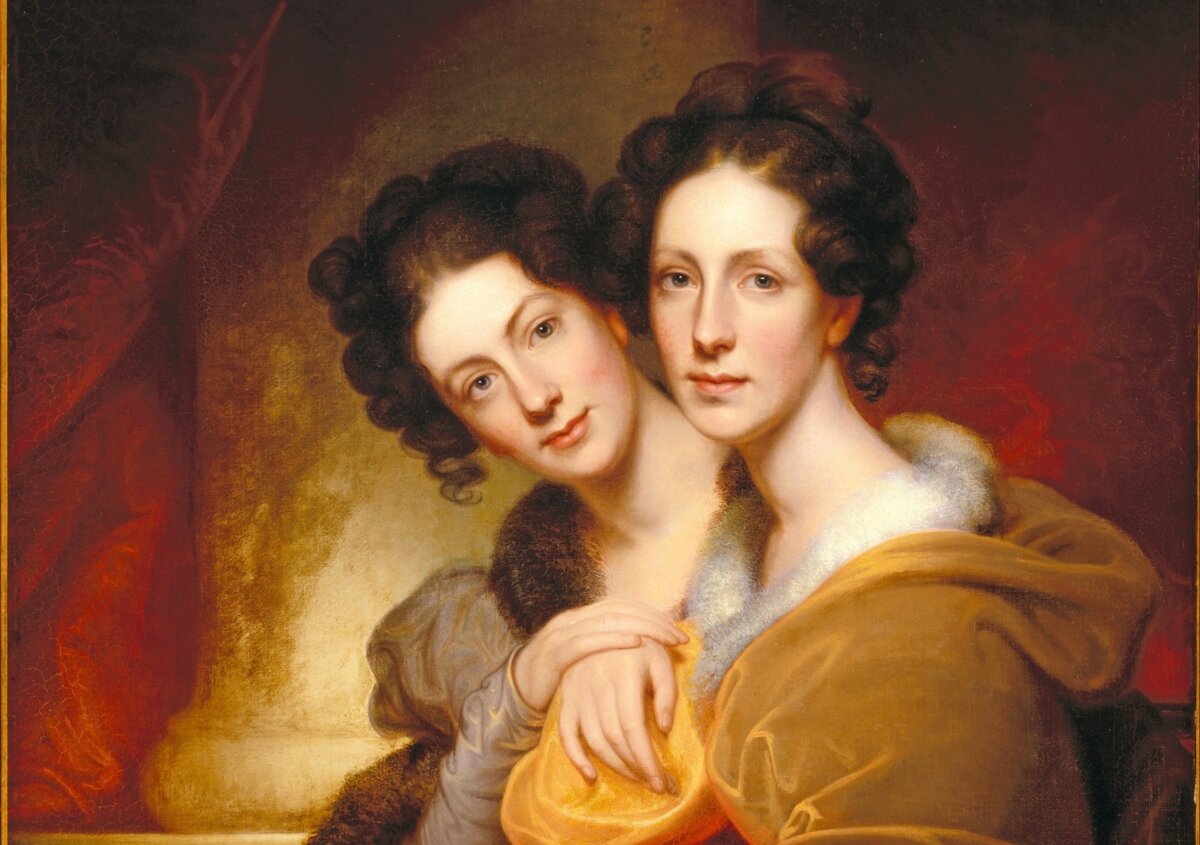
Six years later, he immortalized her in a double portrait with her sister Eleanor, in which the two young women’s strikingly similar appearance and close proximity show their deep bond.
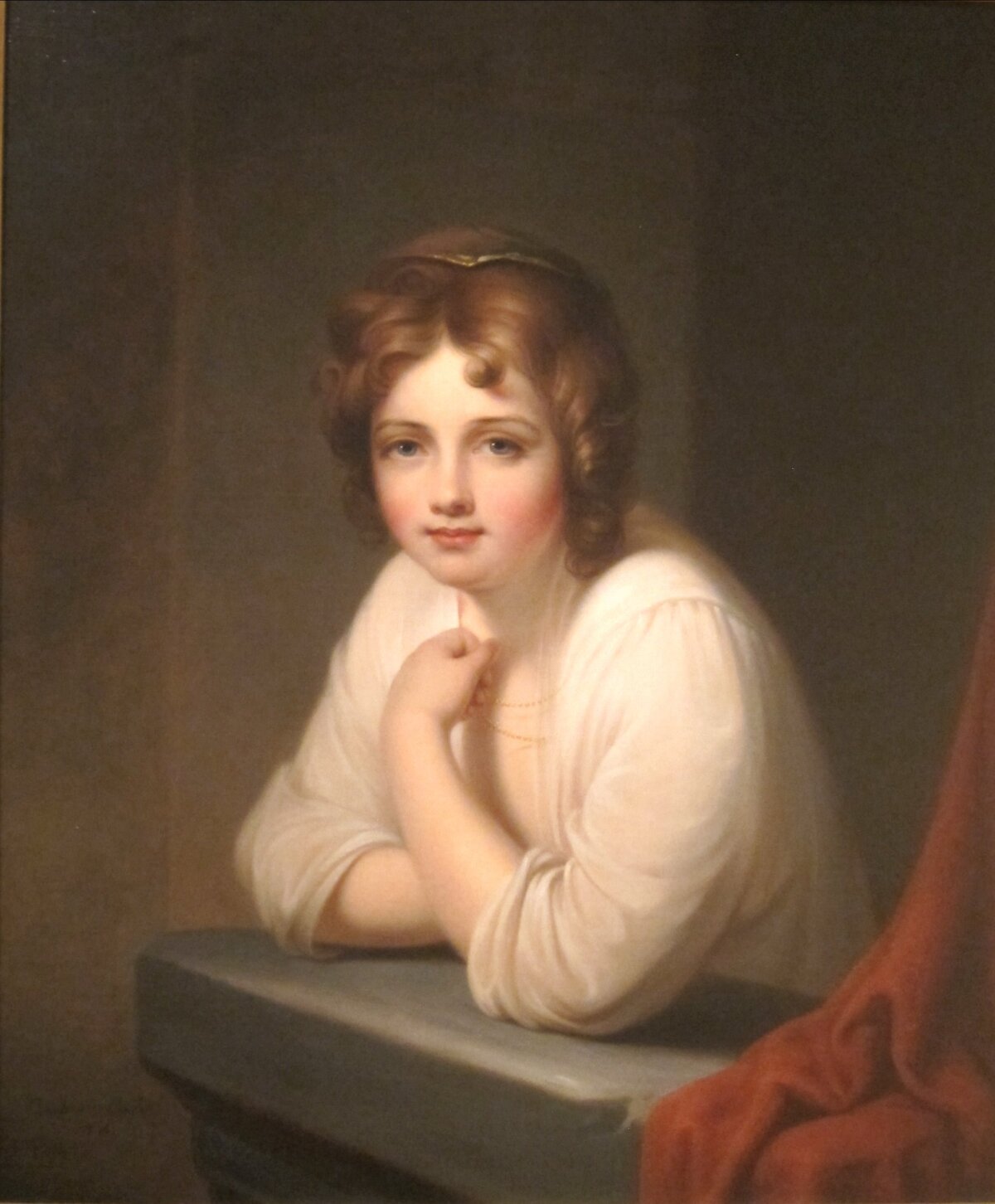
Rembrandt painted Rosalba holding a brush and palette, highlighting his admiration for his daughter’s own artistic talent. In 1846, Rembrandt used his eldest daughter’s girlhood likeness as the model for his neoclassical take on the Dutch Rembrandt’s “Girl at a Window.”
The only painting from Rosalba’s own brush which is easily found is an 1819 oil on canvas portrait of the great artist who inspired her name, Rosalba Carriera. This gorgeous painting uses warm, vivid colors to depict the proud female artist, who looks the viewer squarely in the eye while clasping her palette and brushes in her left hand.
Rosalba’s story is a vibrant example of the influence which art and its creators play on each other. She was inspired by her American relatives and great European artists to create her own art.
In turn, her artwork inspired future generations of American artists to study the work of the old masters and then use their own American ingenuity.
What arts and culture topics would you like us to cover? Please email ideas or feedback to features@epochtimes.nyc