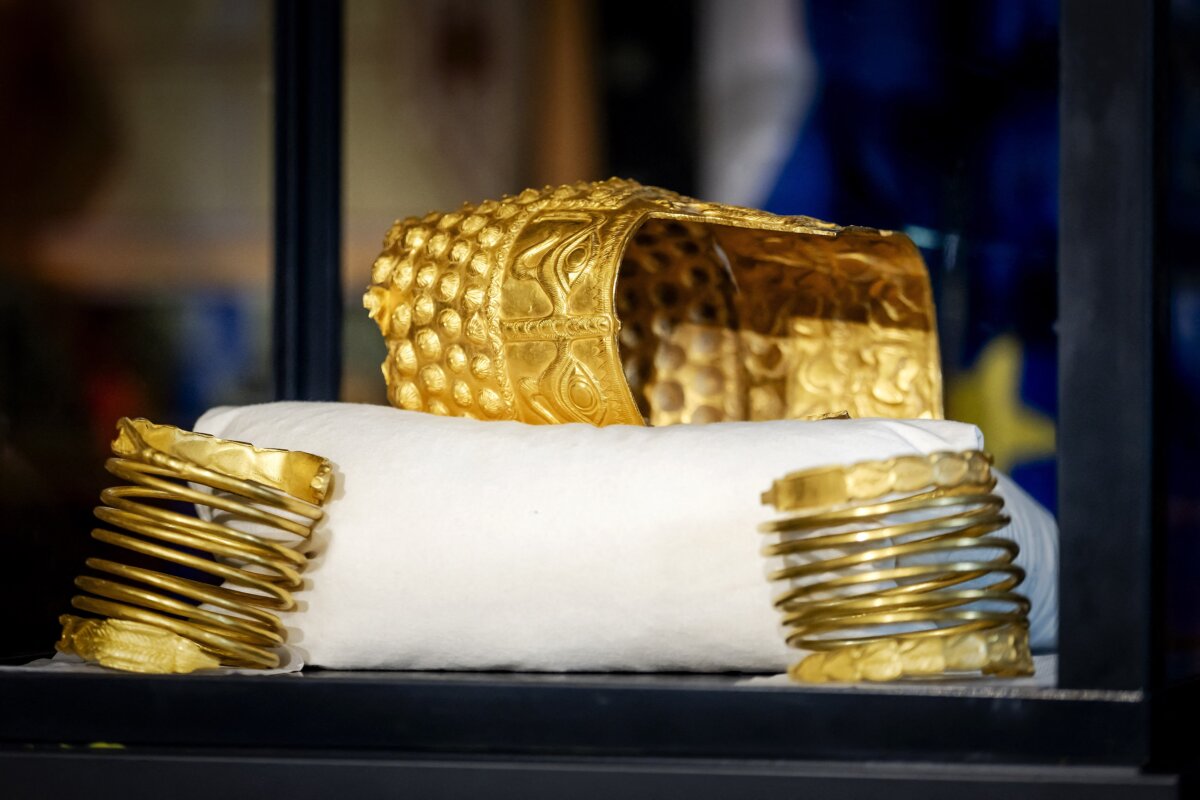
When the Roman Emperor Trajan’s legions crossed the Danube River in the 2nd century, they came for Dacian gold, and they got it. The plunder was immense, and the civilization that had produced some of antiquity’s most extraordinary metalwork was absorbed into the Roman Empire and, eventually, into history. Remarkably, some artifacts survived, including an ancient golden warrior’s helmet and three coiled gold armbands of extraordinary quality. They outlasted invasion, centuries of illegal excavation, and the slow erosion of the archaeological record. Then, in January 2025, thieves detonated firework bombs inside the Drents Museum in the Netherlands and carried them out into the night.
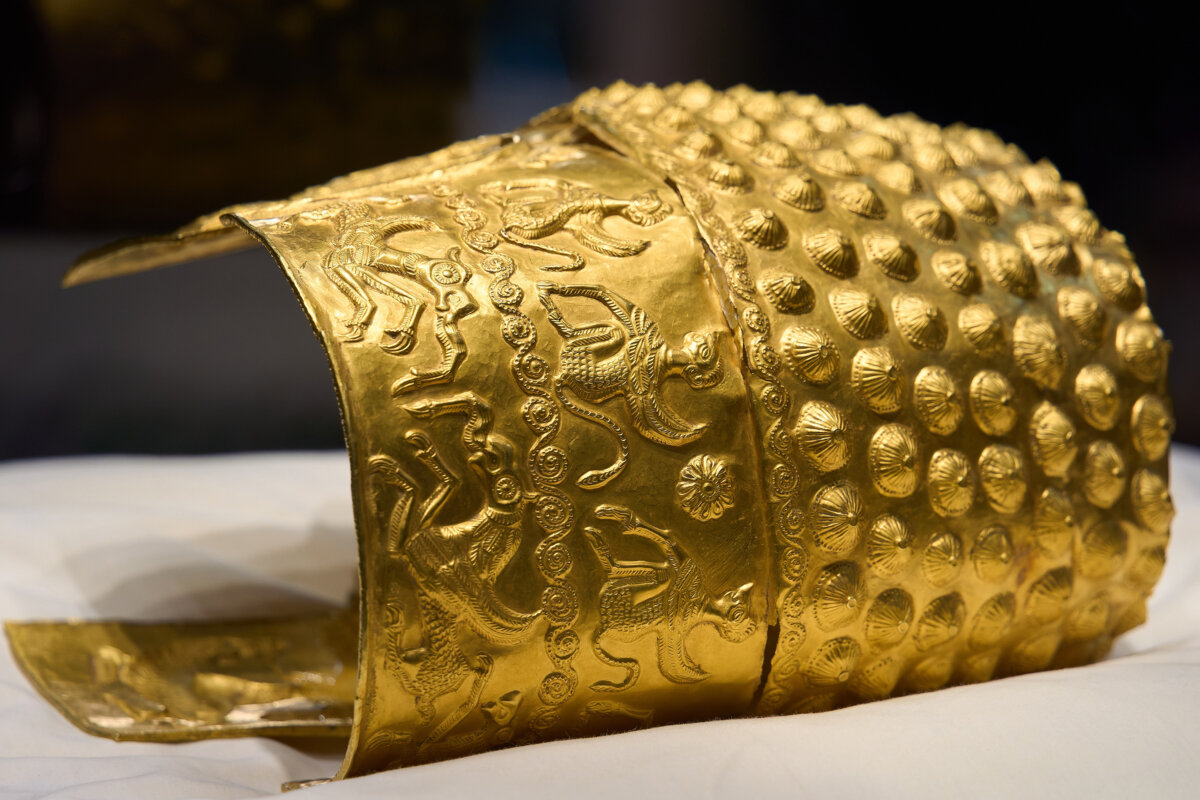
The helmet, dated to the 5th century B.C., is attributed to a high-ranking Dacian warrior. Its form and fabrication speak to the layered meaning such objects carried: simultaneously a mark of elite social standing, a demonstration of accumulated wealth, and an object imbued with spiritual significance. The three gold armbands belong to a later period, the 1st century B.C., and are among only 24 known examples of their specific typology. Archaeological evidence suggests such objects were most often buried in sacrificial pits within the sacred and royal precincts of Sarmizegetusa Regia, the Dacian kingdom’s final capital, in what is now Romania.
Geto-Dacian Metalworking Tradition
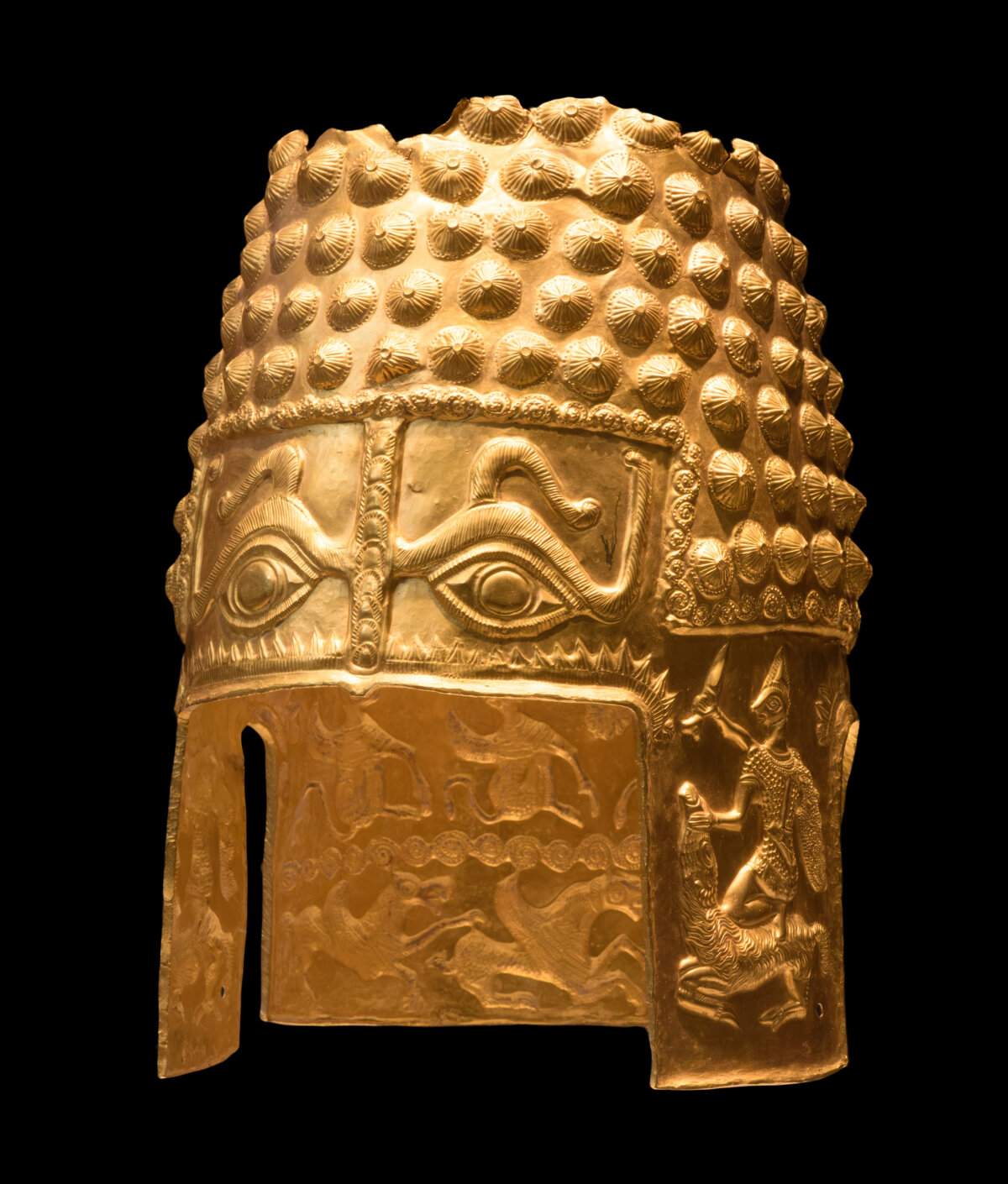
The stolen pieces are products of a metalworking tradition that distinguished Geto-Dacian civilization across the ancient world. Occupying the territories of present-day southeastern Europe, the Geto-Dacians developed sophisticated techniques in gold and silver smithing that served overlapping social, ceremonial, and religious functions. Weapons and jewelry alike were crafted to a remarkable standard of intricacy, reflecting both technical mastery and a coherent symbolic vocabulary.
When Emperor Trajan dispatched an estimated 150,000 military forces across the Danube, first in A.D. 101 and again in A.D. 105, the campaigns were driven by both strategic necessity and extraordinary ambition. Rome, strained by persistent military pressure along its frontiers and a faltering treasury, was in urgent need of new resources. Dacia had them in abundance. It held rich deposits of gold, copper, and iron, and its royal treasury was said to contain upwards of 250,000 kilograms of gold. Ancient accounts claimed enough remained in the mines to pave the roads of Rome in solid-gold cobblestones. Metalworking and mining were not minor pursuits in Dacian society but foundational to its economy, political power, and cultural identity.
The ancient Romans may have gone, but the extraction never stopped. For more than two and a half millennia, heavy metal contamination has slowly accumulated, degrading the surrounding valley ecosystem. The archaeological record suffered from sustained damage. Between 1996 and 2001, Sarmizegetusa Regia—the Dacian kingdom’s final capital, inscribed on the UNESCO World Heritage list in 1999—was systematically targeted by organized criminal networks running large-scale illegal excavation operations. A substantial volume of gold and silver objects was stripped from the site and smuggled onto international markets, scattering irreplaceable material across the globe and leaving permanent gaps in what survives of Dacian civilization.
The Drents Museum theft, then, was not an isolated incident but the latest wound in a much longer story of loss.
The Investigation and Recovery
The January 2025 theft unfolded with the brisk, brutal efficiency typical of high-value art crime. The perpetrators detonated an explosive charge at a side entrance, shattered the display case housing the artifacts, and departed in a stolen vehicle, which was later discovered burned. A hammer recovered from a nearby ditch, DNA traces on discarded clothing found in a local waste container, glass fragments consistent with the museum’s display cases, and records of tool purchases from a retail hardware store collectively formed the evidentiary basis of the prosecution.
Three suspects were arrested. Phone intercepts and covert audio recordings pointed investigators in an encouraging direction: the group had worked in concert, and the artifacts appeared to be intact. The retrieval operation was coordinated in large part by Dutch art detective Arthur Brand, widely known for his work recovering stolen and looted works. It involved undercover negotiations and back-channel contact with those connected to the theft. An undercover officer posing as a criminal buyer reportedly offered one suspect more than $500,000. For the two suspects who cooperated, prosecutors agreed to seek a reduced sentence of 44 months, down from 66. The third refused any arrangement and faced the original recommendation in full.
On April 21, 2026, approximately 14 months after the robbery, most of the stolen artifacts made the journey back to Romania. The warrior helmet had sustained minor damage during the theft; the two recovered armbands came back in perfect condition. In a formal ceremony underscoring the objects’ cultural significance, the helmet and two of the three armbands were installed in a glass display case, flanked by masked, armed guards. They remain in the National History Museum in Bucharest.
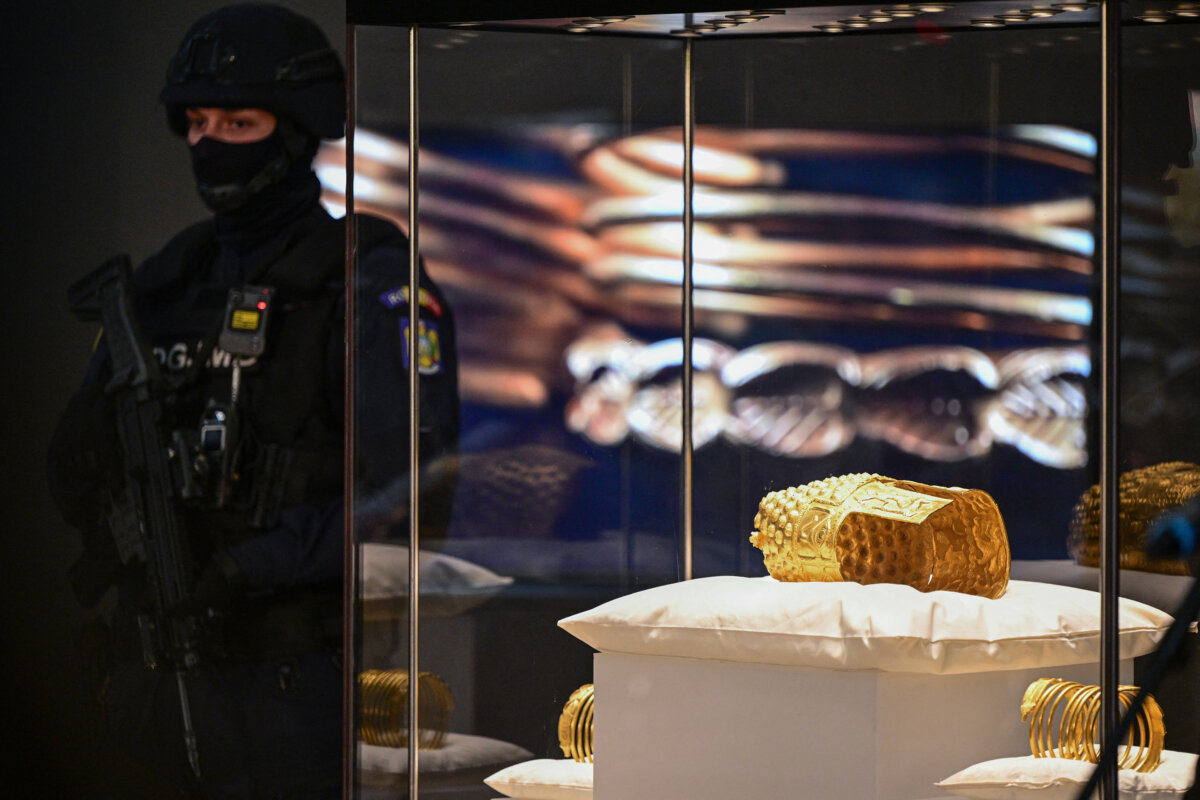
The third armband has not been found. Its whereabouts remain unknown, an absence that hangs over an otherwise remarkable recovery, a reminder that for all the sophistication of the investigation, the covert operations, and the diplomatic negotiations that brought these objects home, the Dacian archaeological record remains incomplete. It has been incomplete, in one way or another, for a very long time.
What arts and culture topics would you like us to cover? Please email ideas or feedback to features@epochtimes.nyc.