




Whether trying to convince an employer to hire you, persuade investors to bankroll your business, prompt customers to purchase a product, or shape judgement in a court of law or the arena of public opinion, compelling rhetoric is key.
Rhetoric is an ancient art of using language to persuade, inform, or motivate an audience, and in many ways, a person’s rhetorical skills play an important role in their effectiveness and success in life.
Over 2,300 years ago, Greek philosopher Aristotle explained the three primary aspects of persuasive communication, and successful artists, politicians, and businessmen have been studying and using them ever since.
In his book “Rhetoric,” Aristotle defined these aspects as follows: “The first kind depends on the personal character of the speaker; the second on putting the audience into a certain frame of mind; the third on the proof, or apparent proof, provided by the words of the speech itself.”
The Greek words for the three aspects of this timeless triangle are Ethos, Pathos, and Logos. Ethos refers to the character of the person making the argument; Pathos refers to the emotional state of the audience; and Logos refers to the logical structure of the argument itself.
Enduring Influence of Aristotle
At the age of 18, Aristotle moved to Athens to attend Plato’s Academy, where he studied under the famous philosopher for almost 20 years and became one of the academy’s most accomplished and exemplary students. After Plato’s death, he was invited by King Phillip II to the Macedonian capital of Pella to tutor the king’s son, who later became known as Alexander the Great.
At around the age of 50, Aristotle returned to Athens and established his own academy of scientific and philosophical inquiry at the Lyceum. Because of his fondness for walking around the Lyceum as he taught, his academy soon became known as the Peripatetic School. He ran the academy for 12 years, until shortly before his death in 322 BC, and during that time he also composed many of his scientific and philosophical treatises.
Aristotle’s writings were extremely influential on the development of scientific subjects ranging from physics and astronomy to biology and geology, and they were perhaps even more influential on philosophical subjects including ethics, politics, economics, and of course, rhetoric. His writings on various subjects are still studied today at universities around the world, and he is widely acknowledged as one of the most influential people who ever lived.
The three books comprising “Rhetoric” continue to be studied by attorneys, politicians, and other public speakers and writers seeking to craft persuasive arguments, and his insights into the three main aspects of rhetorical appeal have been effectively employed for well over 2000 years.
Ethos: Behold the Speaker
Shortly before the conclusion of his second presidential term, George Washington offered his Farewell Address to the nation, in which he announced his decision to retire from public office and not seek reelection.
Even though he had served as commander of the Colonial Army in its victory over Great Britain, was an architect of the U.S. Constitution, and served as the first president of the new nation, the words he used at the opening of his address revealed both his humility and his gratitude; demonstrating to his audience that he was a man of good character.
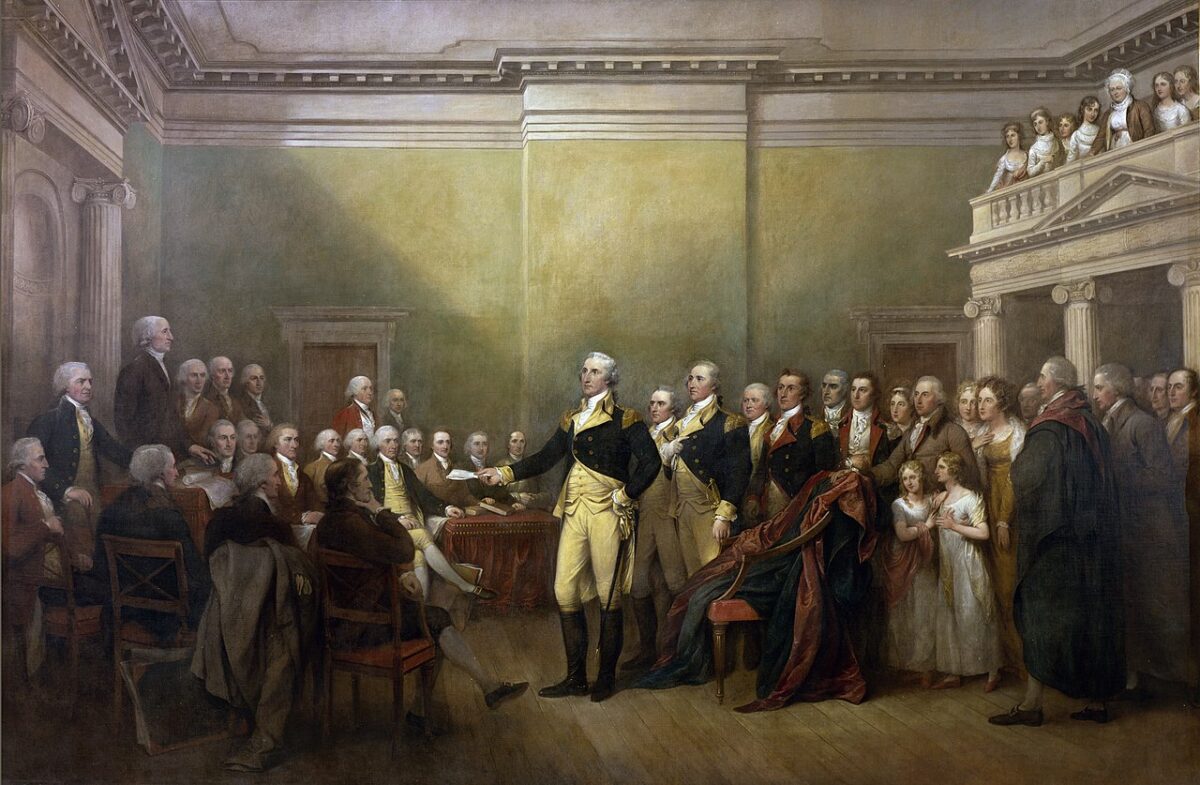
Early in the address, after thanking the people for placing such great trust in his services, he stated, “In the discharge of this trust, I will only say that I have, with good intentions, contributed towards the organization and administration of the government the best exertions of which a very fallible judgment was capable. ”
Concerning Ethos, Aristotle wrote, “We believe good men more fully and more readily than others: This is true generally whatever the question is, and absolutely true where exact certainty is impossible and opinions are divided.”
In his speech, Washington argued against putting partisan loyalty above duty and decency, and he warned of the dangers of foreign entanglements. Although he certainly made his case rationally and appealed to the patriotism and good will of his audience, he began with ethos, by invoking his credibility to speak on such issues.
Pathos: Appeal to Emotion
When attempting to convince an audience, it is also important to consider their emotional state. About pathos, Aristotle wrote that “persuasion may come through the hearers, when the speech stirs their emotions. Our judgments when we are pleased and friendly are not the same as when we are pained and hostile.”
Yet he also leveled criticism at many of his contemporaries for relying exclusively on appeals to emotion, adding, “It is towards producing these effects, as we maintain, that present-day writers on rhetoric direct the whole of their efforts.”
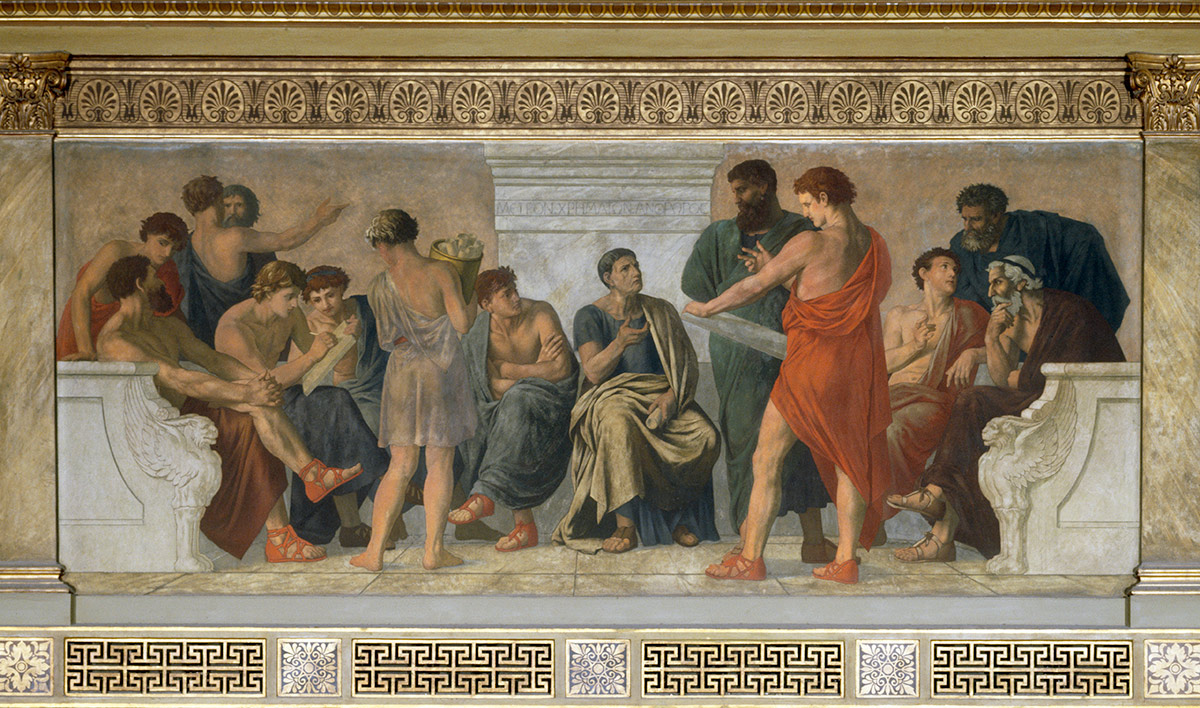
What was true in Aristotle’s time remains so today, as many modern politicians, advertisers, and writers tend to rely almost exclusively on emotional appeals, often forgoing any attempt to establish credibility or incorporate logic.
Many of today’s politicians, especially, by placing partisan ends above reason and decency, have not only damaged their credibility but have also rendered it impossible for them to present logical arguments. Many modern journalists and media organizations have likewise forgone their credibility for similar reasons, and by presenting one-sided coverage of stories and events, have become unable to examine issues with credibility.
As a result, they can appeal only to the emotions of those who already agree with them, but lacking both credibility and logic, their arguments are largely ineffective in terms of persuasion.
In some instances, purely emotional appeals can be somewhat effective, but to the discerning audience, they will never match the effectiveness of an emotional appeal balanced with credibility and logic.
For example, many television commercials appeal to the emotions of viewers with depictions of abused animals or malnourished children, and they seek donations to alleviate such conditions. However, the most effective ones will also include pertinent information about the history and evidence of the accomplishments of the institution, thereby providing the potential donor with trust in the organization and a belief that their donation would be used wisely.
Likewise, the emotional appeal of a memorable family experience at a restaurant or entertainment venue can be intriguing to consumers, but when combined with evidence of the quality of the venue and the economic value of the experience, it becomes considerably more appealing.
Despite his warning about overreliance on emotional appeals, Aristotle clearly recognized the emotional state of the audience as one of the three primary means of persuasion. In fact, a considerable portion of Book II of “Rhetoric” provides a detailed examination of various emotional states, including dislike, anger, hatred, fear, shame, pity, and indignation, as well as the counterpart of each. He also discusses what types of people, based on age, status, wealth, etc. might be most susceptible to certain emotions.
In other words, when attempting to persuade a person or group of people to accept a certain argument, it is crucially important to understand and take into account the emotional state and predispositions of the audience, especially in relation to the emotional effect of the evidence presented.
Logos: Make a Logical Case
In 1963, Martin Luther King Jr. stood on the steps of the Lincoln Memorial in Washington and delivered what has come to be known as the “I Have a Dream” speech. In his speech, King called for the fulfillment of the promise of freedom for black Americans, and he demanded for them the same rights enjoyed by white citizens.
King’s Ethos had been established by his many acts of nonviolent resistance to various racist laws, and it was further enhanced by the eloquence and high-minded rhetoric he employed. The emotional appeal of the speech, the Pathos, is undeniable, as even more than 60 years later it is still counted among the most moving and compelling speeches in American history. However, even with all the beautiful poetic flourishes and compelling visions of a brighter future, the speech would not have been nearly as effective without the profound and consistent logic on which it was built.
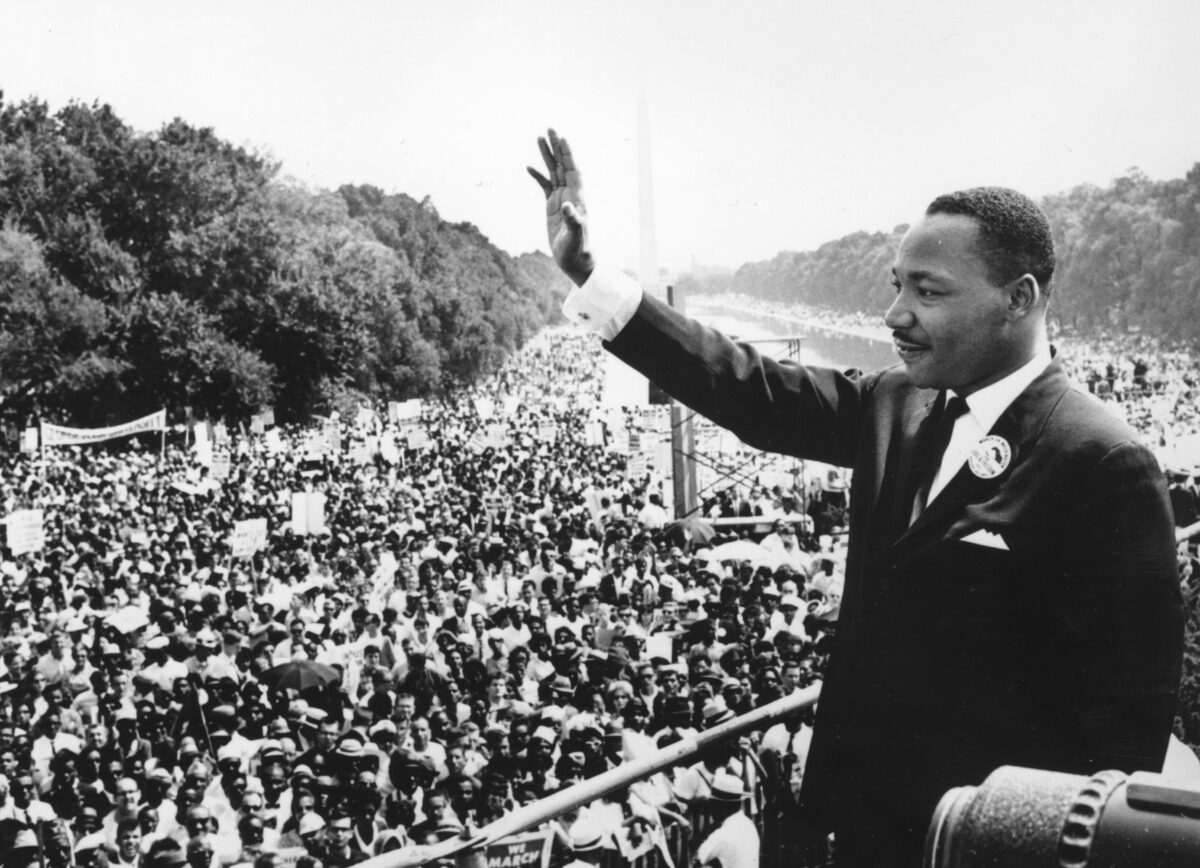
Concerning Logos, Aristotle wrote that “persuasion is effected through the speech itself when we have proved a truth or an apparent truth by means of the persuasive arguments suitable to the case in question.”
At the outset of his speech, King acknowledged the statue of Abraham Lincoln behind him, and stated that although that man had signed the Emancipation Proclamation more than 100 years earlier, black citizens still did not enjoy the same rights and freedoms as white citizens. He pointed out that black people were still prevented from voting in certain states, and that they could not even obtain food or lodging as they traveled in many parts of the country, where they often encountered “Whites Only” signs.
“In a sense, we’ve come to our nation’s capital to cash a check,” King said. “When the architects of our republic wrote the magnificent words of the Constitution and the Declaration of Independence, they were signing a promissory note to which every American was to fall heir. This note was a promise that all men, yes, black men as well as white men, would be guaranteed the ‘unalienable rights’ of ‘life, liberty, and the pursuit of happiness.’”
Unlike many of King’s contemporaries and those who sought to take up his mantle after his assassination, he did not denigrate the founding principles of the country, but rather he embraced them, insisting they should apply equally, to all people, regardless of race. His speech had a profound effect not only on those who heard it in person, most of whom already shared his views, but also on those who saw it on television or heard recordings of it later. It was followed by profound changes in the treatment of black people in the country and great advancements toward equal treatment under the law.
After all, there is no more logical argument against racism than the simple premise put forth in that speech that a person should “not be judged by the color of their skin but by the content of their character.”
All the credibility and emotion in the world cannot construct an effective argument if it is illogical and does not appeal to the reason of the audience.
The Timeless Triangle
Well over 2,000 years after Aristotle died, the three essential rhetorical principles he set forth continue to serve as an effective guide for writers, speakers, and almost anyone else who ever seeks to persuade an audience.
Like a stool balanced on three legs, a solid persuasive argument rests on the character of the person making the argument, the emotions and predispositions of the audience hearing the argument, and the logical construction of the argument itself. Without a balance of all three, the argument will topple like a stool with unequal legs, and as a result, the audience will fail to be persuaded.
