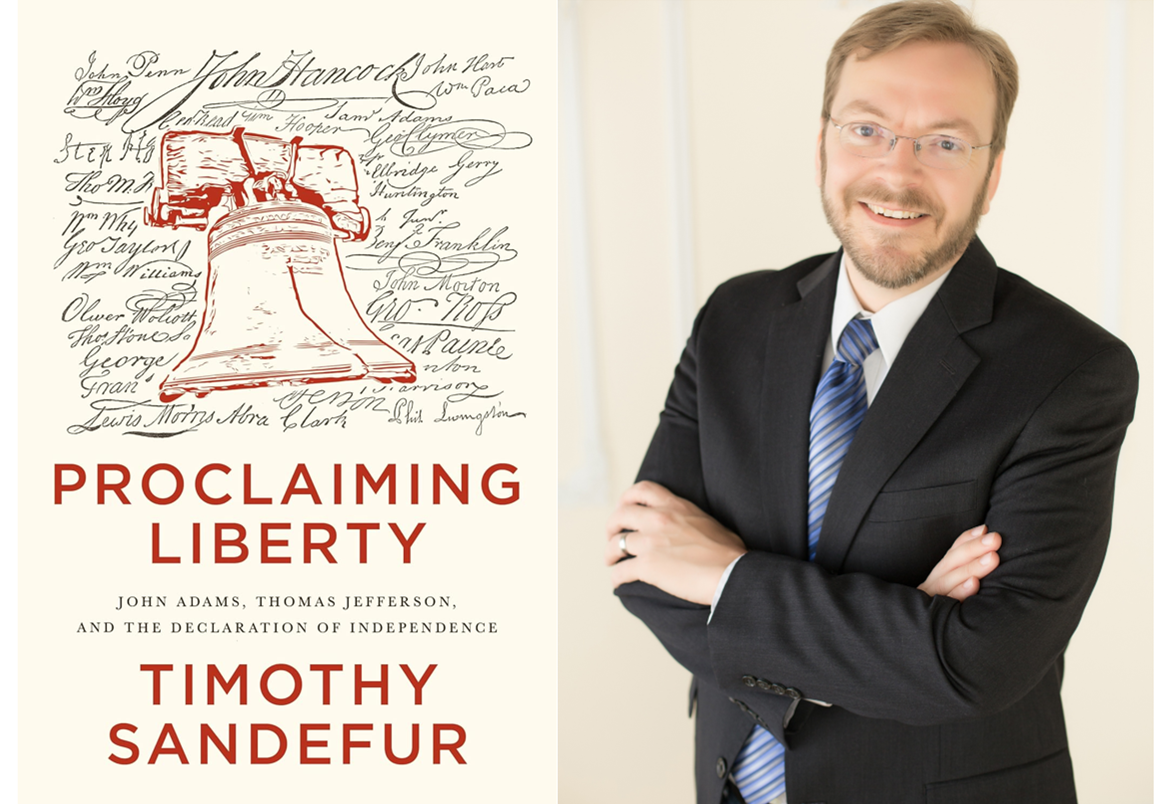
Few documents have made a more profound impact on history than the Declaration of Independence. However, the story behind its creation and the true force of its legacy have often been a victory of legend over facts.
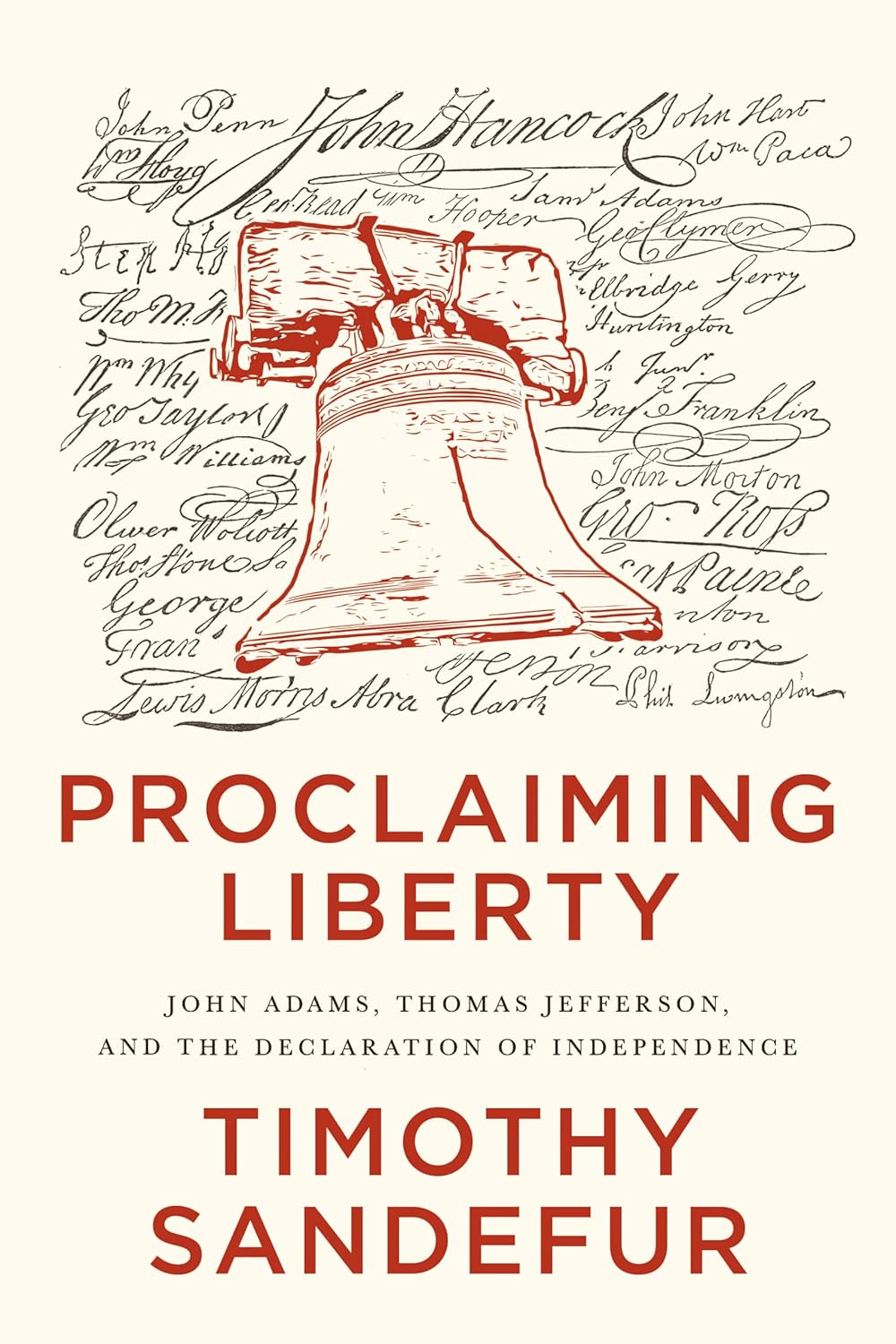
Timothy Sandefur’s “Proclaiming Liberty: John Adams, Thomas Jefferson, and the Declaration of Independence” puts the Declaration in the proper context of its time, while demonstrating how it’s withstood endless assaults by critics. It’s a perfect book for the American 250th anniversary celebrations.
Mother Country Blues
In many ways, the Declaration capped British tumult that first erupted in the 17th century. The execution of King Charles I in 1649 during the English Civil War coupled with the 1688 overthrow of King James II in the Glorious Revolution to give credence for challenging authority.
During this period, the citizens in Britain’s North American colonies were passive observers of the upheaval in their mother country, but they were also passive players in their own realm. Sandefur observes that nearly 100 onerous laws regulating trade within the colonies were passed by Parliament between the reigns of Charles II and George III with no input from the impacted peoples.
At first, the colonists obliged these regulations while running a shadow economy with smuggled commodities. However, when the British treasury was depleted after the Seven Years’ War (1756–1763), Parliament levied a series of harsh new taxes on the colonies. A heavy-handed use of military force to silence dissent made matters worse.
Benjamin Franklin warned British officials against their actions, declaring, “Suppose a military force sent into America: … They will not find a rebellion; they may, indeed, make one.”
Printed Word Power
The struggle against British rule became North America’s first mass media-influenced campaign. Newspaper columns and pamphlets, many published under pseudonyms, offered eloquent arguments against British political and economic abuses.
While Thomas Paine’s “Common Sense” (1776) is the best known of these works today, Sandefur cites “Boston Pamphlet” (1772) as a primary inspiration for the Declaration’s principles. It was authored by Samuel Adams, Joseph Warren, and James Otis; the work focused on the “natural rights” of the colonists and quoted English philosopher John Locke (1632–1704) on why legislatures cannot claim absolute power and must only govern with the citizens’ consent.
Sandefur details how many of the grievances against Britain cited in “Boston Pamphlet,” along with Locke’s impactful language, were incorporated into the Declaration.
The Jeffersonian Touch
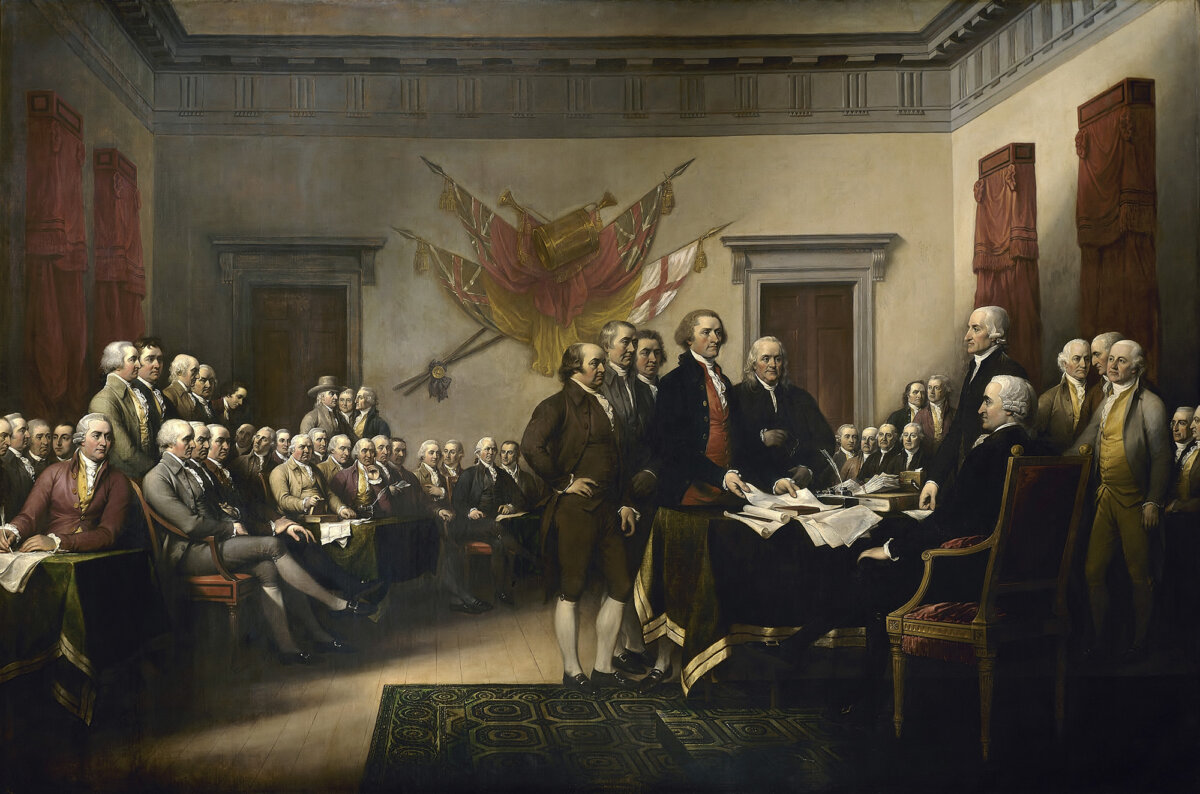
Thomas Jefferson is often erroneously credited as the sole author of the Declaration. In fact, he was part of a five-member committee within the Continental Congress tasked with its creation. John Adams, who was also on the committee, later took credit for giving Jefferson that assignment; Jefferson refuted Adams’s claim.
Adams and the other committee members (Franklin, Roger Sherman, and Thomas Livingston) made changes before the document went to the full Continental Congress for its final draft. Jefferson took two days to write the first draft, which Sandefur credits to his heavy reliance on other writings.
This included Jefferson’s own 1774 pamphlet “A Summary View of the Rights of British America,” which argued that Parliament had no right to govern the American colonies. He also borrowed from the preamble he wrote for the Virginia Constitution.
Sandefur explains, “His task was not to set forth new ideas, but the opposite: to summarize things on which the American people already agreed and that justified their long-delayed separation from Britain.”
What It Means
The immediate reaction of the British elite to the Declaration was heavy in ridicule. Sandefur quotes philosopher Jeremy Bentham, who contemptuously viewed the document’s advocacy for individual rights as “rhetorical nonsense—nonsense upon stilts.” Parliament paid writer John Lind for a book-length rebuttal accusing the Continental Congress of disloyalty.
Later generations of American thought leaders were also flummoxed with the Declaration’s language, especially claims that all men were created equal. Abolitionist leaders insisted the Declaration’s principles were anti-slavery, but Chief Justice Roger B. Taney used the Supreme Court’s 1857 Dred Scott Decision to insist that the slave-owning Founding Fathers never conceived total emancipation of the enslaved population.
Sandefur highlights how late 19th- and early 20th-century Progressives sought to belittle and degrade the Declaration’s celebration of natural rights. Even President Woodrow Wilson was skeptical, stating in 1907, “We are not bound to adhere to the doctrines held by the signers of the Declaration of Independence.”
Into the modern era, several conservative figures also questioned the Declaration’s position on natural rights. Judge Robert Bork went so far as to insist the document’s references to liberty and the pursuit of happiness opened the door to “personal license and social disorder.”
Sandefur concludes his book by challenging the theory presented by revisionist historians Nikole Hannah-Jones and Ta-Nehisi Coates that the nation’s foundation was built on the slavery economy and not the principles of the Declaration. While acknowledging the nation’s troubled racial past, he criticizes those efforts for trying to erase the Declaration’s noble aspiration of a nation as “one people.”
“Proclaiming Liberty” is a rich and provocative history lesson that offers wise consideration of what it means to be an American. Freedom rings loud and clear in this excellent book.
‘Proclaiming Liberty: John Adams, Thomas Jefferson, and the Declaration of Independence’
By Timothy Sandefur
Cato Institute: May 5, 2026
Hardcover, 512 pages
What arts and culture topics would you like us to cover? Please email ideas or feedback to features@epochtimes.nyc