



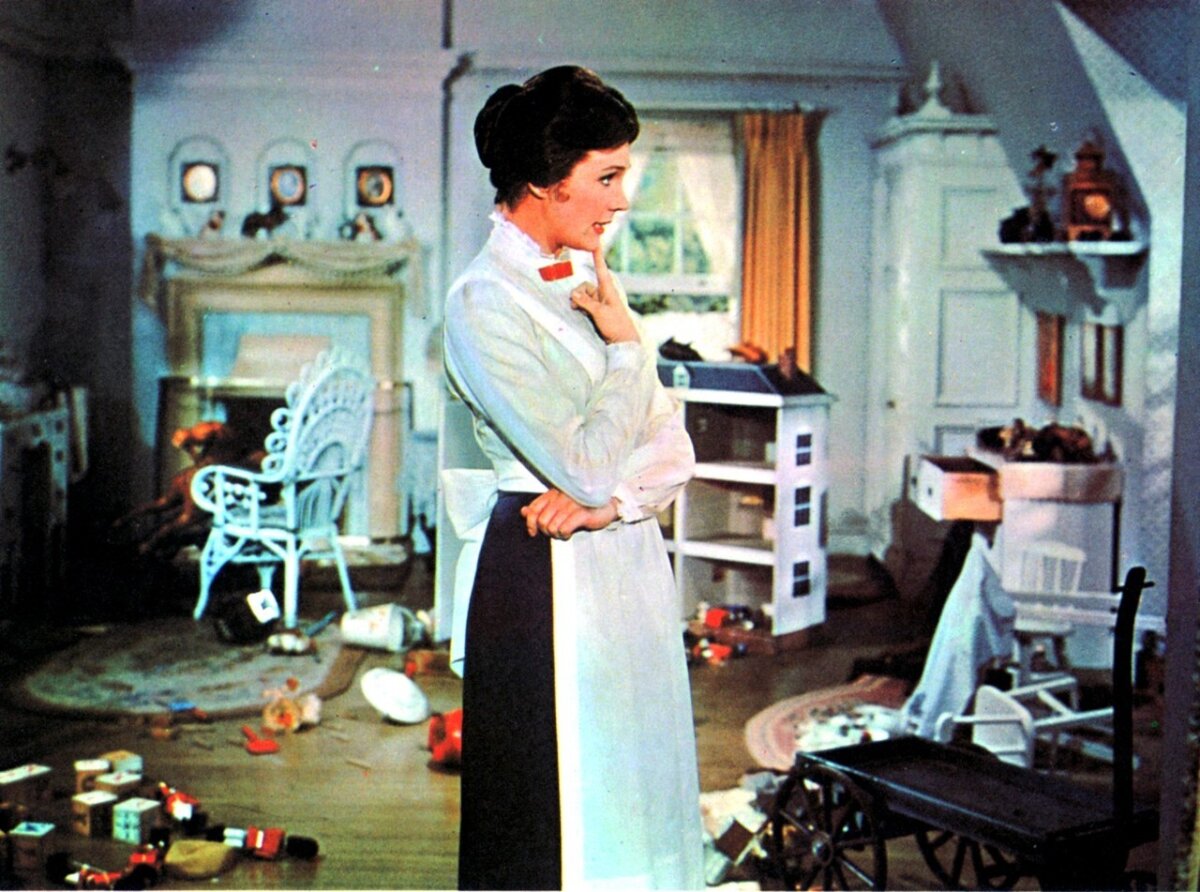
Set in early 20th-century England, this film is a fun and refreshingly goofy way to remember, or revive, classic values.
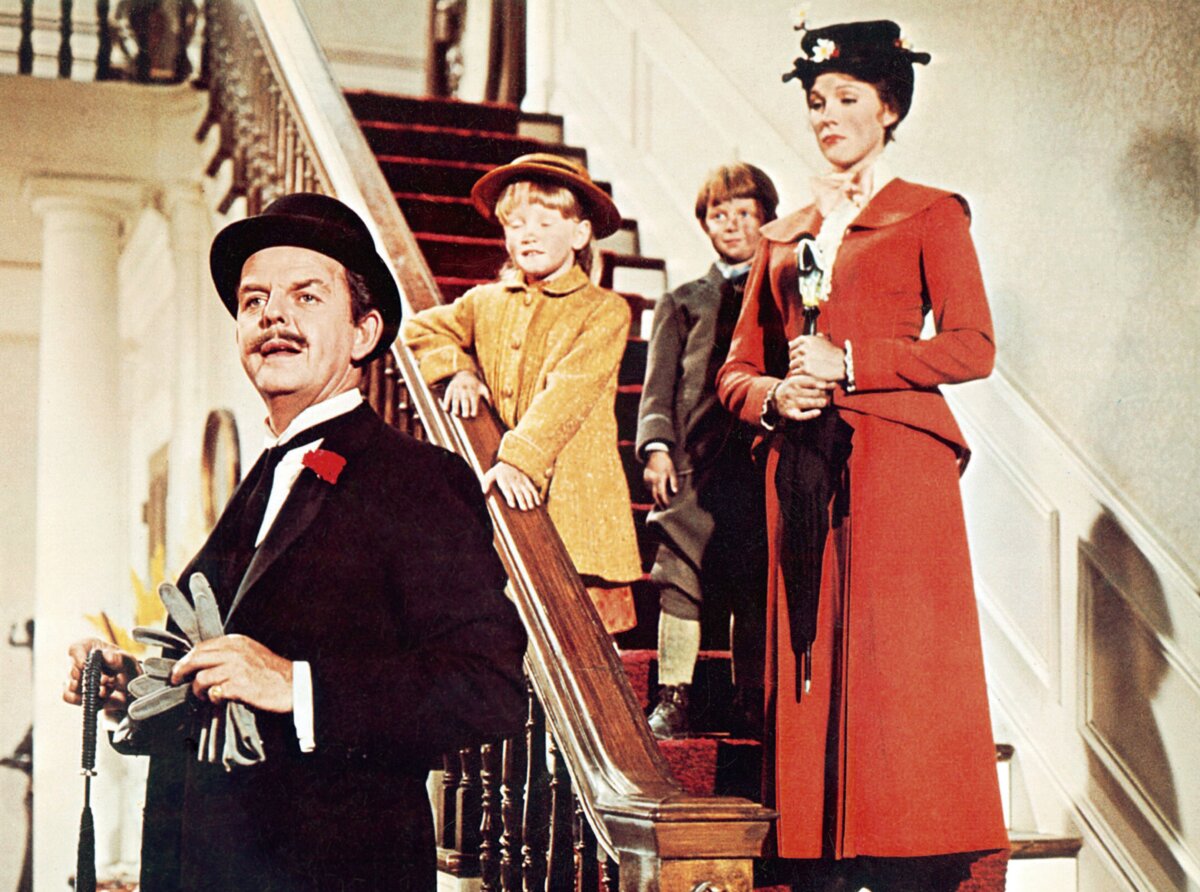
Winifred Banks (Glynis Johns) spends more time singing at suffragette rallies than with her precocious children, Michael (Matthew Garber) and Jane (Karen Dotrice). Her banker husband, George (David Tomlinson) focuses more on banking than anything else. So, the children are cared for by a series of nannies, each frustrated enough with their antics to quit in turn.
Then, a winsomely magical Mary Poppins (Julie Andrews) takes residence as nanny. She transforms the household from one reeking with neglect and boredom to one bursting with love and joy. While at it, she welcomes help from her jack-of-all-trades, singing-and-dancing buddy Bert (Dick Van Dyke) and, it seems, from a “spoonful of sugar.”
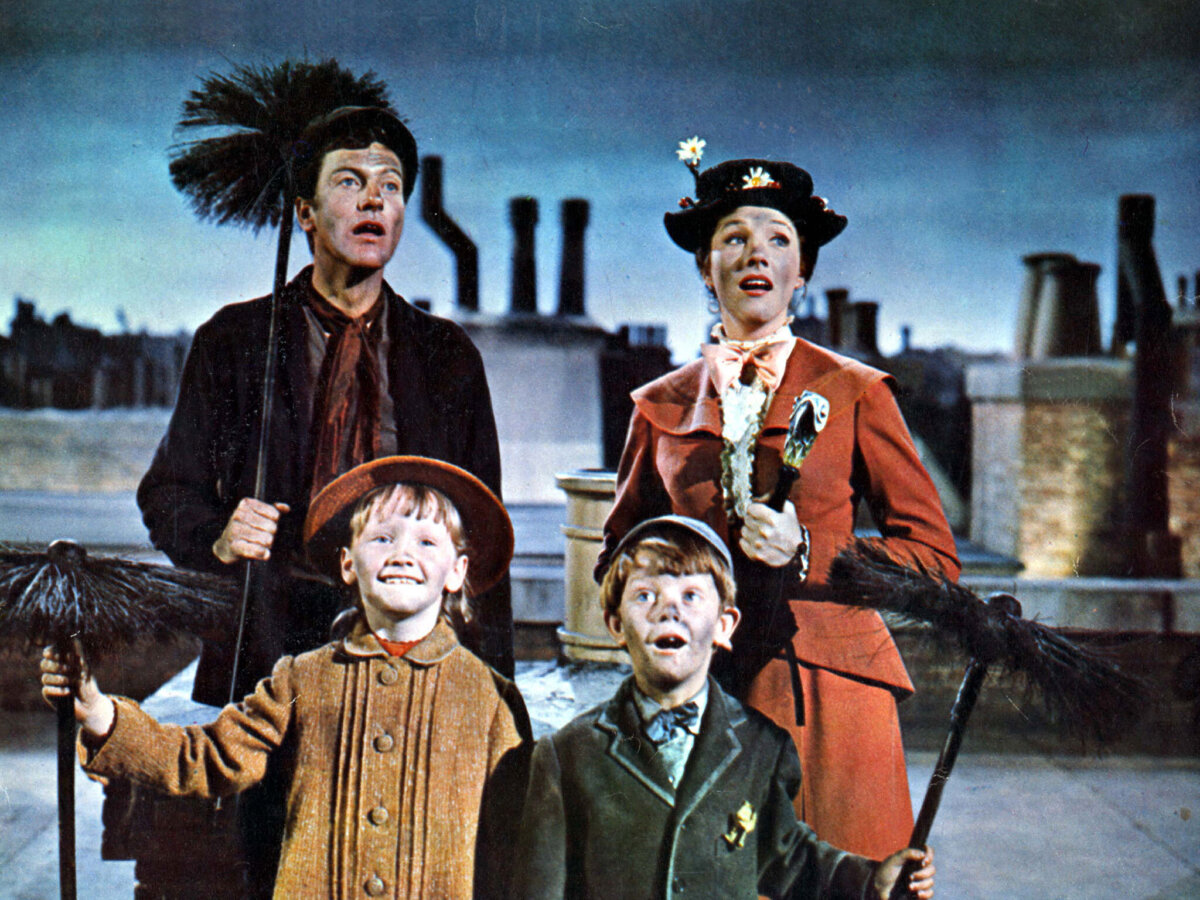
For all its frivolity, the film bears a vital message: Parents have no business outsourcing parenting.
Outsourcing Parenting
On arrival, Mary senses double-standards. George and Winifred aren’t short of platitudes about what Jane and Michael should and shouldn’t do. But they seldom turn their ironically childish, self-righteous gaze inward. The children are too innocent and playful to spot this hypocrisy. It takes Mary’s and Bert’s charm offensive to get the parents to introspect and change.
Winifred is as preoccupied with women’s rights as George is with men’s rights; sample his hilariously haughty song, “The Life I Lead.” They may be woman and man as wife and husband, but they forget that they are something else too: parents. Where’s their sense of balance?
A father may by default be a husband, but no matter how beloved he is to his wife, he’s not automatically a good father. A mother may by default be a wife, but no matter how beloved she is to her husband, she’s not necessarily a good mother. Parenting is about being caring, not just providing caring circumstances.
Sure, matronly maid Ellen (Hermione Baddeley) and affable cook Mrs. Brill (Reta Shaw) dote on both children. But their hearts and minds are on earning their keep, not on what’s best for the children. Understandably so.
George and Winifred invest considerable time, money, and effort in crafting adverts for no-nonsense nannies, agreeing that any candidate who ignores tradition and discipline invites anarchy into the home. Funnily, they invest little to no energy in proper parenting.
On their own, the children gingerly show their parents an ad they’ve written for a nanny. Winifred’s feminine instinct guides her. She restrains George, who pompously insists on writing his own ad. She implies they should respect what the children long for—a nanny who is “kind.” She insists, “I think we should listen.”
But, brainwashed by her activist sisters-in-arms, she doesn’t trust her instinct enough to go the distance. Watch her laughably supercilious song, “Sister Suffragette.” Fittingly, Mary responds not to George’s text but to the poetic text from the children, that he had shredded in a huff.
Solid Parenting
Happily, Mary and Bert are as firm with the children as they are with the children’s parents. They seem to say that there’s no harm in sweetening unpleasant tasks (tidying beds, folding clothes, putting shoes away) with a spot of fun, as long as the tasks are finished and done well. This is so fundamental, it can’t be overstated.
Children who learn to do even unpleasant tasks properly become responsible adolescents and restrained adults. They’ll never indulge in road rage or jump queues, they’ll pay taxes and bills on time, punch above their weight in teamwork, and give credit where it’s due.
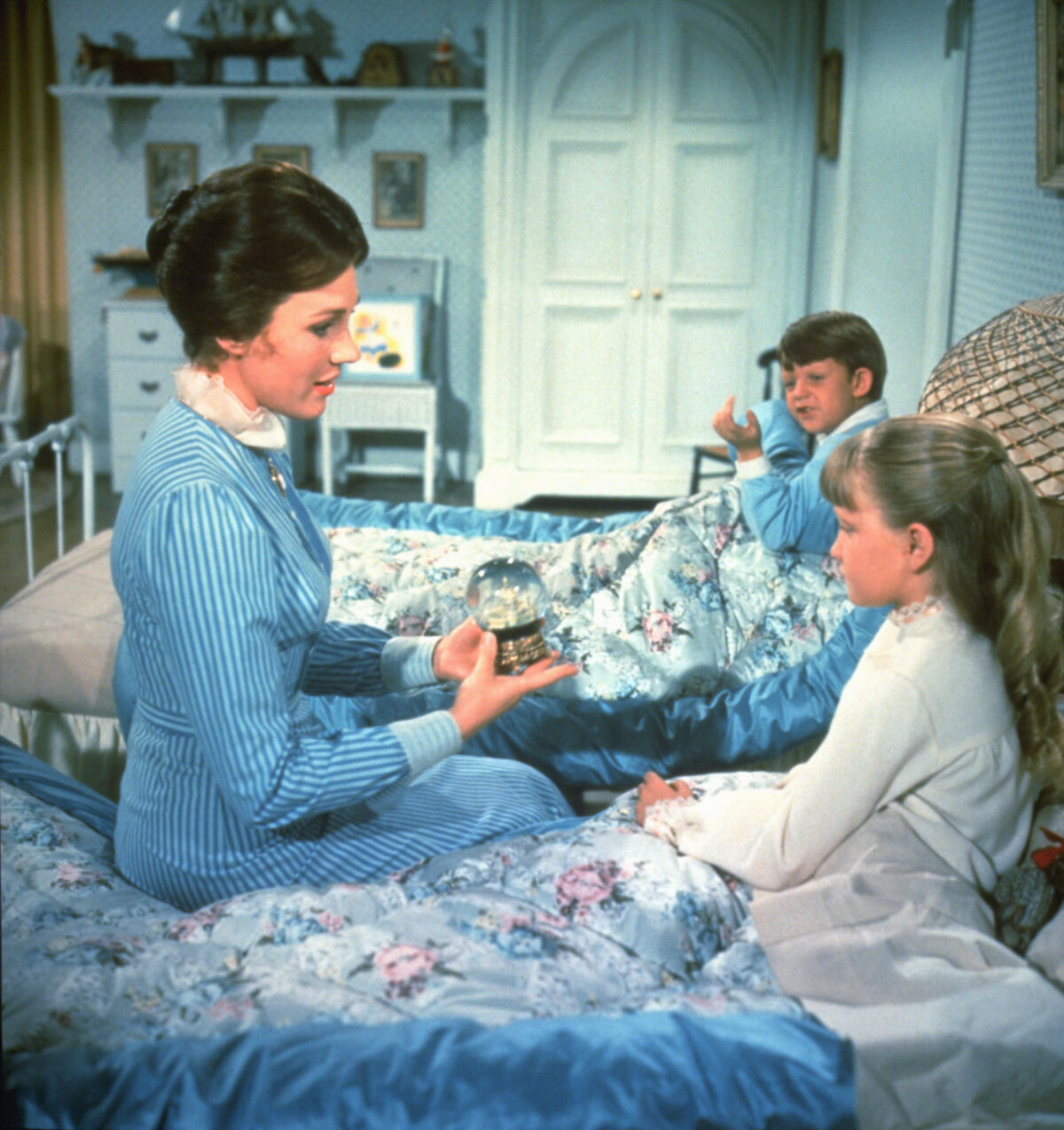
Mary’s lullaby “Feed the Birds” isn’t about feeding, or birds, or woolly altruism, but about caring for those placed under our care. She’s in the children’s bedroom, tucking them in at night with neither parent in sight.
When she sings, “Show them you care … the young ones are hungry, their nests are so bare” she’s saying that children are hungry for the love of their parents. It costs so little to be kind. What parents ought to give their children isn’t a penny or two, but their attention, their smile, their touch, and their presence, even amid admittedly hectic adult schedules.
A 29-year-old Andrews dazzles in her debut feature film and 8-year-old Garber is adorable, whether looking wonderstruck or simply amused. Watch him trying to click his fingers in the magical way that Mary and Jane do.
Check the Internet Movie Database website for plot summary, cast, reviews, and ratings. You can watch “Mary Poppins” BroadwayHD, Disney+ and Apple TV.
These reflective articles may interest parents, caretakers, or educators of young adults, seeking great movies to watch together or recommend. They’re about films that, when viewed thoughtfully, nudge young people to be better versions of themselves.
What arts and culture topics would you like us to cover? Please email ideas or feedback to features@epochtimes.nyc
