Around the world, Mother’s Day is celebrated on different dates and with different customs, but the idea is always the same: It’s a day to honor the beautiful role of motherhood.
Although the American holiday was originally intended as a day to appreciate the mother in one’s own family, it has since expanded to many different maternal figures, like grandmothers, stepmothers, mothers-in-law, aunts, daughters who are mothers themselves, and even adoptive mother figures.
Many classic films feature heartwarming and inspiring examples of motherhood in many seasons and forms.
During her long film career, award-winning actress Loretta Young played many touching maternal roles. She portrayed three different types of motherhood: new motherhood in “Private Number” (1936), being the mother of an adult child in “Mother Is a Freshman” (1949), and mothering an adopted child in “Paula” (1952).
‘Private Number’
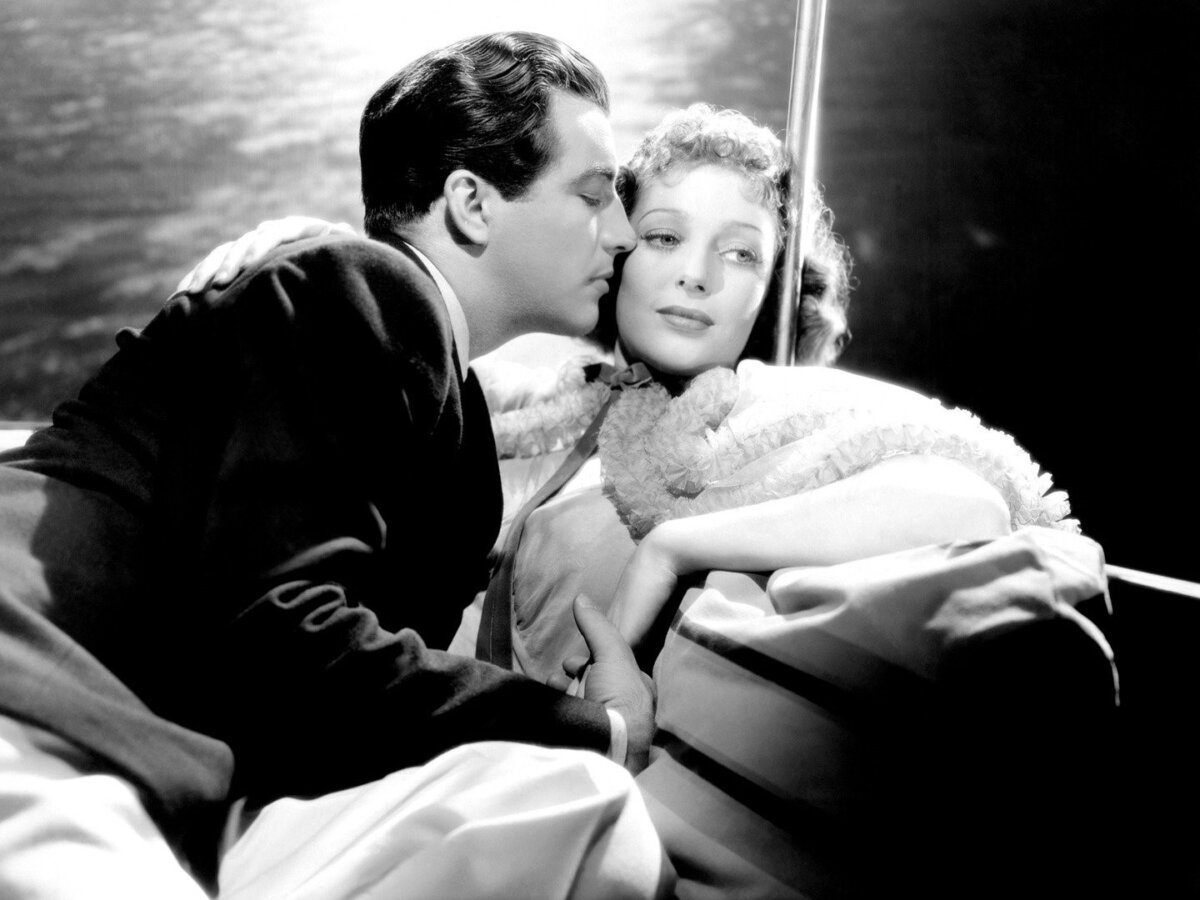
At age 23, Young played 17-year-old working girl Ellen Neal, who finds employment in an affluent New York household run by a tyrannical butler (Basil Rathbone). Ellen resists the advances of the butler but falls in love with her employers’ son, Richard (Robert Taylor).
Despite her misgivings about their social inequality, Ellen agrees to marry Richard. Because their marriage is kept a secret, her ensuing pregnancy causes a scandal as her moral character is questioned by her fellow servants and employers alike. Amid poverty and legal battles, Ellen makes caring for her baby her priority.
Becoming a mother for the first time should be a joyous occasion, but for women in difficult circumstances, it can become a nightmare. Ellen faces financial hardship and isolation as her husband’s family refuses to accept her.
She’s separated from her beloved husband by circumstances outside their control, so she must weather these trials alone. Many women would tragically consider abortion to continue their lives uninterrupted. A woman in this situation might use the baby as leverage to gain money from her wealthy in-laws. But Ellen doesn’t do either.
All she wants is to live happily with her husband and baby. Marriage wasn’t in her immediate plan, nor was having a baby, but she joyfully embraces both as they come into her life.
This character exemplifies the courage of motherhood as she prioritizes her baby above all personal hardship and scandal touching her own life. This must have been a very emotional role for Young to play, since she’d just experienced a very similar situation involving her secret unwed pregnancy with her first child, Judy.
Like Ellen, Loretta chose life for her child and used elaborate scheming to adopt her own daughter, trying to protect both of them from scandal while embracing motherhood.
‘Mother Is a Freshman’
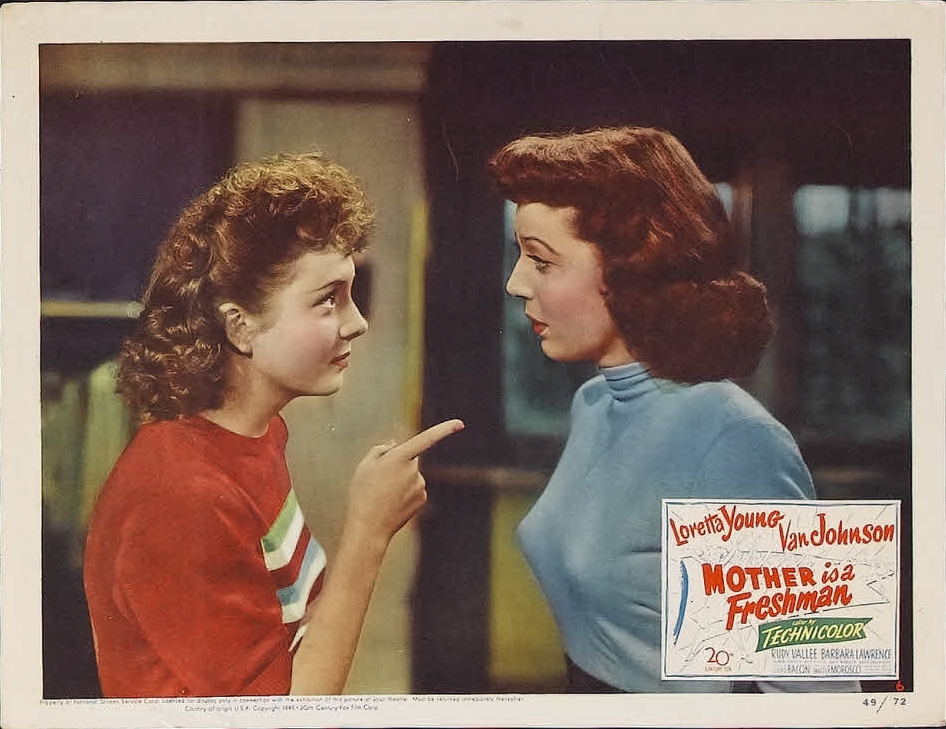
Now 36, Young took on the more mature role of playing a college-aged girl’s mother. As a widow, Abby Abbott (Young) relies on her late husband’s trust fund to support herself and her daughter, Susan (Betty Lynn).
Through no fault of her own, she runs out of funds but is reluctant to accept her stuffy lawyer’s (Rudy Vallee) proposal of marriage. So she does the only thing she can to finance her daughter’s college education: enroll herself to get an exclusive, more than ample scholarship that will pay for both.
Posing as a college girl, Abby joins Susan at Pointer College. She wants to keep an eye on her daughter’s infatuation with an English professor (Van Johnson), yet she finds herself falling for the handsome teacher herself.
As the title implies, this movie is all about a mother and her relationship with her daughter. Like Ellen, Abby must face her financial and parental challenges alone, although for different reasons. Abby and Susan are going through the difficult period where they are learning to relate to each other as two women as well as mother and daughter. As Susan is 17 and Abby is only in her 30s, they are more like sisters in many ways. For instance, they have the unusual predicament of both being interested in the same professor, who’s much closer to Abby’s age but is still youthful enough to be of interest to Susan.
Relationships between parent and adult children can often be strained as they get older. This movie offers a beautiful example of a mother who goes out of her way to provide for her daughter, even to the point of assuming a fake identity and becoming a college girl as a widowed matron.
Abby isn’t just concerned about her daughter’s education, though; she also cares deeply about her daughter’s happiness and ultimate emotional wellbeing. This character is a delightful example of a mother who is wise yet young at heart enough to be mistaken for a very sophisticated college student.
‘Paula’
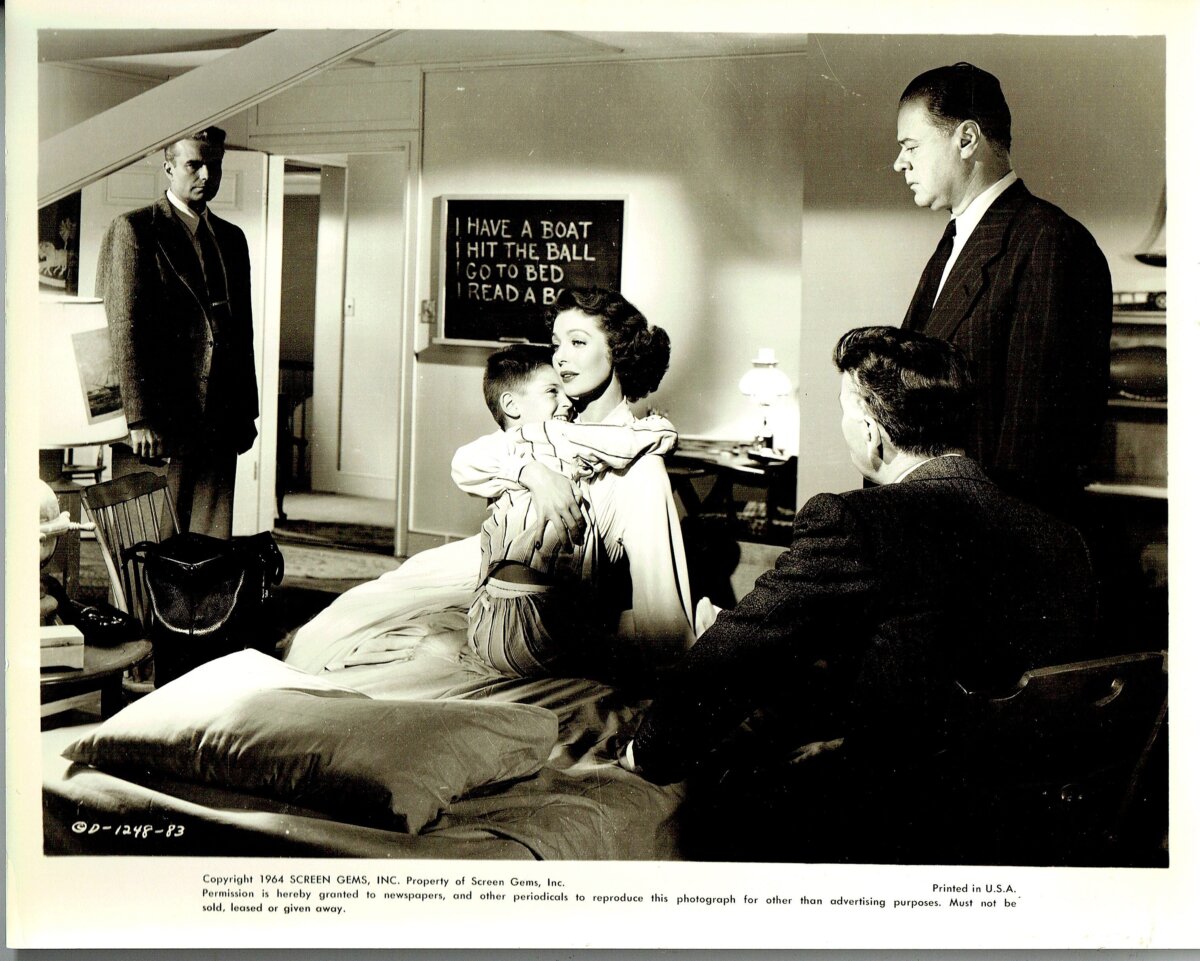
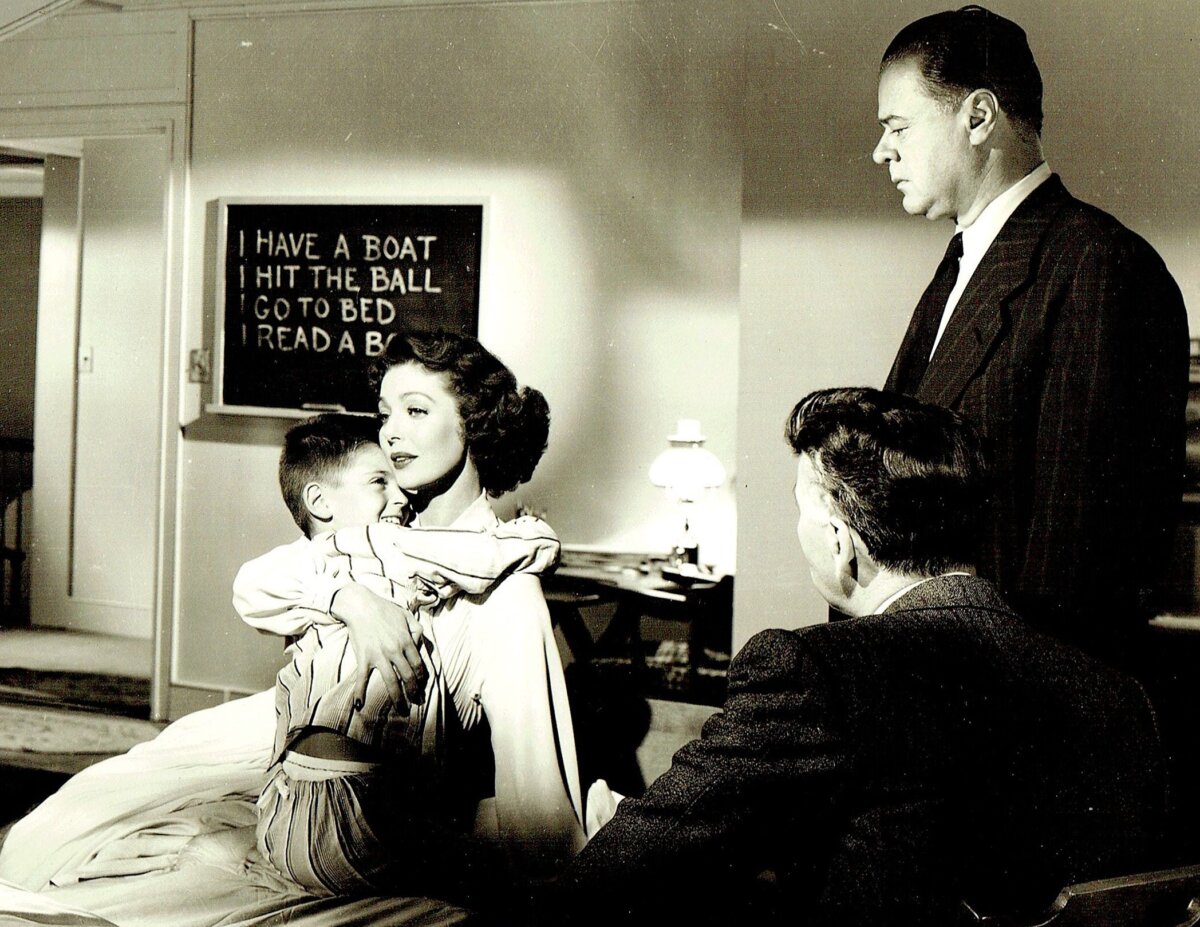
At the age of 39, Young played Paula, a married woman who faces the heartbreaking reality that after two miscarriages, she can never have children. The title character in this film has the full love and support of her husband (Kent Smith), but her maternal heart yearns for a child.
On a dark road one night, Paula hits a little boy (Tommy Rettig) who runs out in front of her car. An irate farmer (Will Wright) forcibly takes the injured boy to a hospital, refusing to let Paula follow as he insists that she’s a drunken society woman.
Paula learns that the boy, David, has lost the ability to speak, so she volunteers to take him in and reteach him. She becomes a mother to him, although she doesn’t tell anyone about her part in his accident.
“Paula” begins with one of the most vulnerable moments of womanhood in a classic film. When we first see Paula, she’s lying in a hospital bed, sobbing and broken from the realization that she’s lost yet another child. With this second miscarriage, she’s lost more than an individual unborn child; she’s also lost all hope of ever becoming a biological mother.
Young makes this an achingly raw and sensitive moment, with disheveled hair and very little makeup on her tearstained face. She embodies an underrepresented facet of motherhood: women who have loved and lost children before they even could know them.
Later, Paula forms a precious bond with David, painstakingly teaching him to form every letter with his mouth and his voice. When he first comes to her house, he’s like a scared little animal, suspicious and wary.
She gradually earns his trust through patient, loving care, showing the lonely orphan what a mother’s love can be. Although her husband is initially very reluctant to foster a disabled child, Paula quickly shows him how deeply David needs and returns their love.
In these three films, we see three beautiful portraits of motherhood through admirable characters Young plays. Each is an inspiring example of what it means to be a mother, in different seasons and different circumstances.
Each of these films is a great movie to watch with your mother or mother figure to celebrate the beauty of maternal love.
What arts and culture topics would you like us to cover? Please email ideas or feedback to features@epochtimes.nyc.