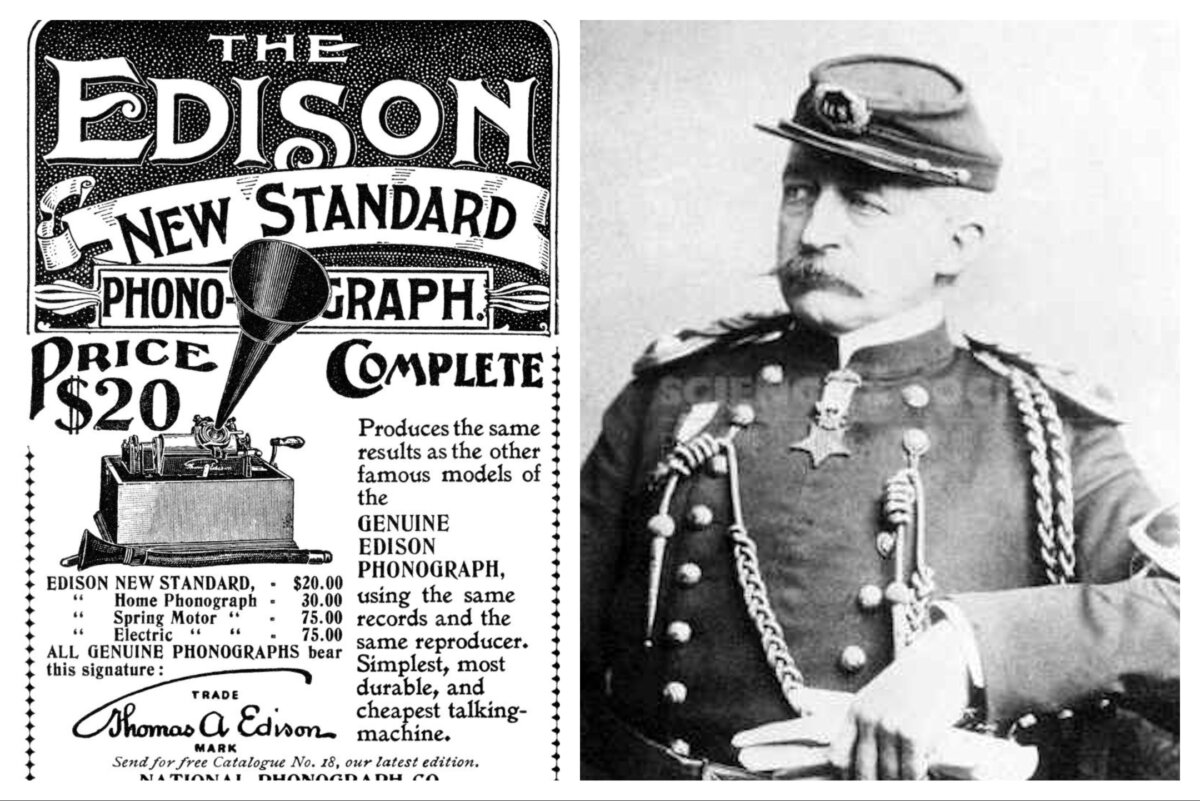
Within a month, 5-year-old George Edward Gouraud’s life was tragically altered. Both of his parents died, leaving the young boy orphaned along with his 9-year-old sister, Clemence. Fortunately, he was taken in by a kindly Quaker family and given a proper education. But when it came to pursuing a career, Gouraud chose a path taken by his parents—one of travel and invention.
The Daguerreotype Comes to America
Gouraud (1842–1912) was born in Niagara, New York, several years after his parents immigrated from France with his elder sister. Before arriving in America, his father, François, had been an associate of Louis Daguerre, inventor of the daguerreotype process of photography. Daguerre sent François to the United States to introduce the new photographic process to Americans. The elder Gouraud is considered the first to sell a camera in America.
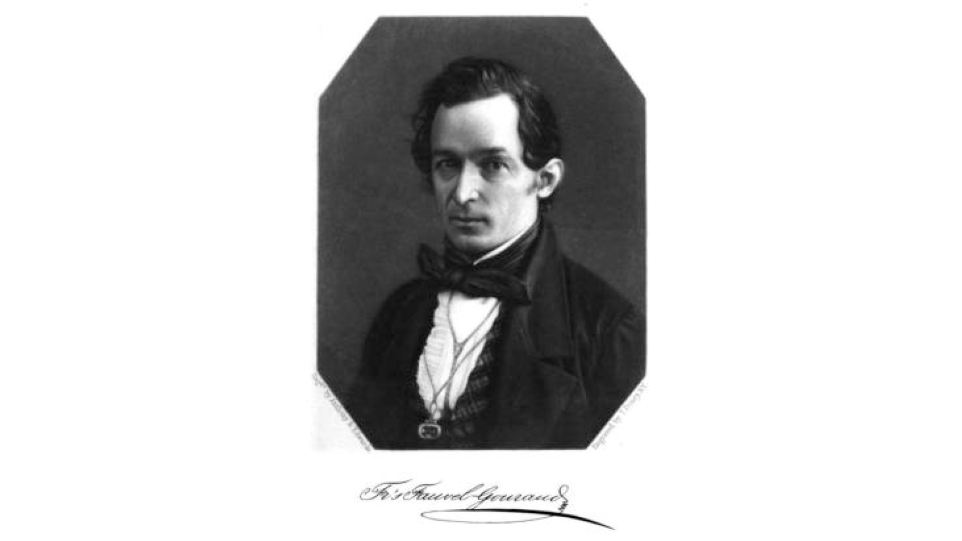
After a few years lecturing in New York, Boston, and Philadelphia on the subject of the daguerreotype, François began lecturing on a completely different topic: memory. His lectures were popular, resulting in the moniker of “Professor.”
His health, however, was fragile. When his wife died in the early summer weeks of 1847, François soon followed in mid-June.
A Valiant Contribution
When the Civil War erupted, George Gouraud enlisted with the Third New York Volunteer Cavalry. He proved a valiant soldier. Early in the war, on May 15, 1862, in Trenton, North Carolina, Gouraud, a lieutenant at the time, arrived with orders for the regiment to withdraw. Sighting a wounded Union soldier who had fallen from his horse, he ordered soldiers to assist. Sgt. John Kenyon, a fellow cavalryman, leaped from his horse while under fire, grabbed the wounded man, and lifted him to Gouraud, who held the wounded soldier across his pommel and hurried away. Kenyon returned to his Company and was awarded, much later in 1897, the Medal of Honor.
Gouraud would have his Medal of Honor moment during the final months of the war and in the heart of the civil conflict: South Carolina. On Nov. 30, 1864, approximately 5,500 Union soldiers walked into a barrage of cannon and small arms fire from about 2,000 entrenched Confederates. The Battle of Honey Hill lasted about six hours and was the only Confederate victory during Gen. William Tecumseh Sherman’s March to the Sea campaign.
During the battle Gouraud, now a captain, proved courageous under heavy fire. He was awarded the Medal of Honor in 1893 for, according to his citation, “While under severe fire of the enemy, which drove back the command, rendered valuable assistance in rallying the men.”
By the end of the Civil War, Gouraud was brevetted as a lieutenant colonel, but sometime after the conclusion of the conflict, he dropped the lieutenant, and, like his father before him, obtained his own moniker. Gouraud became known among many circles—foreign and domestic—as “Colonel Gouraud.”
A Return to Europe
After the war, it is believed that Gouraud began working for either the U.S. Customs Service or the U.S. Treasury Department. After his marriage in 1873, and now working for Western Union, he was sent to London to promote the company’s telephone and telegraph systems. It was around this time that Gouraud met Thomas Edison, who had arrived in London to demonstrate both communication devices. The relationship paid off for both with Edison’s later invention of the phonograph.
By the 1880s, Gouraud was presented with a very different opportunity. George Pullman had become a major American success story with his creation of the sleeper car. With the massive growth and expansion of railroads, Pullman created a way for people to not only travel long distances more comfortably, but more luxuriously. Pullman hired Gouraud, who traveled back to his parents’ home country of France to sell the idea of sleeper cars to the European public, opening an office in Paris.
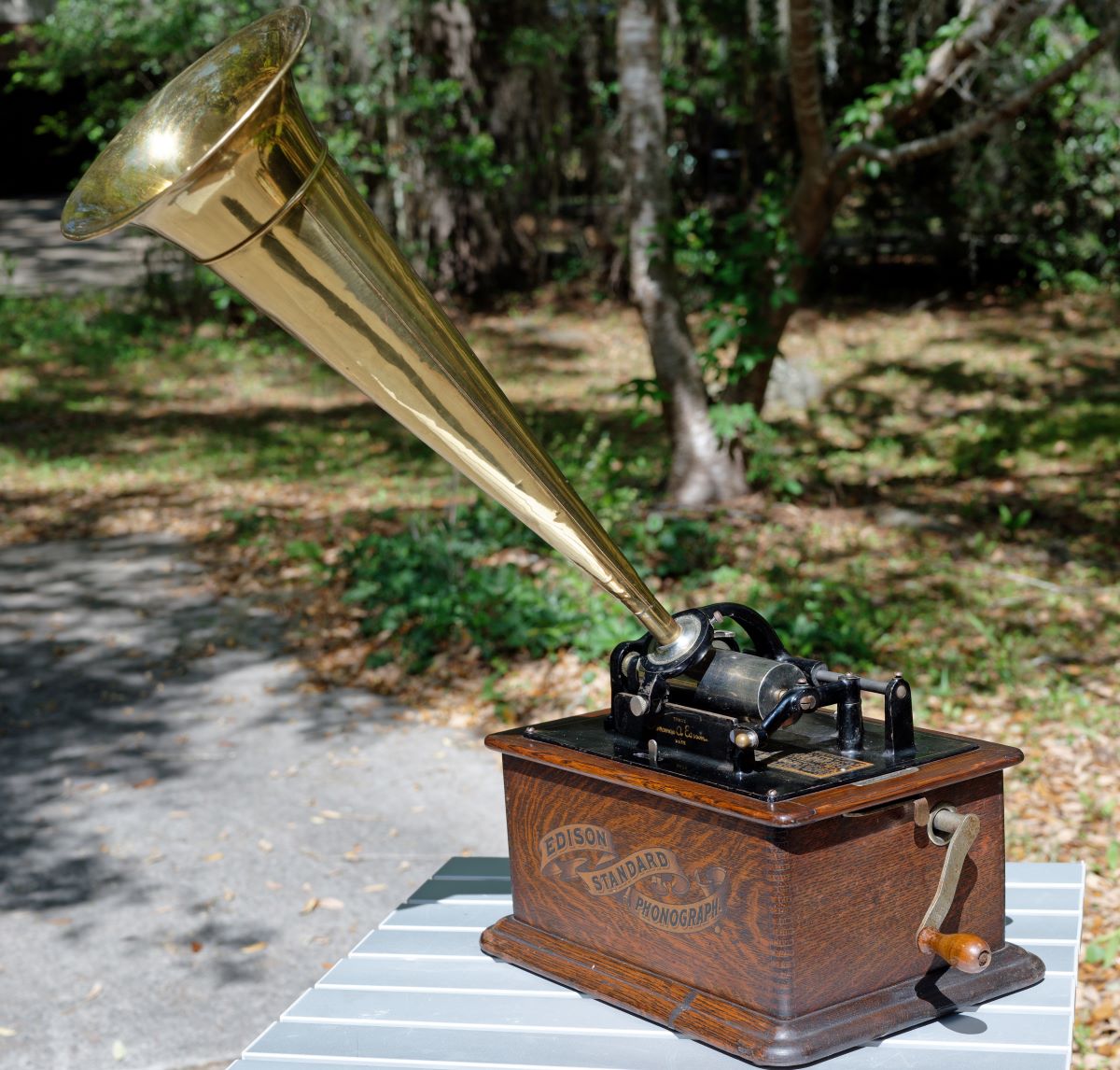
By this time, Edison had already invented the phonograph and had moved on to perfect the incandescent light bulb. Gouraud kept in communication with Edison, however, and encouraged him to continue trying to perfect the phonograph as well. By 1888, Edison announced to the world his “perfected phonograph,” which used wax cylinders instead of tin foil.
Europe’s Phonographer
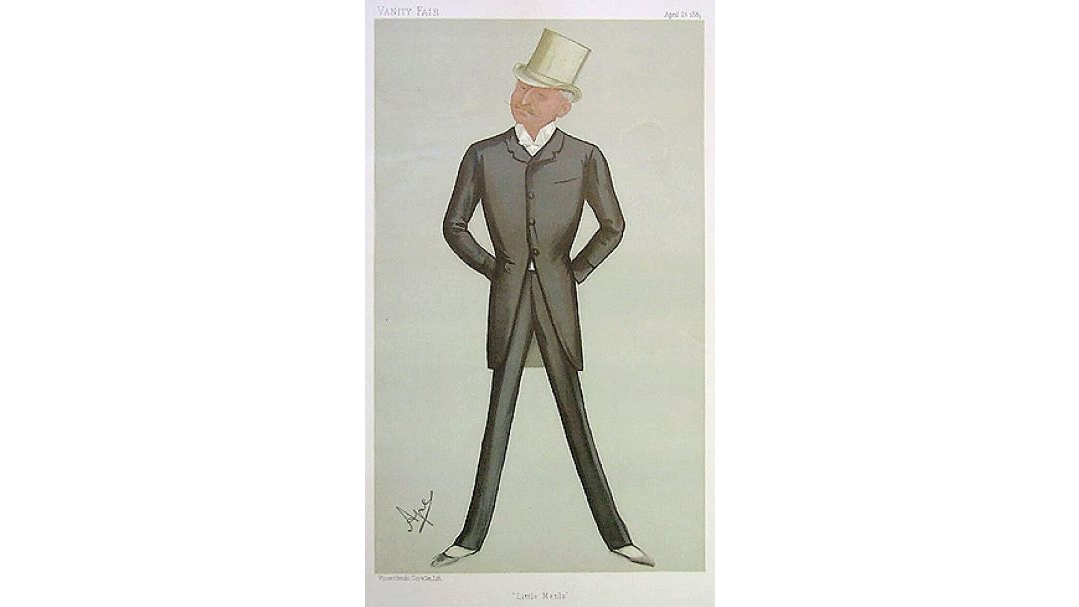
Gouraud, a phonograph enthusiast, became its promoter for Edison. It was apparent that Gouraud was not simply enamored by Edison’s invention, but by the inventor himself, as he named his home in Norwood, South London, “Little Menlo,” in honor of Edison’s famous New Jersey laboratory.
Edison had the perfected phonograph shipped to Gouraud, who became the first to present the phonograph to the European market. The promoter of American technologies captured the voices of a number of prominent Europeans, including the poet Robert Browning; Cardinal Henry Edward Manning, the archbishop of Westminster; Henry Irving, the Shakespearean actor; as well as P.T. Barnum, while he was visiting London.
Additionally, Gouraud’s team of phonographers recorded the voice of several other important individuals, including Florence Nightingale, Alfred Tennyson, and Prime Minister William Gladstone. These recordings, which Gouraud called the “Library of Immortal Voices,” thankfully still survive.
Gouraud forked out a fortune of his own money to purchase the rights to commercialize the product in Europe. The successful and affable salesman was the toast of London with his incredible machine. Despite being a relatively efficient businessman, he did not cash in on the phonograph. Eventually, the invention’s allure faded and, with it, Gouraud’s fame.
During his heyday, his image was captured in 1889 by Vanity Fair magazine caricaturist, Carlo Pellegrini. Gouraud’s image, which is now part of London’s National Portrait Gallery collection, was part of a series called “Men of the Day.” Below the drawing of Gouraud in a top hat and suit, reads “Little Menlo”—apparently, he’d obtained another moniker.
The Civil War hero and Medal of Honor recipient, Gouraud—or “Little Menlo” or “The Colonel”—remained in Europe, dying in Switzerland in 1912.
What arts and culture topics would you like us to cover? Please email ideas or feedback to features@epochtimes.nyc.