In 1941, the Empire of Japan went to war with the United States. One of the first losses suffered by the United States was its Philippine Commonwealth, a large archipelago between the Pacific Ocean and South China Sea won during the Spanish-American War in 1898. Japan invaded the Philippines two days after Pearl Harbor, conquered most of it in a month, and captured the rest in May 1942.
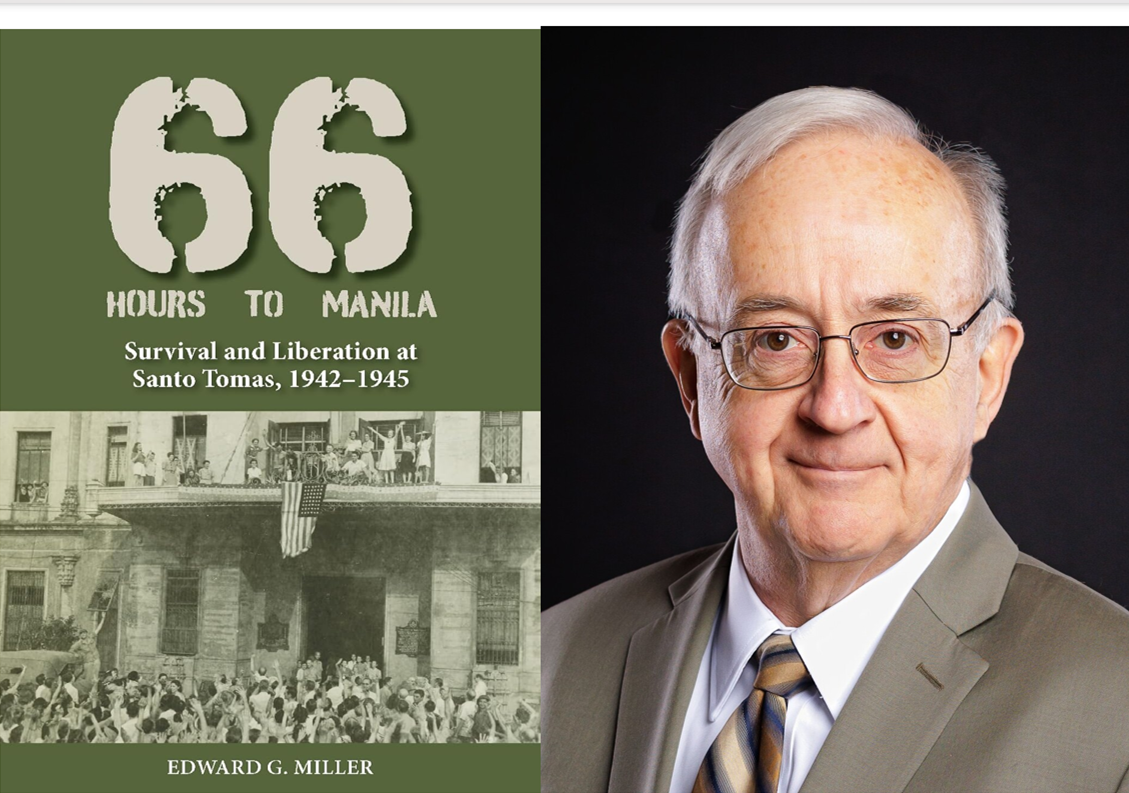
World War II historian Edward G. Miller recounts the liberation of Philippine internees in “Sixty-Six Hours to Manila: Survival and Liberation at Santo Tomas, 1942–1945.”
Many U.S. civilians lived in the Philippines at that time. Some were transient, in the Philippines for a job; others had permanently settled there. Communities of British and Dutch citizens also lived in the Philippines. Along with the Americans, the Japanese viewed them as enemy nationals.
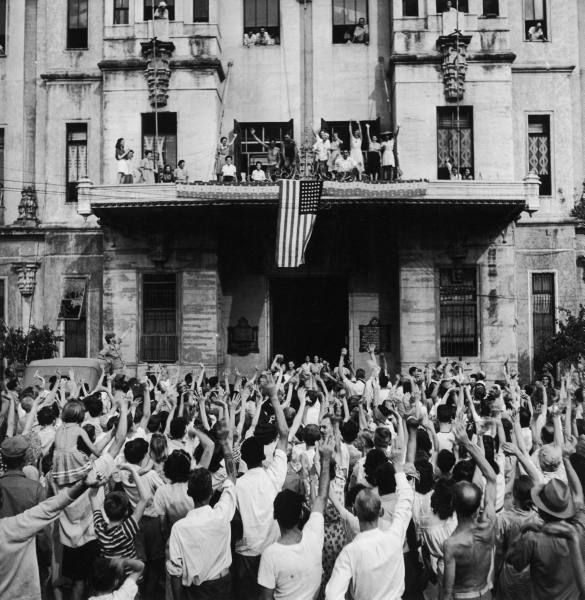
Soon after taking Manila, the Philippine capital, the Japanese rounded these civilians up and interned them. The University of Santo Tomas in Manila was expropriated by Japan and turned into an internment camp.
This book describes the events which followed: the lives of those in the Santo Tomas Internment Camp (STIC) from 1942 to 1945. It then looks at the mission which the U.S. Army mounted in February 1945 to rescue the internees from a feared Japanese massacre.
Santo Tomas
The book opens with several chapters about life at Santo Tomas. These reveal the difficulties and hardships the internees suffered during their incarceration. It explores the interaction between the Japanese soldiers and their civilian captives.
The Japanese were brutal. Two internees, recaptured after escaping, were executed for their escape attempt. Yet, Japanese brutality wasn’t limited to their foes. The book reveals that brutality was endemic to mid-20th-century Japanese society.
Much of the privation suffered by the internees was inadvertent. The Japanese hadn’t considered that they would run internment camps. They were unprepared to supply and administer them. The Japanese limited outside attempts to feed and support internees, believing that allowing outside support reflected badly on Japan’s ability to provide for their charges.
The internees were forced into an existence where survival was difficult. They had to collaborate with the Japanese to survive. They had limited privacy, inadequate housing and food, and only what clothing they brought with them. As the war continued, the population of Santo Tomas increased, and the food supply shrank. By December 1944, the STIC internees were close to starvation.
The book then presents the rescue. After the United States invaded Luzon in January 1945, Gen. Douglas McArthur worried that the internees would be massacred before the liberation of Manila. He directed the commander of the 1st Cavalry Division to send a relief column to liberate the prisoners in advance of the rest of the U.S. XIII Army.
The 1st Cavalry was a dismounted cavalry, motorized but with little armor. It was also smaller than a standard infantry division, with the equivalent of eight battalions to an infantry division’s nine. Its commander put together a force made up of a quarter of the division’s force for the relief. The book describes how, in a three-day road march, it fought through Japanese resistance to liberate the camp.
Aftermath
The book closes with the aftermath of liberation. Hard fighting followed liberation. It took a month to clear Manila of Japanese resistance. Then the internees had to put their lives back together. Many were left with just what they had when released. Their homes and property had been destroyed during the war.
The book is well-illustrated with black-and-white photographs of the people, places, and equipment involved in the events it describes. The author includes three maps and a plan of STIC. These allow readers to follow the action.
For those unfamiliar with military organizations and terms, Miller lists the commandants of Santo Tomas, provides a table of organization for the 1st Cavalry Division, and has a table of acronyms in appendices. These help readers to sort out the participants and understand the acronyms the military thrives on.
This is an exceptionally good example of military history. It’s superbly researched, accurate, and readable. Miller is unafraid to call out misconceptions perpetuated by many histories of the WWII Philippines campaign when appropriate.
This book is a page-turner. Despite being a fast-moving, confusing, and complex subject, it’s a book that can be clearly understood by those unfamiliar with the military and military history. However, military personnel can also read and draw meaningful lessons from it.
Above all, it’s a book about endurance, perseverance, and courage. It shows how people perform differently under adversity. Some fall short, but many exceed expectations. This book offers examples of both types among the men sent to rescue the Santo Tomas internees and among the internees themselves.
“Sixty-Six Hours to Manila” presents the shortcomings of the United States as a colonial power and in its military decisions made early in the war. It doesn’t dwell on them but instead balances them with the many strengths the United Stated demonstrated during the period. It’s an inspiring book.
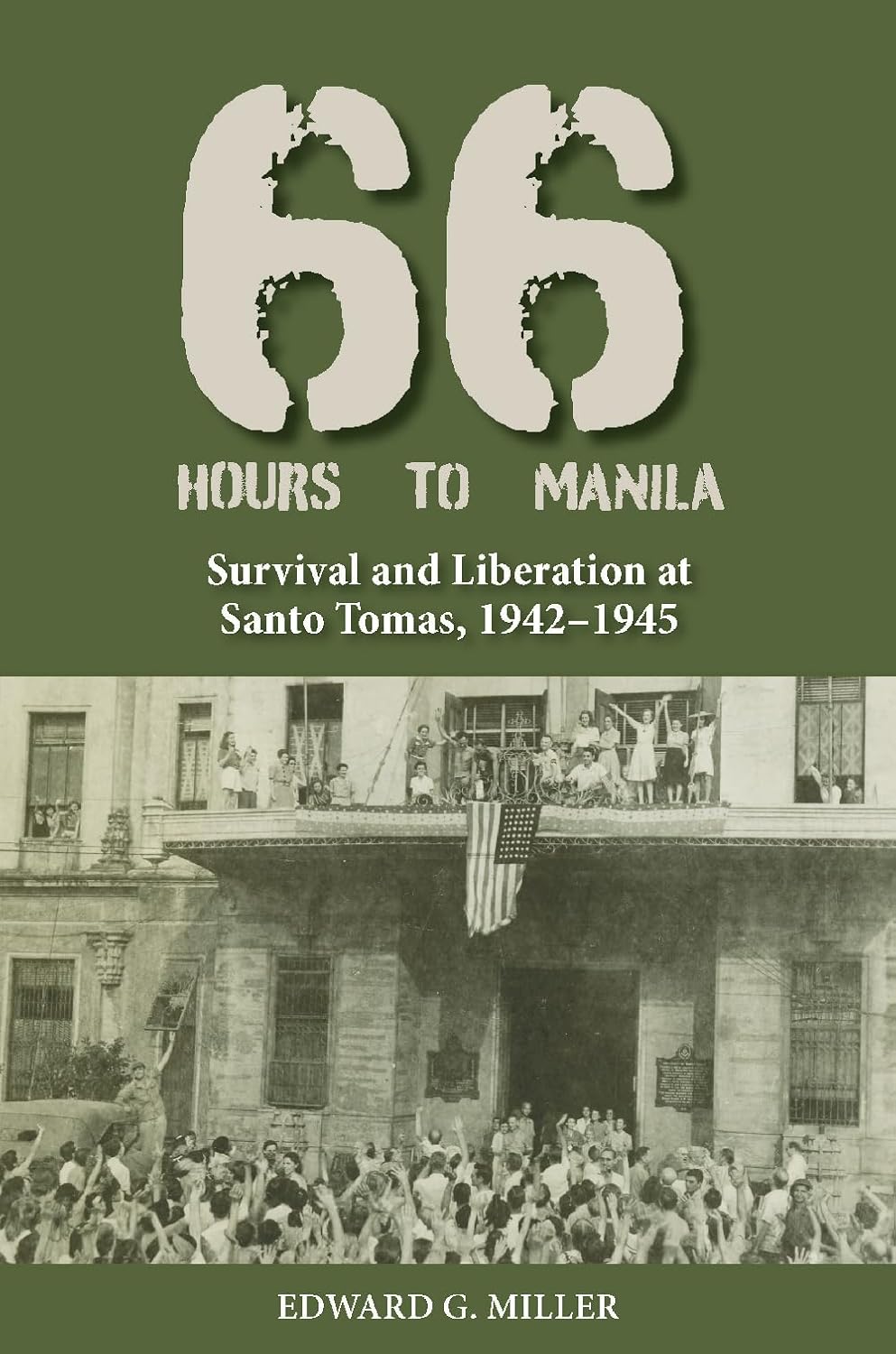
‘Sixty-Six Hours to Manila: Survival and Liberation at Santo Tomas, 1942–1945’
By Edward G. Miller
Texas A&M University Press: March 20, 2026
Paperback, 296 pages
What arts and culture topics would you like us to cover? Please email ideas or feedback to features@epochtimes.nyc