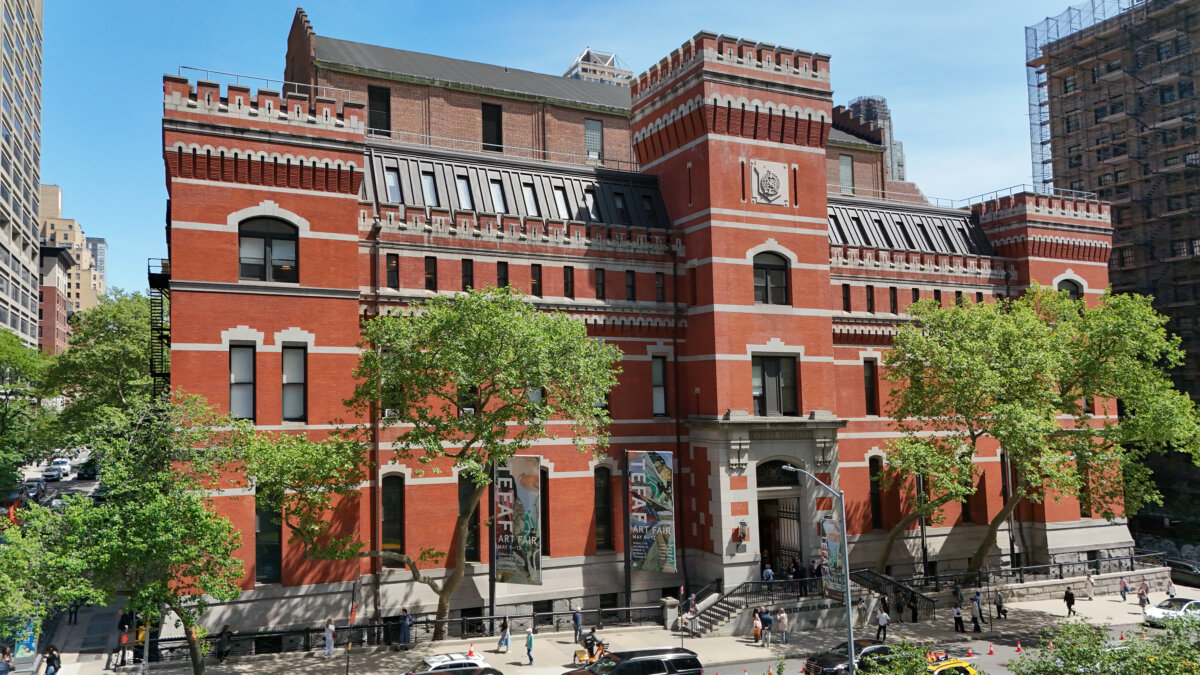
NEW YORK CITY—TEFAF New York, one of two acclaimed international art fairs run by The European Fine Art Foundation (TEFAF), has just opened for public viewing through May 19, 2026. Eighty-eight exhibitors from 14 countries have brought museum-quality works for presentation in Manhattan’s historic Park Avenue Armory. The art spans diverse media, nationalities, and epochs.
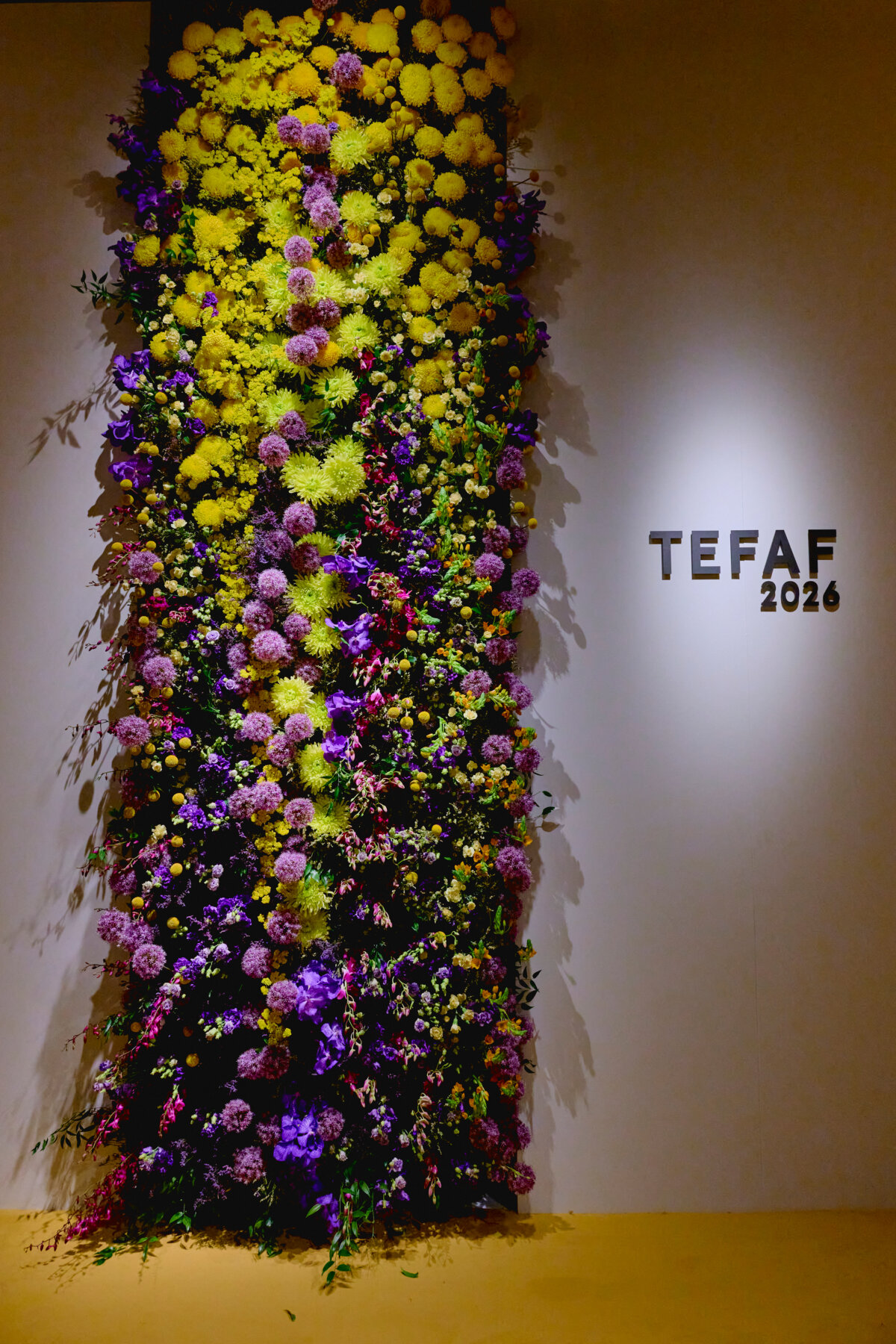
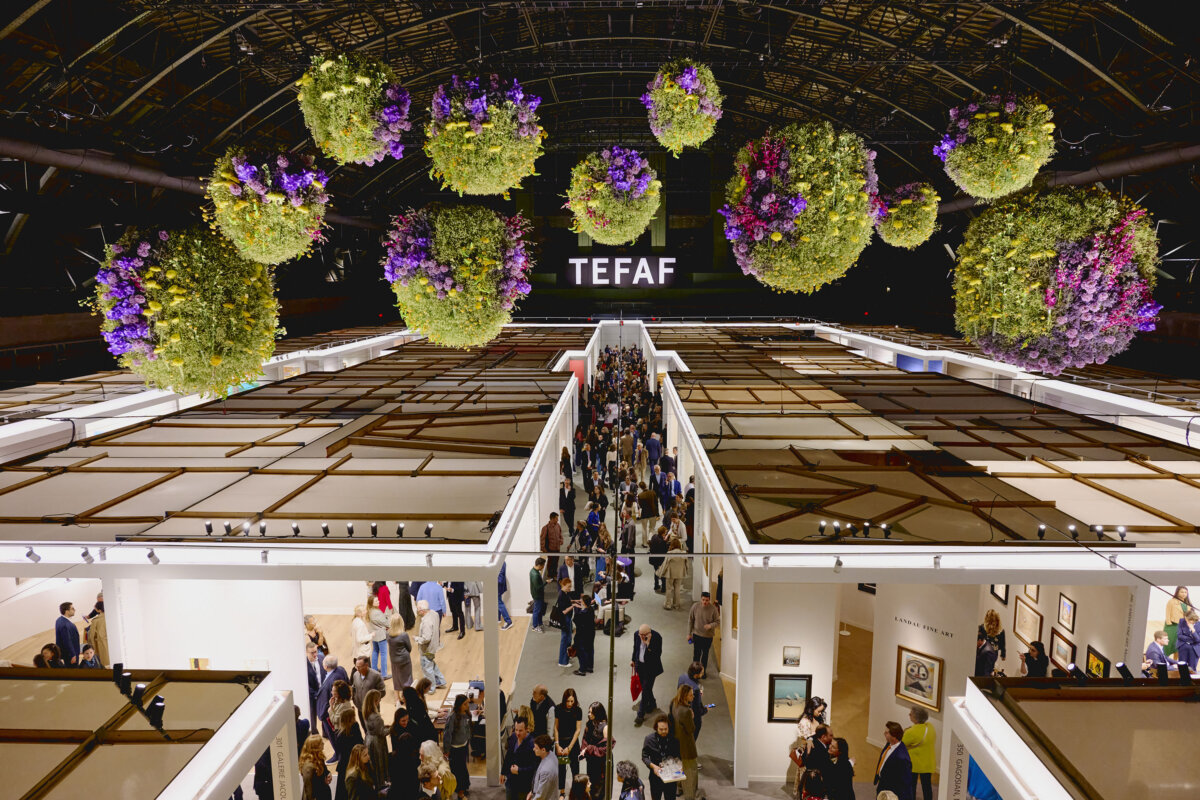
Enhancing the fair’s curated gallery and dealer stands are dazzling floral decorations. Abundant and artfully arranged blooms are designed by a Dutch florist in collaboration with the fair’s architect and its stand builder. Such displays are always an outstanding feature of both the New York fair, in existence since 2016, and the fair’s original location in Maastricht, Netherlands, operated by TEFAF since 1988.
Arts of Antiquity
A striking work at TEFAF New York is the 3,300-year-old limestone “Stele for Thutmose IV.” Dating from circa 1417 B.C.–1407 B.C., it is presented by the London gallery David Aaron LTD. The gallery specializes in ancient classical, Egyptian, Near Eastern, early Islamic art, and natural history. A stele is an upright stone monument incised with an inscription, image, or both.
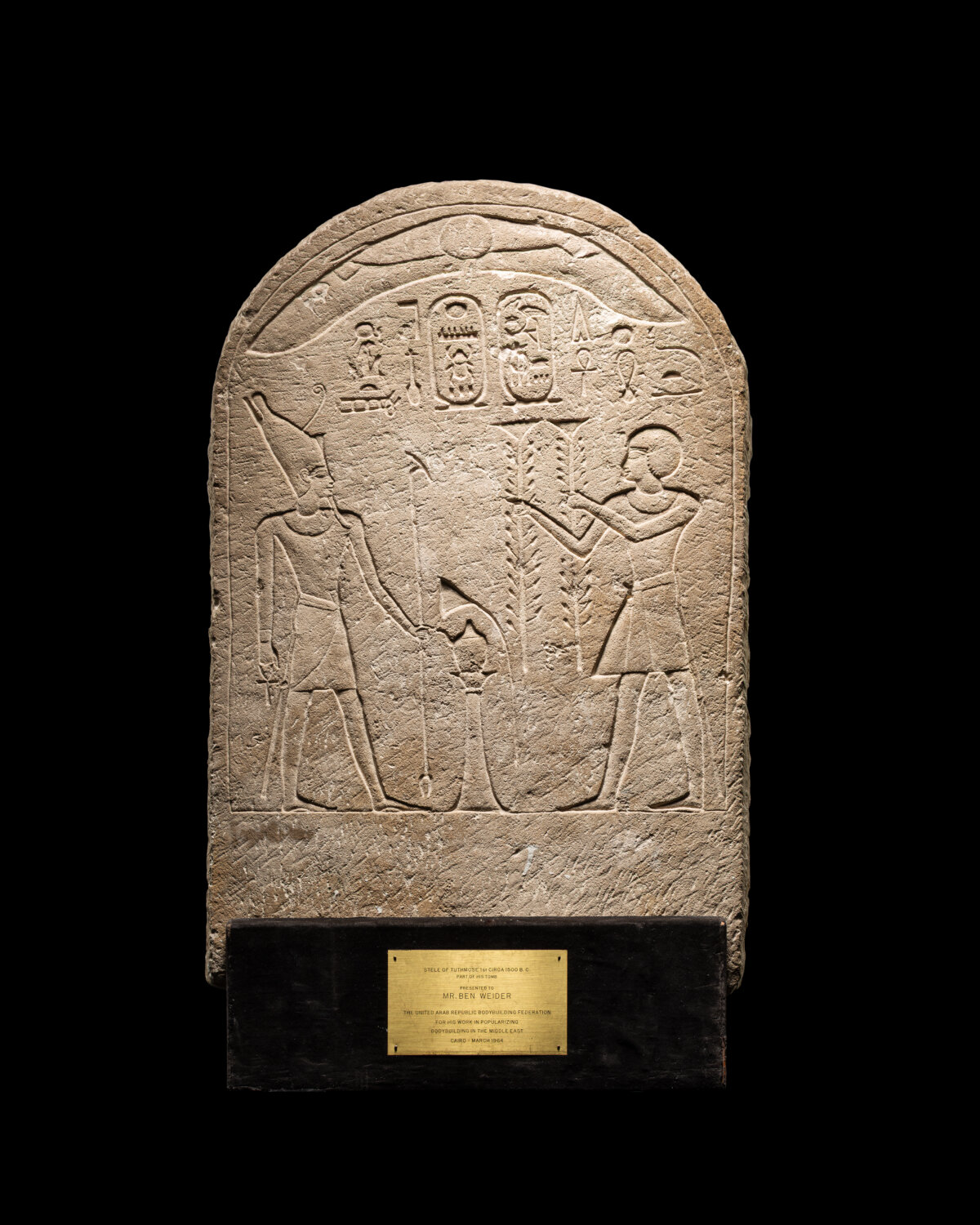
This example depicts Thutmose IV, the eighth Pharaoh of the 18th Dynasty of Egypt, on the left-hand side. An offering bearer holding plants is the figure at right. Thutmose wears the double crown of Upper and Lower Egypt, called a “pschent.” In addition, he carries a scepter and an ankh, symbolic of life. Above this scene are hieroglyphs, including two cartouches featuring the pharaoh’s name and prenomen, or throne name. Overlooking this composition is a sun disc with outstretched wings.
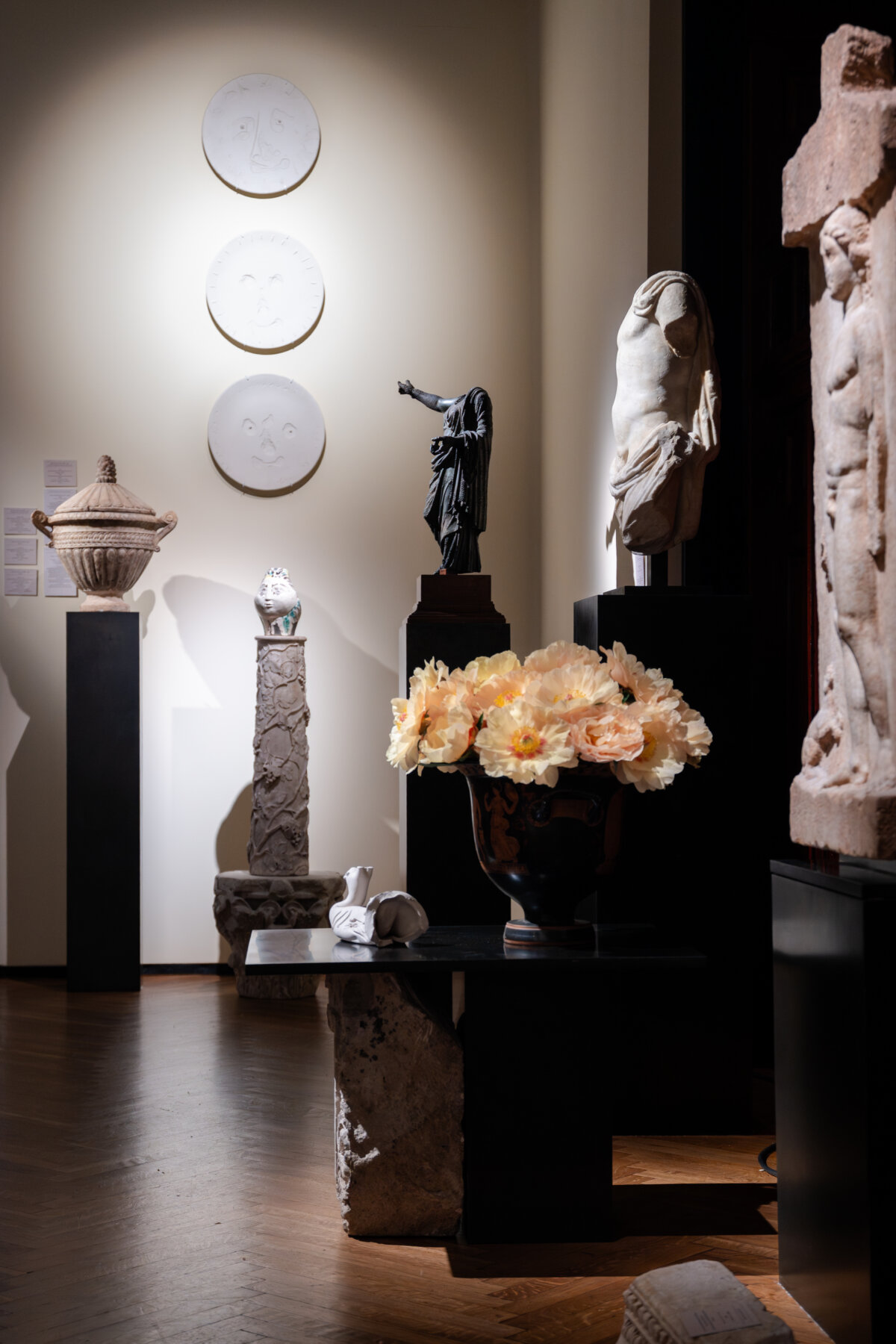
Two stands over from David Aaron, at Galerie Chenel, is a notable work more than a millennium younger than the stele, though still ancient. The Parisian Galerie Chenel focuses on ancient sculpture, particularly Roman works. The marble “Helmeted Athena” from the A.D. 1st century to 2nd century is a Roman vision of the goddess of wisdom, reason, and war who sits in both the Greek and Roman pantheon.
This representation of Athena shows her with a Corinthian helmet, a type of ancient Greek military headgear characterized by almond-shaped eye-holes and a rounded nose-guard. The helmet is pushed back atop her head, underscoring her connection to warfare as well as her attribute as a divine protector.
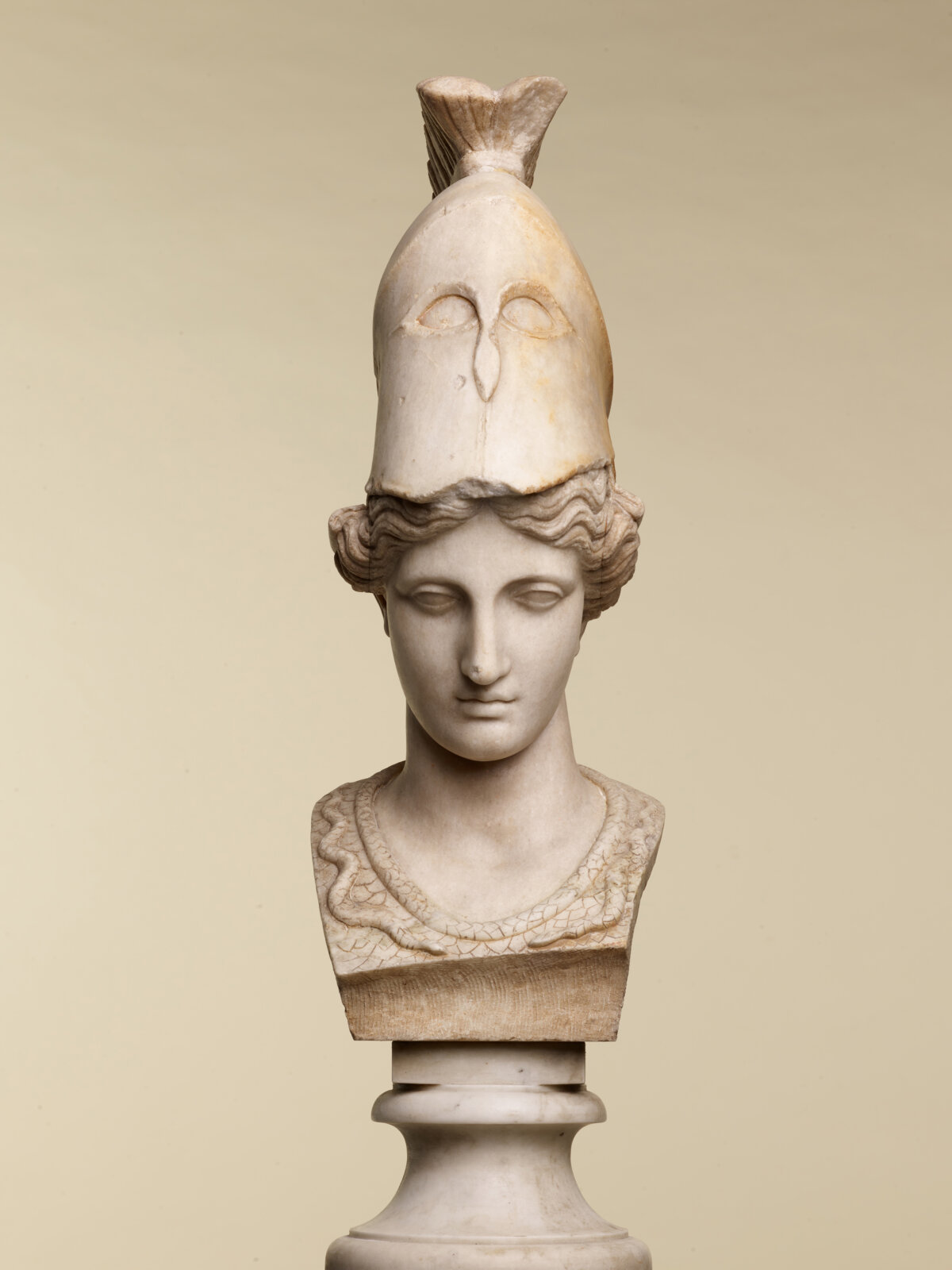
Both of these galleries’ stands are situated in the Armory’s historic rooms. Rarely opened to the public, access is arranged specially for TEFAF. The Armory, a castle-like brick building built between 1877 and 1881 that occupies an entire city block of the Upper East Side, was formerly military headquarters. It is now a cultural facility that contains “the single most important collection of nineteenth-century interiors to survive intact in one building,” according to the New York City Landmarks Preservation Commission. The majority of galleries exhibit in the Armory’s 55,000-square-foot Wade Thompson Drill Hall under an 80-foot-high barrel-vaulted ceiling. It is one of the largest unobstructed spaces in all of New York City.
Japanese Decorative Arts
Galerie Marcilhac, also based in Paris, is devoted exclusively to 20th-century French decorative arts. A highlight at their stand is “The Adrent Armchair” from circa 1915. The creator of this stunning piece of furniture was the Japanese sculptor and lacquer specialist Seizo Sugawara (1884–1937). Sugawara trained at the Ecole des Beaux-Arts in Tokyo before moving to Paris in 1905. He taught the art of lacquer to the Art Nouveau jeweler Lucien Gaillard and went on to collaborate with and work for the pioneering designer Eileen Gray.
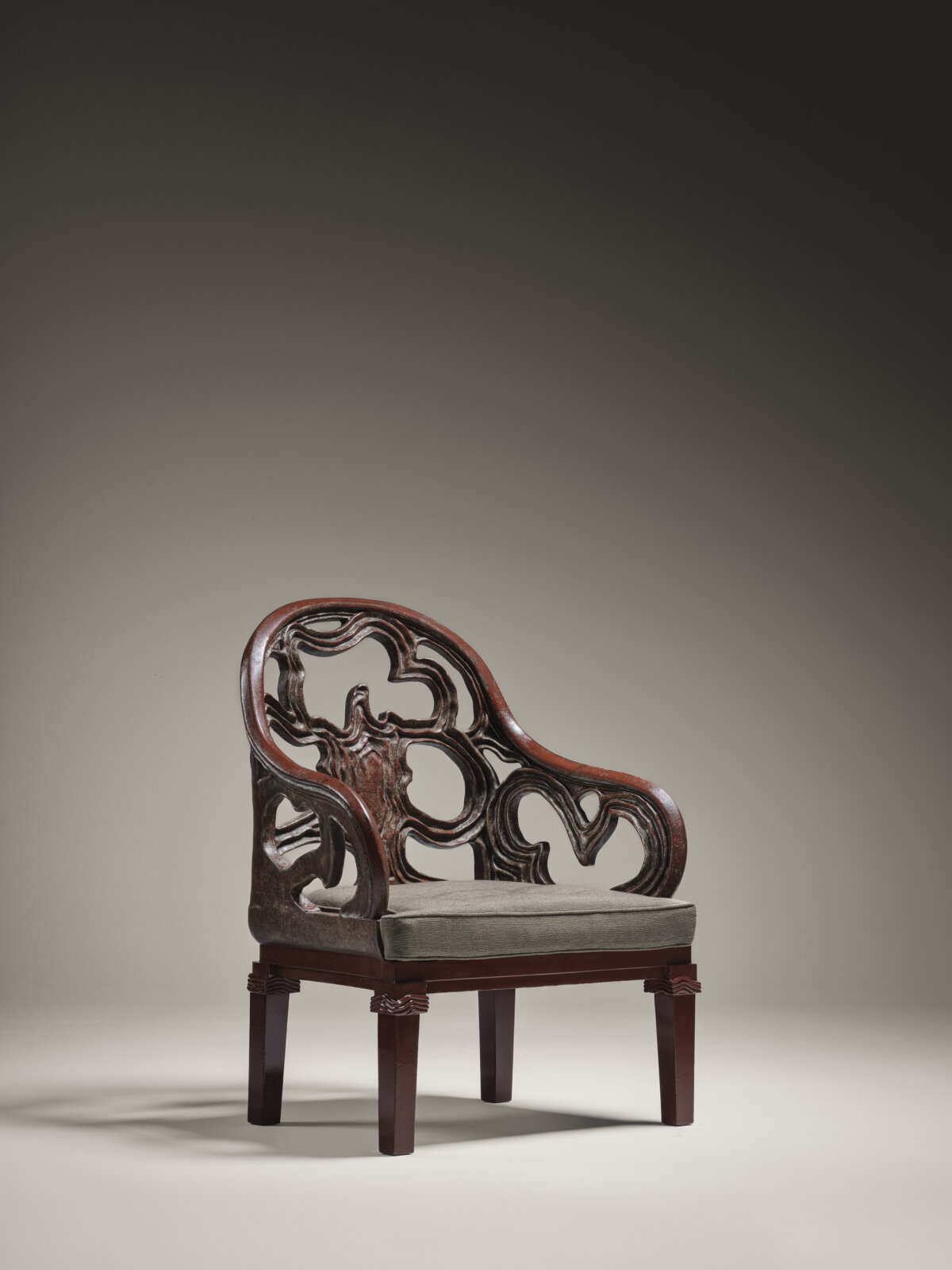
Sugawara was one of a small group of Japanese expatriates working in France, and this armchair is a rare surviving design object from the early 20th-century Japonisme movement. Made of lacquered and solid wood, the armchair has still its original horsehair cushion. Its form was inspired by traditional Chinese root chairs, and it showcases an ancient Japanese lacquer technique called “maki-e” that employs silver powder.
Japanese flower ceramics from the latter part of the Meiji period (1868–1912) are incorporated into a pair of exquisite earrings made just this year by the Munich-based Hemmerle. A fourth-generation family-run jewelry house, Hemmerle’s jewels are often in earth tones. The company employs unique metals and techniques as well as unusual materials to create their one-of-a-kind pieces. They can feature ancient or historic works of art.
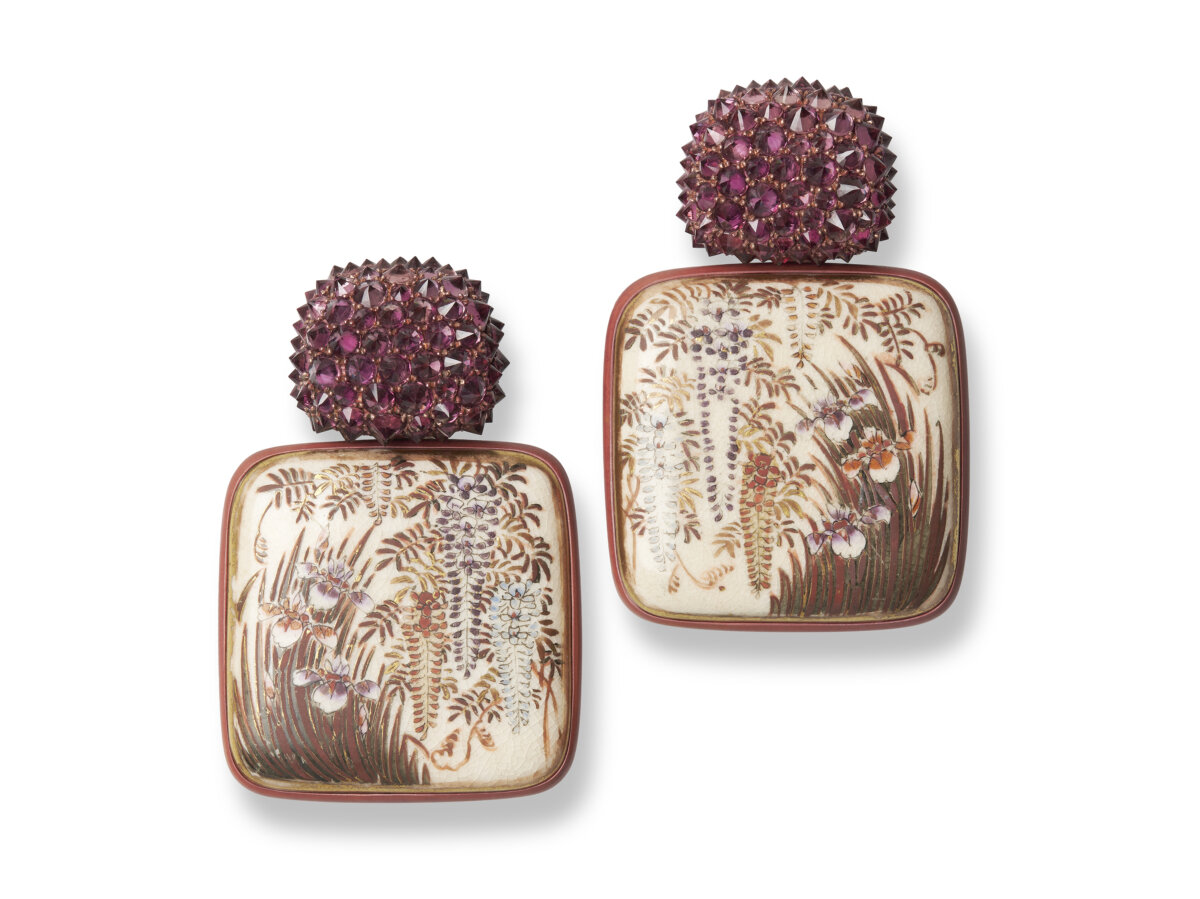
The ceramics display delicately rendered wisteria and irises. Each includes the master’s mark, or “ta mi,” in ink on the reverse. Hemmerle frames these poetic botanical compositions in burnt copper and white gold. Above them, a sculptural dome of over 160 Umba sapphires, gemstones from the Umba Valley in Tanzania, compliment their warm palette.
Museum Restoration Fund Award
This year’s recipient of the TEFAF Museum Restoration Fund (TMRF), in partnership with the Bank of America Art Conservation Project, is the Minneapolis Institute of Art (Mia). Since 2012, TMRF has funded over 25 important restoration projects of public artworks of cultural importance, including last year’s support of the “Black Book of Houses” at the Hispanic Society Museum & Library in New York City.
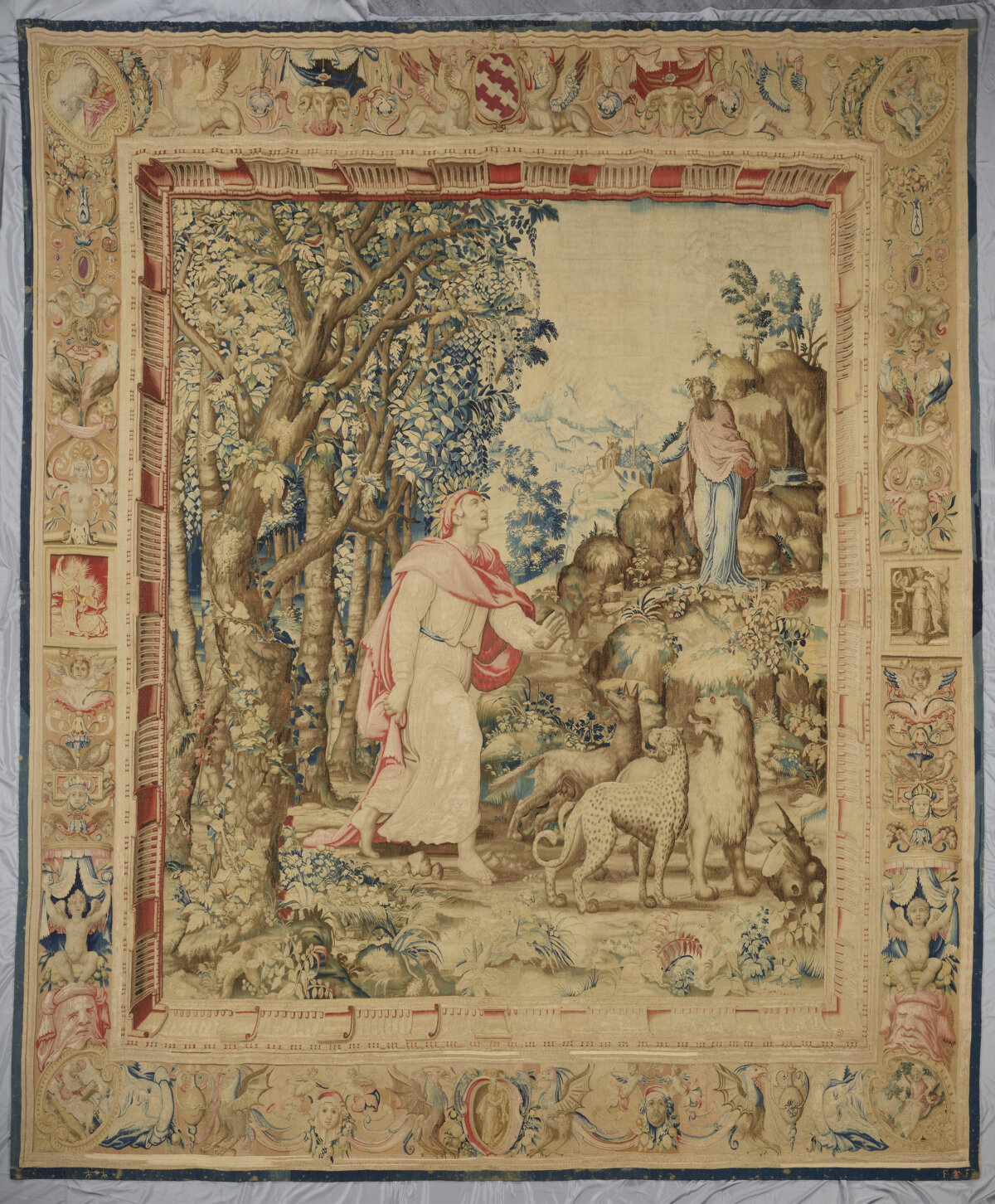
The 2026 grant awarded to the Mia will allow the institution to conserve its monumental 16th-century wool and silk Italian tapestry “The Meeting of Dante and Virgil” (design and cartoon circa 1546 to 1548; woven circa 1547 to 1549). Notably, this is the first time that TMRF has allocated funds to the treatment of a tapestry. The Mia’s encyclopedic collection of art includes 41 tapestries. “The Meeting of Dante and Virgil” is considered the most important Italian Renaissance tapestry in America. This rare work, which measures approximately 17 feet, 5 inches long, is the only early Medicean tapestry in a public collection outside of Italy.
The artistically brilliant tapestry was woven in a Florentine workshop established in 1545 by Grand Duke Cosimo I de’ Medici. Cosimo, a patron of artists including Bronzino, wanted to rival the historically famous weaving centers of Brussels. The subject of this tapestry is the meeting of the poets Dante and Virgil at the beginning of the former’s epic poem “Inferno.”
The designer of the image was Francesco Salviati (1510–1563), a major figure in 16th-century Italian art. Born Francesco de’ Rossi in Florence, he was the son of a weaver but chose to pursue a career in fine art. Salviatai is best-known for oil paintings of monumental narrative scenes and richly colored portraits. Another aspect of his artistic practice was making tapestry cartoons, full-scale preparatory drawings of an image used by weavers as a guide.
The Meeting of Dante and Virgil” has not been visible to the public recently because of “structural weaknesses, losses, and fragile silk areas,” explains the Mia in a press release. “Conservation … will include wet cleaning, stabilization, selective reweaving, and the installation of a new support system to allow safe display.” The restored artwork will be spotlit in an upcoming Mia exhibition from July 11, 2026 to Jan. 31, 2027.
An in-depth look at the restoration of the tapestry will be discussed in a TEFAF Talk, one of six conversations presented as part of the fair’s public program. These are being held in the Armory’s impressive Veterans Room, which is a superlative example of the American Aesthetic Movement and the most significant surviving intact interior by Louis C. Tiffany and Co., Associated Artists. This collective was composed of an early-career Tiffany, architect Stanford White, and Candace Wheeler, an interior and textile designer, along with other creatives. A short-lived endeavor, Associated Artists’ prominent portfolio went on to include the Mark Twain House and rooms in the White House.

There are also Tiffany works on offer at the fair. One example is a monumental and richly decorated light fixture of brass and gold, green, and amber glass by the Tiffany Glass and Decorating Company. This “Moorish Turtleback” Chandelier (1900) is at the stand of New York’s Macklowe Gallery and reflects Venetian, Byzantine, and Moorish elements.
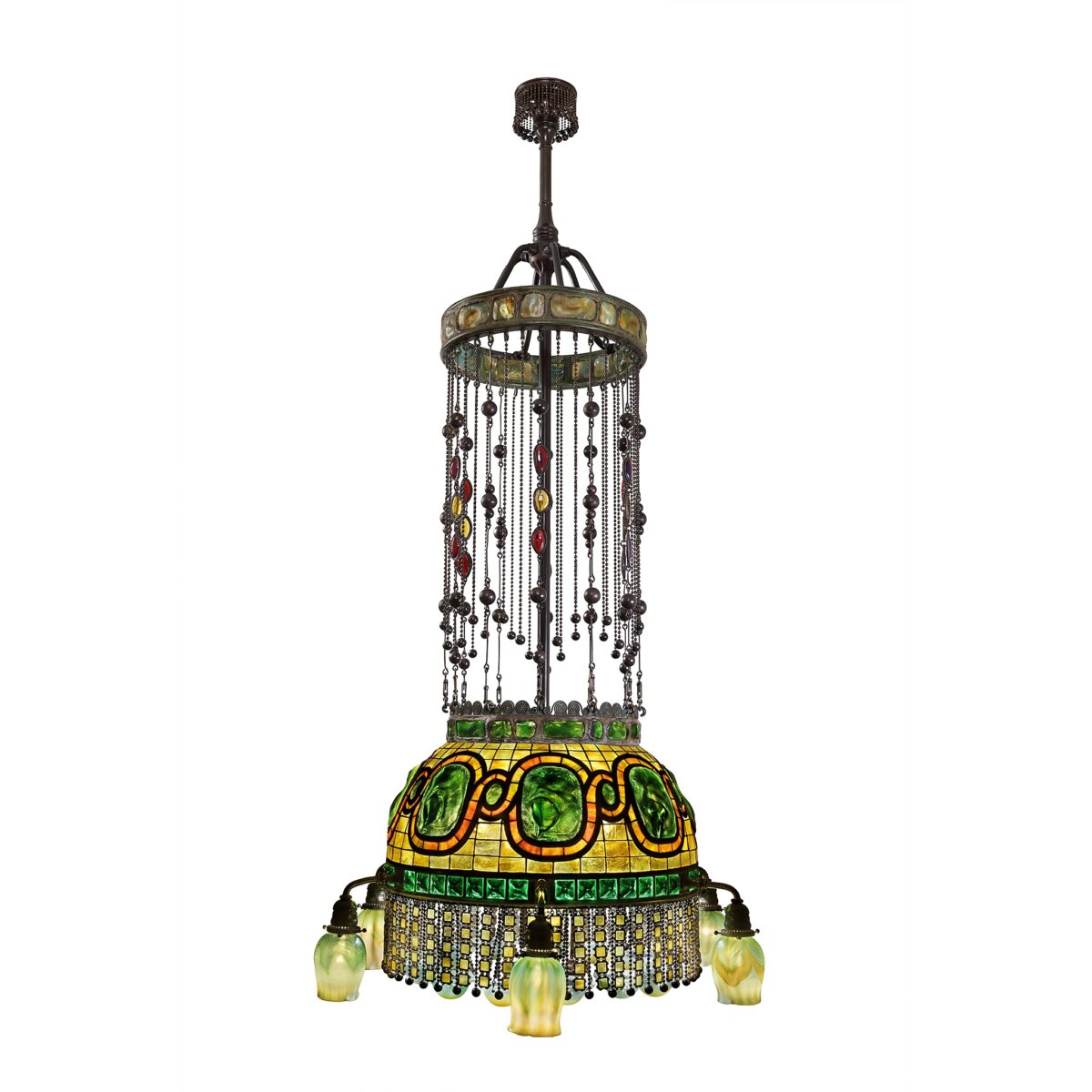
A Moorish influence is visible in the Veterans Room, which integrates harmoniously elements from Celtic, Egyptian, Greek, Japanese, and Persian styles as well. This interior, along with the rest of the Armory, is an apt setting for TEFAF New York, whose exquisite examples of fine art, antiquities, design, and jewelry await collectors, connoisseurs, and the culturally curious.
What arts and culture topics would you like us to cover? Please email ideas or feedback to features@epochtimes.nyc