




As mobility decreases, the bedroom becomes even more important. More than a sanctuary of sleep, the aging-in-place bedroom can become a multifunctional living space where you can read, relax, surf the internet, and watch favorite TV shows. This is true if staying in your own home, but doubly true if you move in with other family members.
The aging-in-place bedroom is all about maintaining independence, balanced by safety, comfort, and a forward-thinking design that allows for future modifications. Ideally, it should be situated on the first floor and have an en suite bathroom for late-night visits. The alternative is to install a chairlift or elevator. For every problem, there’s a solution.
Visionary Design
When renovating or building a home, keep the future in mind. Make doorways a minimum of 32 inches (36 inches is better) and use lever door handles or knob-to-lever covers. Next, place the furniture so that there’s still plenty of room to move about, ideally 36 inches minimum (60 inches minimum for a standard wheelchair).
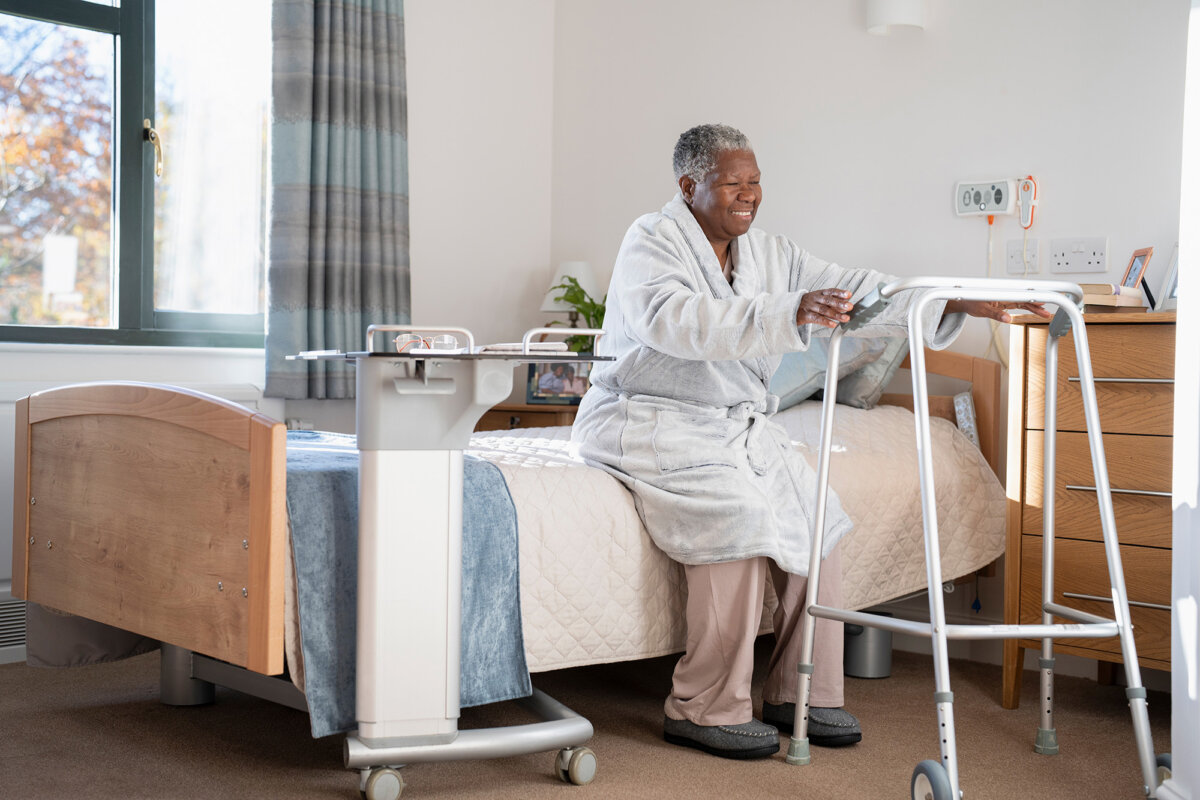
Add blocking behind the walls for future grab rails around the room or attach grab rails to existing studs. If there’s space, add a comfy, sturdy chair to rest on, with the bonus that it can be grabbed for balance if needed. In fact, choose sturdy, stable furniture throughout, and attach tall items, such as shelf units, to the wall.
Bedside Butler
Choose a bedside table with drawers that slide out fully to avoid bending to reach items in the back. Consider installing a landline phone by the bed in case of a power outage, or a call button or alert system. Also, add a bedside table organizer for glasses, remotes, medications, and a flashlight for power outages.
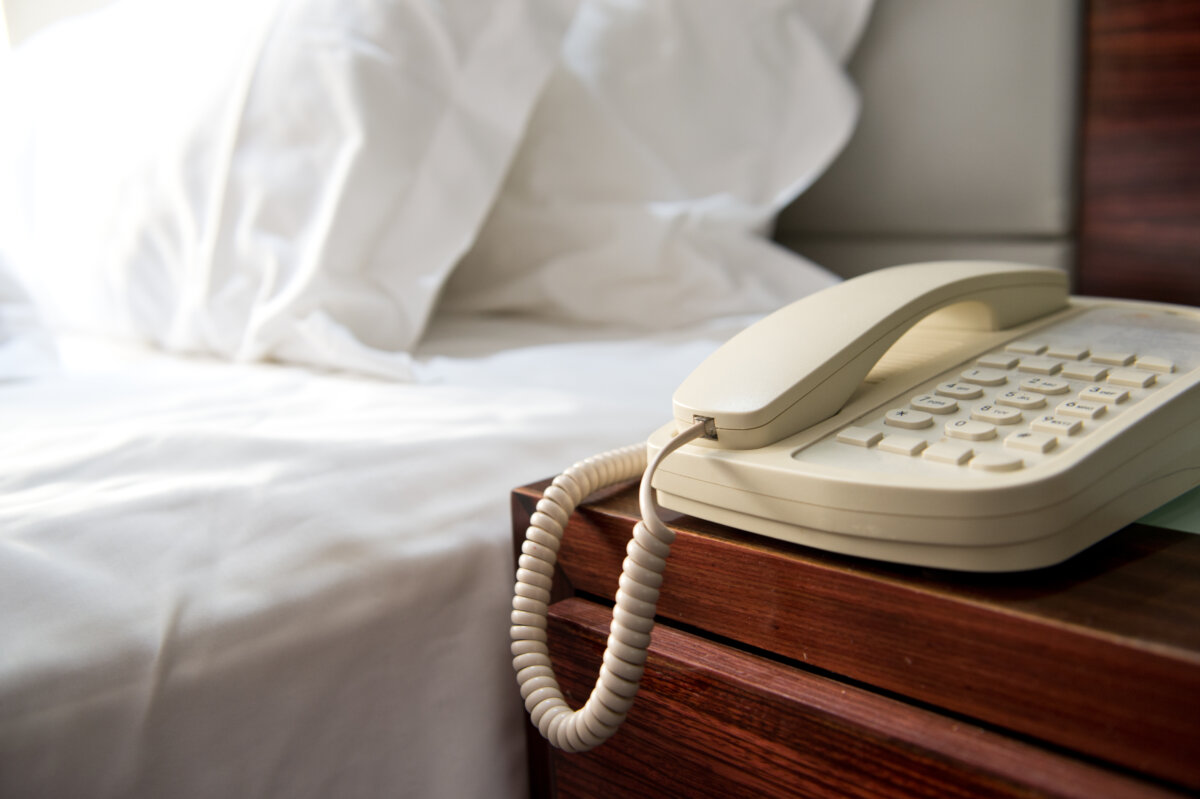
Does a lightweight bedside table shift when you lean on it? Put non-skid pads underneath.
High-contrast furniture, such as a dark bedside table against a light wall, aids the vision-impaired, while designated places for commonly used items help anyone struggling with memory. Have a hamper handy to keep clothing off the floor.
Beneficial Beds
Remove excess decorative pillows from the bed so they won’t fall to the floor and become trip hazards. Bed skirts and long comforters or bedspreads can also tangle the feet.
Want to keep the existing bed? If it’s 17 inches to 23 inches from the floor to the mattress top, it may be just fine. A popular alternative is an adjustable bed with easy-to-reach controls. If you want a hospital bed, keep in mind that it requires specialty-sized sheets.
Access can be improved with bed steps, an assist rail or transfer pole, or bed rails. Choose bed rails that can be operated from inside the bed, as some are caregiver-only operated. Bed rail bumper pads add extra cushion, and a bedside storage caddy keeps books, magazines, tablets, and laptops handy. For the seriously mobility-impaired, a professionally installed ceiling lift or overhead track system can be a game changer, although the ceiling may need to be reinforced.
Add a rolling overbed table or bed desk to support in-bed functionality and under-bed motion-activated lighting for safety.
Curated Closets
Clean closets mean that fewer things can fall from overhead. Then, take advantage of the temporarily empty closet to add a new closet system or add updates to the existing design, even if it’s simply a top shelf and clothing rod setup. Keep essentials within 15 inches to 48 inches of the floor (such as lower closet rods) or use pull-down rods or motorized systems. Place the most readily used items at hand—this also goes for dressers, bedside tables, and other furniture.
Open closet shelves are easier to access and can be further customized with shelf risers and lazy susans. If opting for closet drawers, make sure that they’re full-extension for easy access and soft-close to save fingers. Dedicate some space for shoe storage. When restocking, place heavy items on the floor and lighter things on the top shelves.
Walk-in closets should be brightly lit and have a 32-inch minimum doorway. Use stick-on motion-sensing lights for dark corners. Need more space? Consider a gas-lift or motorized storage bed.

Indoor Glow
To make switches easier to find in the dark, consider illuminated switches or an illuminated or glow-in-the-dark light switch plate. Rocker switches are easier on hands, as are switch enlargers for bed table lamps. Better yet, add touch- or remote-controlled lamps and perhaps purchase some remote-control blinds as well.
Silent Valet
Dressing aids give independence and dignity. Invest in an extra-long shoehorn and a sock aid with extended ergonomic handles to virtually eliminate bending. A dressing stick will assist with reaching for clothing and pulling it on, from pants to blouses, jackets, and more. Meanwhile, a button hook/zipper aid simplifies those pesky chores, even for those with arthritic hands. For those who like to look spick and span, get a power shoe buffer with a long handle designed for stand-up operation.
____________________________________
Fancy Footwork
Low-pile carpet offers minimal resistance underfoot for a walker. It also insulates and helps cushion a fall. Be sure to bevel all room thresholds.
The Mimic
Non-skid, textured wood-look plank or stone-look vinyl tile adds elegance while providing traction for wheelchairs and walkers. Adding a cork underlayment or other padding will help soften it. Make sure that it’s thick enough to withstand wheelchair traffic.
Benefits of Cork
Slip-resistant and boasting a natural warmth, cork flooring is perhaps most popular for its joint-friendly, fatigue-reducing cushioning effects, while at the same time still offering a stable surface underfoot. However, it is less durable than vinyl, particularly for wheelchair users.
More Surfaces
Resilient engineered hardwood’s natural wood grain provides good traction for wheelchair users. Slip-resistant porcelain and ceramic tile increase safety without sacrificing style. Non-slip, shock-absorbing rubber flooring is best used in high-risk areas.
