By the spring of 1940, James “Jimmy” Maitland Stewart (1908–1997) had hit the jackpot in Hollywood. He’d become one of MGM’s top guns, rising from small parts to becoming a star and a major audience draw in movies like “You Can’t Take It With You,” “Mr. Smith Goes to Washington,” and “The Philadelphia Story,” for which he won an Academy Award for best actor.
In October 1940, having received his draft notice, Stewart decided to leave the glitter behind and enlist in the Army. After being declared underweight, which would have allowed him to escape service, the actor passed a second weigh-in and entered the Army months before the attack on Pearl Harbor. Later, Stewart explained that he had a friend assessing the scale on this second attempt.
With his lifelong interest in flying and his hundreds of hours in the air as a pilot, Stewart enlisted in the the Army Air Corps as a private. His degree from Princeton University in architecture helped win him a commission, and he served in a variety of posts, most importantly as an instructor in flying heavy aircraft.
With the war on, Stewart desperately wanted to serve overseas, but refused to use his star status to make that request until rumors reached him that he was being sent on publicity tours and to make films for the military. He approached his commander at that time, Col. Walter Arnold, and made his case for combat. Arnold granted his request, and Stewart was soon bound for England as an operations officer in the 445th Bombardment Group.
January 7, 1944: Ludwigshafen
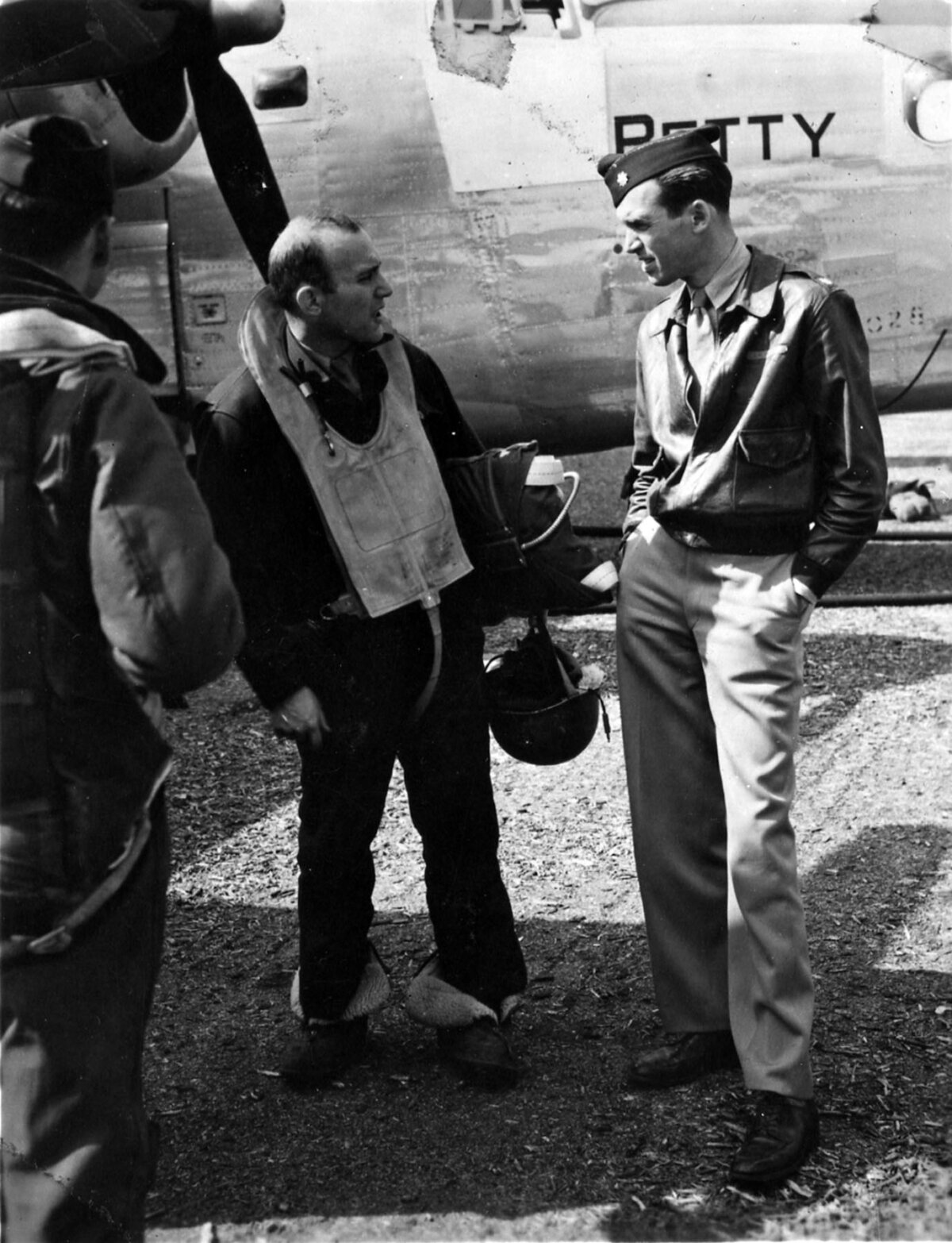
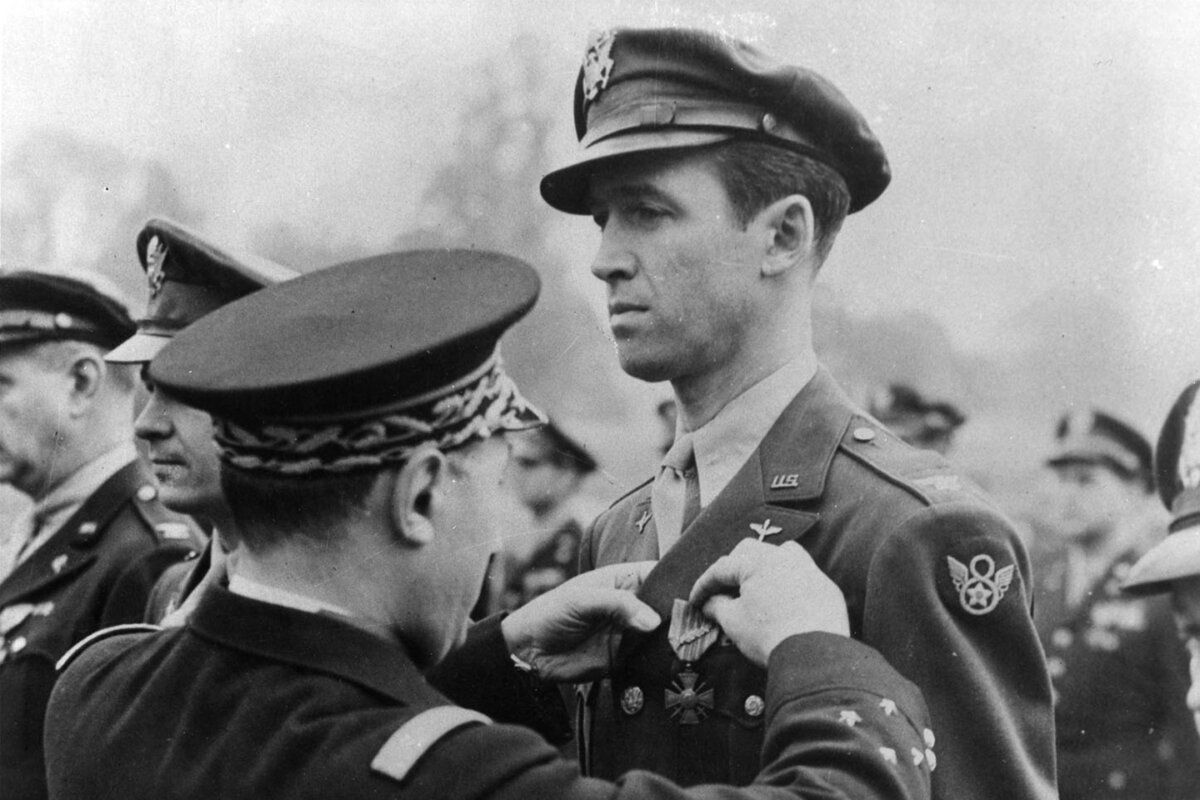
Stewart proved a competent officer, a detail man, and careful planner, traits that won him the admiration of the pilots and crews he commanded. He also led the flight group into the skies over Germany. One of these missions brought him to the attention of his superior officers, and he won a Distinguished Flying Cross.
During one mission over Ludwigshafen, his 445th group was following the 389th bomber group away from their target at Ludwigshafen when Stewart realized that they were 30 degrees off course. He contacted the leader, who contended that Stewart was wrong. Despite the other man’s mistake, Stewart stuck with the 389th, knowing that this course of action could lead to his death and the death of his men, yet also knowing that the 389th would need their help.
Near Paris, some 60 Luftwaffe fighters appeared and swarmed around them, firing away. The 389th’s lead pilot was shot down, and 16 other B-24s fell that day as well. None of Stewart’s aircraft were lost in this horrific battle, and his courage in sticking with the 389th saved some of them as well.
When the war ended, and Stewart returned home, he refused to speak publicly about his experience or to appear in any movie directly about the war. Moreover, he remained in the Army Reserve until retiring in 1968 as a brigadier general.
A Question
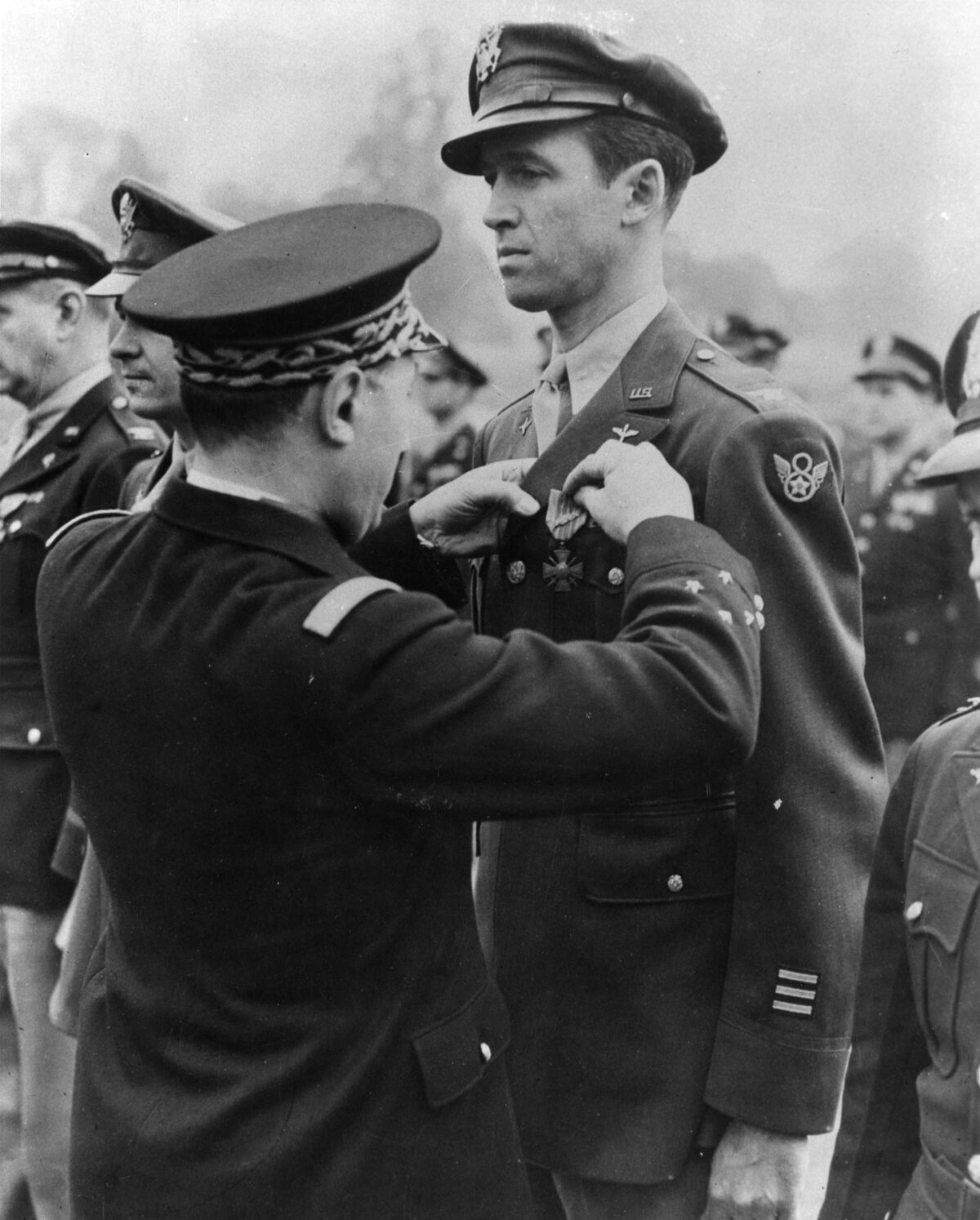
The Academy Award-winning Stewart pushed to enlist in the military months before Pearl Harbor. He requested combat duty, the first major movie star to do so. He refused most interview requests while serving in England and later refused to make a name for himself due to his contribution to the war, which he might easily have done.
And joining that war came with a cost. Stewart never forgot the men under his command who had lost their lives, memories accompanied by suffering, anguish, and guilt.
So why did he do it? Or, as a young person might ask, what planet did this guy come from?
We find an answer in Stewart’s boyhood and youth: his family, his heritage, and his hometown.
Home-Grown Patriotism
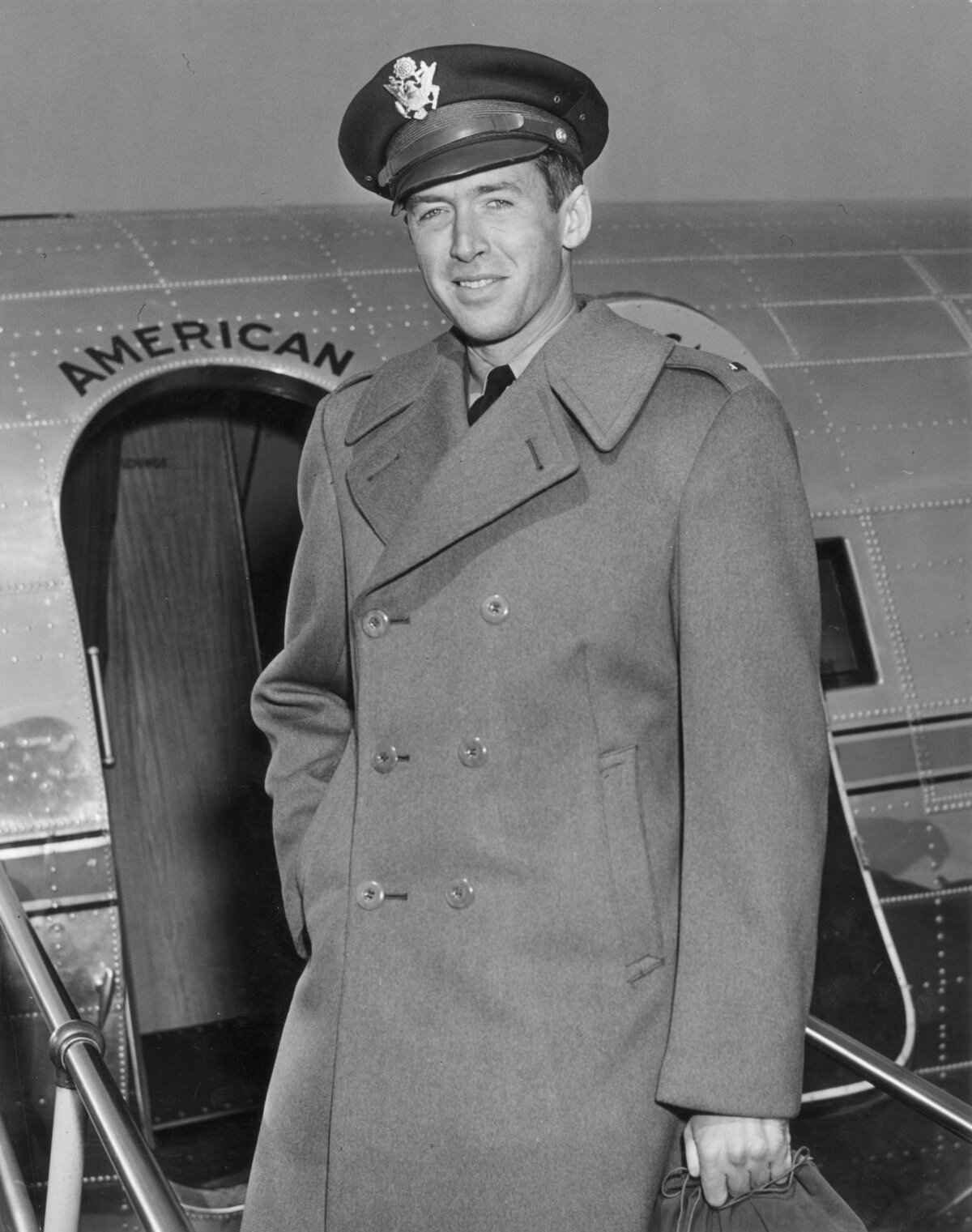
The Stewart family had a proud history of military service. One of Stewart’s ancestors, Fergus Moorhead, had fought the British in the Revolutionary War. His maternal grandfather was a Union general in the Civil War, and Alex, Stewart’s father, fought in the Spanish-American War and then reenlisted at the age of 42 during World War I.
More importantly, Elizabeth and Alexander Stewart provided their son with love, discipline, a strong religious faith, a work ethic, and respect for others. He loved his parents in turn. He always spoke highly of them and modeled his moral code and behavior on his father’s example, whom he adored.
Just before Stewart shipped out to Europe, his father gave him a small book containing Psalm 91 along with a letter: “Jim, I’m banking on the enclosed copy of the 91st Psalm. The thing that takes the place of fear and worry is the promise of these words. I am staking my faith in these words. I feel sure that God will lead you through this mad experience. God bless you and keep you. I love you more than I can tell you. Dad.”
Stewart carried this letter for the rest of his life. The inscription on his tombstone is taken from the 91st Psalm: “For he shall give his angels charge over thee, to keep thee in all thy ways.”
Stewart also felt a fierce loyalty to his hometown of Indiana, Pennsylvania. There, Alex Stewart operated a hardware store that his father had opened in 1853. Indiana reinforced the values of the Stewart home. On one of his many visits, Stewart paid the town this tribute: “I’ve always known there were kind decent folk in Indiana. Folks who get out of bed every morning and do a full day’s work and live their lives in a way that reflect well on the country. … It’s the character of Indiana, the character for which all of us fortunate enough to live here take a sample and keep it with us wherever we go. I belong here. It’s a good feeling, and I’m grateful for it.”
In the classic and beloved movie “It’s a Wonderful Life,” Stewart plays George Bailey. At the end of the film, his brother, Harry Bailey, a pilot who has himself won fame and saved lives just as Stewart did in real life, unexpectedly shows up on Christmas Eve and, in front of a crowd of family and friends, raises a glass to George with this salute: “To my big brother George, the richest man in town.”
Jimmy Stewart was by no means the richest man in Hollywood, but his patriotism and sacrifice enrich all who know his story.
What arts and culture topics would you like us to cover? Please email ideas or feedback to features@epochtimes.nyc