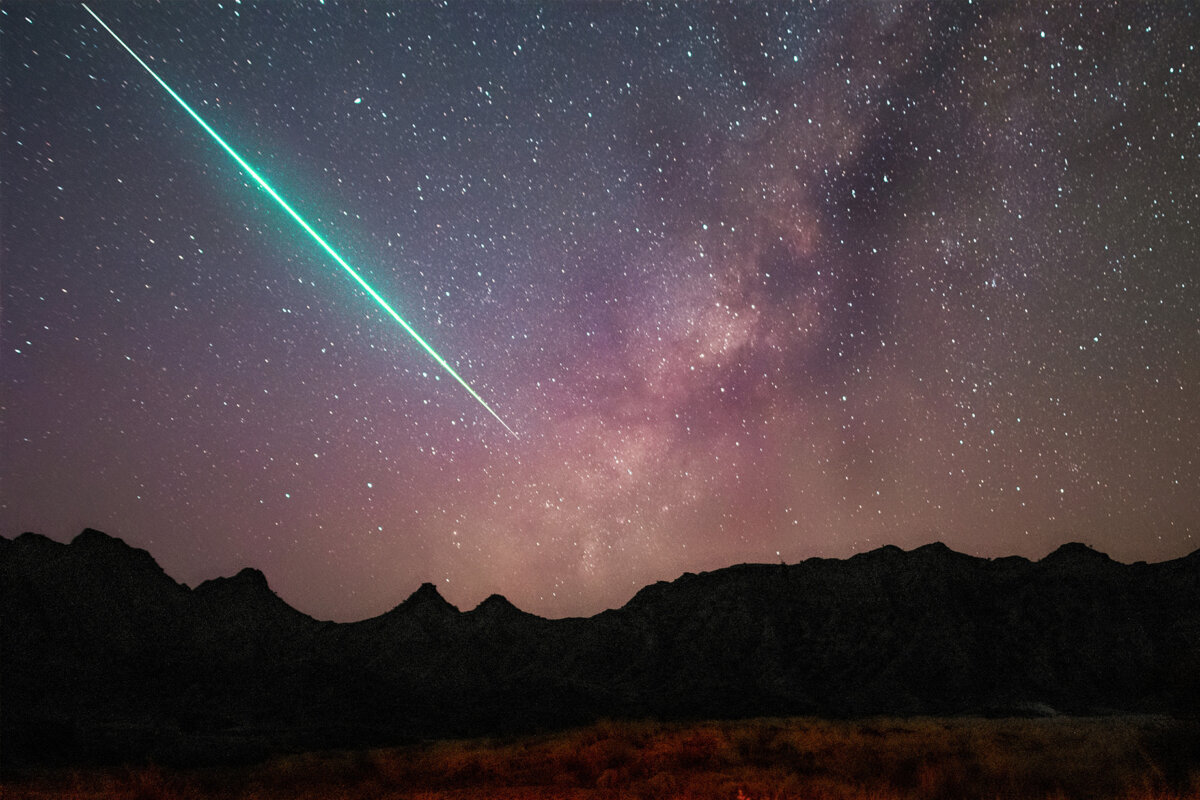
There’s a good chance you will spot shooting stars streaking from the eastern horizon during twilight hours later this spring season. A daytime meteor shower called the Arietids—though largely invisible to human eyes (since they fall during daylight)—will peak in June. Being incredibly active meteors, however, many are likely to spill over into the predawn sky when it’s still dark enough to see them.
The big question, though, is how many will we see?
Since the Arietids are most abundant in the daytime, the majority will be drowned out by sunlight. Despite the sunshine, however, scientists have used radar and radio echoes to count a nominal hourly rate of 50 to 200 Arietids during peak period. That’s a fair number as meteor showers go, though far fewer will be visible.
Meteors During the Day?
The Arietids’ awkward timing owes to celestial geometry. Meteors travel along fixed vectors with respect to Earth’s position in space, and the point from which the Arietids seem to radiate, their radiant, happens to reach its height in our sky when the sun is visible. Meteors are typically most dramatic when their radiant is high, but the sky will be bright and the meteors impossible to see when the Arietids rain down.
Yet there’s still hope for sighting some during early twilight.
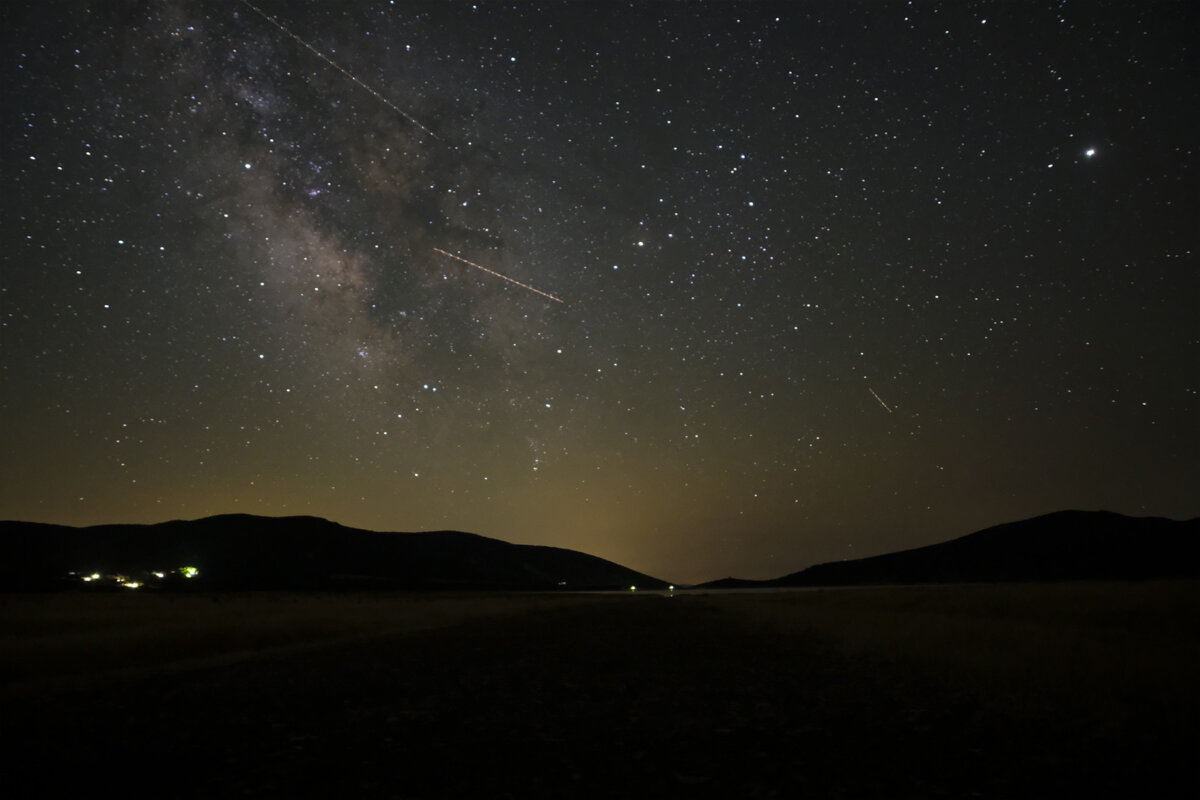
A narrow window for viewing the Arietids exists between when their radiant breaks the horizon and sunrise. This year, look between 3:02 a.m. to 4:48, when there will be no noticeable sunlight. Fortunately, the waning crescent moon will offer dark skies, boosting the odds of seeing more meteors.
Experts say you might see a modest 14 meteors per hour in the days around peak period.
The Arietids are expected to arrive between May 22 and July 3 when the Earth ploughs through a specific stream of meteoroids in space—the birthplace of Arietids. This crossroads along Earth’s orbit is an annual event you can set your calendar by. We’ll hit the thickest patch of those meteoroids around June 10, though it’s hard to say exactly when they’ll peak; meteors are notoriously sporadic.
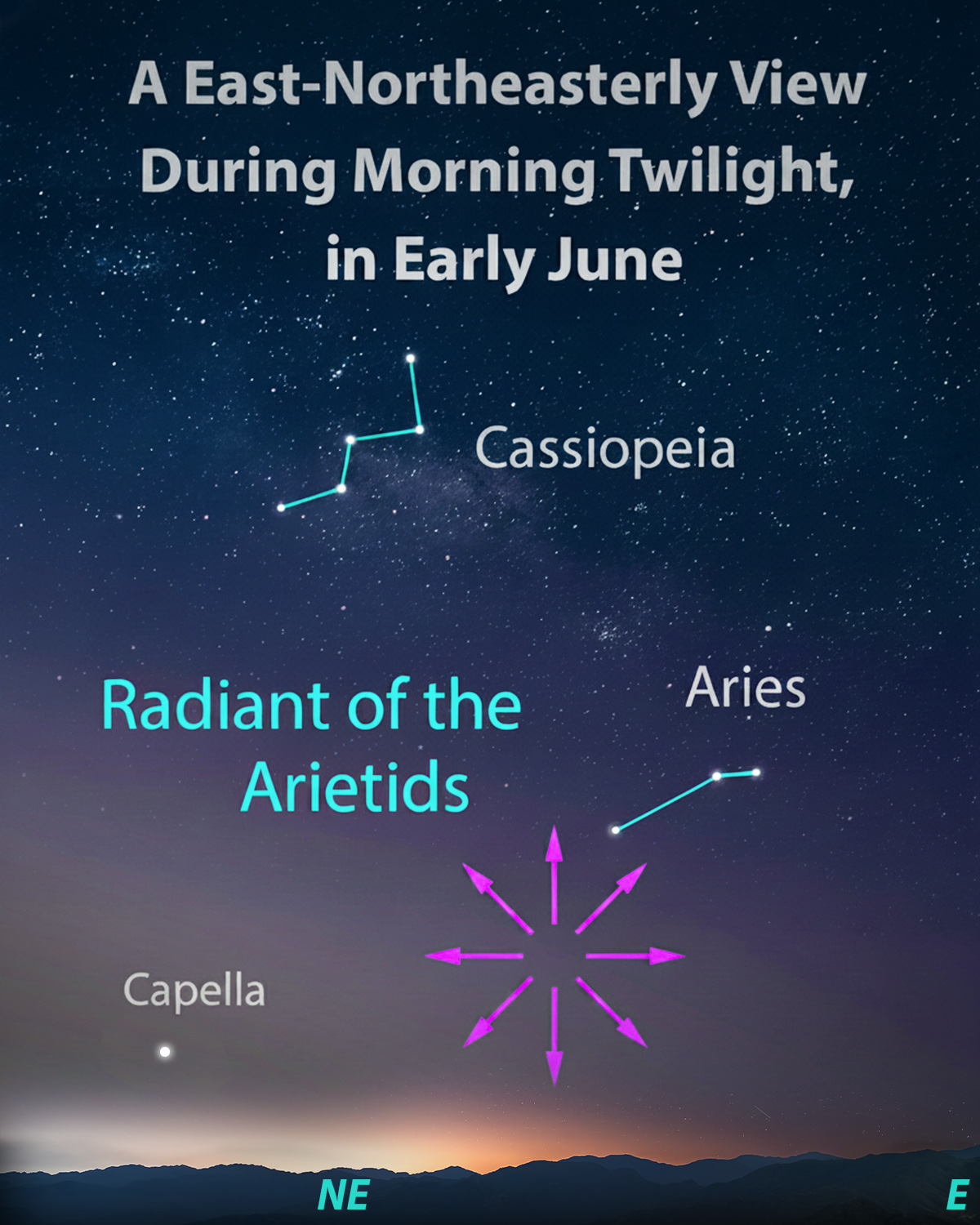
A few more pointers for Arietid viewers are probably in order: Find a relatively open horizon, because these meteors usually shoot from below. Look east-northeast just below the constellation Aries where the Arietids’ radiant sits though no meteors will occupy the radiant itself; they’ll fan upward across a wider expanse. Once day breaks, the show is over.
As a last resort, NASA offers a way to monitor the Arietids’ daytime activity through its Meteor Shower Portal though, sadly, some of the charm of watching a shooting star in person will be lost.
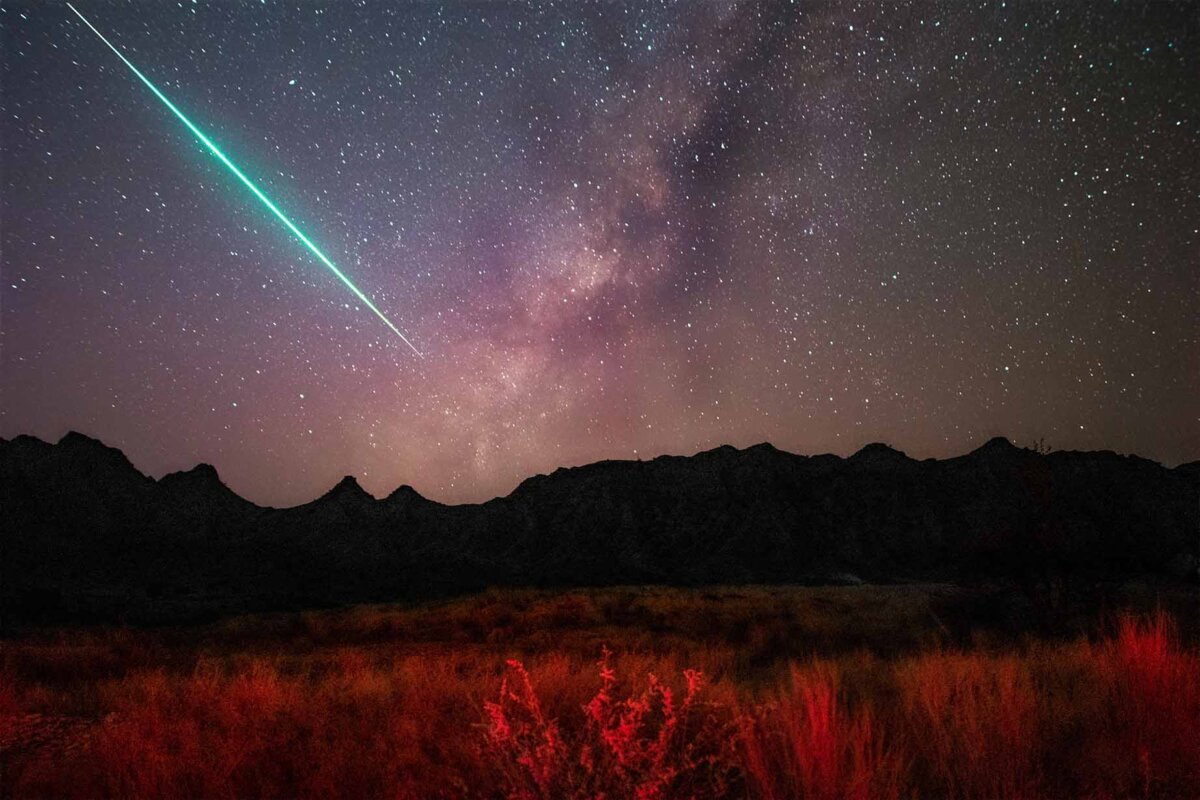
Where Do They Come From?
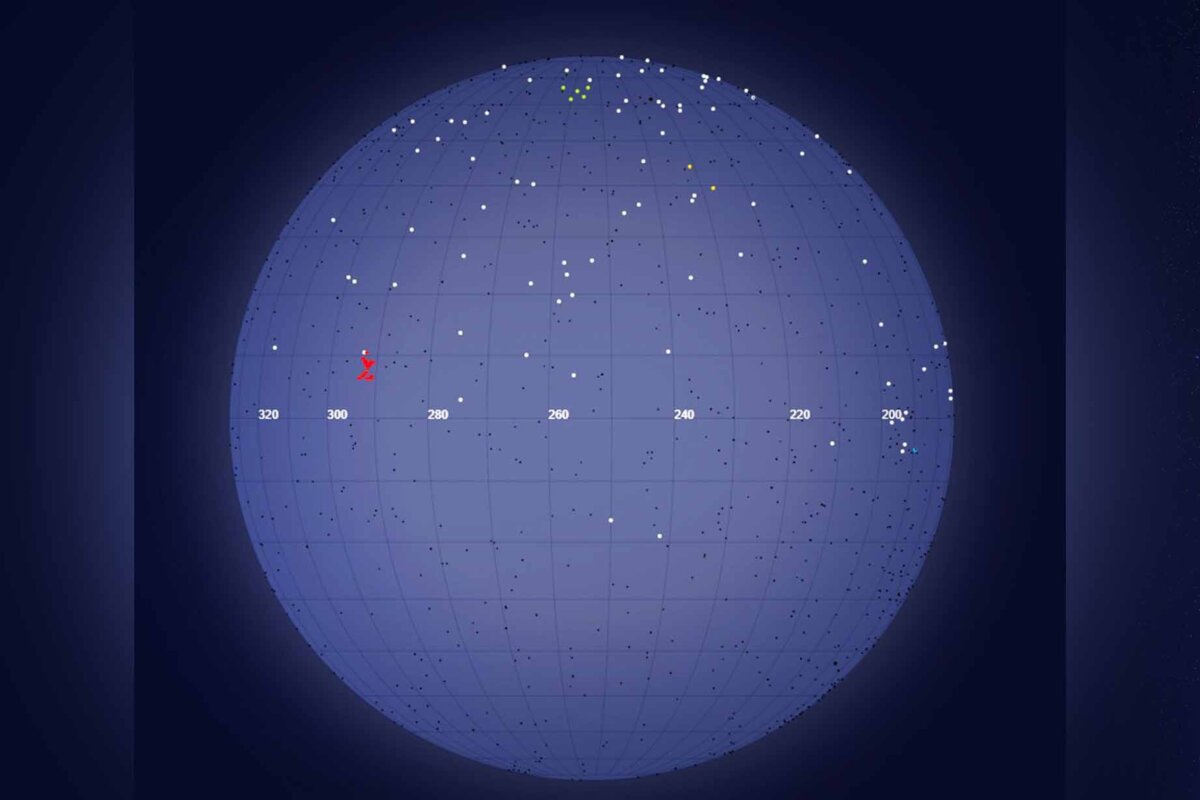
Meteor showers arise when Earth collides with streams of grit-like debris in space, which burns up in our atmosphere and causes falling streaks of light. This debris is the remnants of larger objects, such as comets or asteroids, that vented their material long ago. Over time, that debris gradually distributes itself along the orbit of its parent object throughout the solar system.
The Arietids seem to radiate from the constellation of their namesake, Aries, but this is just coincidental. There’s no connection between the Arietids and Aries beyond a trick of one-point perspective that makes them seem to overlap. Sort of like train tracks converging on the horizon, the Arietids meet at their radiant if you follow their orbital motion backward.
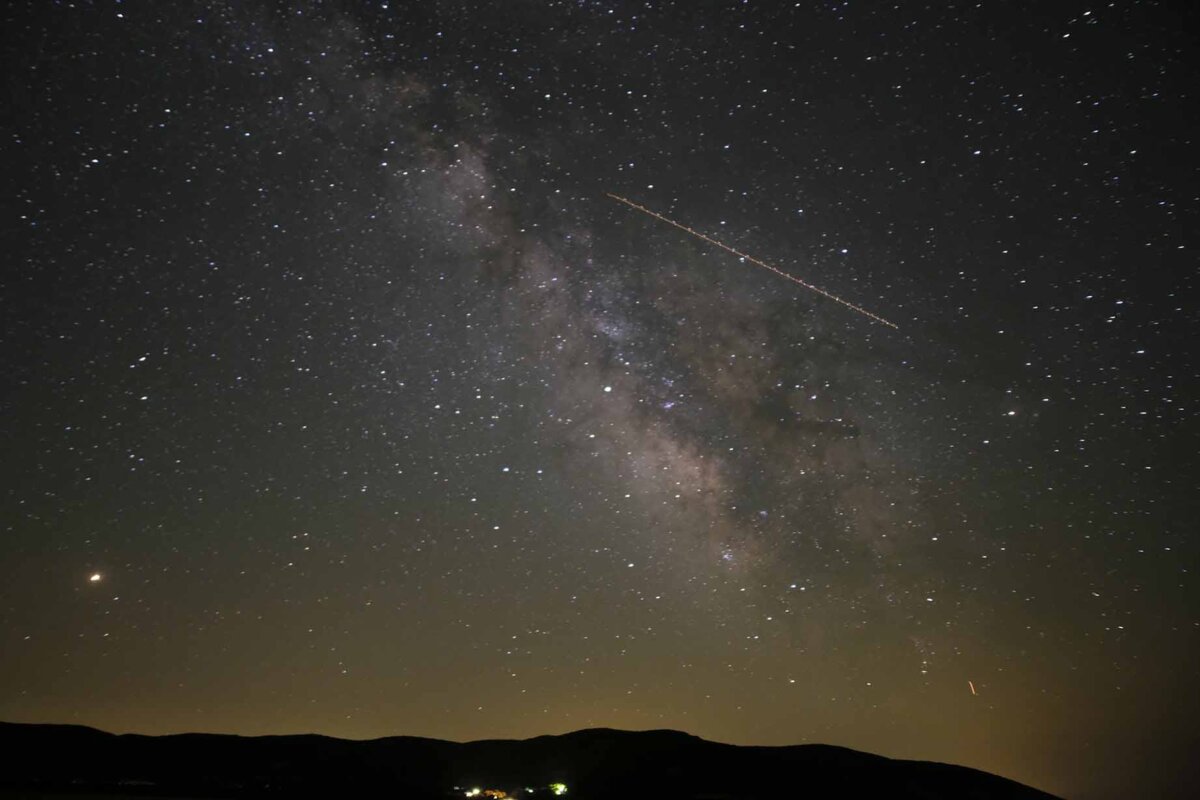
In reality, this shower has always existed relatively close to home while Aries’ closest star is trillions of miles (roughly 12.5 light-years) away. The meteors are only 60 miles above Earth when they ignite.
To look toward the Arietids’ radiant is to look, in a sense, back in time when this ancient space dust was ejected from a larger object eons ago. Astronomers speculate that meteors associated with the Arietids might have broken off a comet called 96P/Machholz, or perhaps the larger Machholz Complex containing a host of objects: two comet groups, eight meteor showers, and at least one asteroid.
To look east, however, is to look ahead to where you’ll see one of the most active daytime meteor showers. Twilight hours may be the only viewing window. Look for the Arietids shooting upward from just above the horizon.