



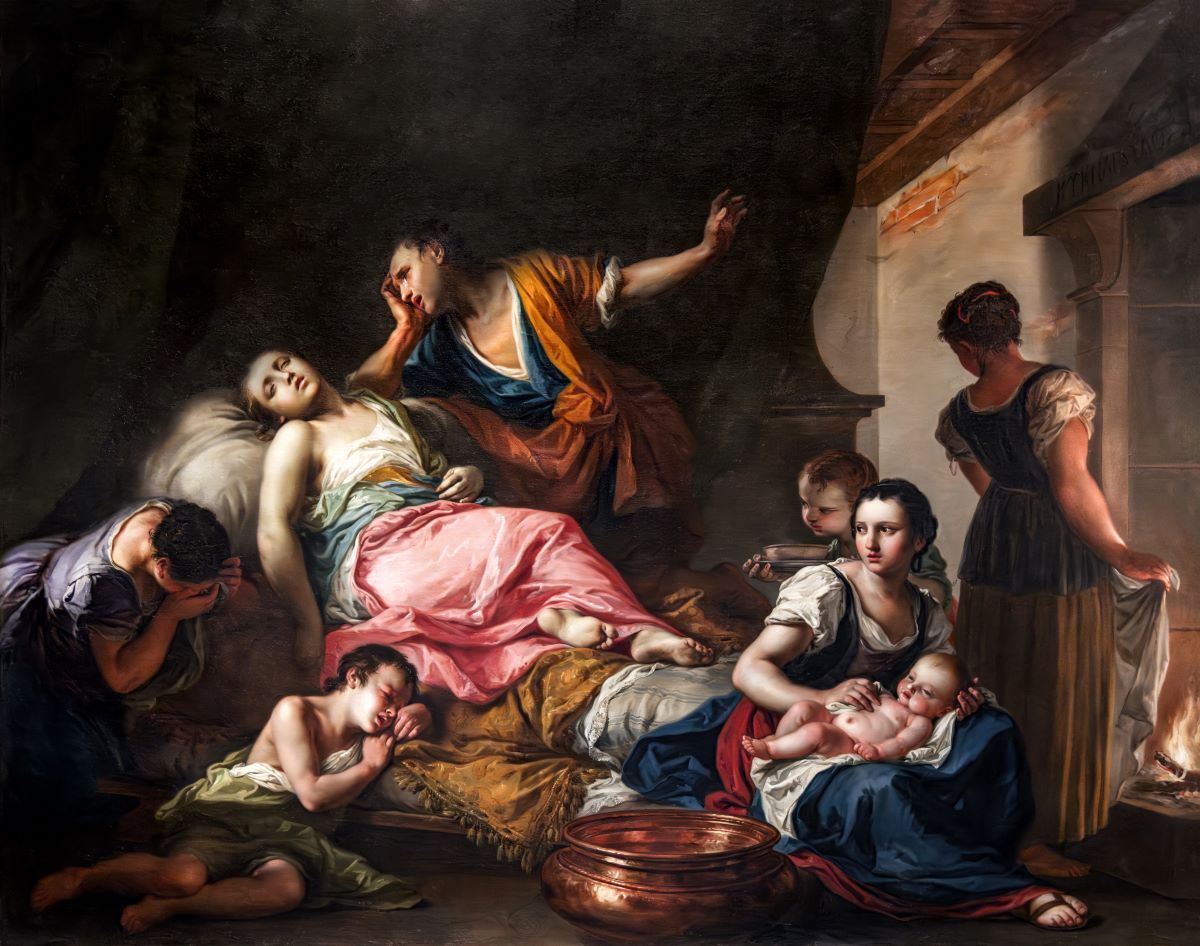
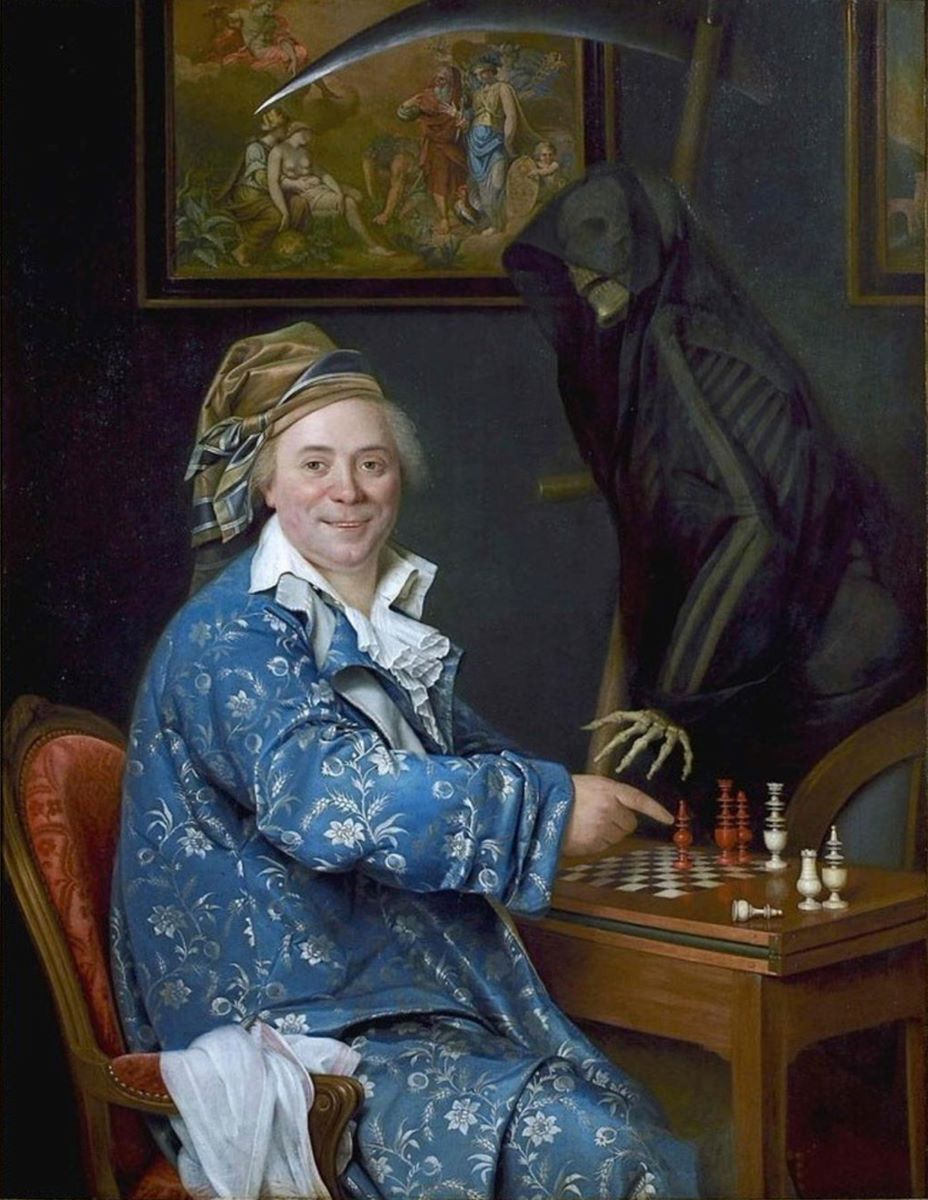
Death assumes a wide array of disguises in art and literature. He appears as a reaper, a horseman, a ferryman, an angel, and an old friend. He is usually personified as a male figure. Across these depictions, death is inviting, conquering, ruthless, or sometimes even comforting. Taken all together, death appears rather mercurial.
Two of the most famous classic poems about death, Emily Dickinson’s “Because I Could Not Stop for Death” and John Donne’s “Holy Sonnet X,” not only provide distinctive characterizations of death but also offer nearly contrasting portraits.
Dickinson’s poetry is not easily categorized but blends elements of Romanticism and Realism. She wrote “Because I Could Not Stop for Death” around 1862 or 1863, during her most productive years.
As with many of Dickinson’s poems, it’s written in common meter (quatrains with alternating lines of iambic tetrameter and trimeter) and has a rhyme scheme of ABAB.
Donne, who wrote during the Early Modern period in England and was one of the Metaphysical poets, wrote “Holy Sonnet X” around 1609. The poem is a hybrid of the Petrarchan and Shakespearean sonnet forms, beginning with an octet and ending with a couplet.
‘Because I Could Not Stop for Death’
Because I could not stop for Death–
He kindly stopped for me–
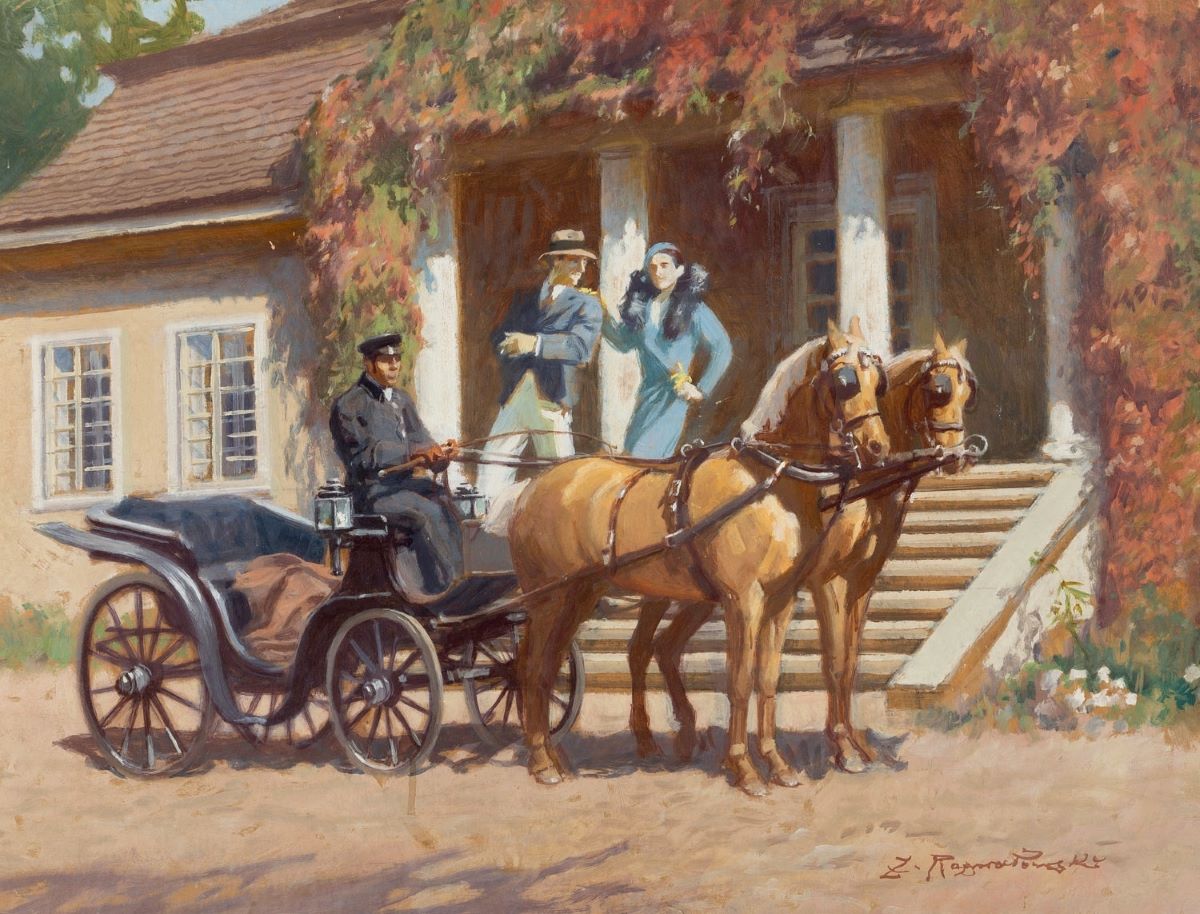
The Carriage held but just Ourselves–
And Immortality.
We slowly drove–He knew no haste
And I had put away
My labor and my leisure too,
For His Civility–
We passed the School, where Children strove
At Recess–in the Ring–
We passed the Fields of Gazing Grain–
We passed the Setting Sun–
Or rather–He passed Us–
The Dews drew quivering and Chill–
For only Gossamer, my Gown–
My Tippet–only Tulle–
We paused before a House that seemed
A Swelling of the Ground–
The Roof was scarcely visible–
The Cornice–in the Ground–
Since then–’tis Centuries–and yet
Feels shorter than the Day
I first surmised the Horses’ Heads
Were toward Eternity–
Dickinson depicts death as a kindly suitor but lures the speaker into the carriage under false pretenses. By the end of the poem, it is clear that she does not know the destination of the journey and must surmise that “the Horses’ Heads/ Were toward Eternity –.”
Immortality sits in the carriage as the mute chaperone whose presence could almost be comforting but instead is unsettlingly silent. In spite of her initial discourtesy of refusing to stop for death, the speaker responds to his civility with generosity, setting aside both leisure and labor for him (and, in so doing, giving him all her days).
The would-be scenic route they pass has an eerie quality to it: the innocent joy of children at play is marred by the fact that they “strove” with one another in the ring (which itself is both a symbol of eternity and a sign of constrictiveness) and the fields of grain gaze at the carriage as they pass.
The lines “We passed the Setting Sun—/ Or rather—He passed Us—,” rather than coloring the carriage ride with the beauty of a sunset, places the emphasis on the movement of the sun contrasted with the movement of the carriage, and, in either case, light and warmth have drained from the scene. The repetition of “ground” instead of a rhyme in the fifth stanza abruptly ends the rhyme scheme and concludes the carriage ride with a finality.
In the final stanza, the lady has been duped in both the destination of the carriage and the nature of Immortality: She did not initially know which direction the carriage was going, and Immortality turns out to be nothing more than a bleak, endless passing of time. Perhaps the presence of Immortality (from the Latin “immortalis” meaning “deathless”) lured the speaker into the carriage and reassured her that death will conduct himself civilly.
However, at the end of the poem, the company of three has dwindled down to one; they pause before the speaker’s new abode, and it is clear that she will be crossing the threshold alone. Death has proven to be a faithless companion, and eternity proves to be not timelessness but rather nothing but time, a measurement of centuries and days.
‘Death, Be Not Proud’
Death, be not proud, though some have called thee
Mighty and dreadful, for thou art not so;
For those whom thou think’st thou dost overthrow
Die not, poor Death, nor yet canst thou kill me.
From rest and sleep, which but thy pictures be,
Much pleasure; then from thee much more must flow,
And soonest our best men with thee do go,
Rest of their bones, and soul’s delivery.
Thou art slave to fate, chance, kings, and desperate men,
And dost with poison, war, and sickness dwell,
And poppy or charms can make us sleep as well
And better than thy stroke; why swell’st thou then?
One short sleep past, we wake eternally
And death shall be no more; Death, thou shalt die.
In Donne’s poem, death appears as a pitiable figure, an unsuccessful assailant laying siege to an impenetrable fortress. He is all the more pitiable because he suffers from the delusion that he is successful: “Those whom thou think’st thou dost overthrow/ Die not, poor Death, nor yet canst thou kill me.”
The speaker reasons that if rest and sleep are good and bring pleasure, death, which they mirror, must be a still greater source of good. Death, therefore, is also depicted as rest, a deliverer from the pains of this world. The speaker addresses him as “poor death” because he can’t successfully do the one thing he is supposed to do, namely end life.
Not only does death fail to destroy, but he is less effective than things such as “poppy or charms” that bring on sleep; death cannot even induce a lasting sleep, for, instead, “one short sleep past, we wake eternally/ And death shall be no more.” In the second half of the poem, death becomes not only an opponent but an inferior: “Thou art slave to fate, chance, kings, and desperate men.” With the final line, the speaker passes the death sentence; death falls by his own sword.
The only one truly destroyed in the poem is death himself. Donne, an Anglican pastor, is echoing the tone of 1 Corinthians 15: 54-55: “Death is swallowed up in victory. Where, O death, is your victory? Where, O death, is your sting?” Death is powerless because as St. Paul says, “The sting of death is sin” (1 Corinthians 15:56), and Christ conquered both sin and death through his resurrection. Through him, we look forward to eternity as not just an endless stretch of time as depicted in Dickinson’s poem, but as eternal life and union with God.
In the end, the poems are not so much pictures of death as they are pictures of eternity. Personification veils the fact that death does not have a proper substance but is rather a privation of life. The poems do not offer a definitive answer but prompt us into contemplation of the great human question of what happens after death. While Dickinson’s poem serves more as a reminder to not let death steal upon us like a thief, Donne’s poem does not urge us to remember our end so much as remind us that there is no reason to fear it. Beyond death is either nothing or everything; death himself is an inevitable but short-lived visitor.
What arts and culture topics would you like us to cover? Please email ideas or feedback to features@epochtimes.nyc.
