



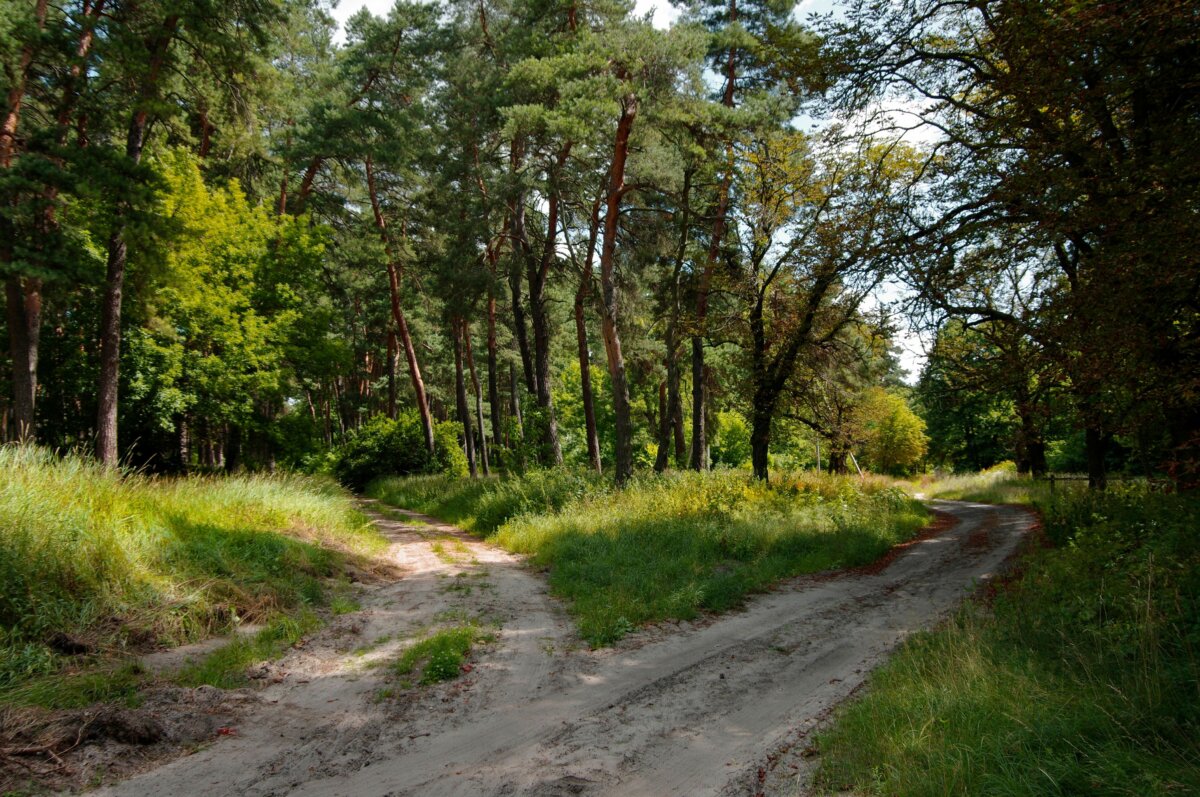
Around the time of graduation or other such milestones, one might hear someone quote the final stanza of Robert Frost’s “The Road Not Taken” as an anthem of individualism: “I took the [road] less traveled by,/ And that has made all the difference.” Far from speaking these lines with a sigh, as the speaker in the poem does, most people will recite them swelling with sentiment as a rousing call to go against the crowd, strike out into the unknown, and be true to oneself.
Two roads diverged in a yellow wood,
And sorry I could not travel both
And be one traveler, long I stood
And looked down one as far as I could
To where it bent in the undergrowth;
Then took the other, as just as fair,
And having perhaps the better claim,
Because it was grassy and wanted wear;
Though as for that the passing there
Had worn them really about the same,
And both that morning equally lay
In leaves no step had trodden black.
Oh, I kept the first for another day!
Yet knowing how way leads on to way,
I doubted if I should ever come back.
I shall be telling this with a sigh
Somewhere ages and ages hence:
Two roads diverged in a wood, and I—
I took the one less traveled by,
And that has made all the difference.
But Frost didn’t write the poem thinking its lines would be the perfect adornment for graduation cards. In fact, he wrote the poem as a jest to poke fun at his chronically indecisive friend Edward Thomas, who always had difficulty choosing which path to take when the two went on walks together and would frequently lament that they had not taken the other path.
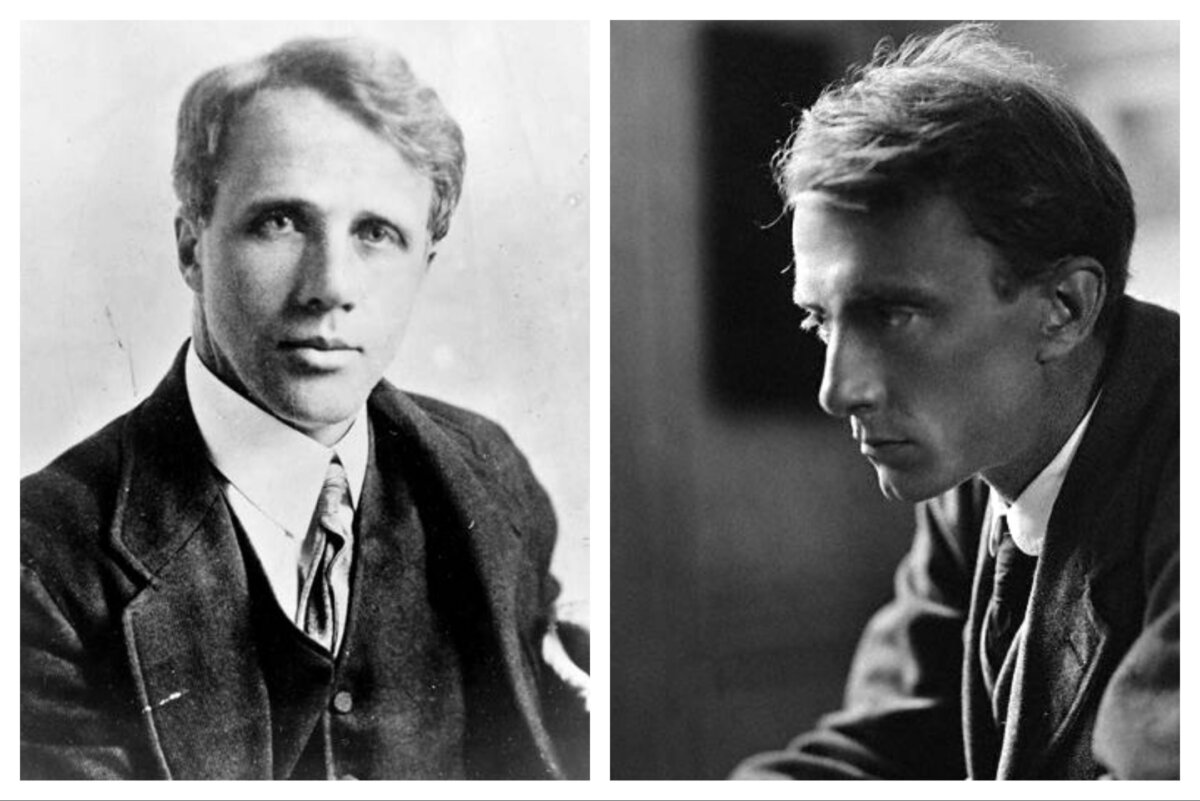
Frost sent the poem with no explanation in a letter to Thomas in 1915, and Thomas himself didn’t get the humor of the poem until Frost eventually explained the joke.
Frost later remarked to Thomas that he had read it to a group of college students and that the poem was “taken pretty seriously” even though he did his best to make it obvious that he was “fooling.” The poem has only continued to befuddle readers, who, despite Frost’s best efforts, have insisted on finding it inspirational rather than comical.
The whole of the first 2 1/2 stanzas is one long sentence expressing the speaker’s laborious waffling in his choice between the two roads. The miraculous gift of bilocation being denied him, the speaker has to choose between two goods, knowing that the choice of one will exclude the other. With the rambling articulation of the decision-making process, Frost gently mocks the gravity with which the speaker considers such a trivial matter, to the point of irrationality.
In the lines “Long I stood/ And looked down one as far as I could/ To where it bent in the undergrowth,” we see the speaker’s attempt to foresee all the consequences of his choice. However, the bend in the road makes it impossible to see its end, and, at the outset, neither path offers any portent of what is to come. The speaker must simply make as good a decision as he can based on the appearance of the start of the paths.
Despite this limited bit of information to ponder, the speaker spends a long while paralyzed at the fork in the road, vainly trying to see the entirety of each path. As far as he is able to see, he is deciding between two practically equal goods. One is “just as fair” as the other, and they are so nearly equally worn that the less traveled road wants for only one more set of footsteps to wear them both evenly (“the passing there/ Had worn them really about the same”).
The speaker himself acknowledges that the fact that one road is slightly less worn only “perhaps” gives it “the better claim”; he doesn’t know if this is truly the case or if the more traveled road would lead to a better outcome.
Unlike the many readers of the poem who view the road more traveled with scorn, the speaker of the poem recognizes it as beautiful and, in fact, hopes to someday have the chance to take that road as well: “Oh, I kept the first for another day!/ Yet knowing how way leads onto way,/ I doubted if I should ever come back.” In fact, even in the moment of his decision, he knows he’ll be thinking about the road that he did not take for years to come.
Many readers mistakenly refer to the poem as “The Road Less Traveled” from its most famous lines that have caused the poem to become an emblem of willpower and a pioneering spirit. However, the poem is actually titled after the other road, the one he did not choose.
Frost’s deliberate choice of “The Road Not Taken” as the title drives the reader’s thought to where the speaker’s probably is—on what could have been rather than on what is. In this case, the final stanza carries not so much a tone of triumph as it does a tone of wistfulness over a classic “the grass is always greener” (or less worn) sort of conundrum.
The final stanza is comical considering that the speaker does not know if his chosen path really did make “all the difference.” The tone is sometimes read as self-congratulatory with a self-contented or relieved sigh, but the tone could also be melancholy, with the speaker regretfully sighing that the road he took made a negative difference in his life. Either way, the speaker has no way of knowing where the other path would have led because he could not walk both of them. With this in view, both exultation and lamentation would be nonsensical.
Although more teasing rather than inspiring, the poem may perhaps offer some direction to the directionless, but only insofar as it shows that in decisions between two goods, the choice matters less than the resolve.
Contrary to what might be inferred from its title, “The Road Not Taken” illustrates why our thoughts should be on the road currently traveled. There’s no use in wistfully recalling the road not taken because “way leads onto way” without leading us to a way of knowing what could have been.
Here’s a personal example: When the chronically indecisive asked for advice on how to make a perfect decision, a former teacher of mine would always say that she would make a choice, and then, 10 or 20 years down the road, she would know whether it was the right one.
The fear in the poem stems not from the unknown but rather from what is lost. Accepting this loss keeps us from remaining paralyzed at a crossroads; instead, we may go on our way. In gleaning even this much from the poem, I can only hope that I have not joined those who first listened to it and disappointed Frost by taking it much too seriously.
What arts and culture topics would you like us to cover? Please email ideas or feedback to features@epochtimes.nyc.
