“Let us then gather around their sacred remains and garland the passionless mounds above them with the choicest flowers of Springtime; let us raise above them the dear old flag they saved from dishonor.”—Gen. John A. Logan in his call for the national recognition of Decoration Day
On the last Monday of May, the United States observes Memorial Day. While it’s now a day to honor all veterans who died in service to our country, this holiday began as a day of remembrance for fallen soldiers from the Civil War.
Its earliest celebrations consisted primarily of decorating these veterans’ graves with wreaths and flowers, honoring their service while hoping American servicemen would never have to fight their neighbors again. Because of this, it was originally called Decoration Day.
It’s now standard practice to villainize the Confederacy in depictions of the Civil War, but this wasn’t the case in classic films. Perhaps because it hadn’t been all that long since this terrible strife engulfed our country, Golden Era Civil War films strove to show Confederates as decent human beings.
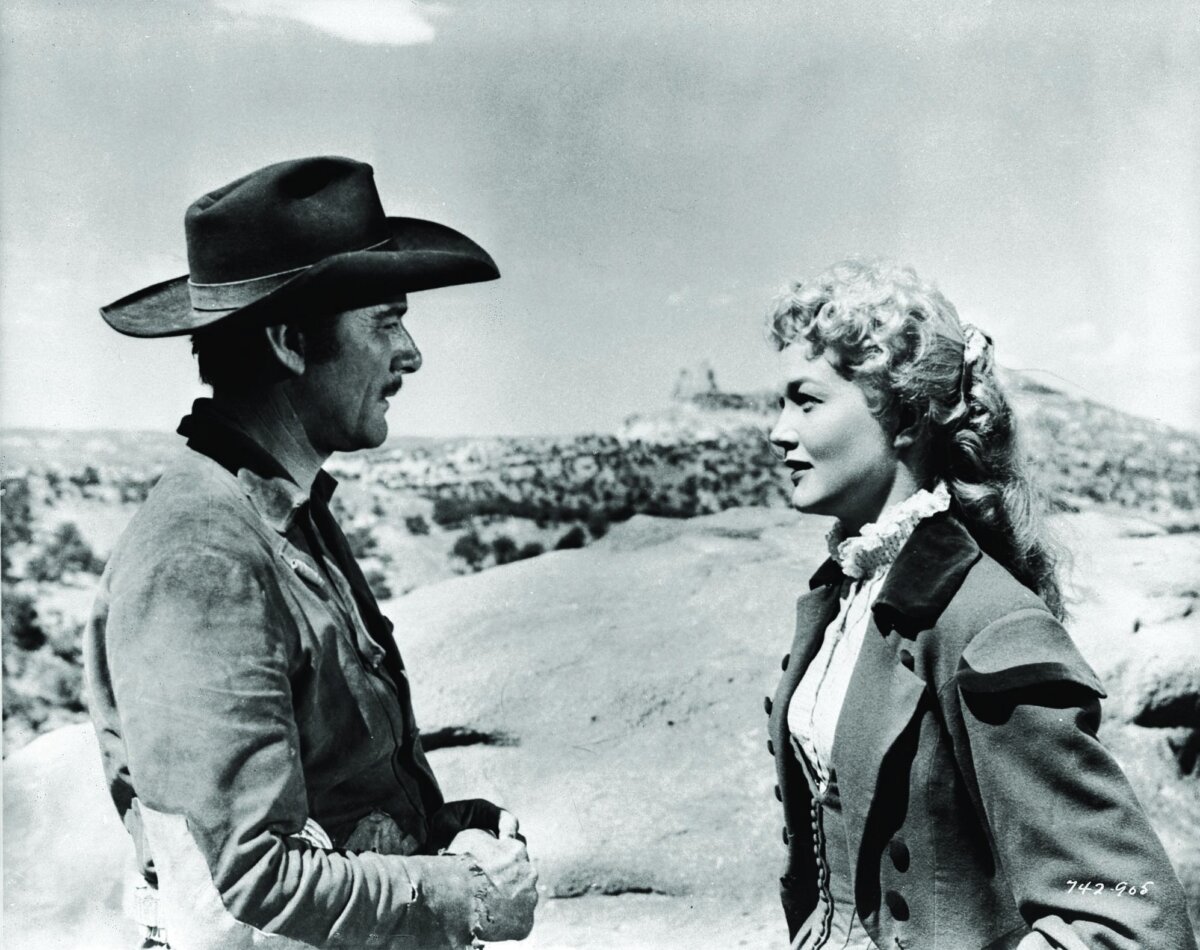
Two comparable films that present this idea by highlighting the two sides’ shared humanity in adverse circumstances are “Rocky Mountain” from 1950 and “Red Mountain” from 1951.
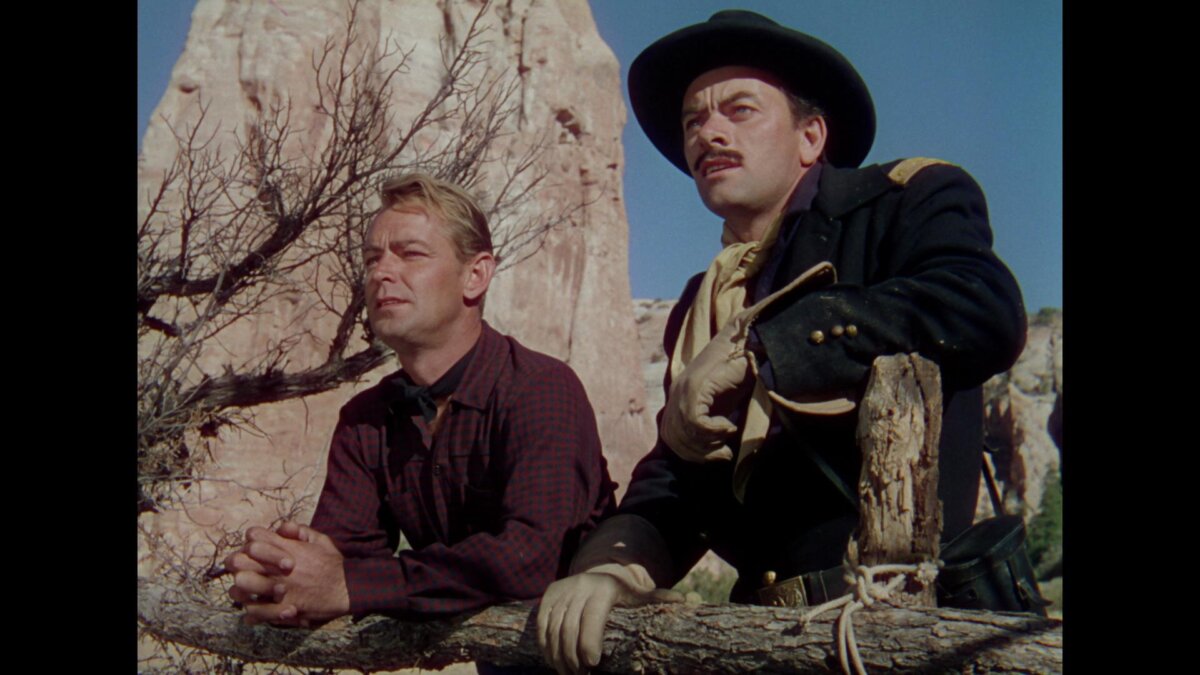
‘Rocky Mountain’
In 1865, a troop of eight Confederate soldiers is secretly sent to California under the command of Capt. Lafe Barstow (Errol Flynn). Their mission is to persuade outlaw Cole Smith and his army of cutthroats to wage a full-scale attack on California, forcing the Union to send more troops out west and give the dwindling Confederate army a chance in the South.
The troop reaches Rocky Mountain, where they encounter a man (Howard Petrie) claiming to be California Beal. He says Smith sent him. The soldiers observe a passing stagecoach being ambushed by a Shoshone war party, so they fight off the Indians and rescue two survivors: the driver (Chubby Johnson) and Johanna Carter (Patrice Wymore), a passenger on her way to the nearby Union garrison to see her fiancé, Lt. Rickey (Scott Forbes).
When Rickey arrives, Barstow captures his party rather than killing them, for Johanna’s sake. Rickey reveals that “Beal” is actually Smith himself. Smith leaves to gather his men, promising to return in two days. However, when one of Rickey’s Shoshone guides escapes, Southerners and Northerners alike face an impending Indian massacre.
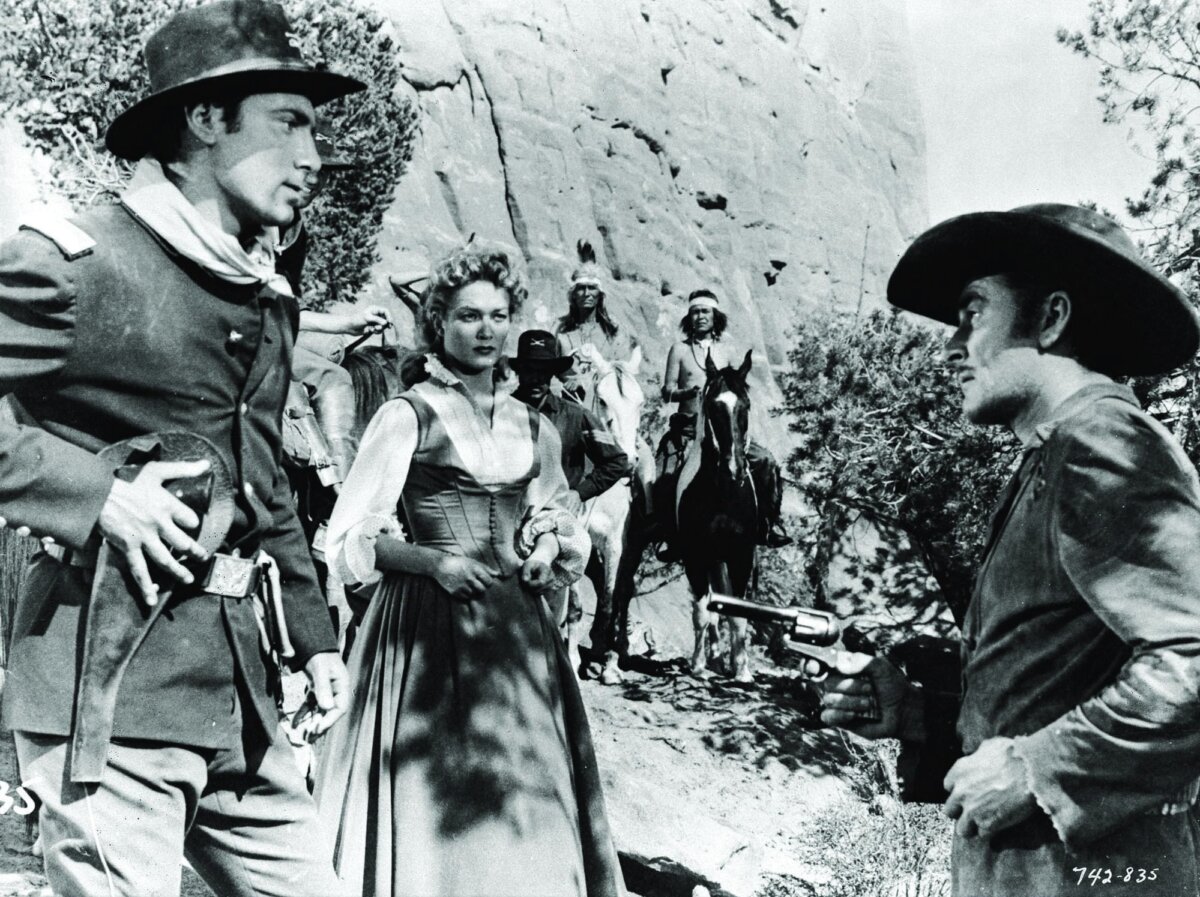
‘Red Mountain’
In 1865 in the small Western town of Broken Bow, a government assayer is shot with a Confederate cartridge. An angry posse blames Lane Waldron (Arthur Kennedy), a former Confederate soldier who was allowed to go out west by being paroled to the Union army.
Lane is rescued from hanging by stranger Brett Sherwood (Alan Ladd), and the two men escape to Lane’s nearby cabin. When Lane deduces that his savior is the actual murderer, he attempts to capture Brett, who is too clever and escapes.
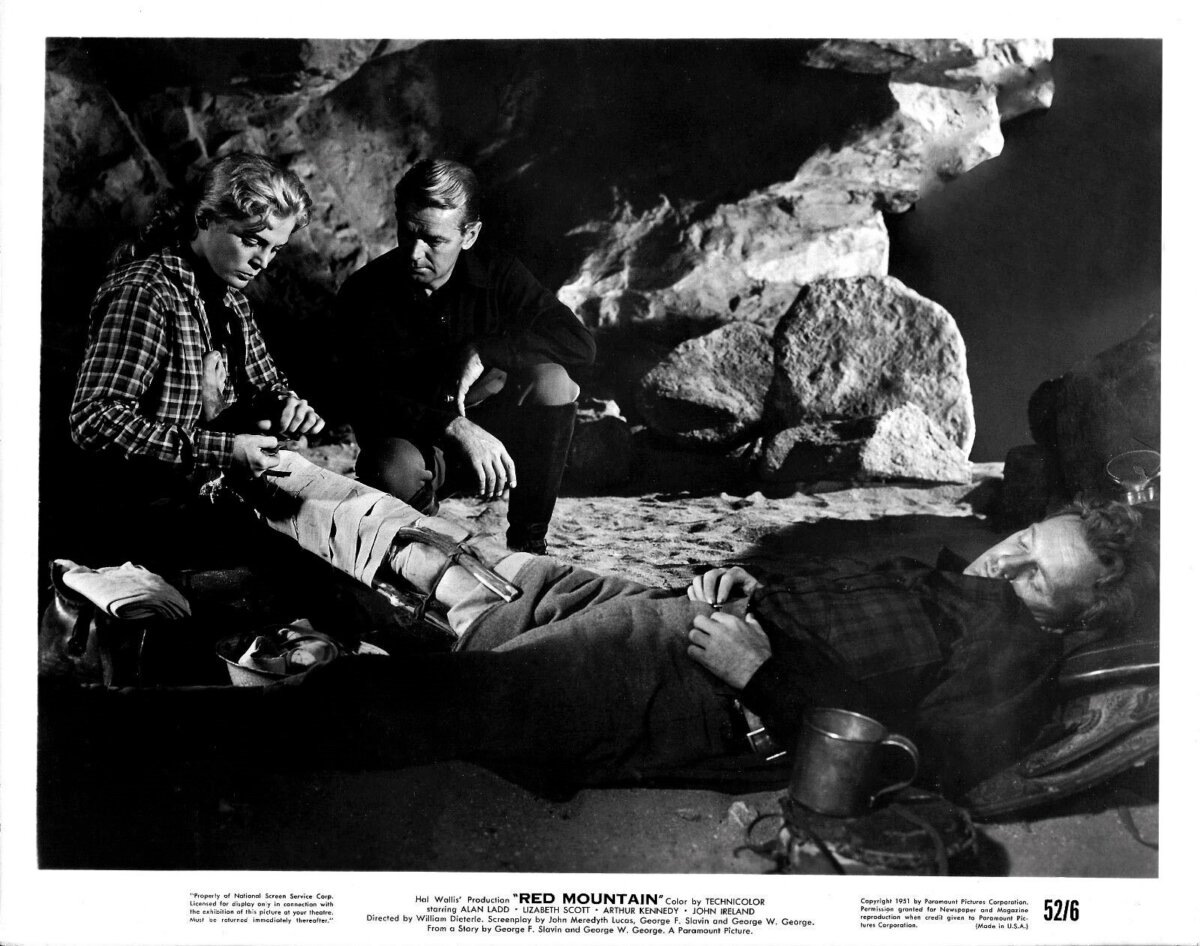
The next morning, Lane’s fiancée Chris (Lizabeth Scott), arrives at the cabin and the two successfully capture Brett. However, Brett breaks out of his bonds, wrests Chris’s gun away from her, and tries again to escape. In the ensuing fight, Lane falls and breaks his leg. As a storm brews, Brett sets the leg, and the unlikely trio takes refuge in a nearby cave.
The next morning, Brett tells Chris to take Lane to a doctor in Broken Bow. She’s moved by the Southerner’s kindness. Suddenly, a Union troop arrives, but it’s actually a disguised guerrilla squadron led by Southern commander Gen. William Quantrill (John Ireland).
Brett came out west to join them, but he’s distressed to see Indians in Quantrill’s troop and horrified by their savage battle tactics. As Lane’s condition grows more serious and Quantrill’s intentions look less than honorable, Brett is torn between his duty as a soldier and his personal duty to do what he knows is right.
Heroes and Heroines
The similarities between these two films are numerous and unmistakable. Made within one year of each other, both take place in 1865. They both have a Western setting; feature a Confederate soldier, a Yankee lady, and her fiancé as the three leads; and bear the name of a mountain. The themes of patriotism, brotherhood, and war’s futility are the same. But beyond these obvious similarities, the two stories differ greatly.
Lafe and Brett both illustrate that in any conflict, there are people on each side who are merely fighting for what they believe is right. Both men show honor, bravery, devotion, and a strong sense of duty to their cause and their fellow men.
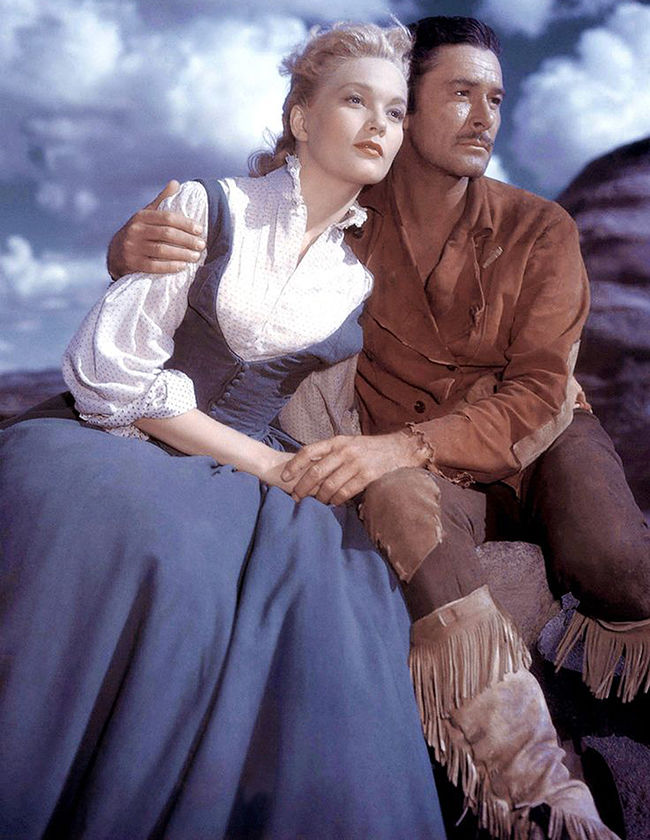
Lafe tells Joanna, “You don’t have to like a war to fight in it. You just have to believe in what you’re fighting for.” The hatred and destruction which the conflict has wrought on the country pain him, but he believes in the idea behind the Confederacy and will fight for it to the end.
Brett displays the same unwavering faith, even in the face of his own home’s destruction and the difficult question of slavery. Even as he’s swayed by his growing feelings for Chris and his increasing doubt about Quantrill’s motives, duty holds him back. “I’m a soldier,” he tells Chris. “I do what I’m told. War has nothing to do with chivalry or nobility.”
The greater contrast is between the two female characters. Joanna is a typical damsel in distress, somewhat unaware at first of the surrounding danger. It’s only through knowing Lafe and his companions that she truly begins to understand the cruelty of war, especially between countrymen.
Chris, on the other hand, is a strong-minded, spirited woman who’s fully aware of what she believes and isn’t afraid to express it. From the beginning, she challenges Brett with her abject hatred for the Confederacy and the men who support it.
She insists that Lane is no longer one of them. By getting to know Brett, she truly comes to understand that it isn’t a question of who’s right or wrong; the only important thing is finding unity again.
Victories and Losses
It would be impossible to compare these films without discussing their respective endings. In “Rocky Mountain,” Lafe and his troop fail in their mission. Although they go out fighting valiantly, they are ultimately massacred by an Indian war party.
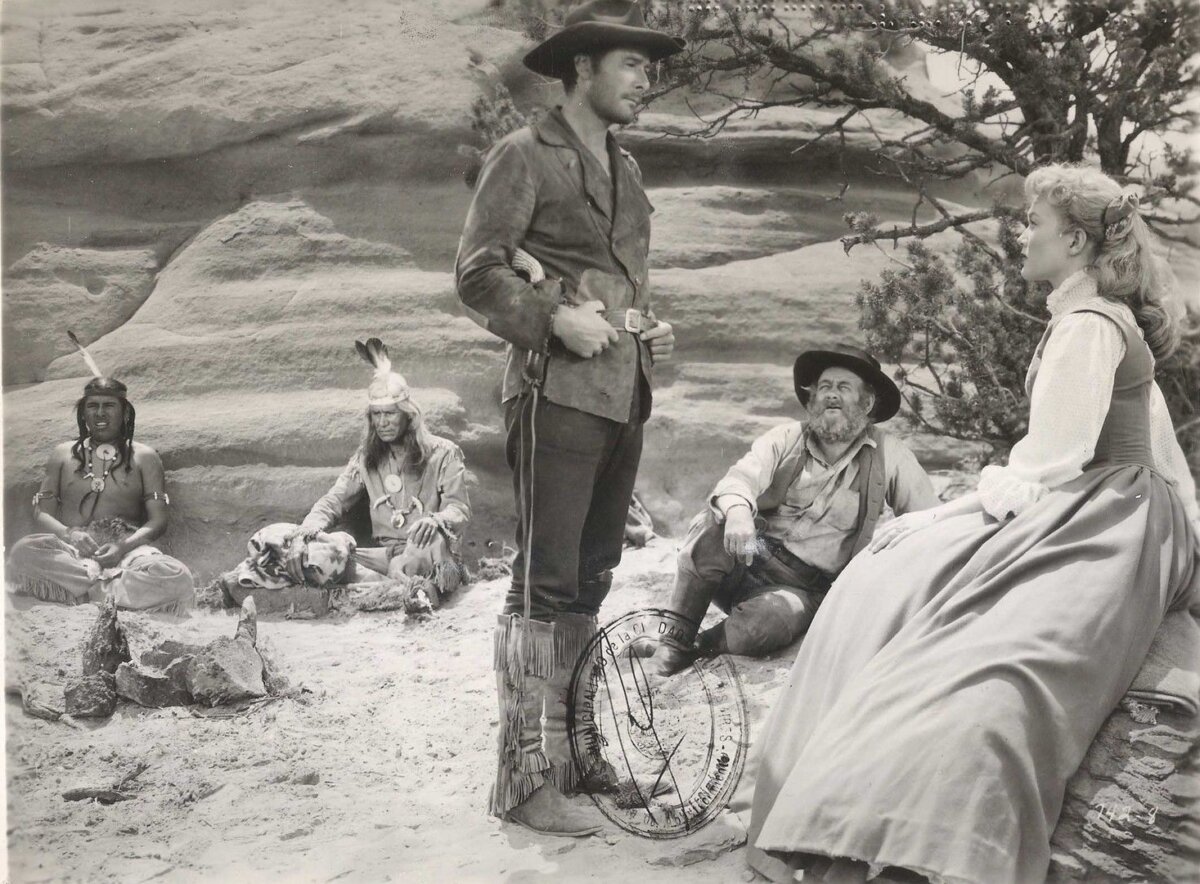
The film ends with Rickey placing the Confederate flag atop Rocky Mountain, as his men stand in rank to salute it. This film is a tribute to the ultimate futility of war, particularly the Civil War.
In “Red Mountain,” while Lane sadly doesn’t survive, Brett realizes that Quantrell is fighting for himself, not the dying South. He takes him down with the help of local townsmen and Union troops.
As he convalesces after battle, Chris reveals that the war is over. Brett quotes a passage of Lincoln’s famed “A House Divided” speech, adding, “Your president said that,” before smiling and correcting himself, “our president.”
This film expresses hope for a reunited country. Brett and Chris’s happy ending is symbolic of the South’s return to the Union and the burying of past strife.
The hostile climate of Civil War-era America is relatable nowadays, as opposing political parties threaten to tear our country apart again. These films are important reminders of how dangerous this is.
In one, we see hatred and division lead to the death of eight brave, noble men. In the other, we see these same ugly factors overcome by the greater powers of love and common humanity.
This Memorial Day, as we honor all the brave men and women who have died for our country, remember what they fought for: a strong, united country, bound together by love, patriotism, and devotion to the American way of life.
What arts and culture topics would you like us to cover? Please email ideas or feedback to features@epochtimes.nyc